Day 6 Metten
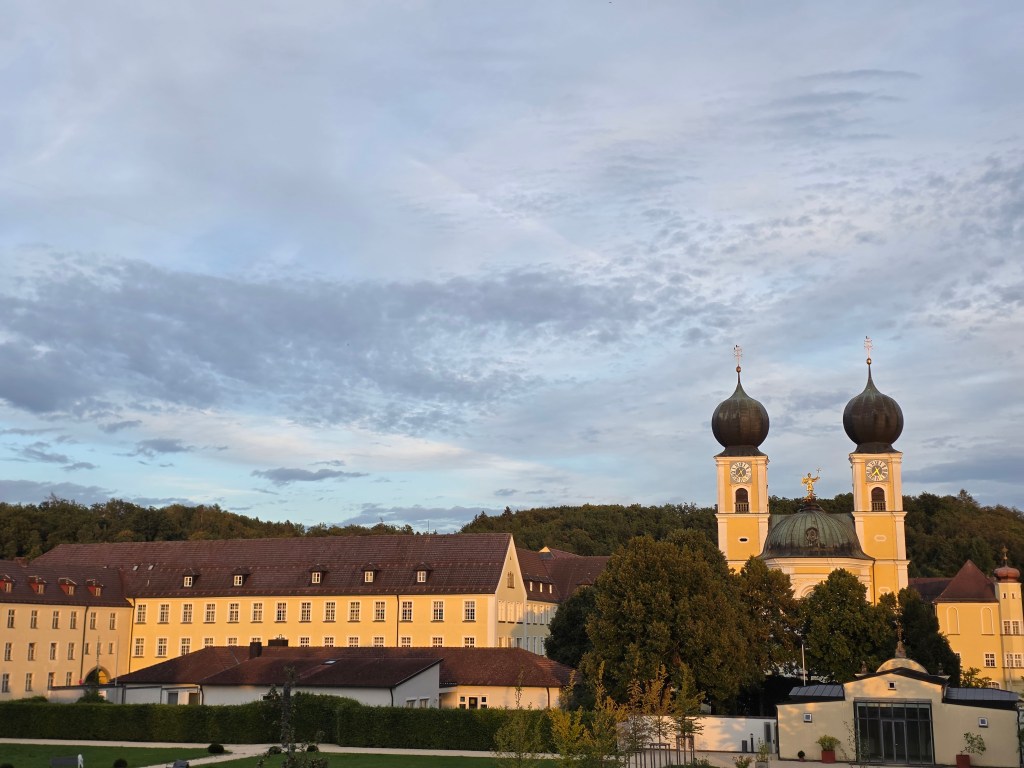
9 am walk across the road to the monastery churchs and its grounds. The church is less breathtaking than Ottobeuren, particularly as there is no sunshine.
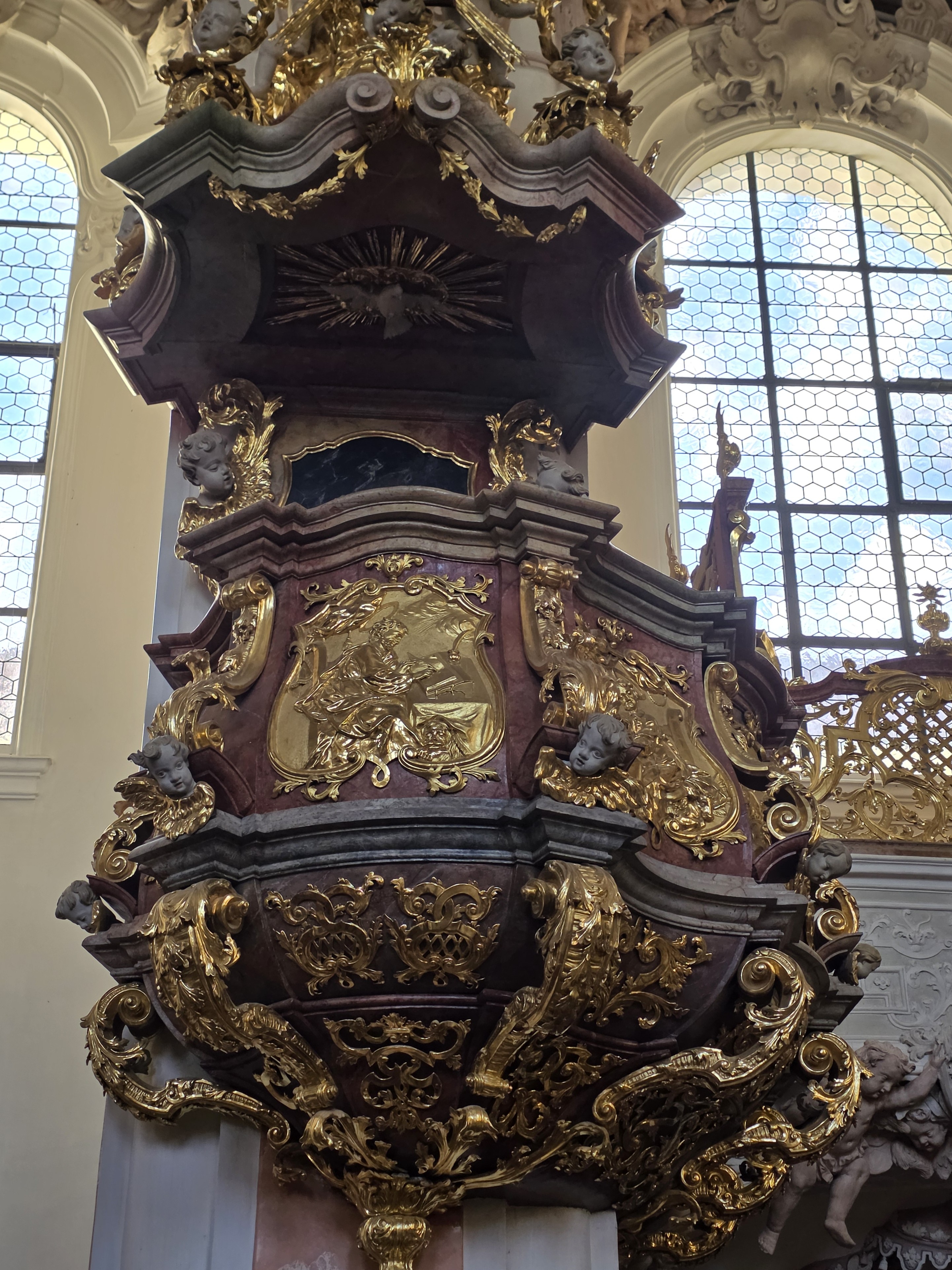
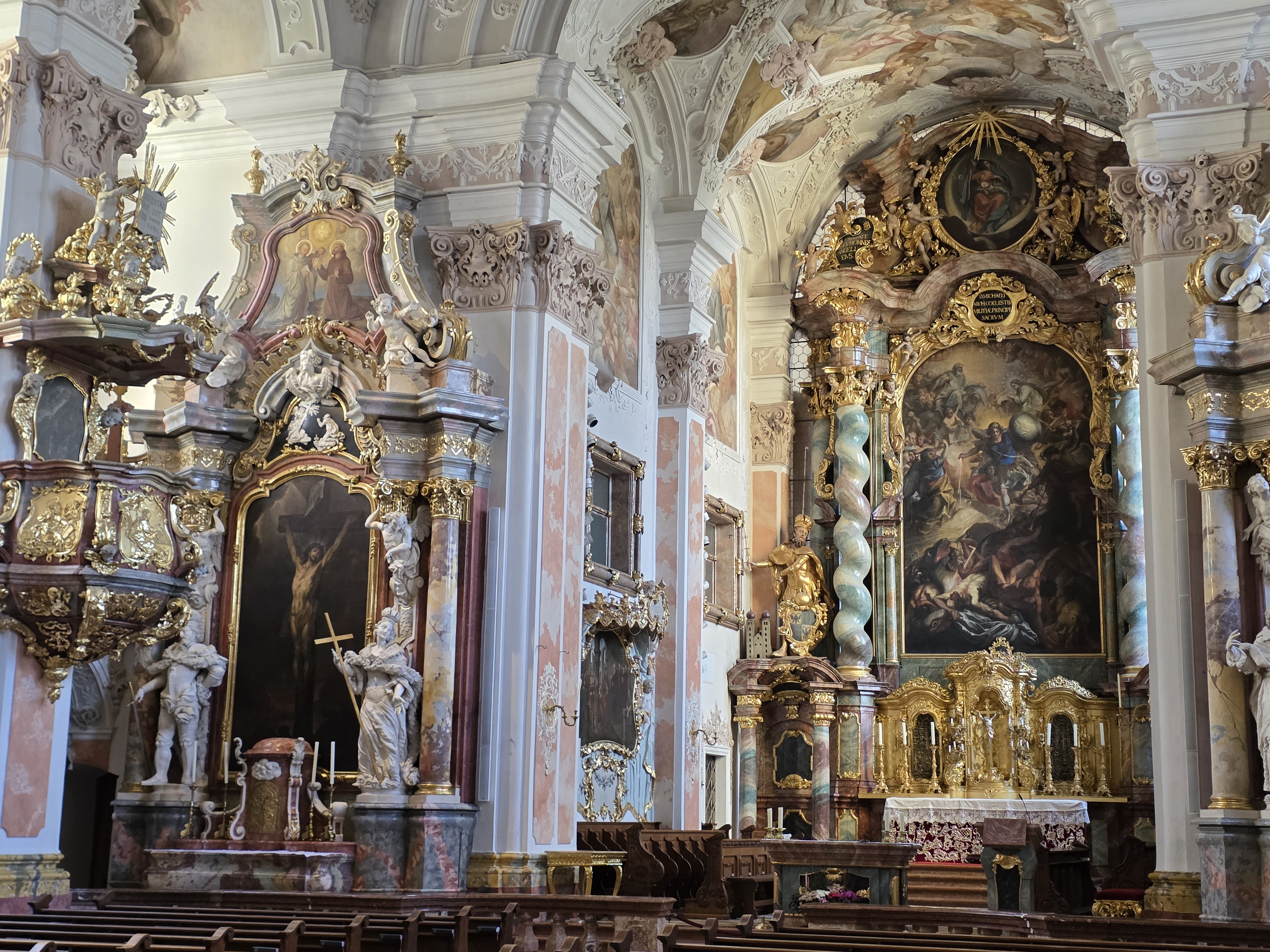
An austere monk sells us €5 tickets for the library tour at 10 and we promise to return.
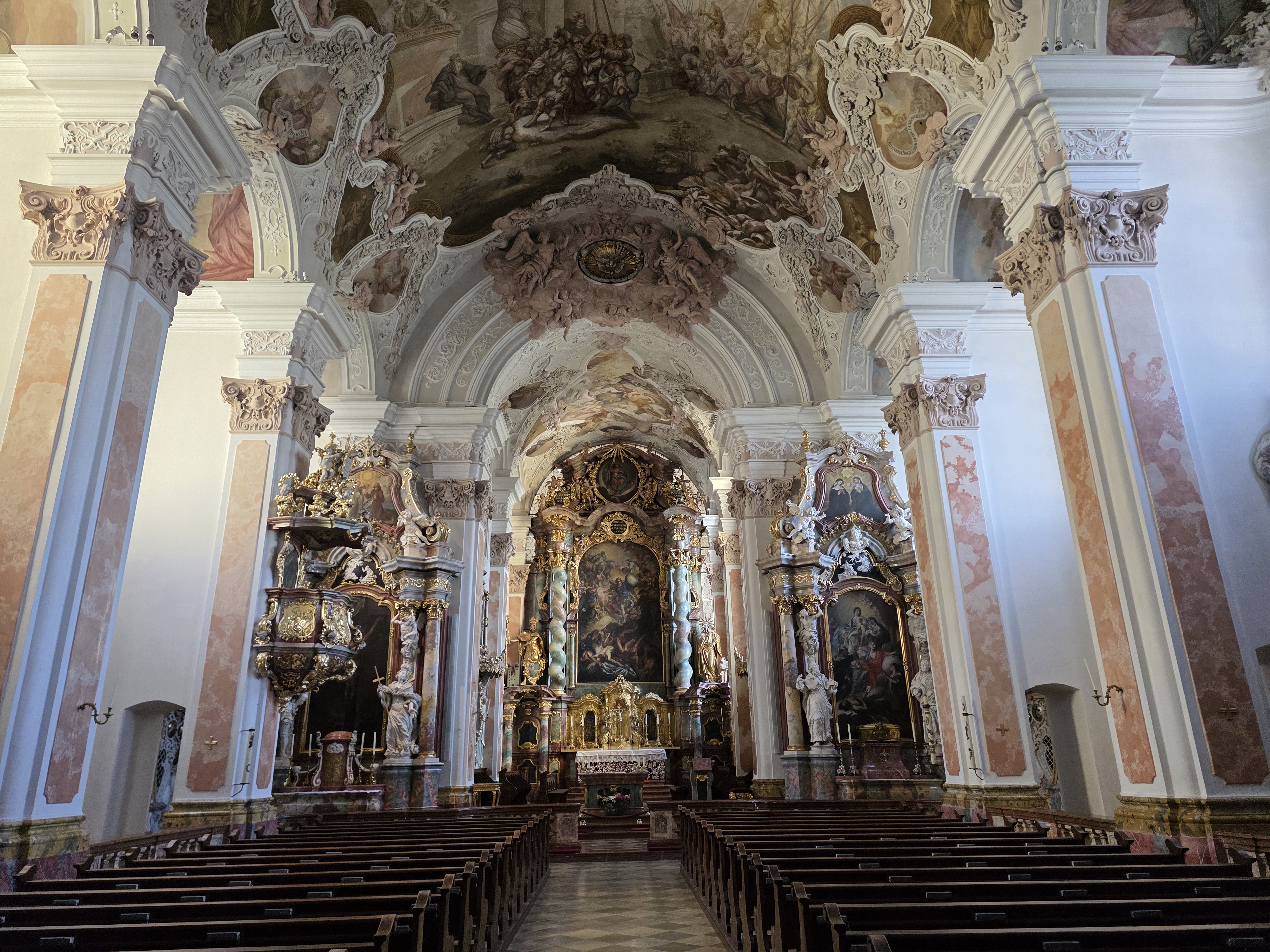
When we do, we are the only guests. Our tour-guide monk is an rather earnest man who doesn’t speak English so it is a matter of listening very carefully and delving deep in the memory for things to say in German.
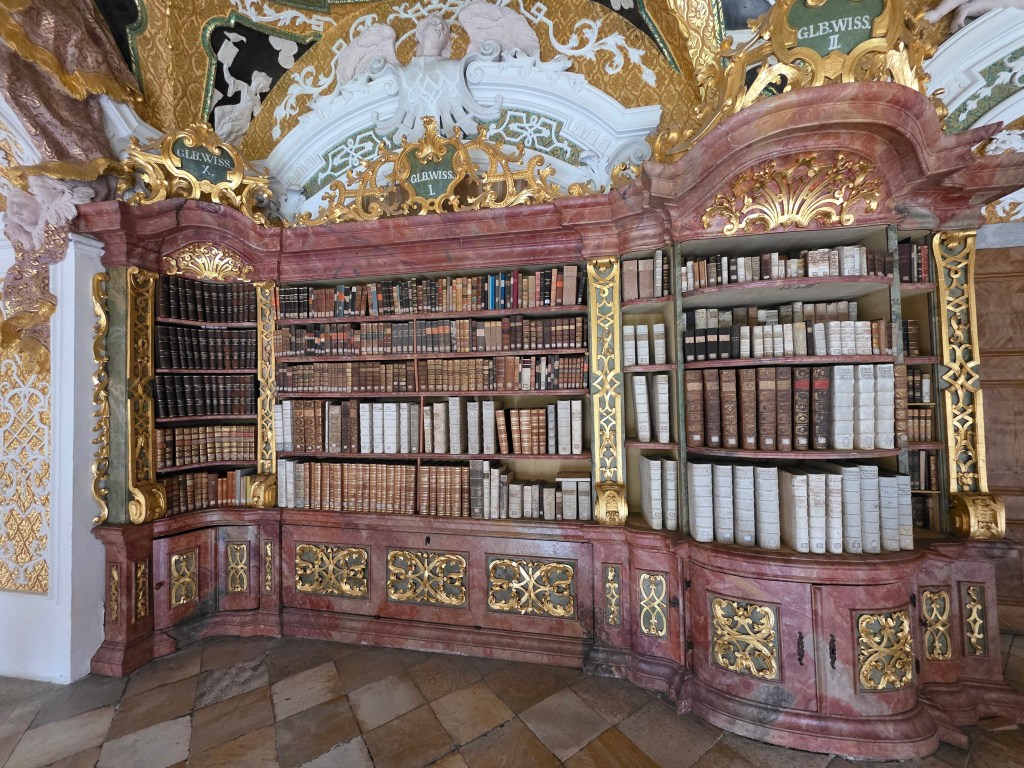
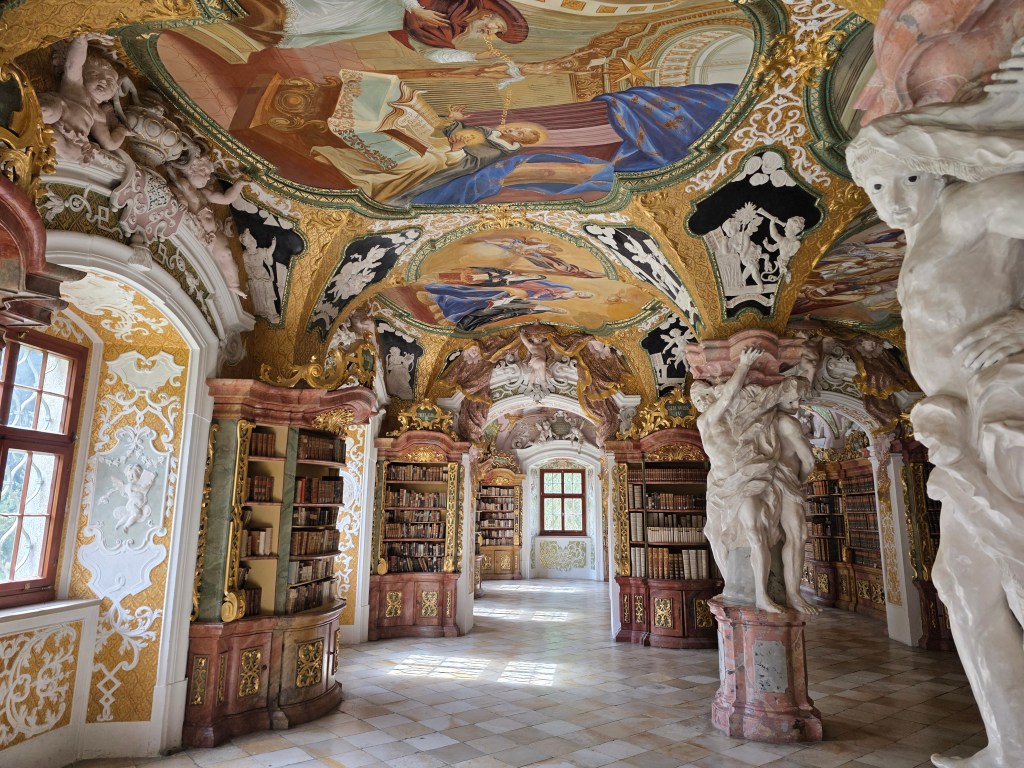
The library is spectacular, with lower ceilings and, consequentially, a more intimate feeling than the other monastery libraries we have been in.
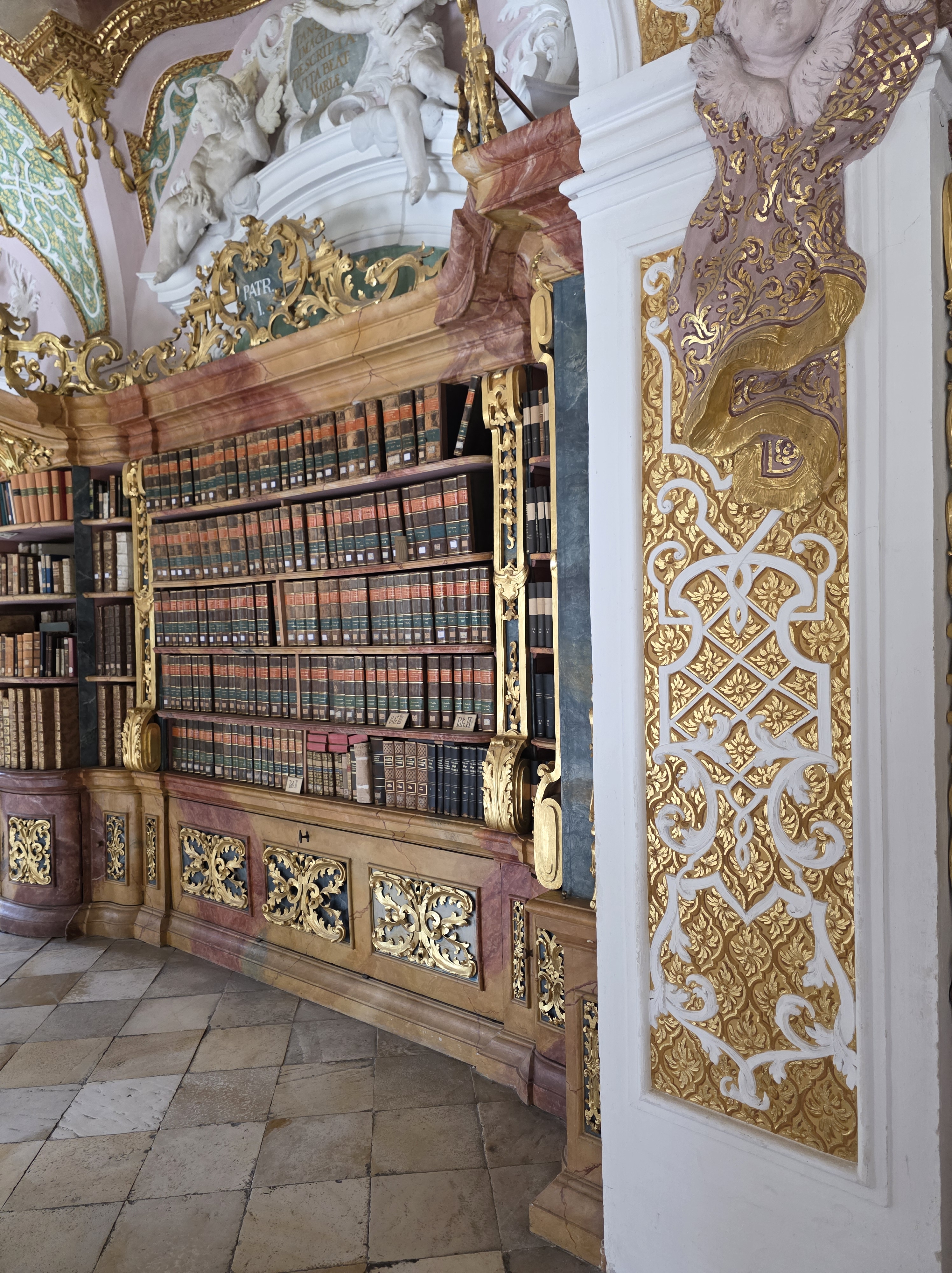
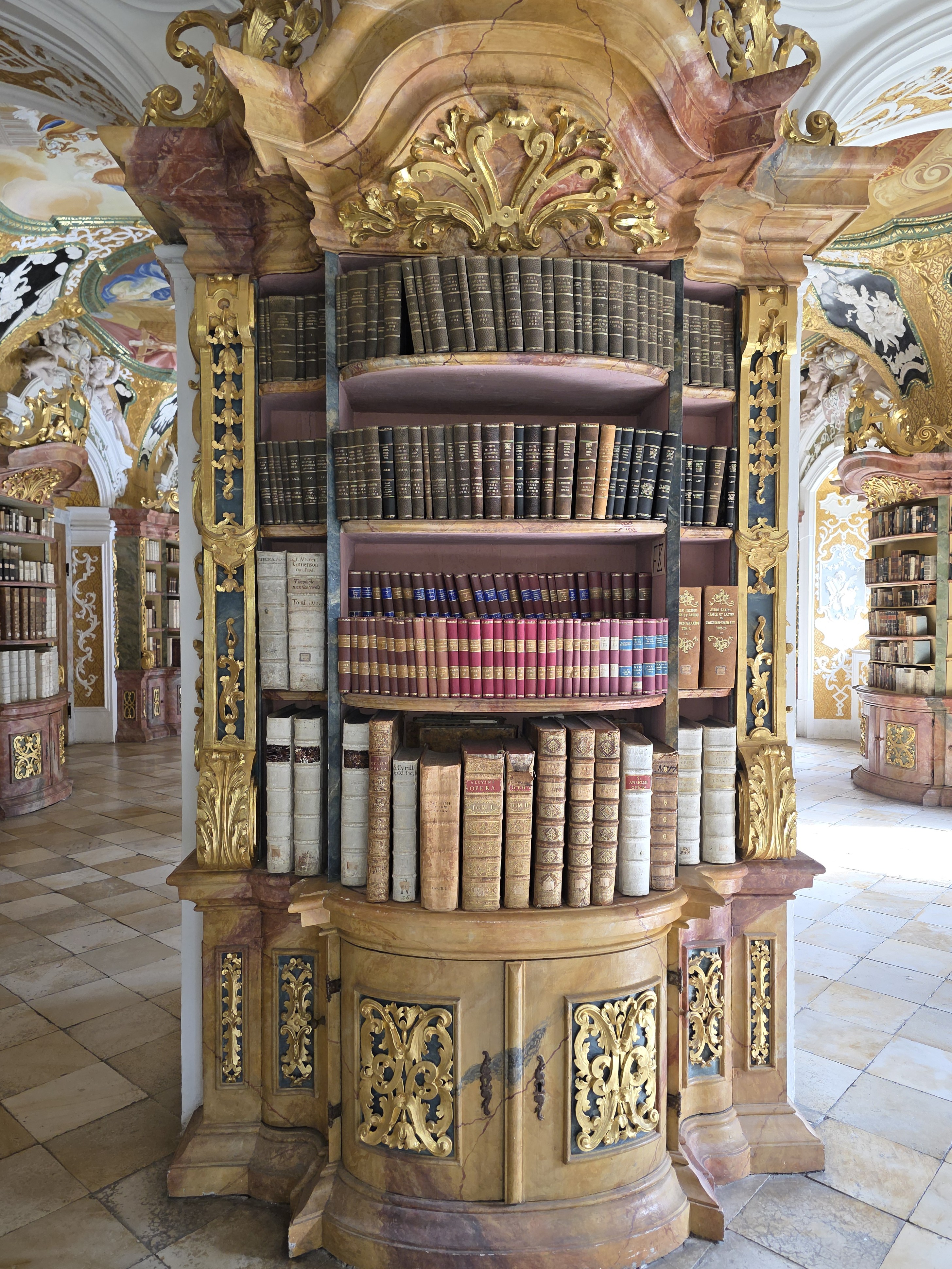
It has the look and feel of a working library as well as a Baroque chamber. We drop the names of the others on our itinerary to some effect; our guide is particularly impressed that we are going to Melk (apparently the l is not pronounced) which seems to be Dominican ground zero.
The rest of the Abbey is quite a contrast:
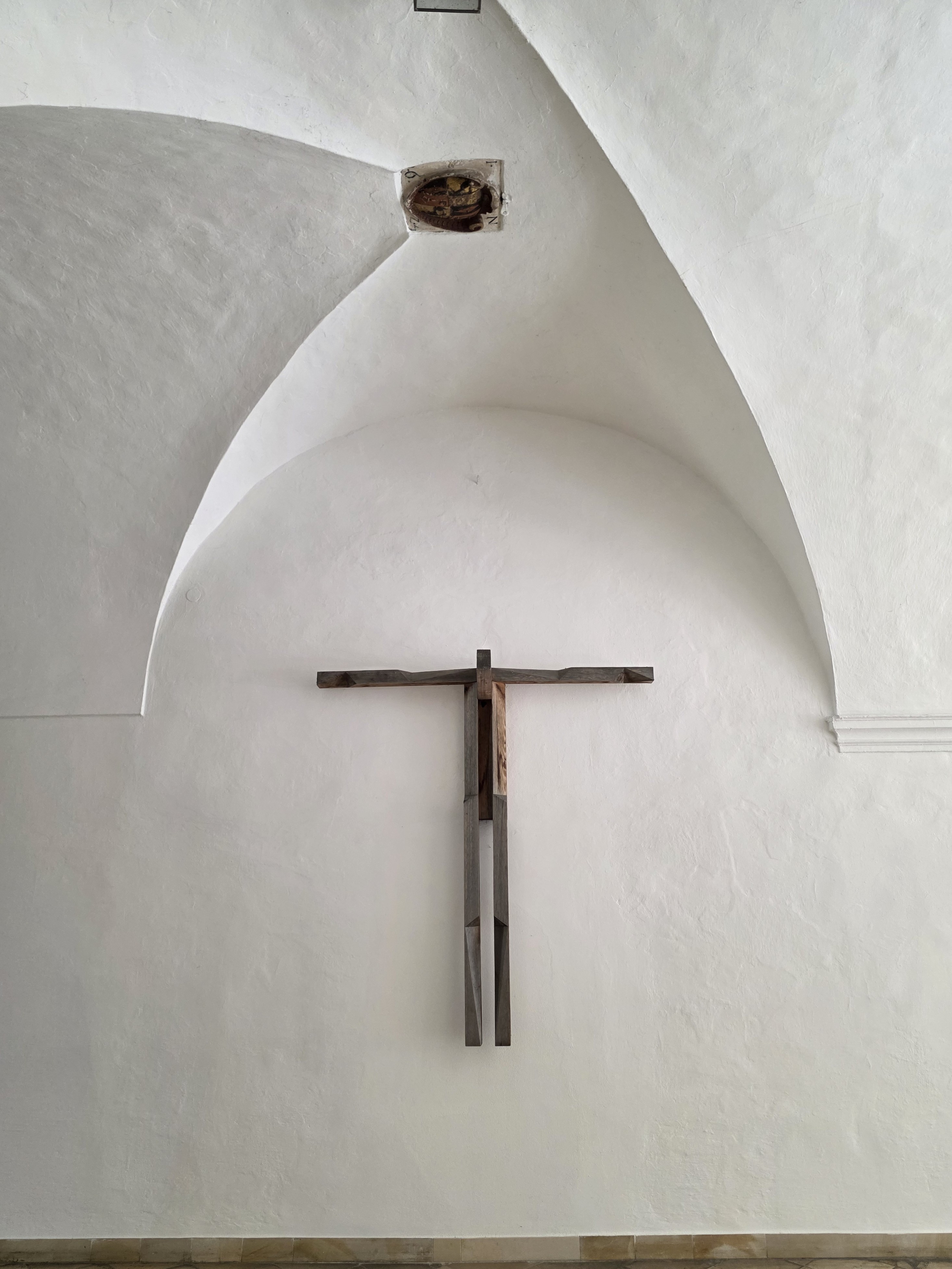
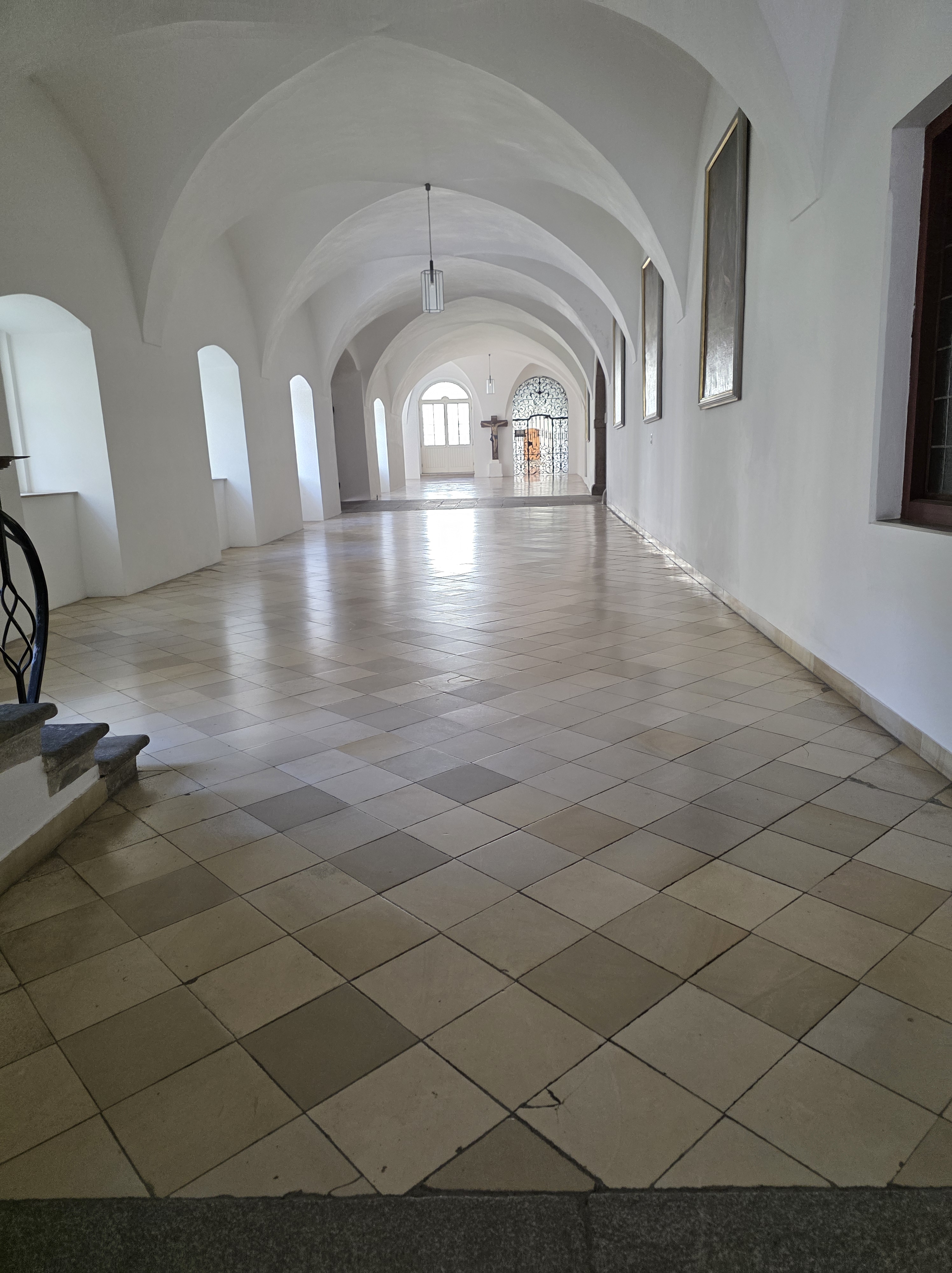
After coffee and cheesecake, it is still only about 11 and we set off up the hill to Egg to visit the eleventh-century castle there. However, work to replace a bridge on the way is still taking place and we return to town rather than face a hilly diversion.
Good meal in Taverne Marios Greek restaurant; J has the schnitzel and I have the largest calamari rings I have ever been served – both meals uncannily like the illustrations on the menu.
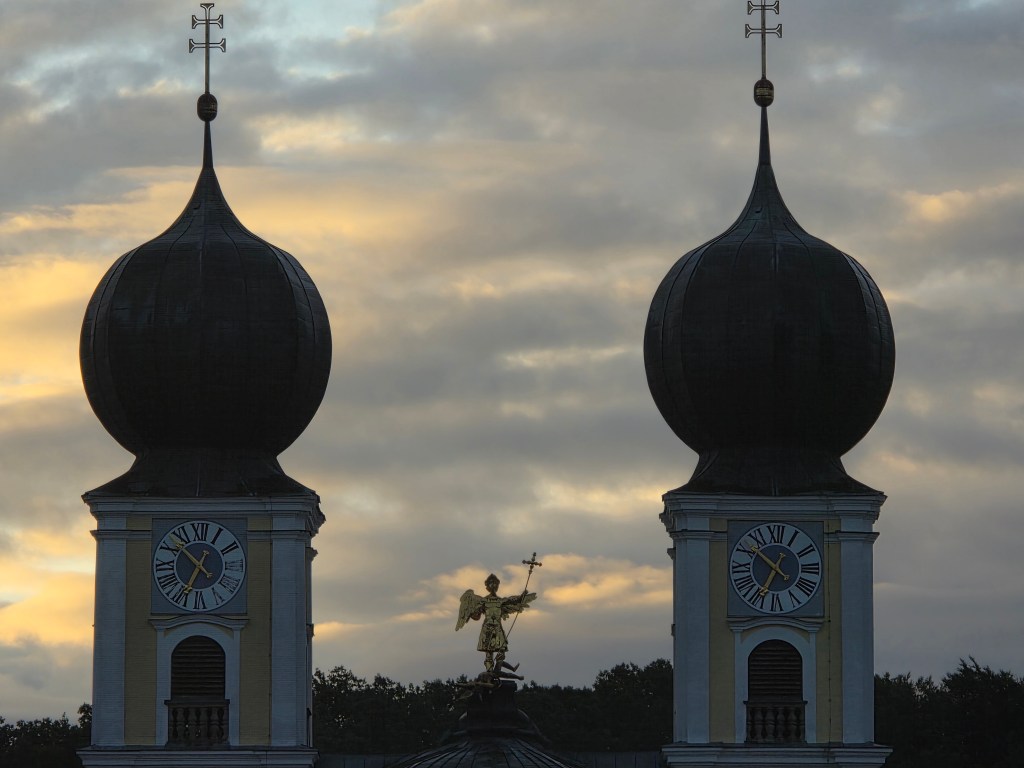
Day 7 Metten to Vienna
7.30 bus to Deggendorf leaves from just around the corner. The driver has no means of issuing tickets so we travel for free with a couple of schoolgirls. Deggendorf produces the first train of the day for a reprise of the ten minute journey to Plattling where we change to an Erzatz train – a bus.
This is direct to Passau where we again see the Danube and catch our first Austrian train – smart on the outside and quite old-fashioned inside with the first hole-in-floor loo whe have seen in a long time.
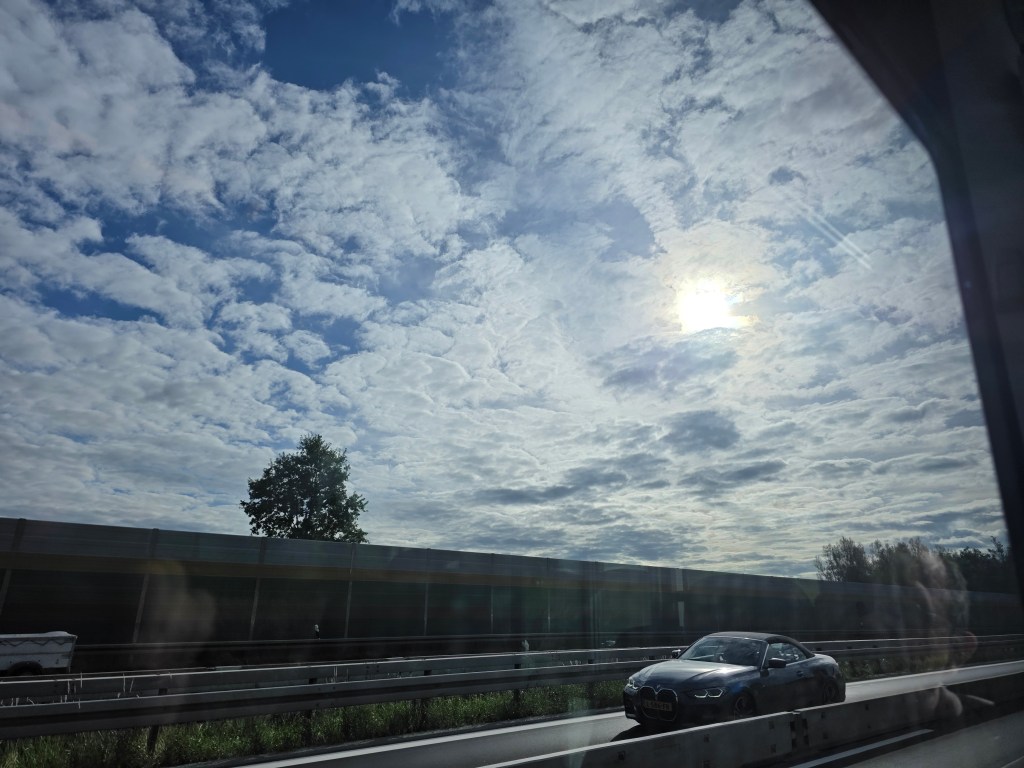
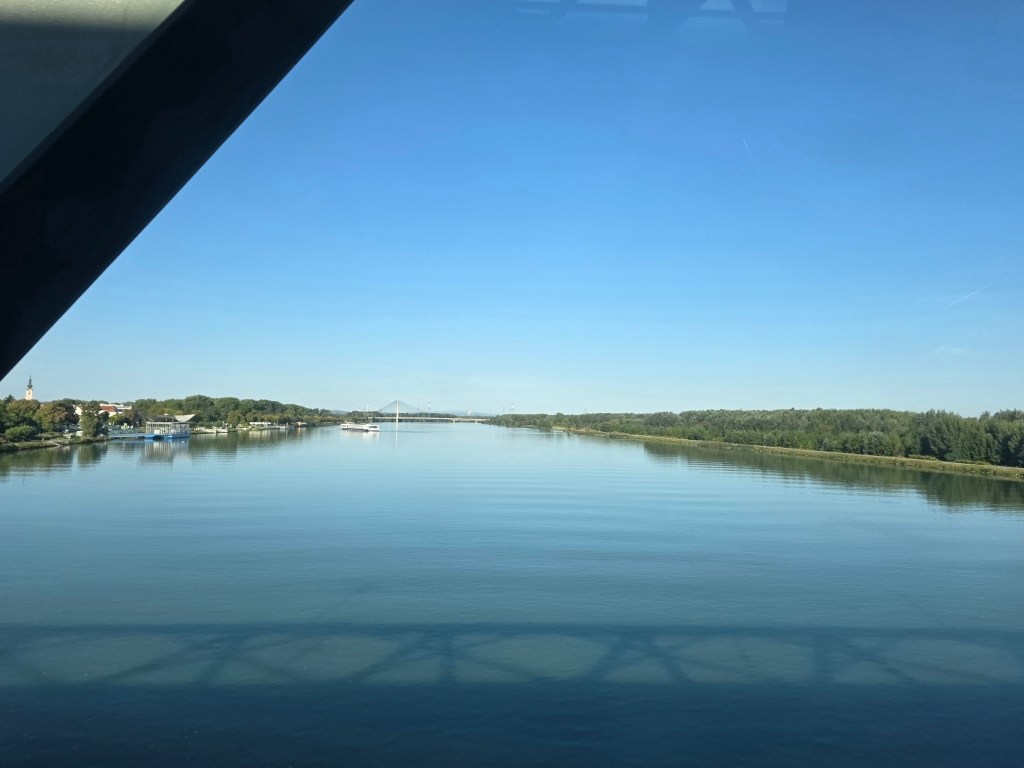
Shortly after departure we cross a river and arrive in Austria. The view is very green and Sound of Music. We are on two regional trains until Linz when we join an intercity railjet which has first class and table restaurant service.
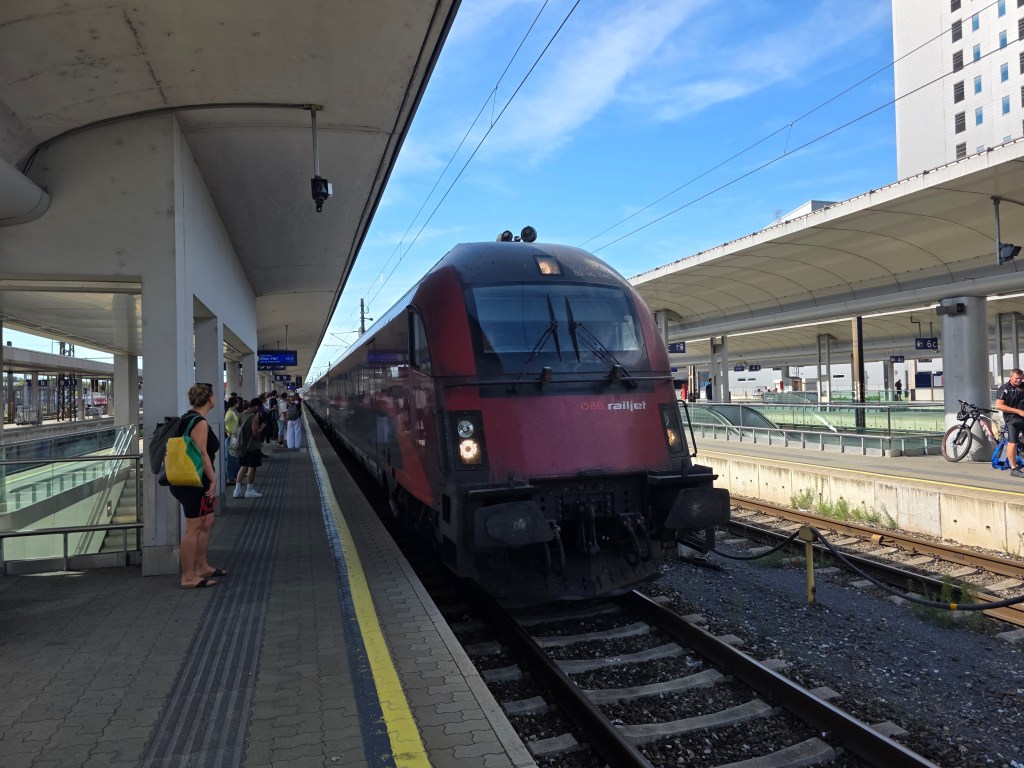
Along the way are a variety of walls and coverings, designed, it seems, to frustrate grafitti and doing so with some success. Spinning along at 200+ kmph we are impressed to have made so many connections.
We arrive at Vienna Hbf soon after 12.30. Meantime, J has been online and bought us local transport tickets for a week for €25 each and we walk straight onto the metro; 3 stops on the red U1 from the Hauptbahnhof to Stephansplatz, which is the absolute city centre, takes very close to My Place apartments – very superior they are.
Out to the nearby Japanese Matcha Komachi restaurant in Hoher Markt for an excellent lunch and then shop for dinner at the Spar in the same block as the accommodation followed by a siesta.
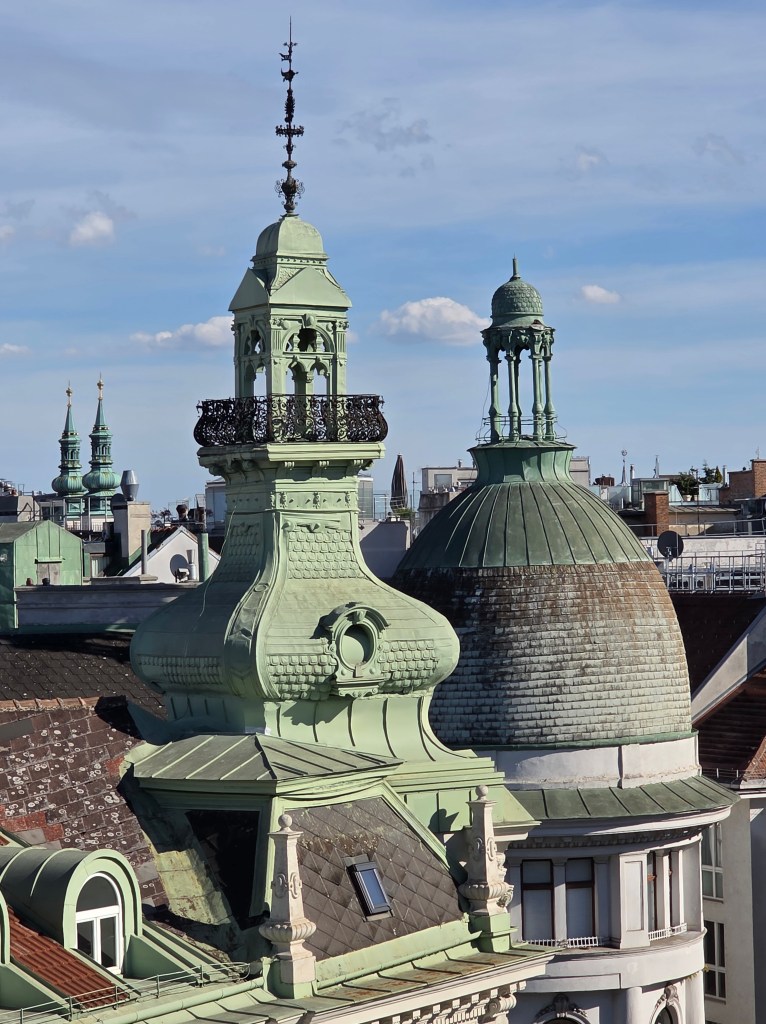
Late afternoon out to the town starting with the Maria Gestade Church which is closest,
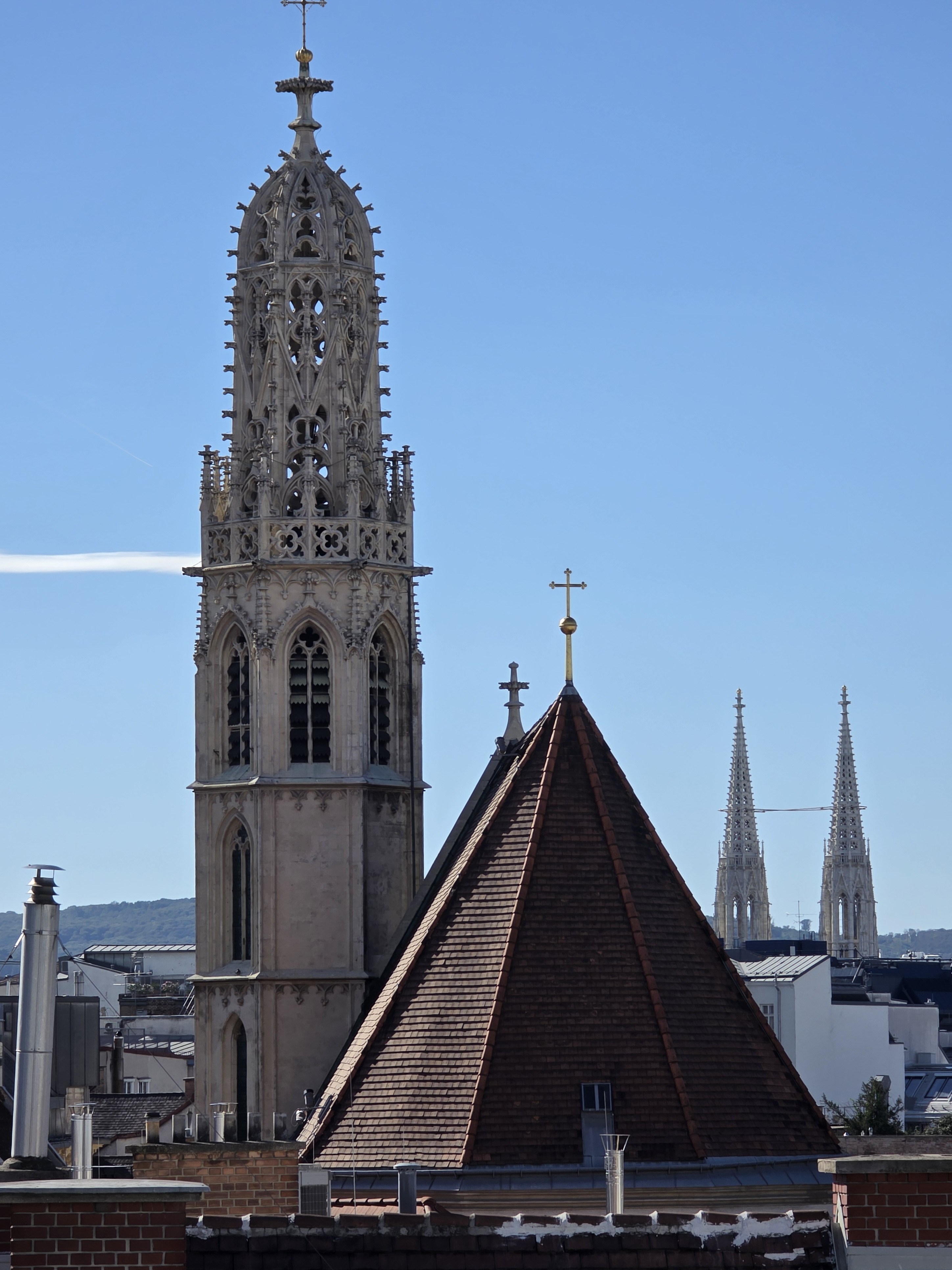
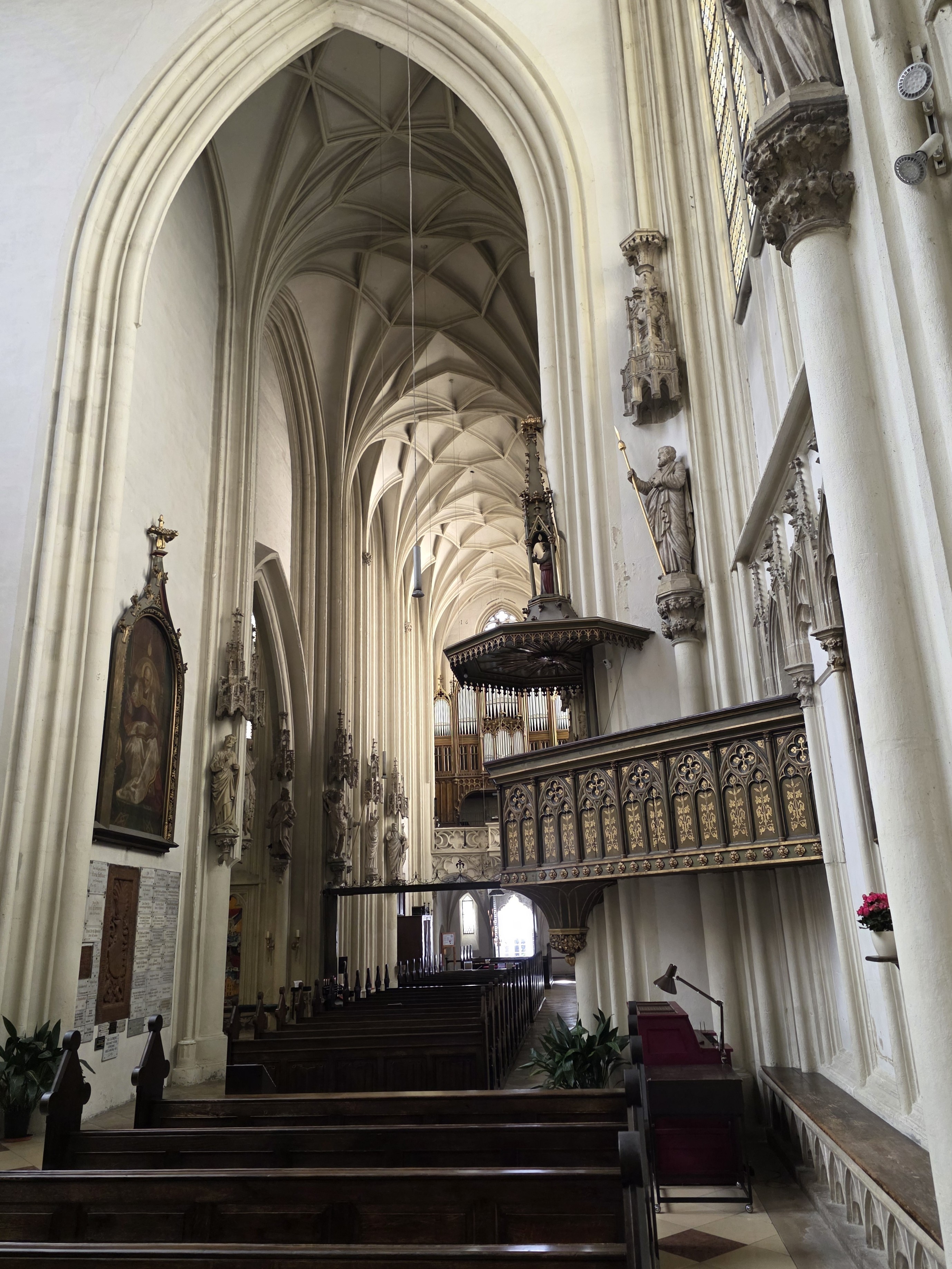
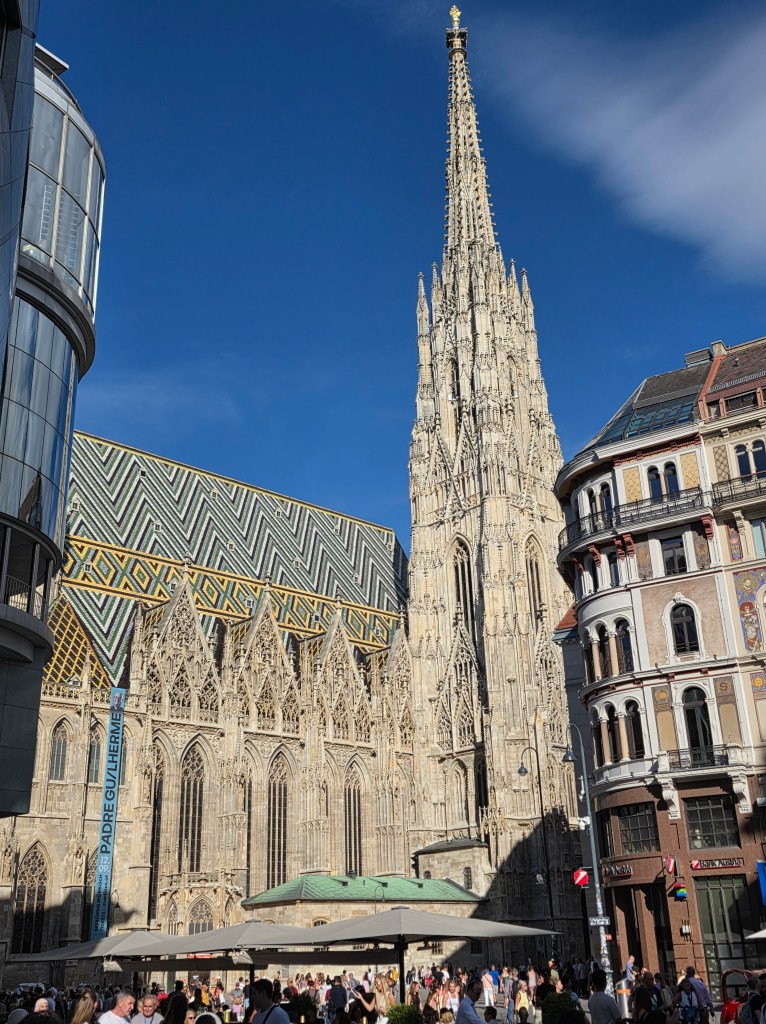
then St Peter’s where there is a service going on. Then the Dom – St Stephen’s which is huge and hugely busy.
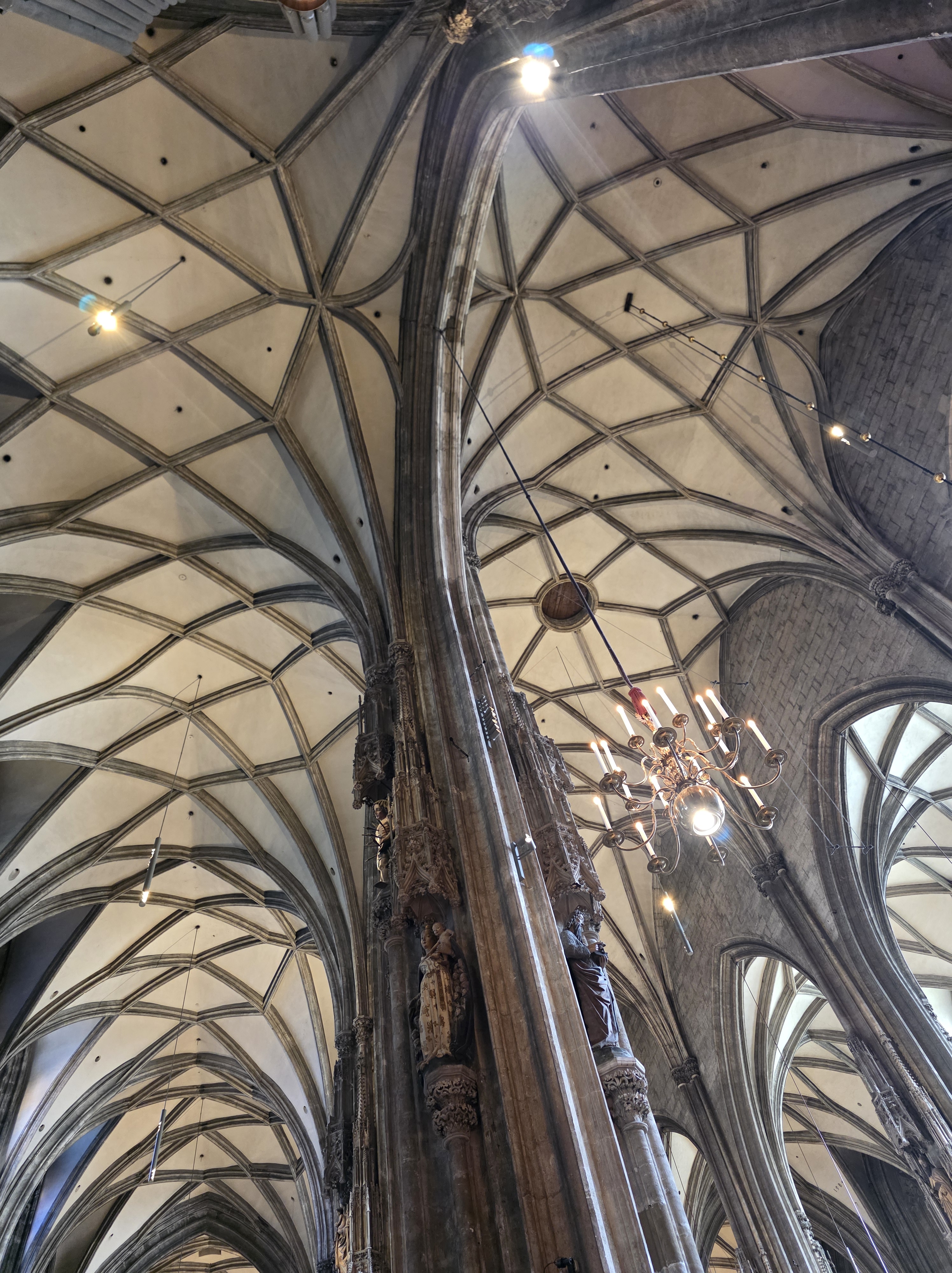
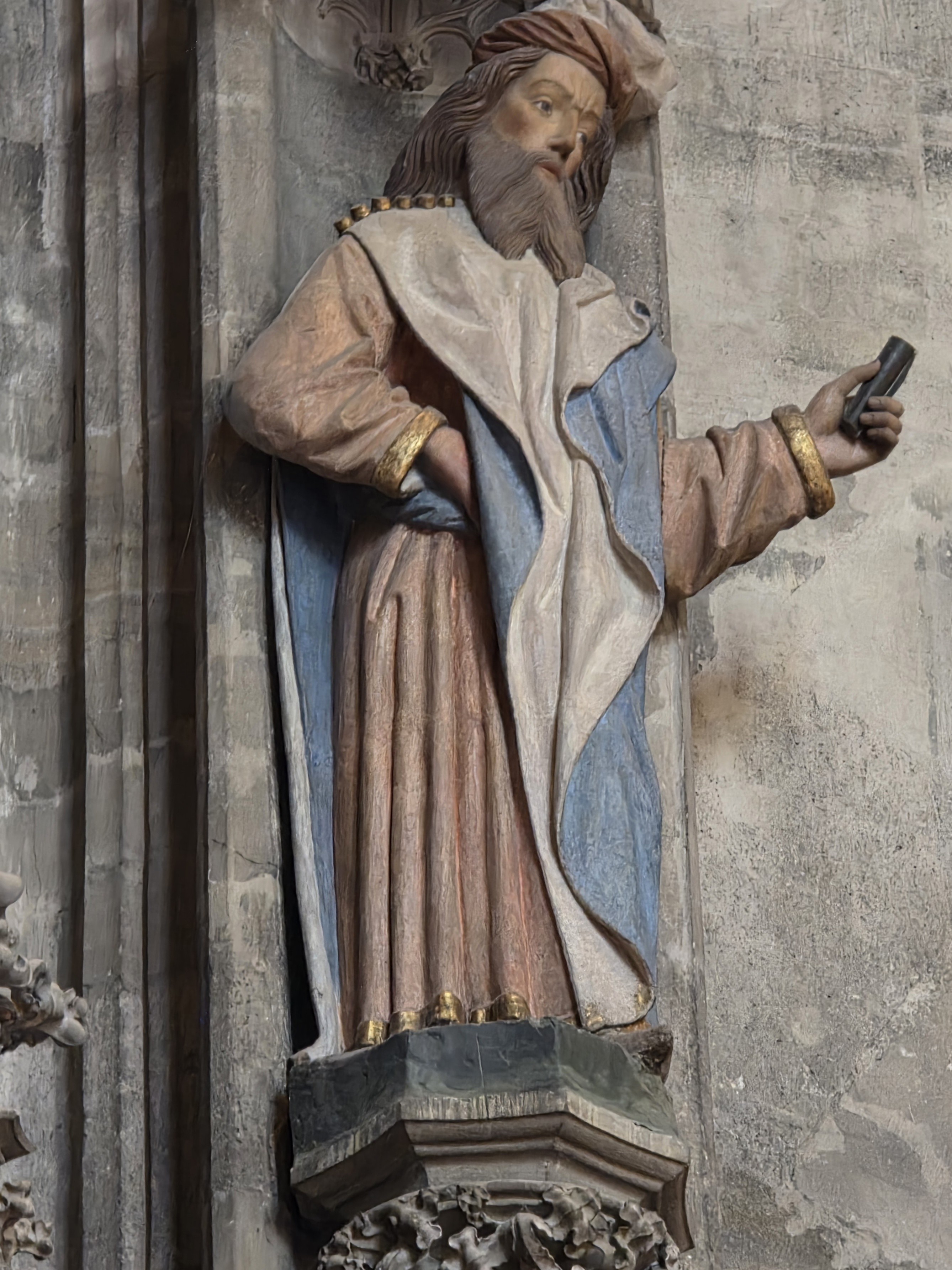
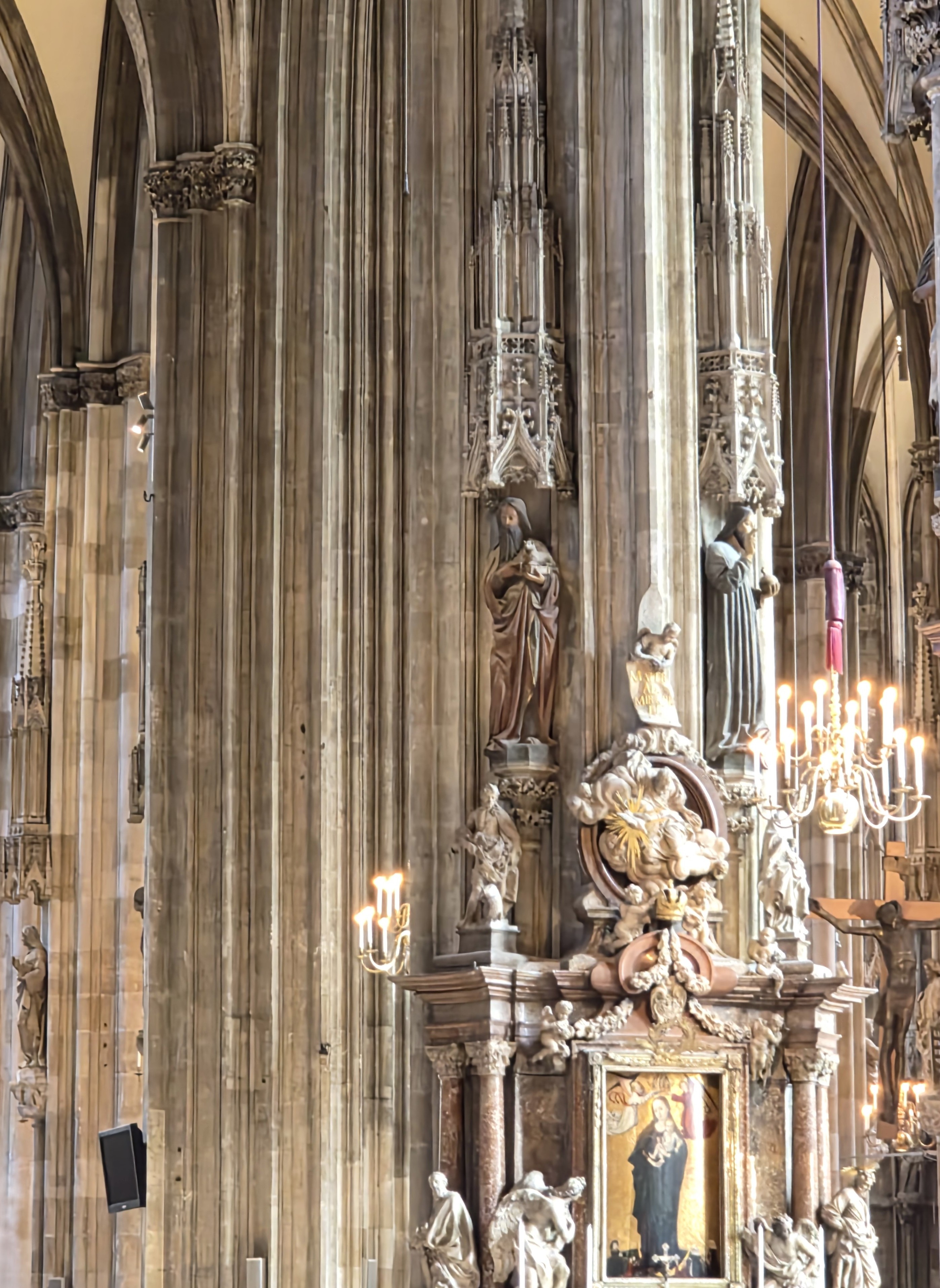
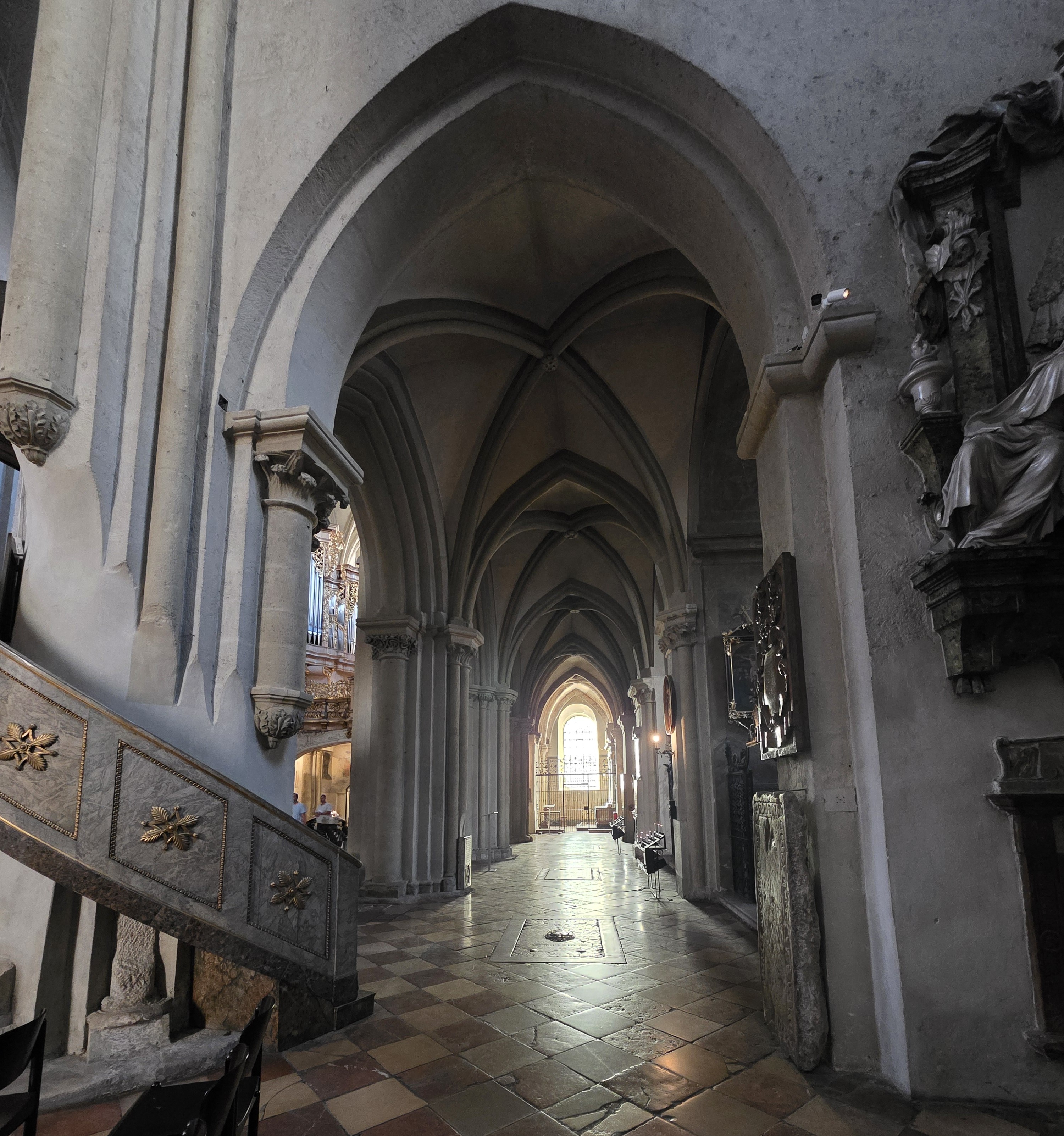
Finally, Michael’s.
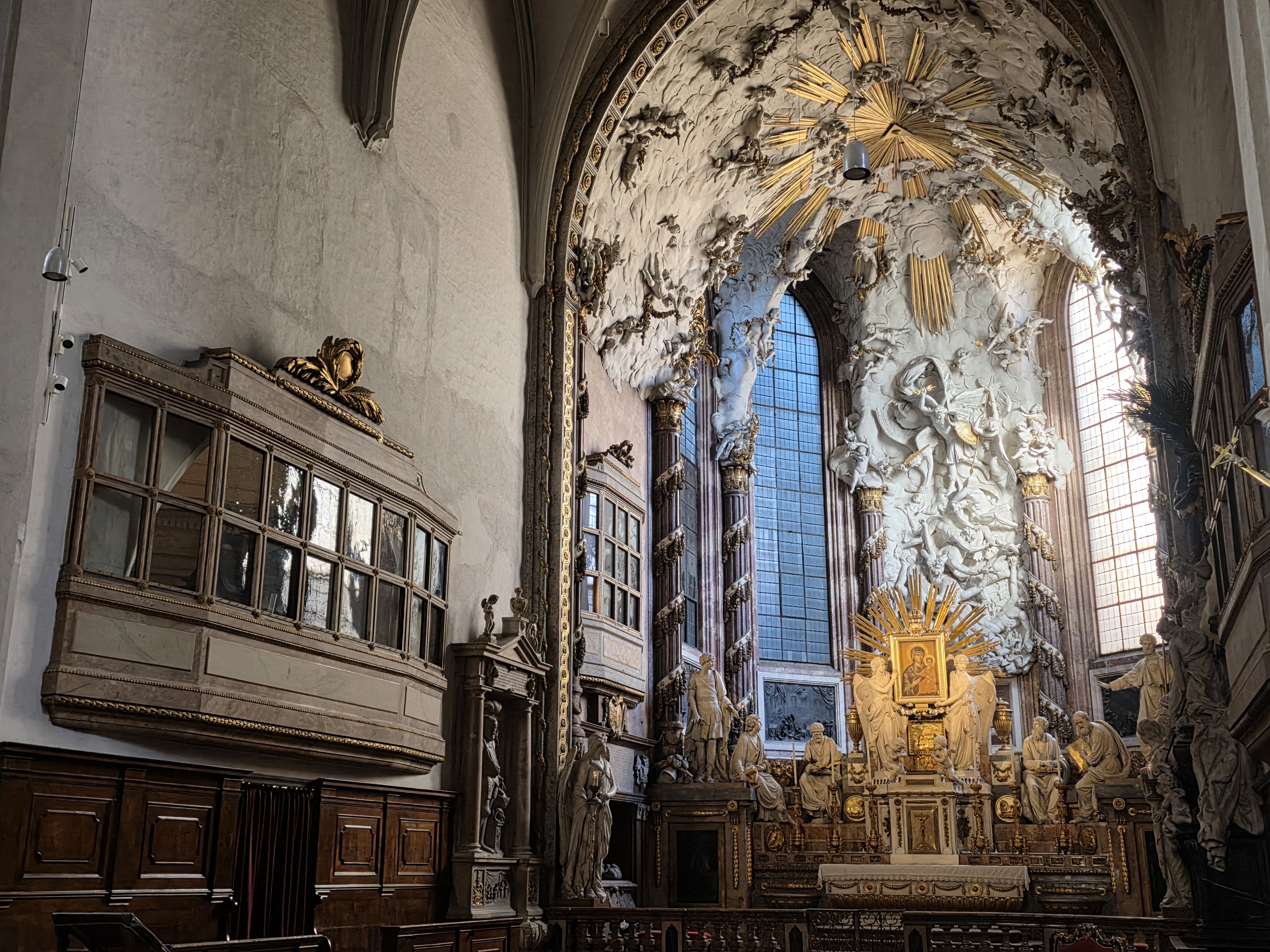
Dinner at a small restaurant behind the Dom – Swiss (ie cheese-covered) schnitzel for me and goulasch for J.
Day 8 Vienna
Metro to Ketterbruckengasse Fleamarket which is extensive with good quality stuff. It is cloudy and windy – the stallholders are holding down their gazebos to fend off disaster. But this gives way to a dark cloud that produces a little rain as we leave the cafe of the Markt Amt. This cafe is the only one we have been to that is card-only – far more places in Germany only take cash.
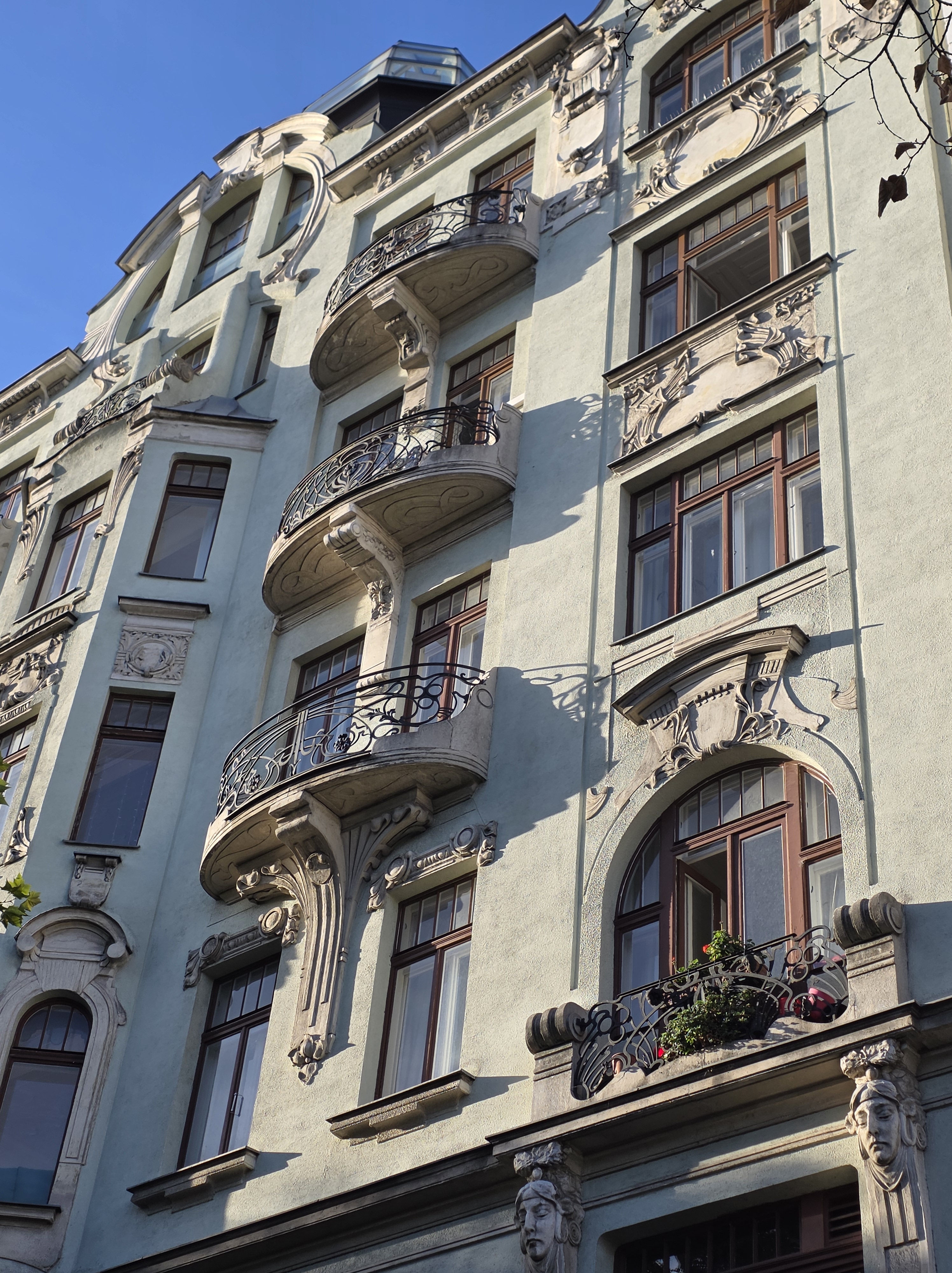
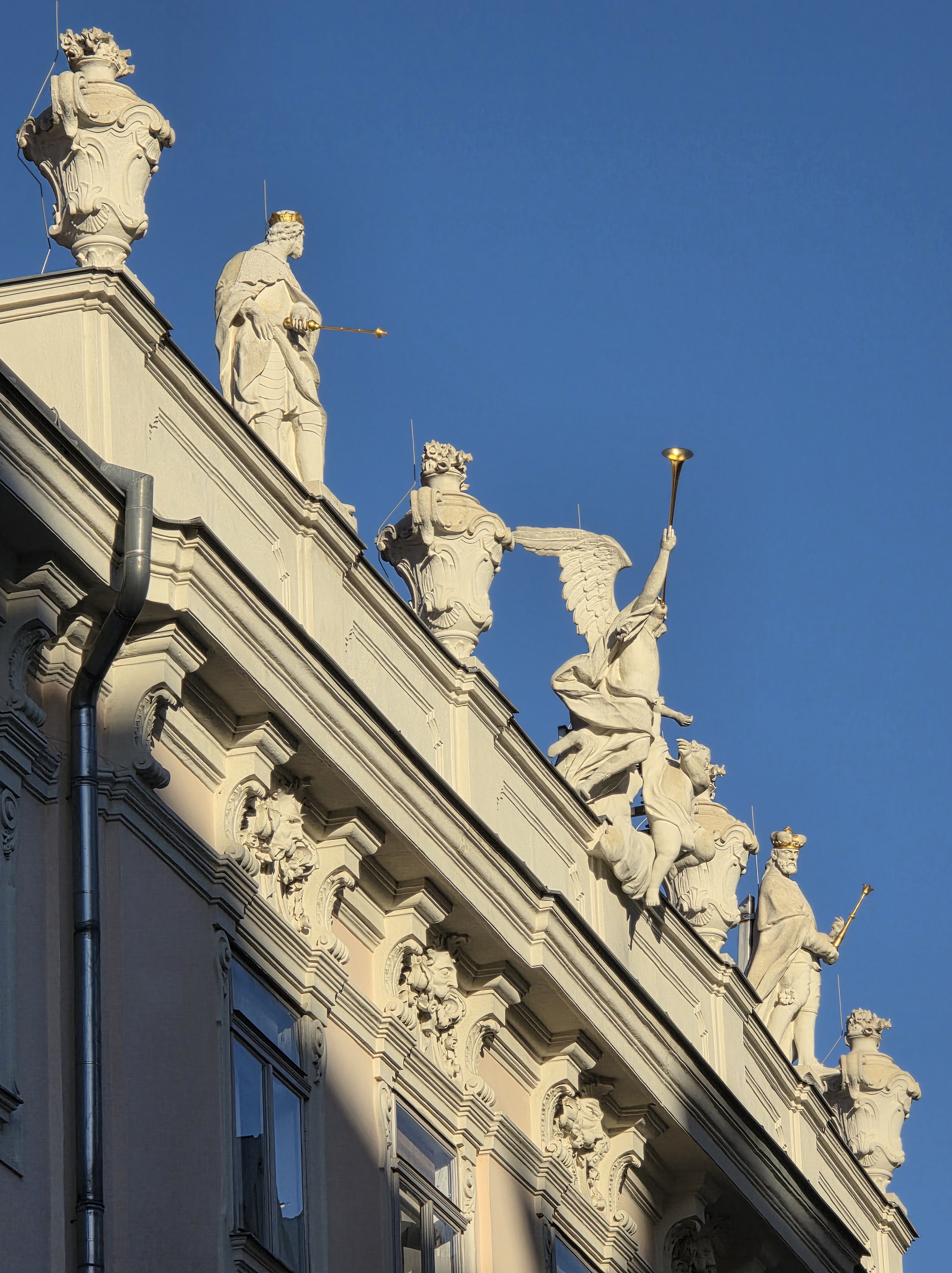
Metro lines 1 and 4 and bus 26A take us to Meta Markt beside Erzherzogkarlstrasse. This is a permanent flea market in a much less prestigeous part of town. Back to Matcha Komachi for more sushi. After lunch I use the gym at the apartment and at 4pm we go out into town in search of the church with a pair of onion domes we first saw from the roof of the hotel but didn’t reach yesterday.
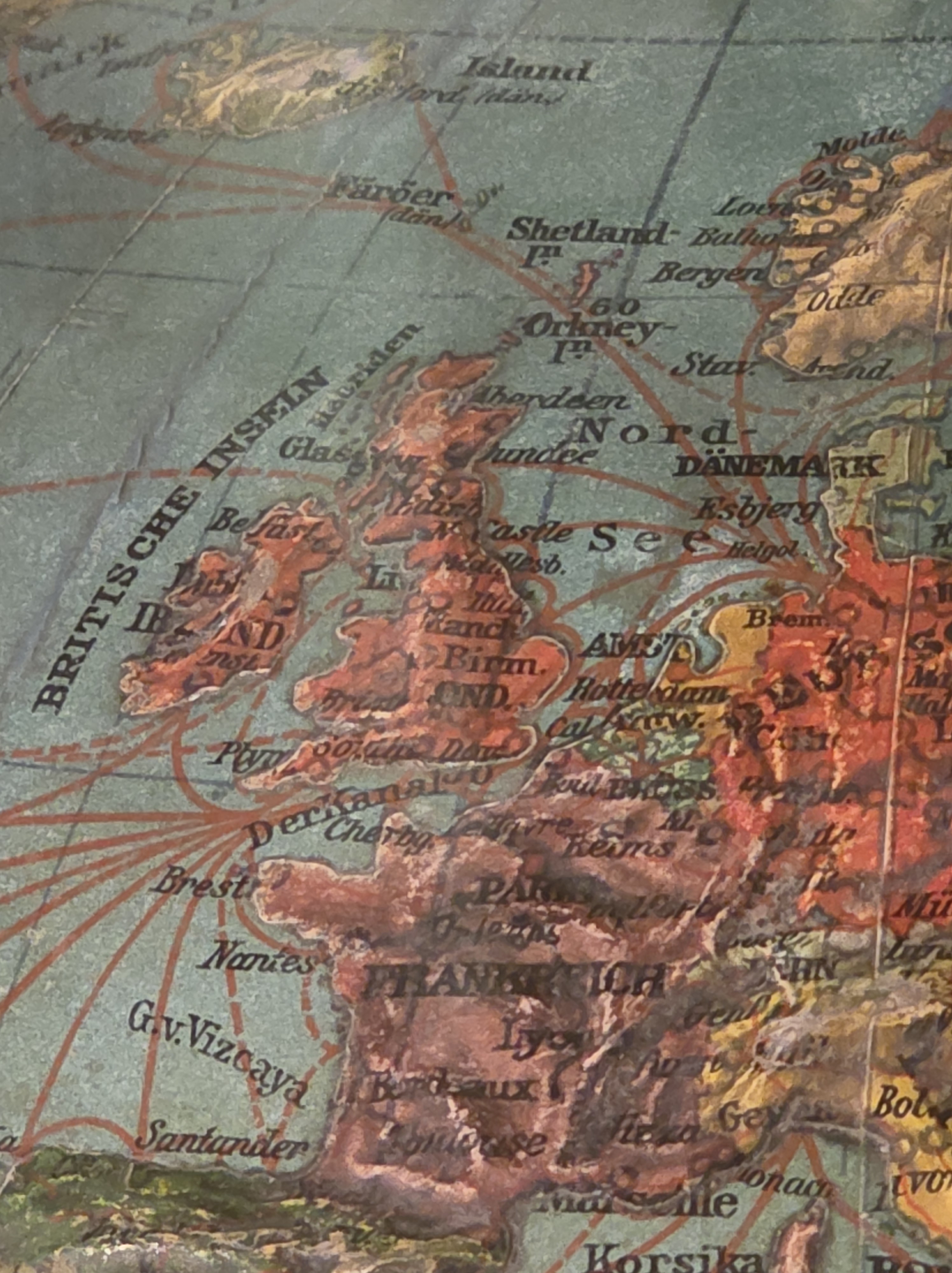
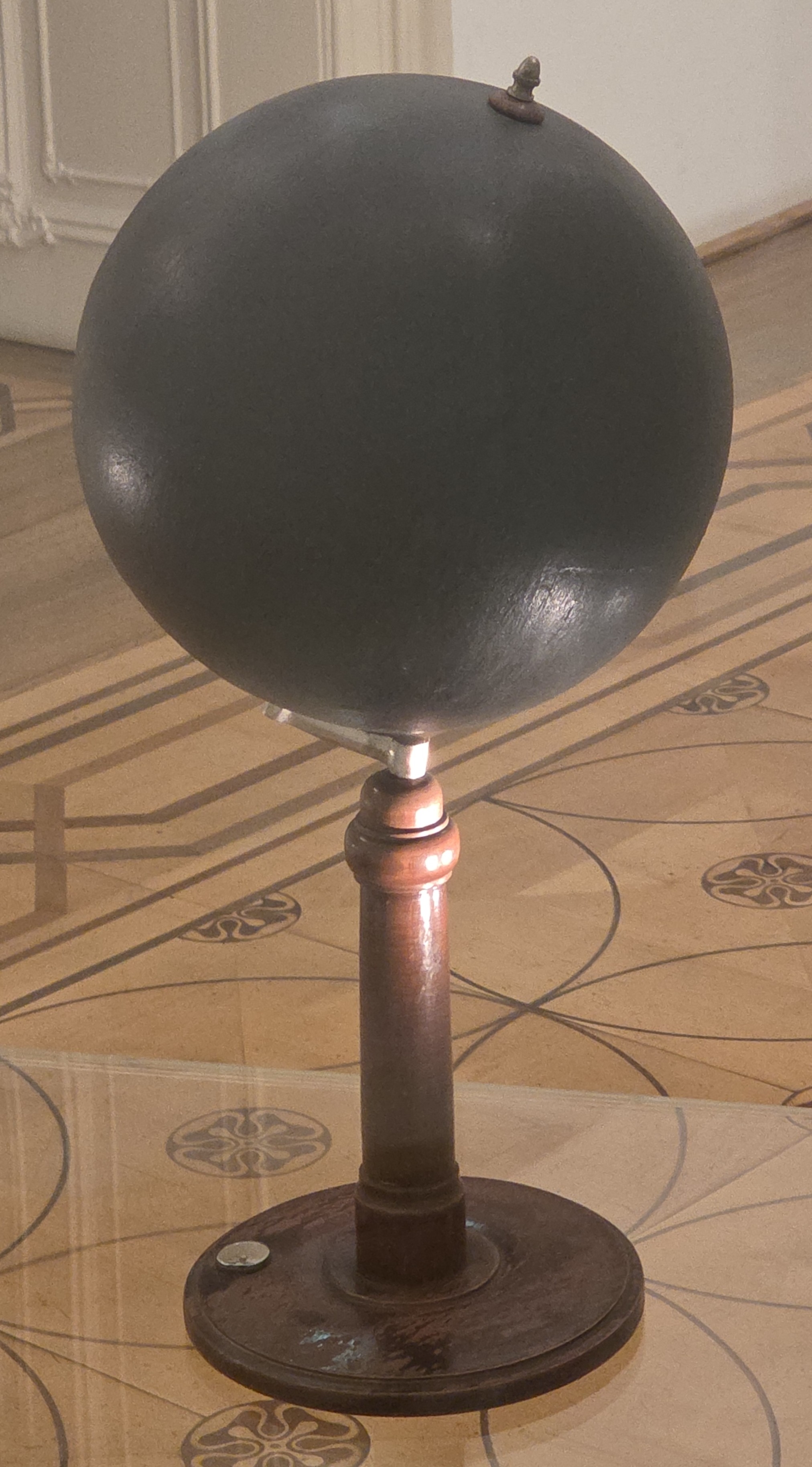
However, we are diverted on our way by the Austrian National Library’s exhibition rooms – both the globes and esperanto.
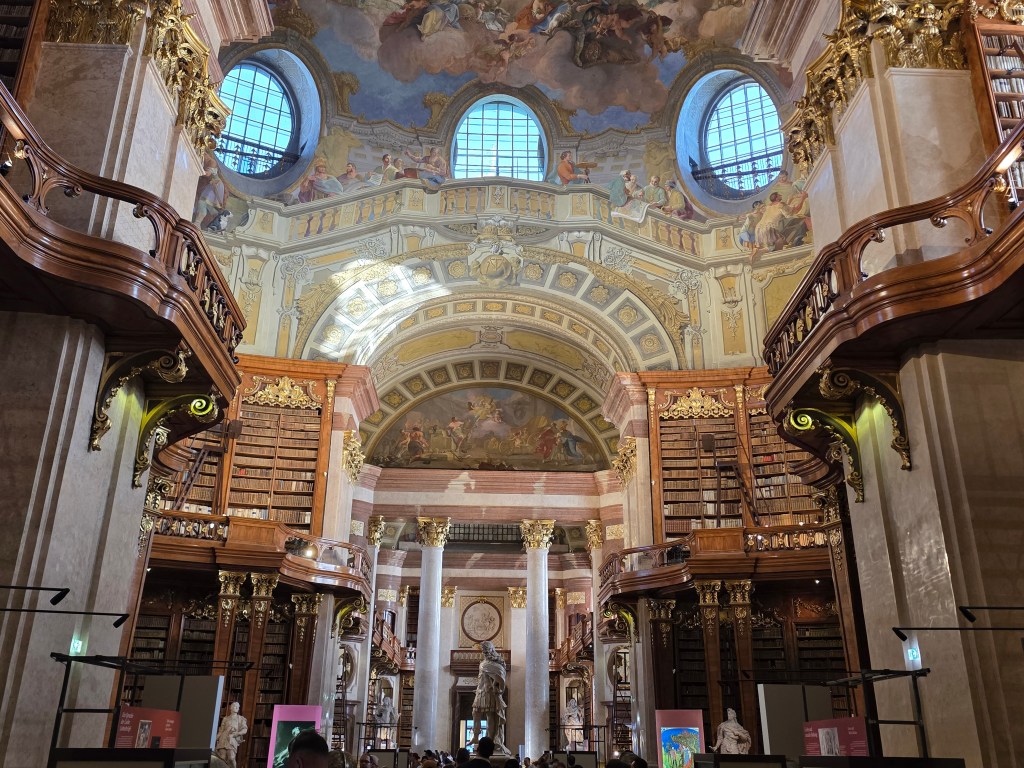
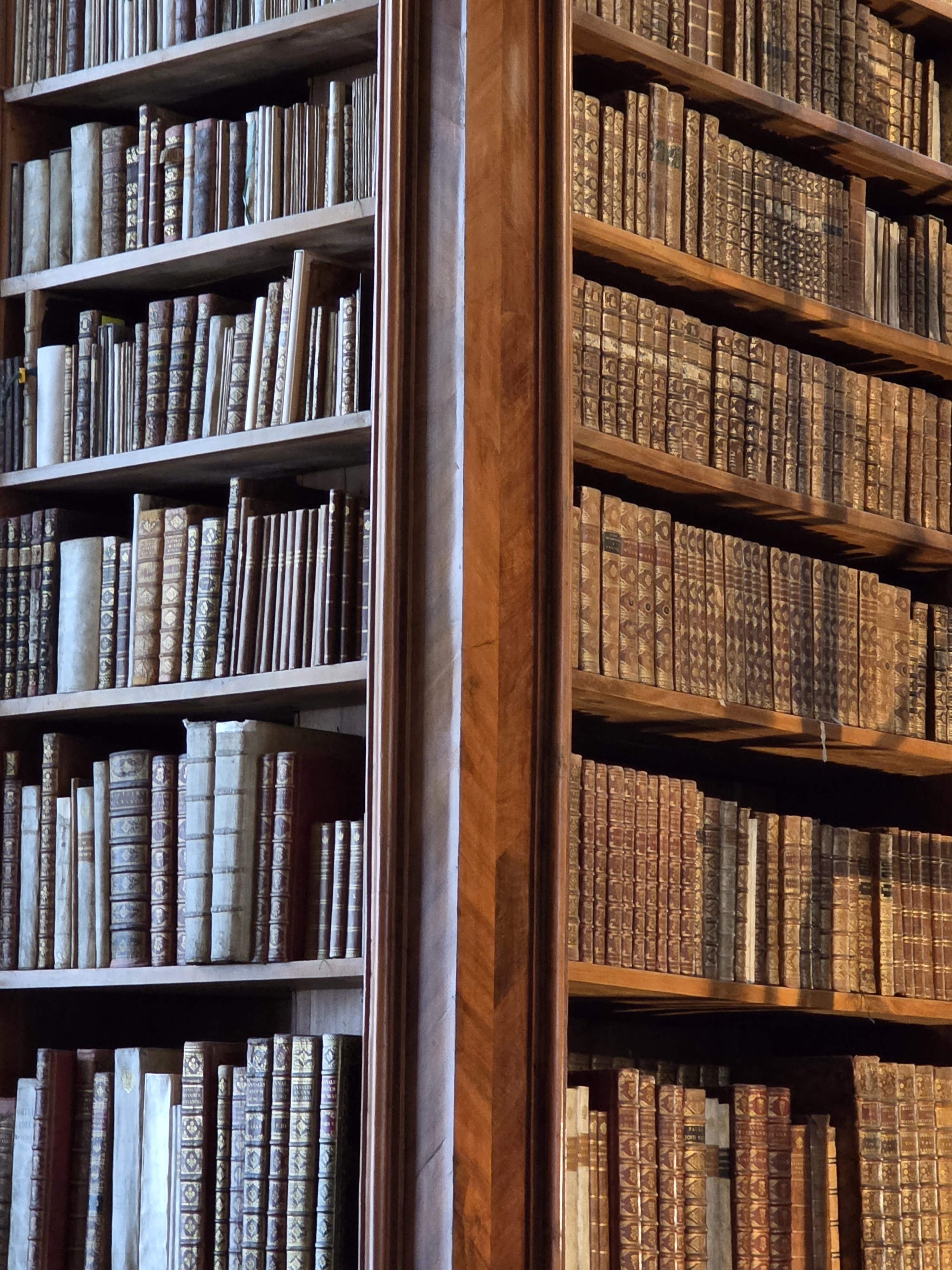
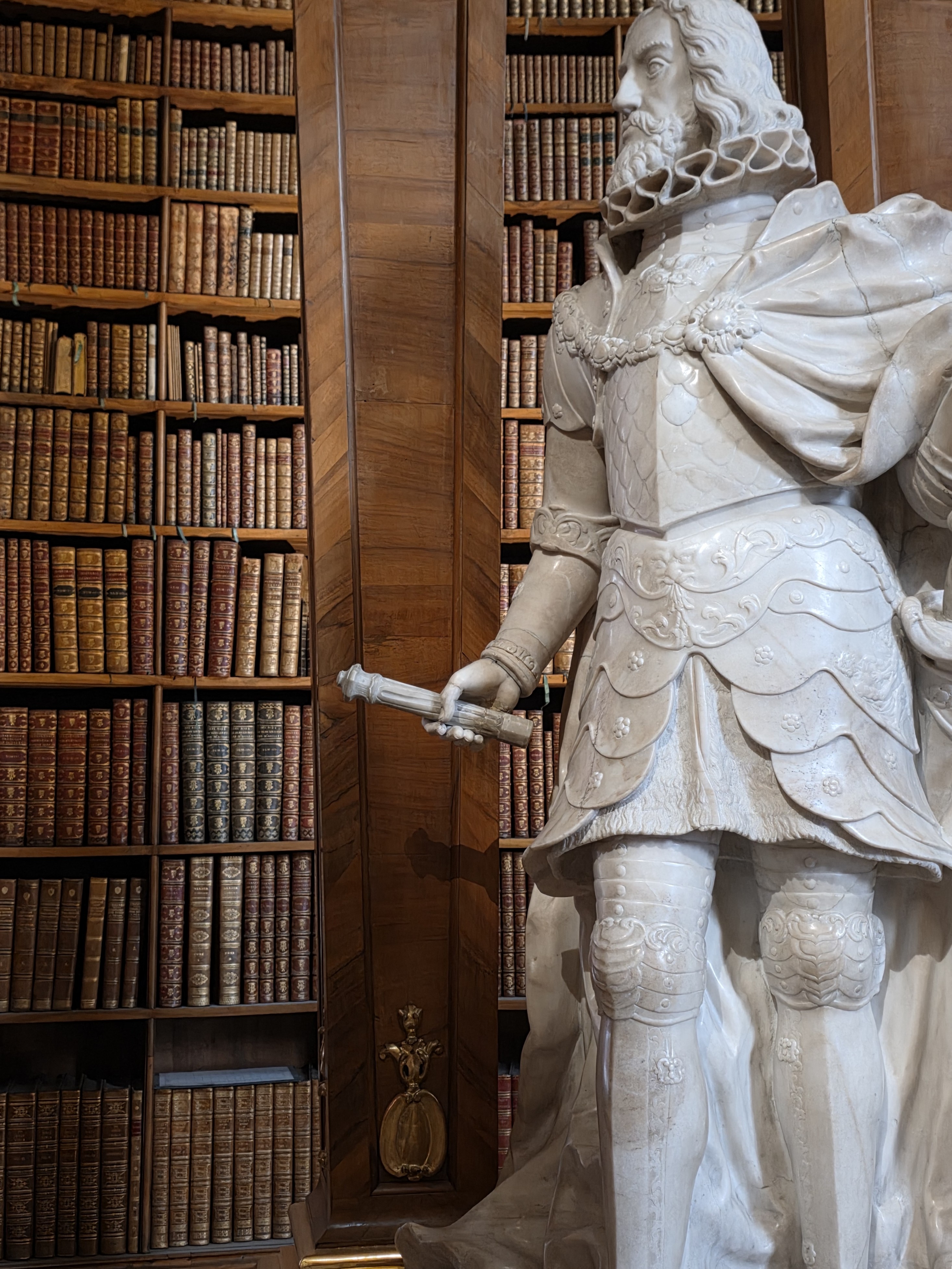
But these are just the warm up for the Grand Hall which is a huge and hugely-impressive Baroque gem.
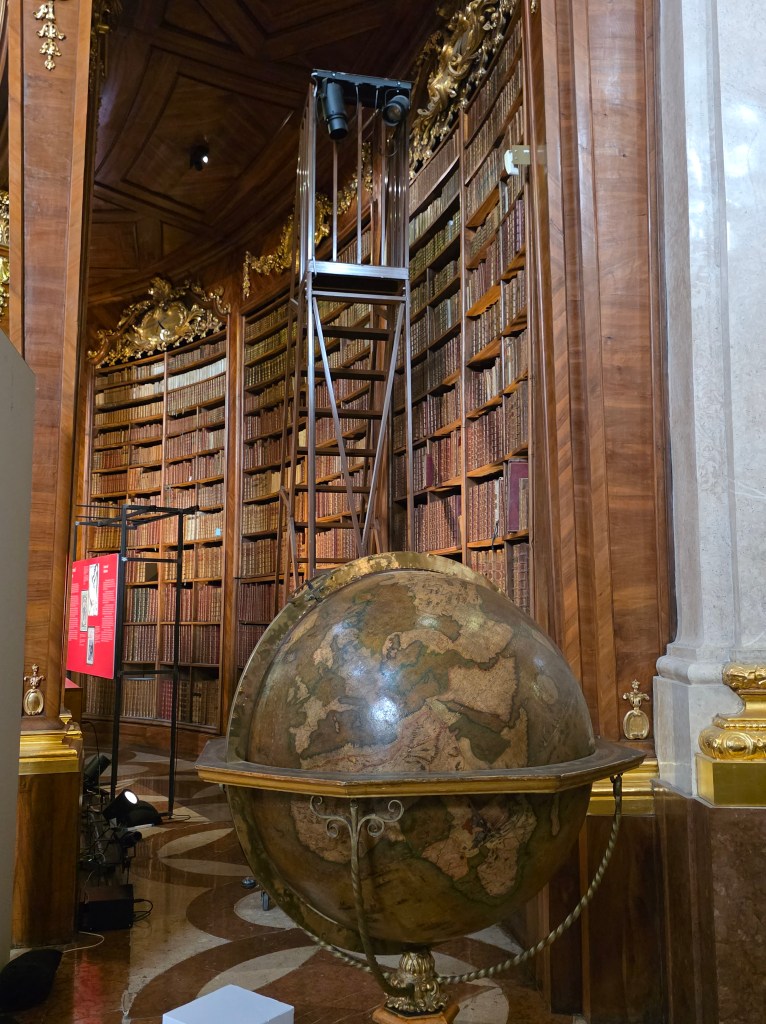
It’s very busy but, between crowds, we are enchanted.
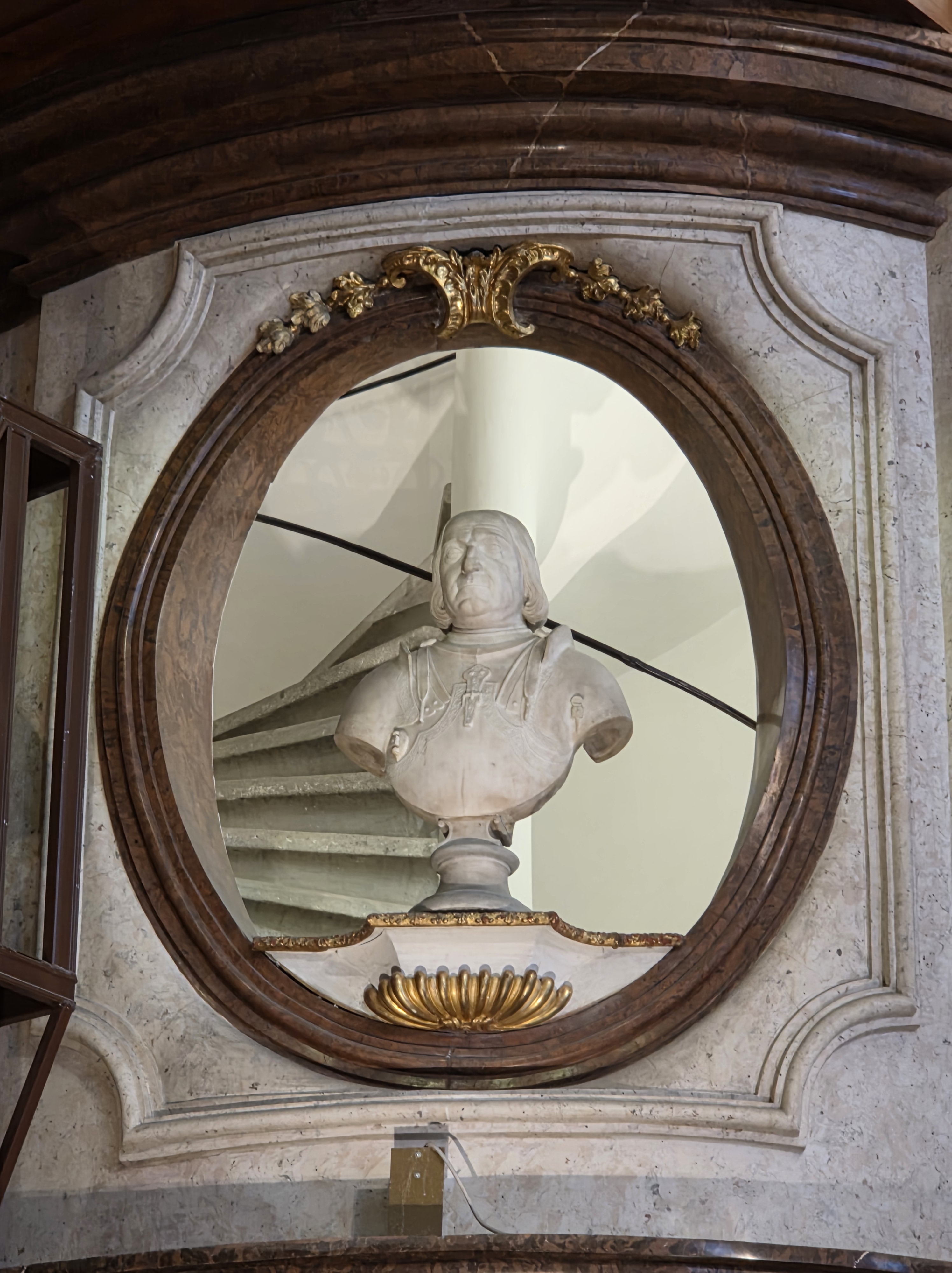
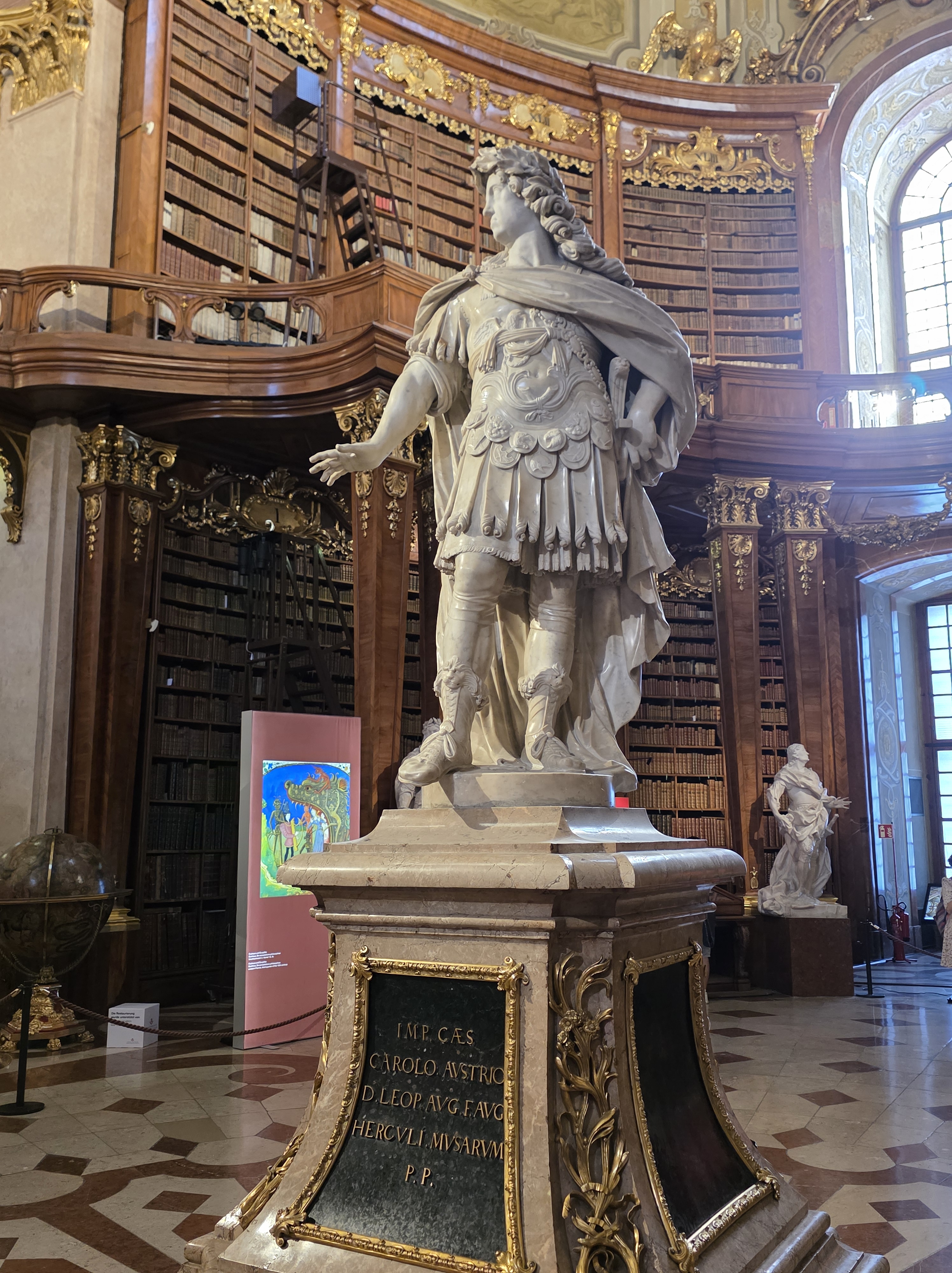
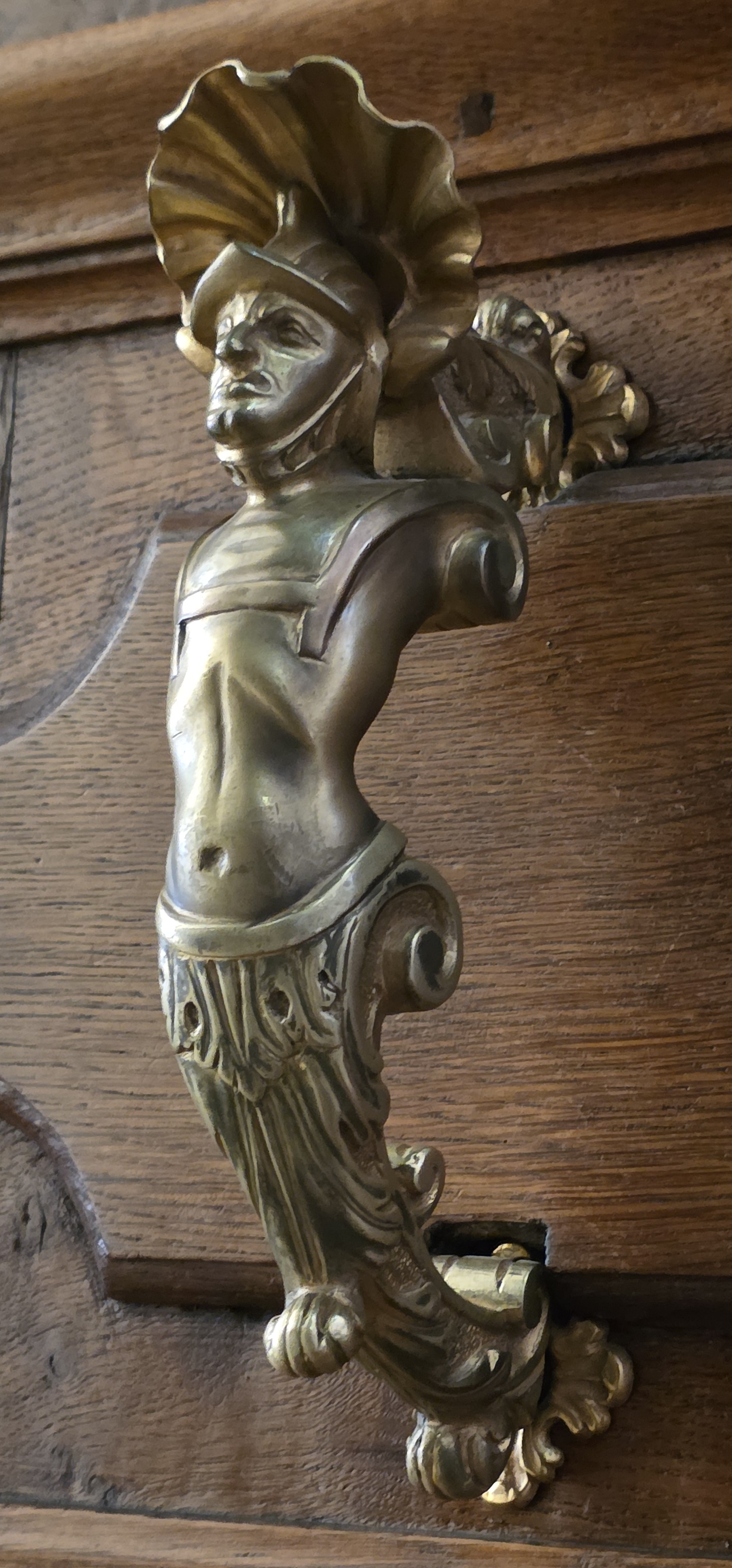
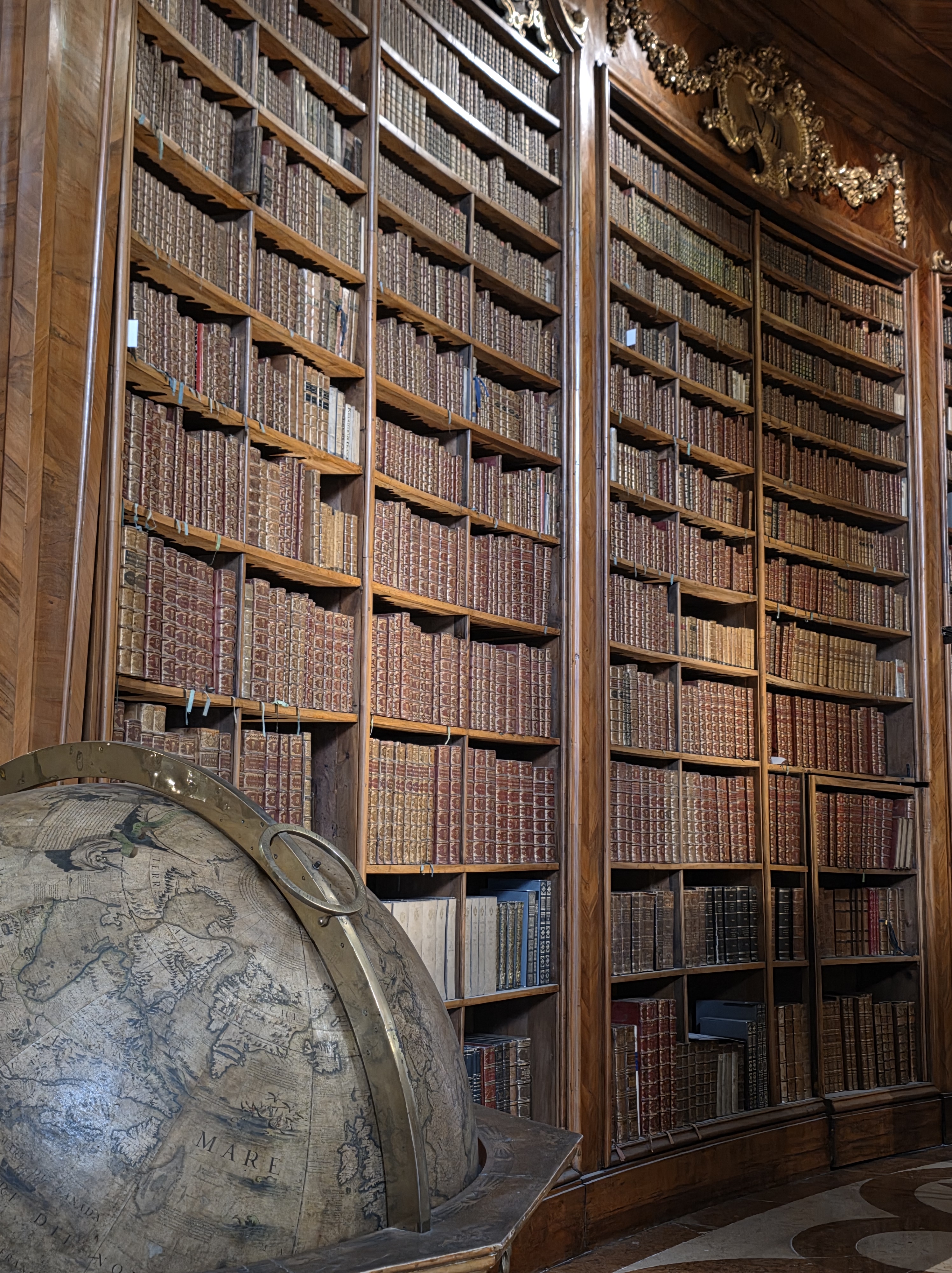
We find ourselves beside the opera house where there is a performance soon. A man standing outside the ticket office is selling €18 tickets for €40 which J refuses to entertain. We do not think to enter the ticket office but return to the flat.
Day 9 Altenburg
Away from the flat at 7.15 and U4 to Friedrichstrasse from where we walk to Franz Josefs Bahnhof which is a four-platform event not easy to find.
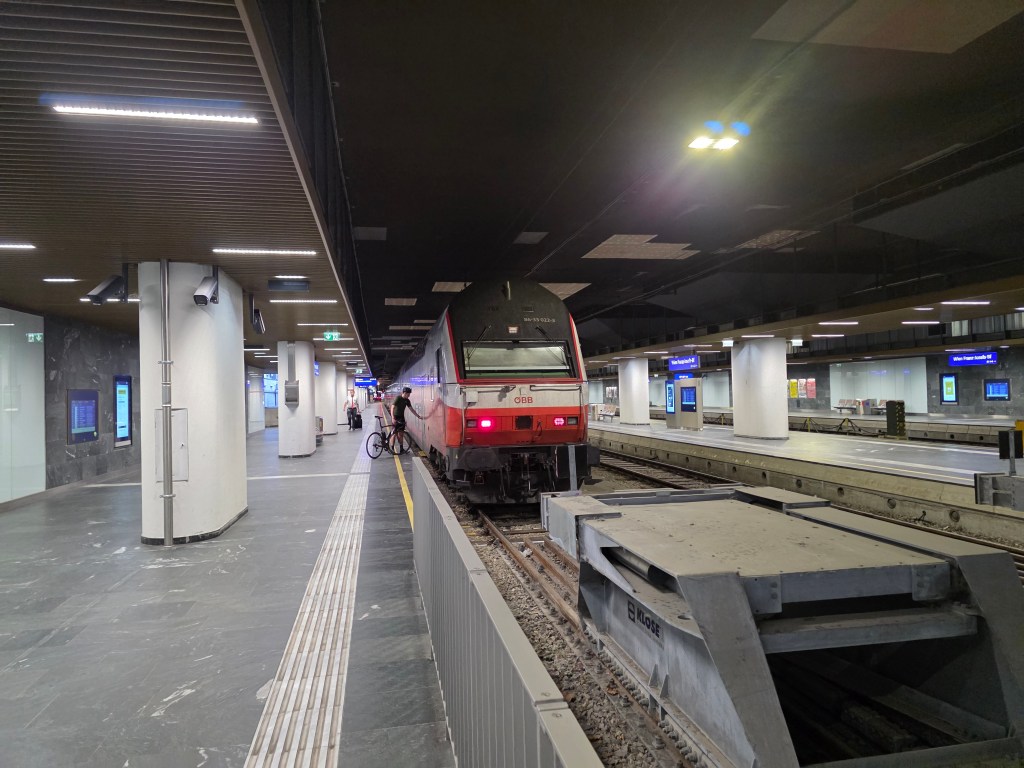
7.46 Krems on the Rhine train changing at Hadersdorf am Kamp to the 9.04 to Horn Noe where we arrive at 9.55. As advertised, there is no bus to Altenburg at the weekend. Although I am exchanging texts in German with Taxi Altenburg, there is no taxi until midday.
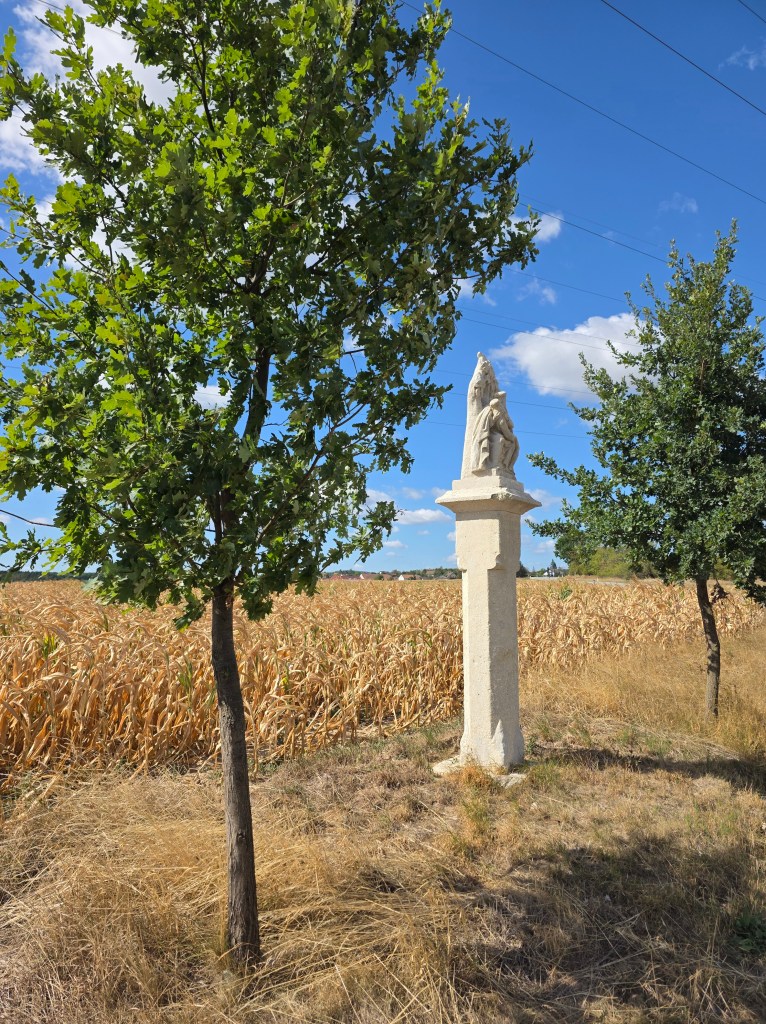
So we walk the seven kilometers to the Abbey, an unenjoyable experience on the A38 which is rather fast and without pavement and which crosses the A2 to Vienna at a roundabout. We arrive in a bit under an hour and a half with a taxi booked for our return.
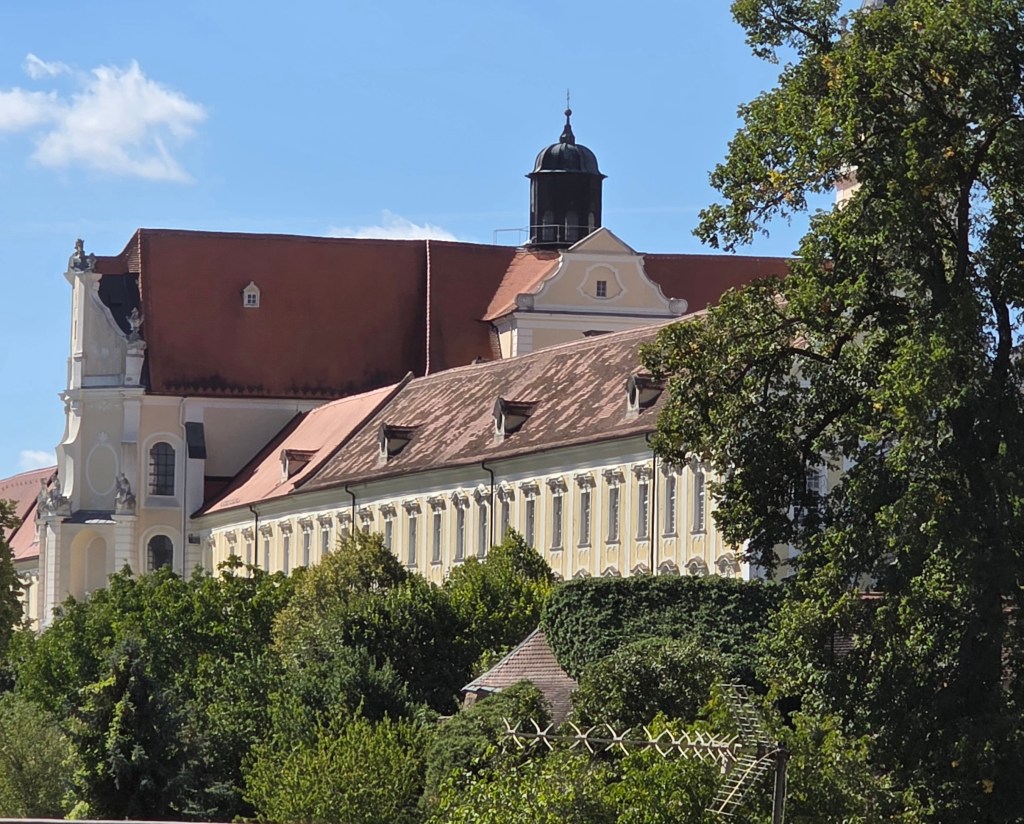
Though splendid, there is, perhaps, a law of diminishing returns; the church is elaborate but preparing for a service.
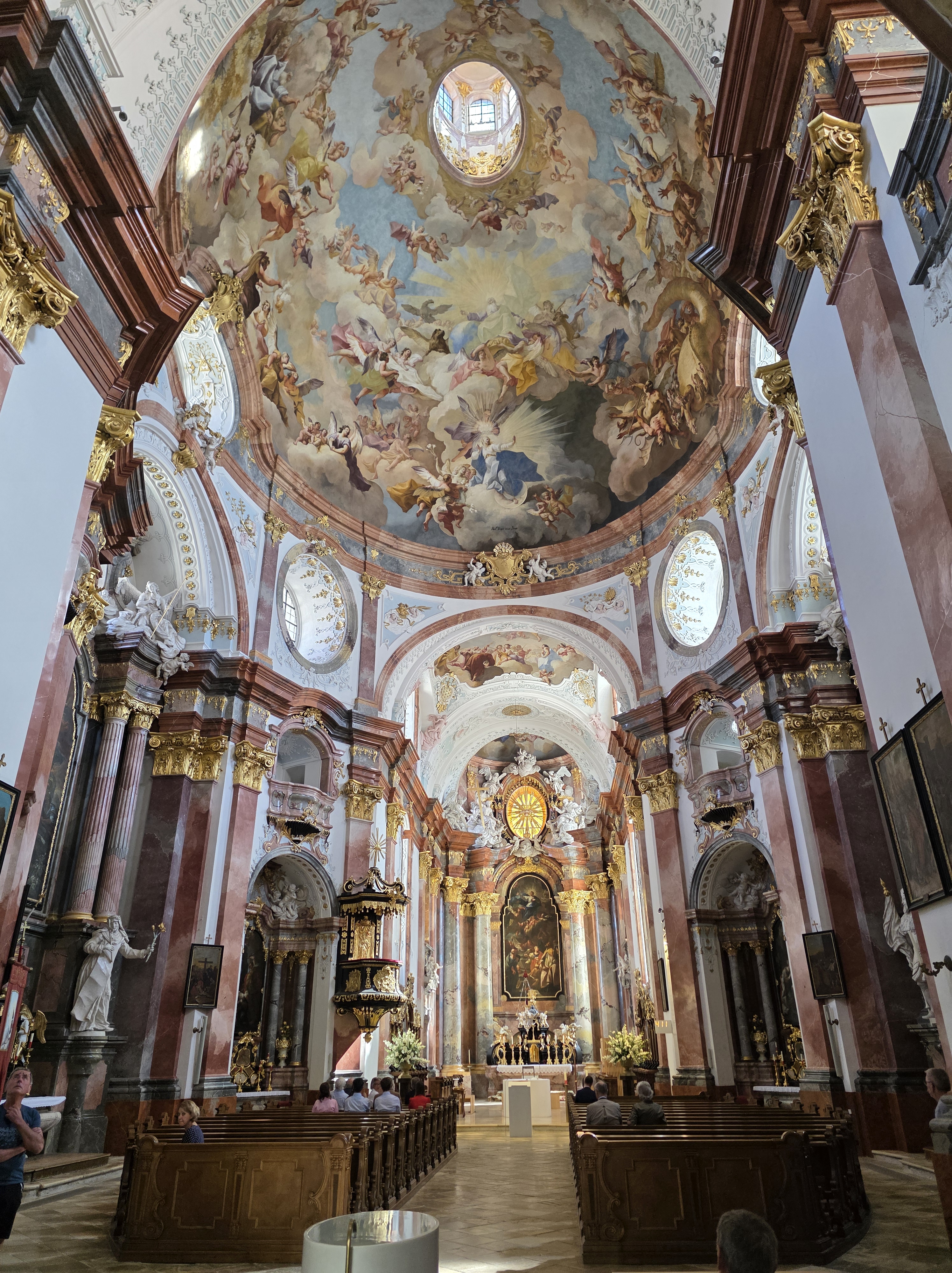
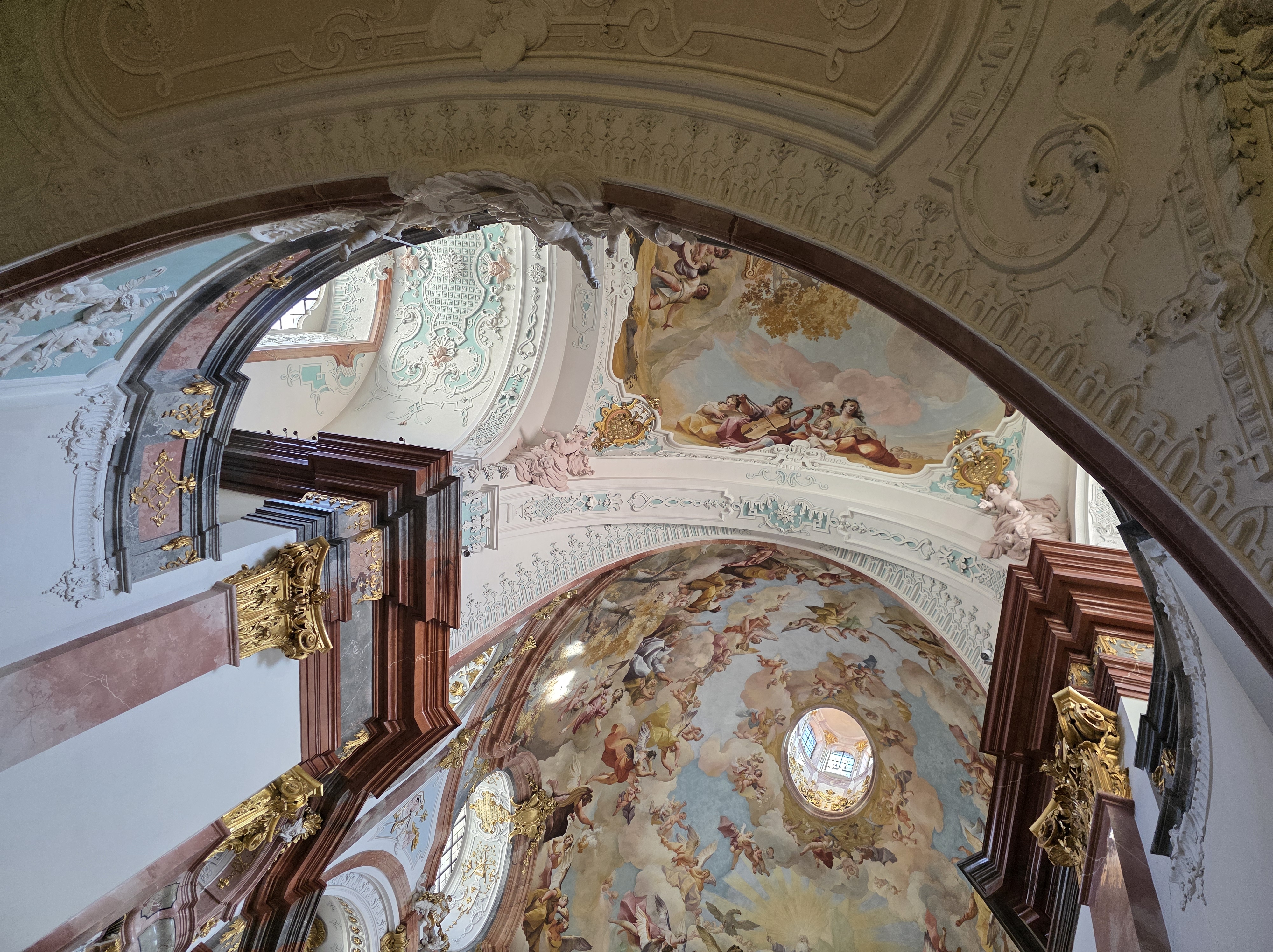
Down to the early version of the church in the basement and up to the viewing platform.
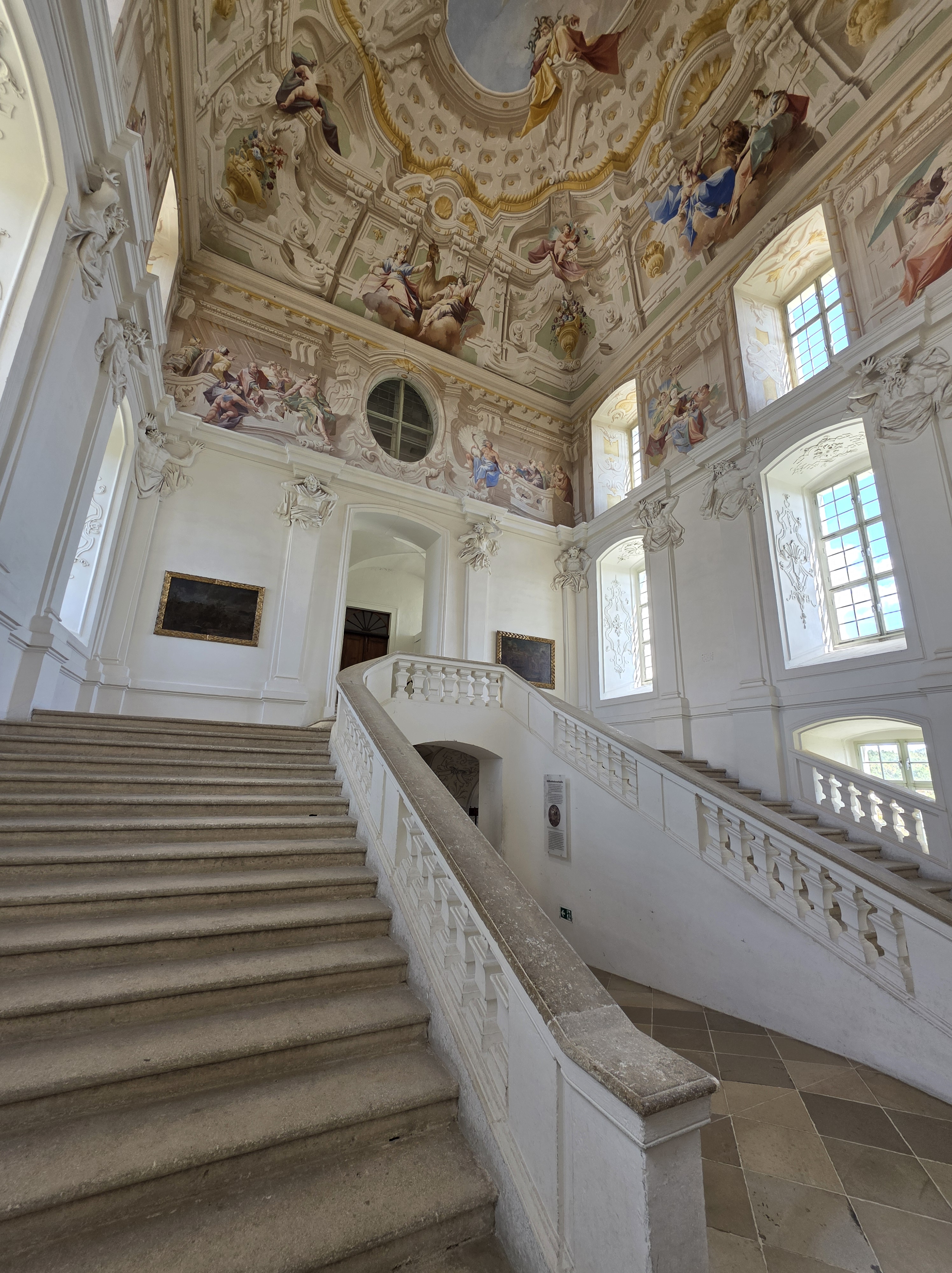
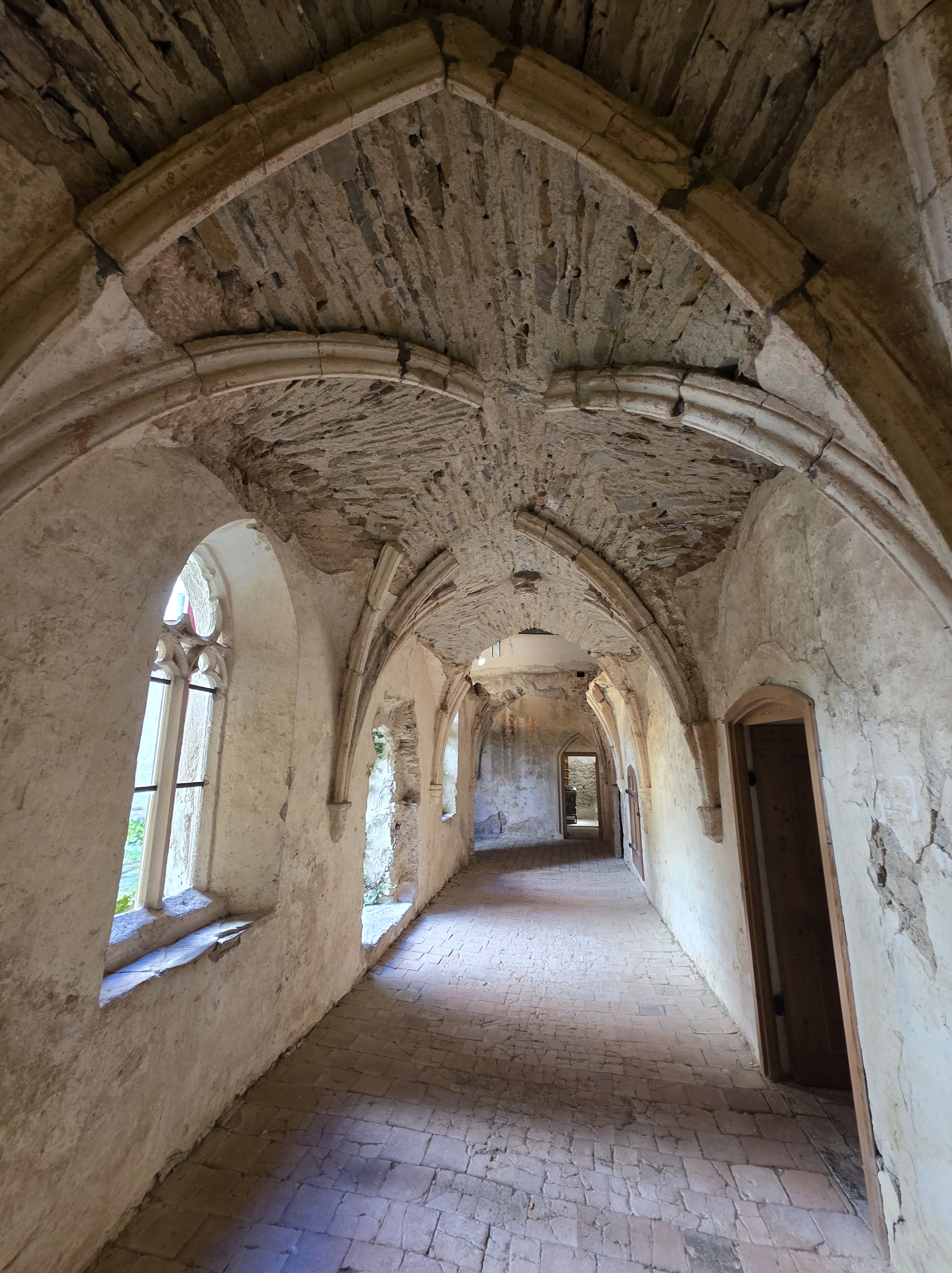
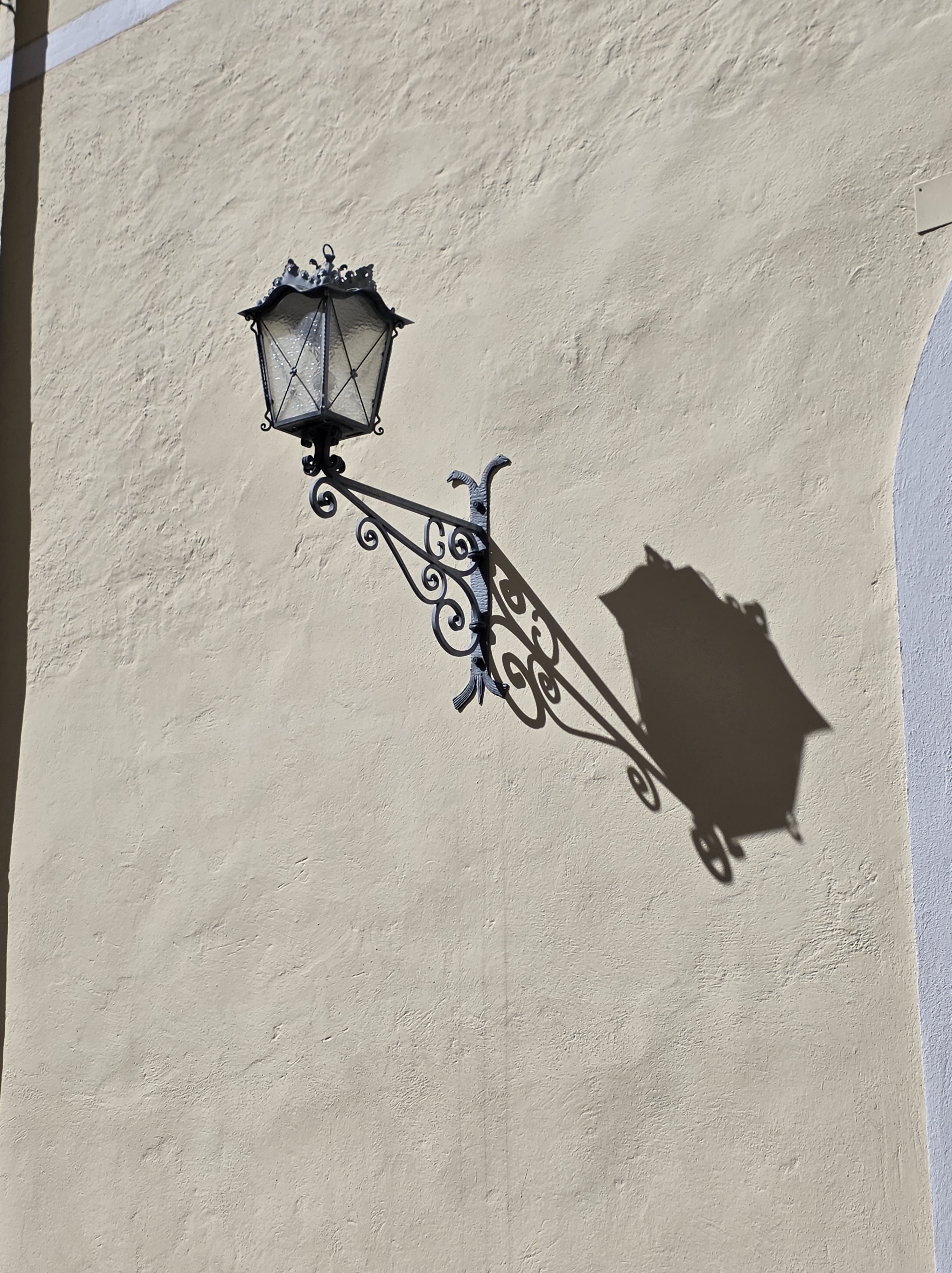
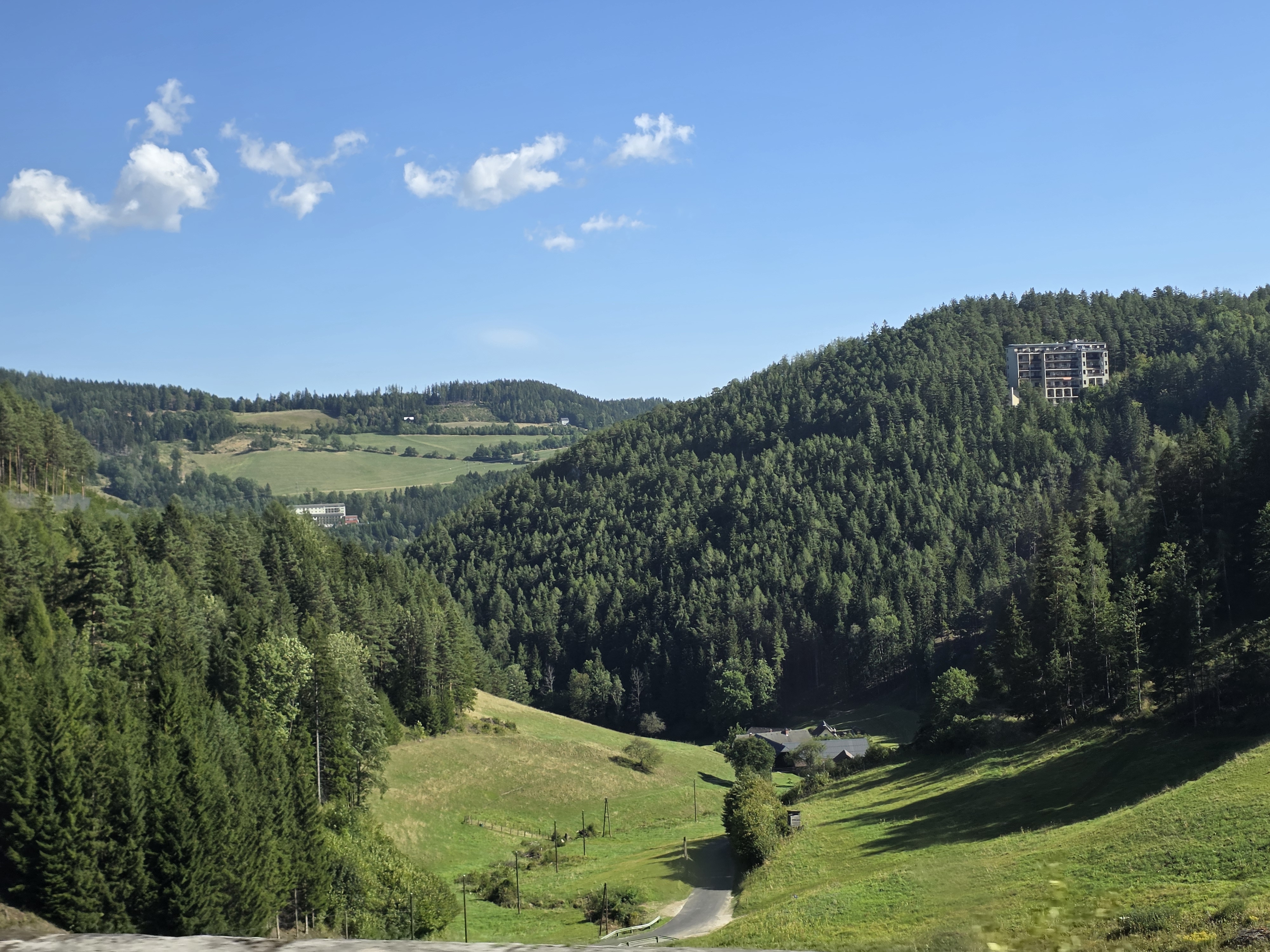
The front of the building is impressive and the surrounding woodland picturesque.
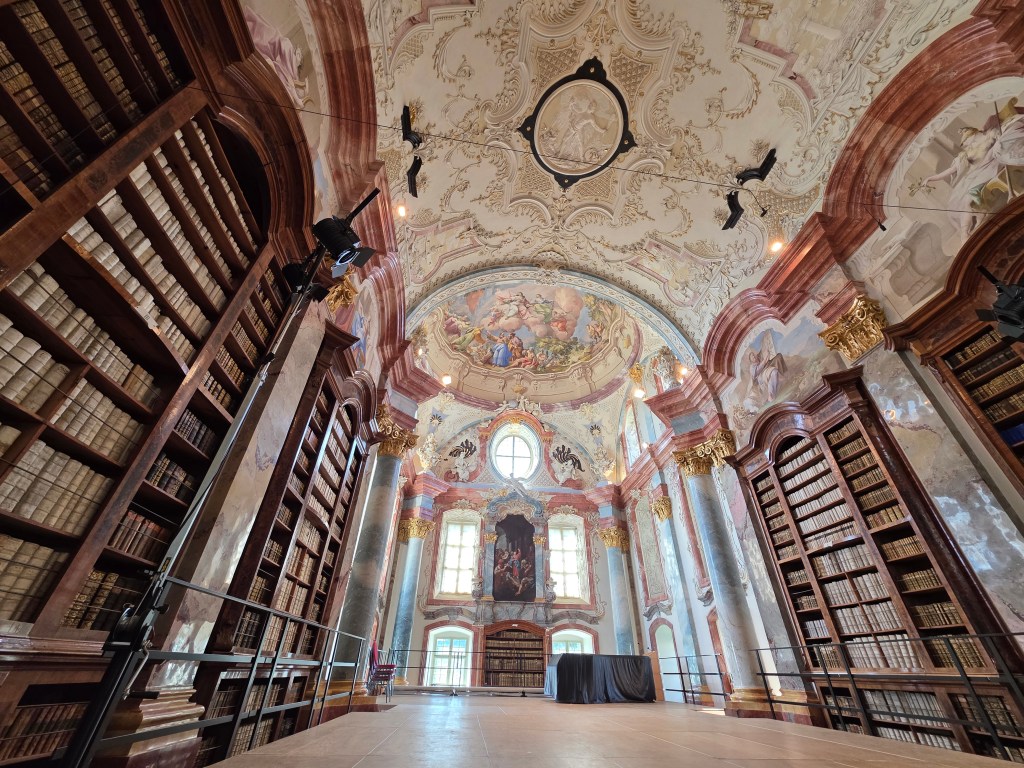
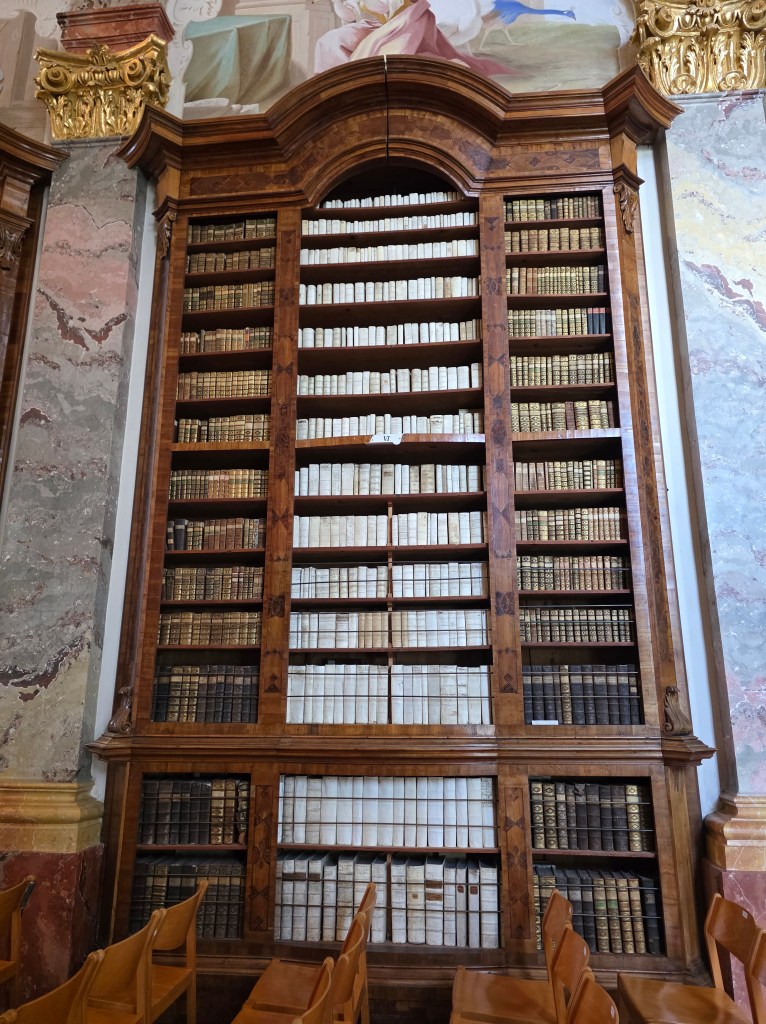
On to the library which is hosting a tour with a guide lecturing a dozen in German. When she has done, she makes us go behind a rope at the entrance but meantime, we have enjoyed a view of a room that bears comparison with the libraries we have seen elsewhere including the National Library yesterday.
Coffee and to the carpark for our taxi at 12.45. Our driver announces that she has her husband with her – an ancient who needs help fixing his seatbelt. Trains back just as slow as on the way out, no doubt how they achieve timetable-compliance.
Back to the flat to make use of its facilities – the gym and the laundry. Out name-checking the centre of the city – Gucci, Vuitton, Dolce & Gabbana and so on. As in Germany, all shops are shut on Sundays though these examples are not a great deprivation to us.
On our return, the hotel is being checked by the fire brigade after an alarm, nothing to do with the washing machine we left running though we spend an unsettled few minutes waiting outside before the all-clear.
Day 10 Melk
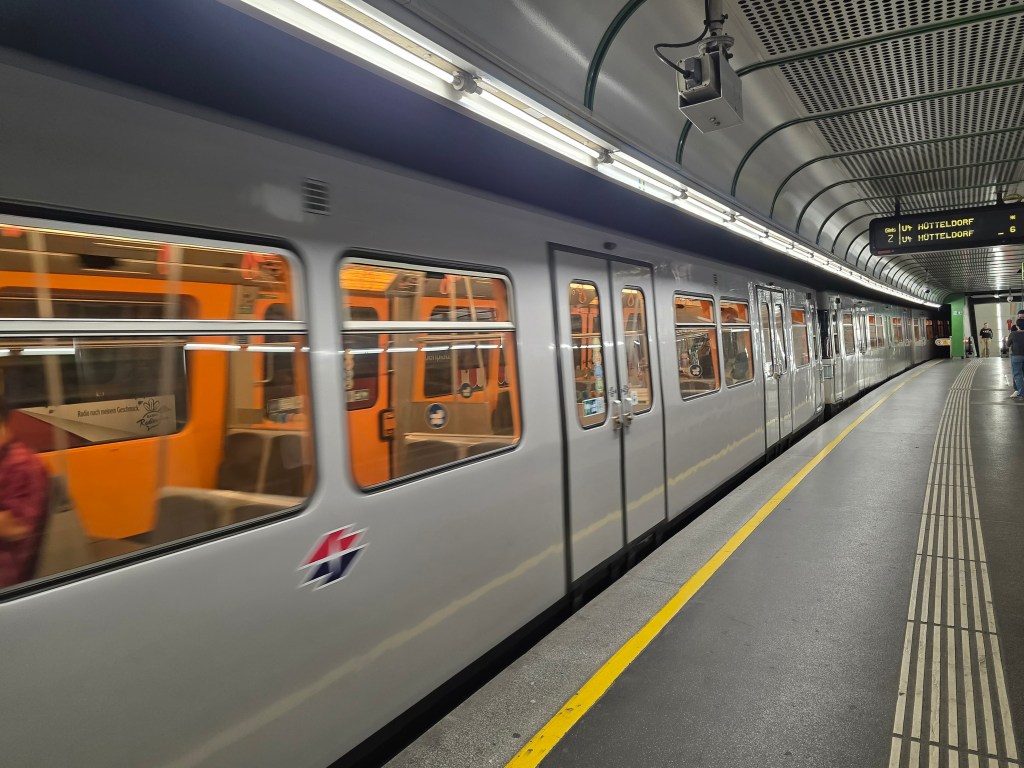
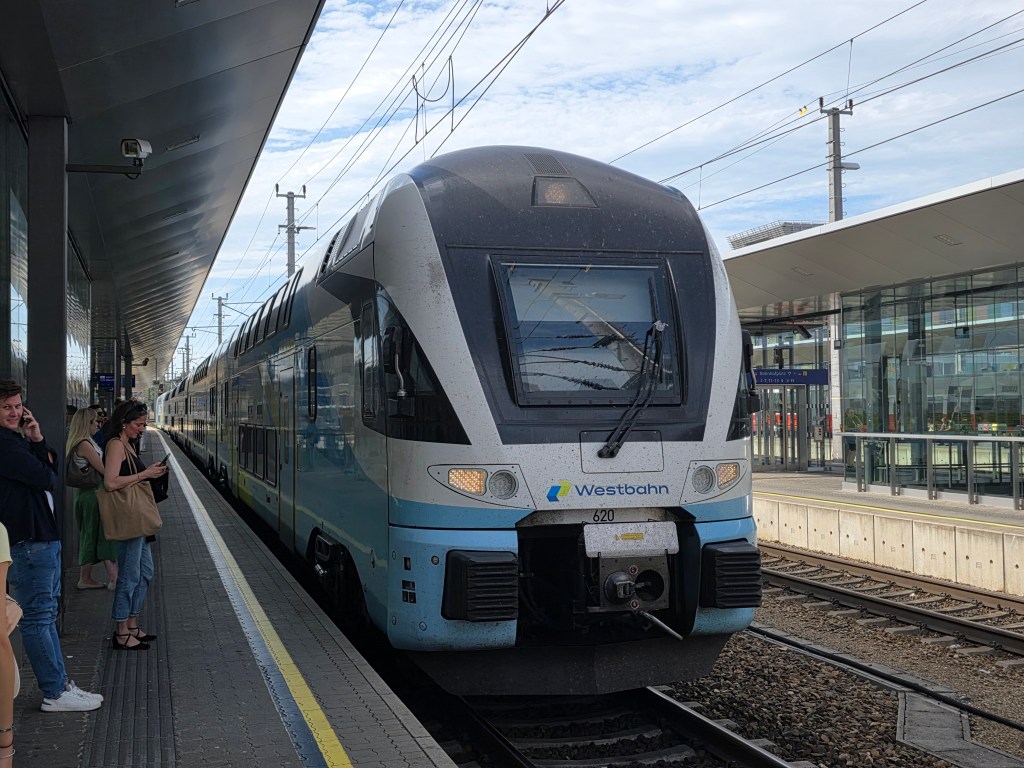
Line U4 to the end of the line at Hutteldorf then the 8.26 to Melk. The train is very fast to St Polten about half an hour west of Vienna. However, we sit there for fifteen minutes before progressing.
Unfortunately, I failed to charge my phone last night. Frustratingly there are no charging points at the seats of this train. Even more frustratingly, we locate the charging point on the underside of the luggage shelf above our heads shortly before we arrive at Melk.
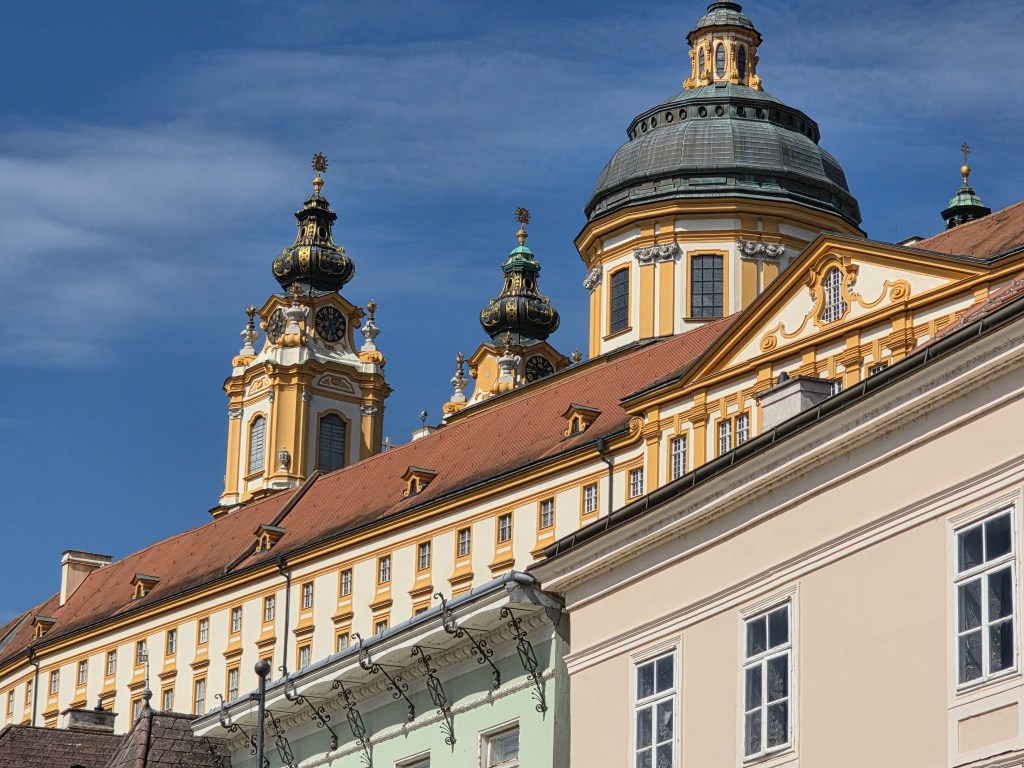
Melk is a little picture-perfect place entirely given over to visitors to the Abbey that dominates; Tour groups are assembling and climbing up the hill. We easily overtake them and buy our tickets at 10am.
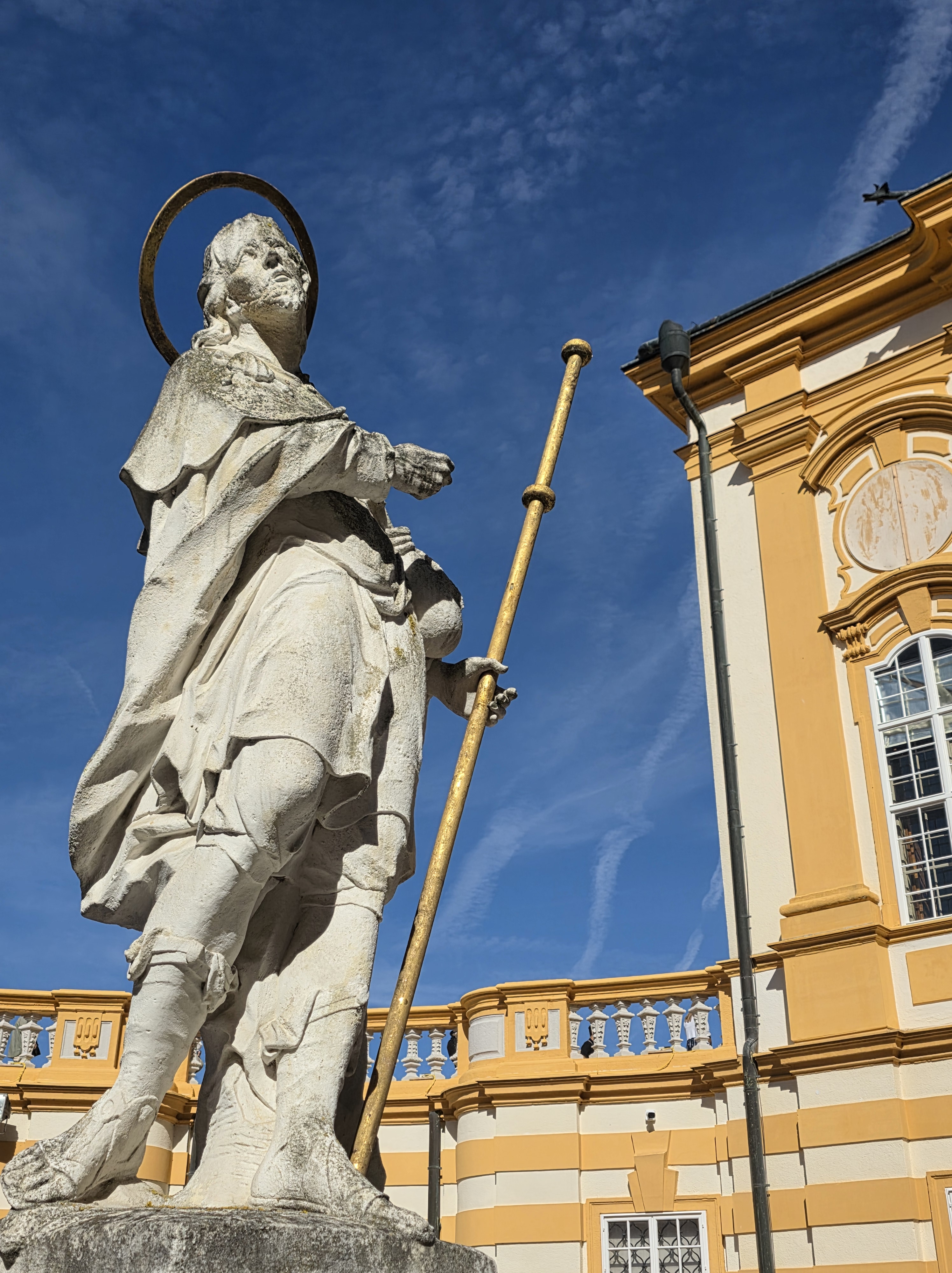
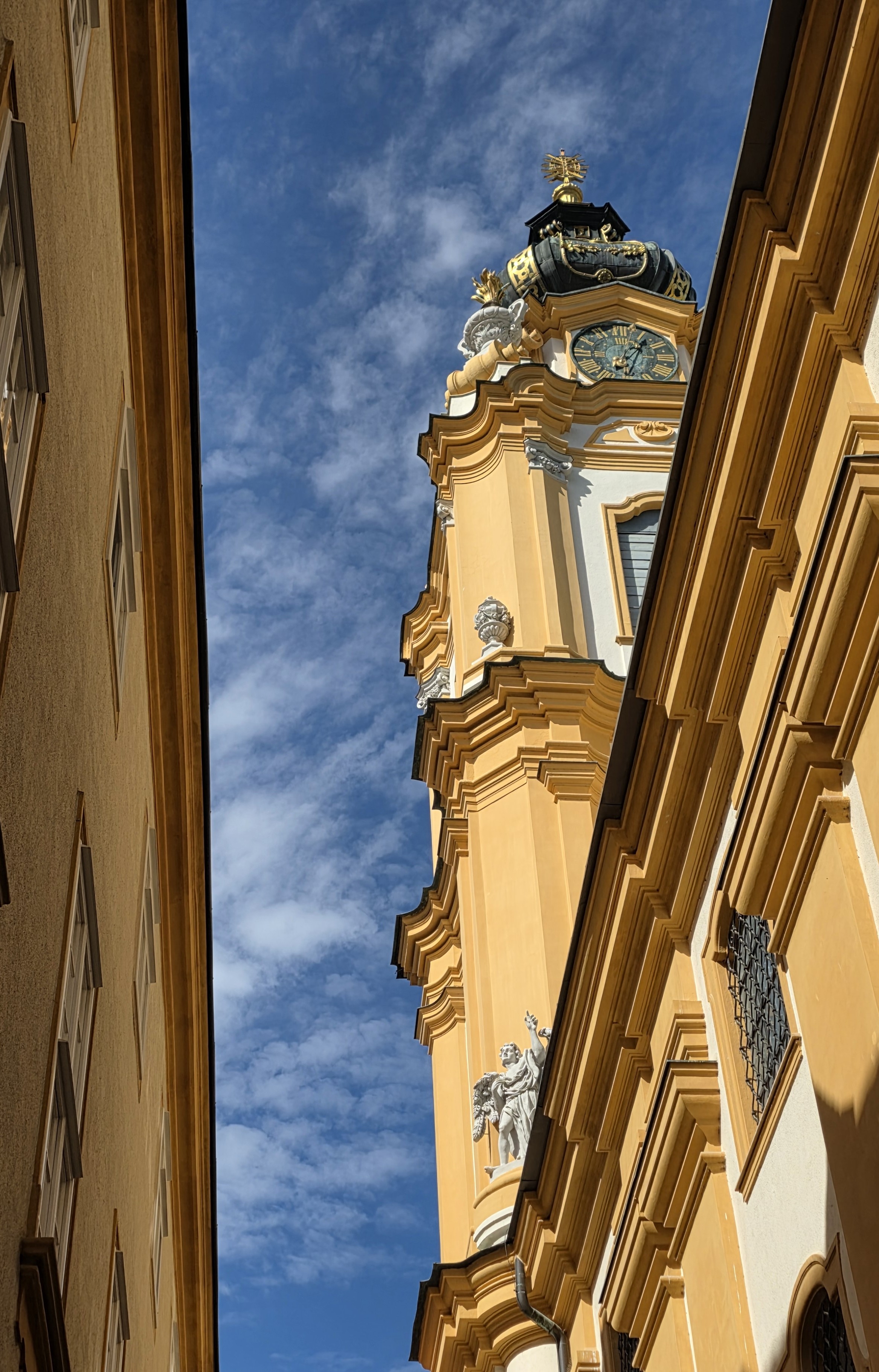
By this time, the first three or four rooms are full of groups being given detailed descriptions of the contents but the rooms are not special so we skip past and into the fabulous parts of the complex.
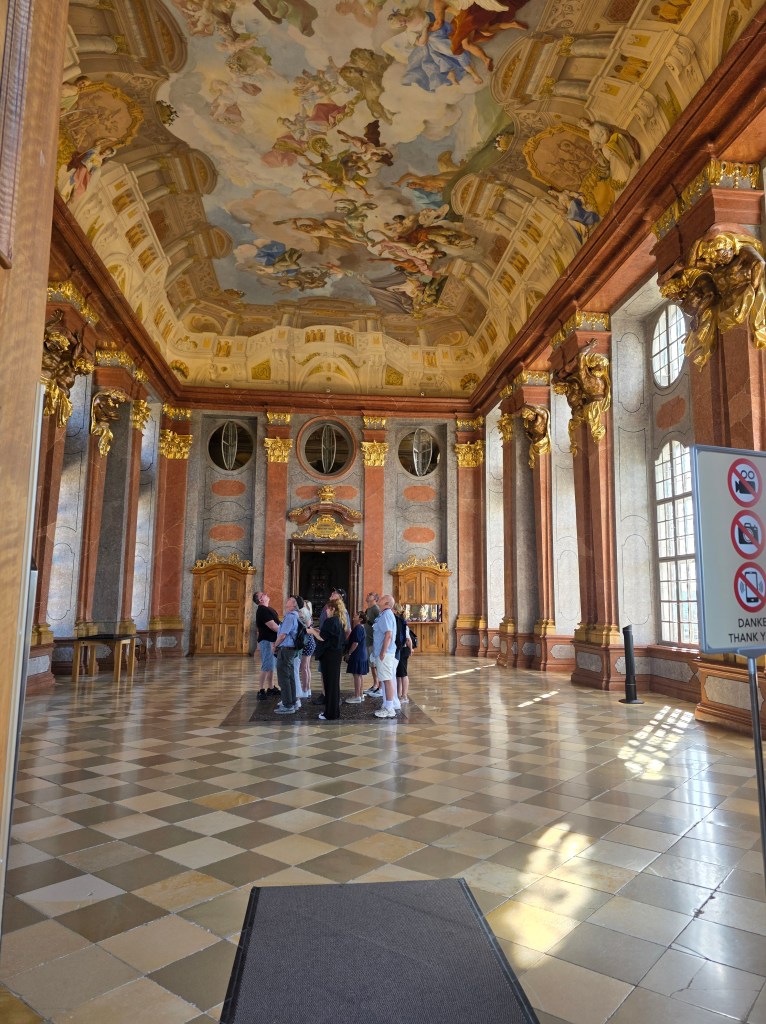
The library is largely under renovation and covered with a reproduction screen.
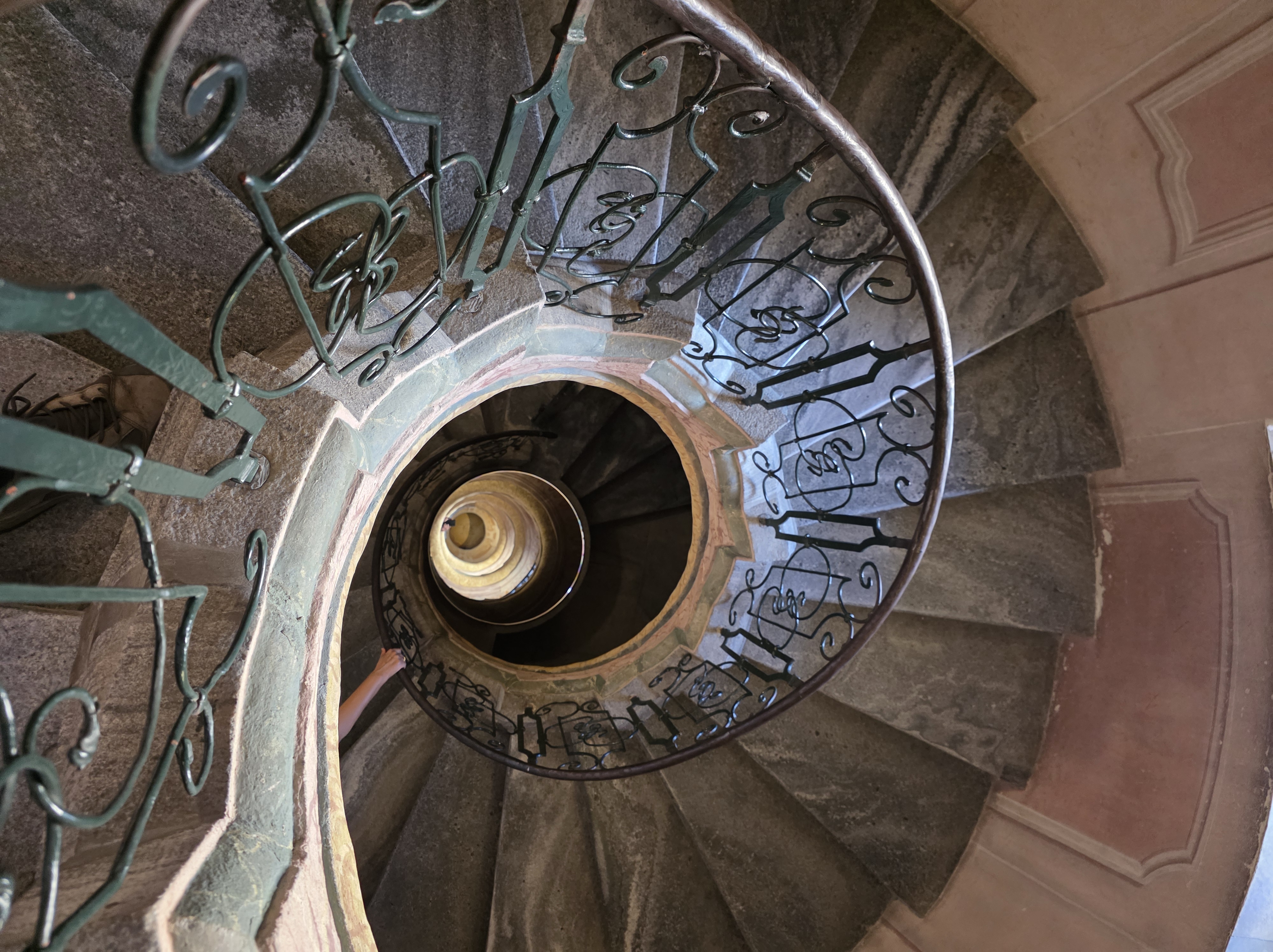
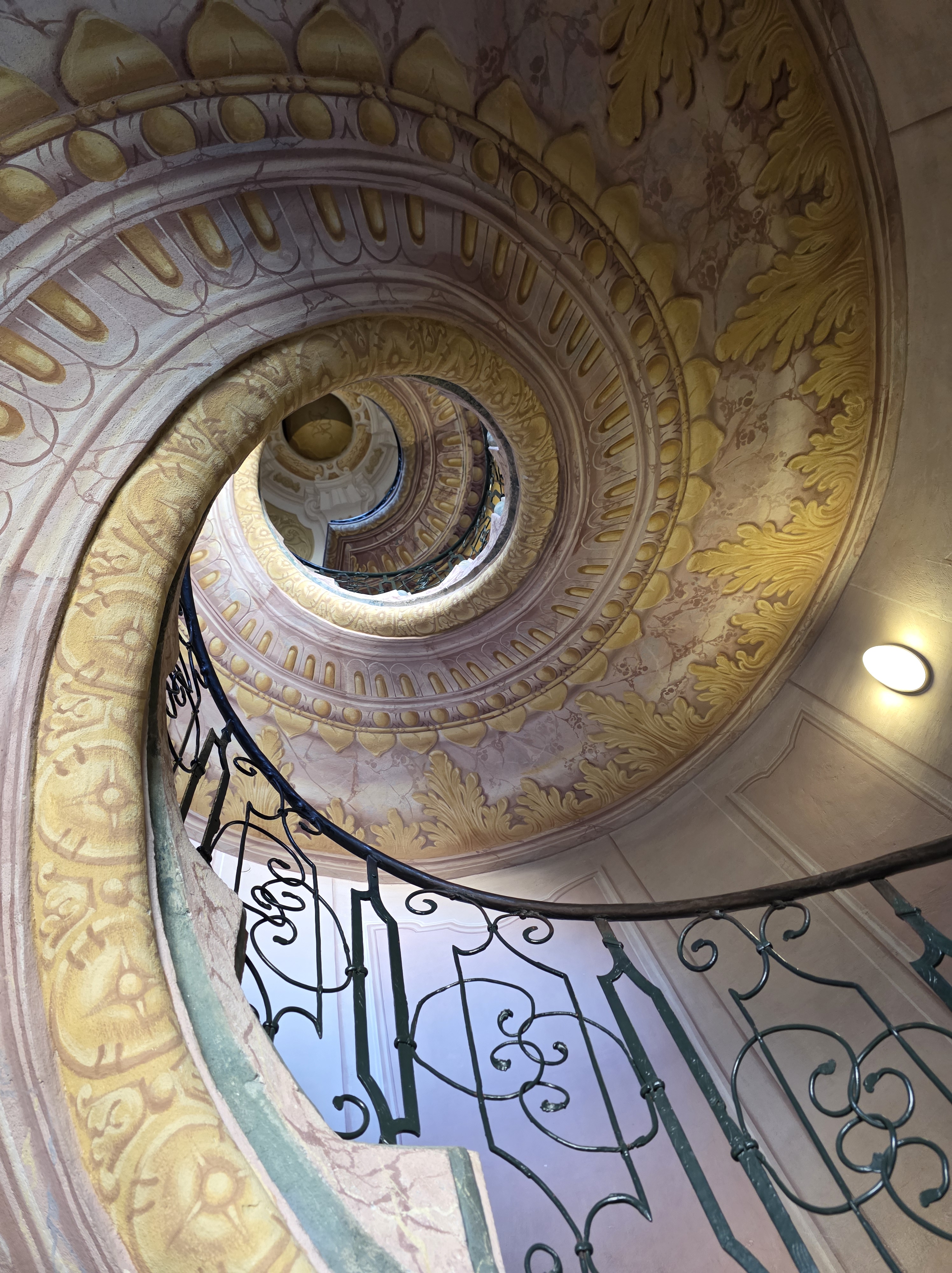
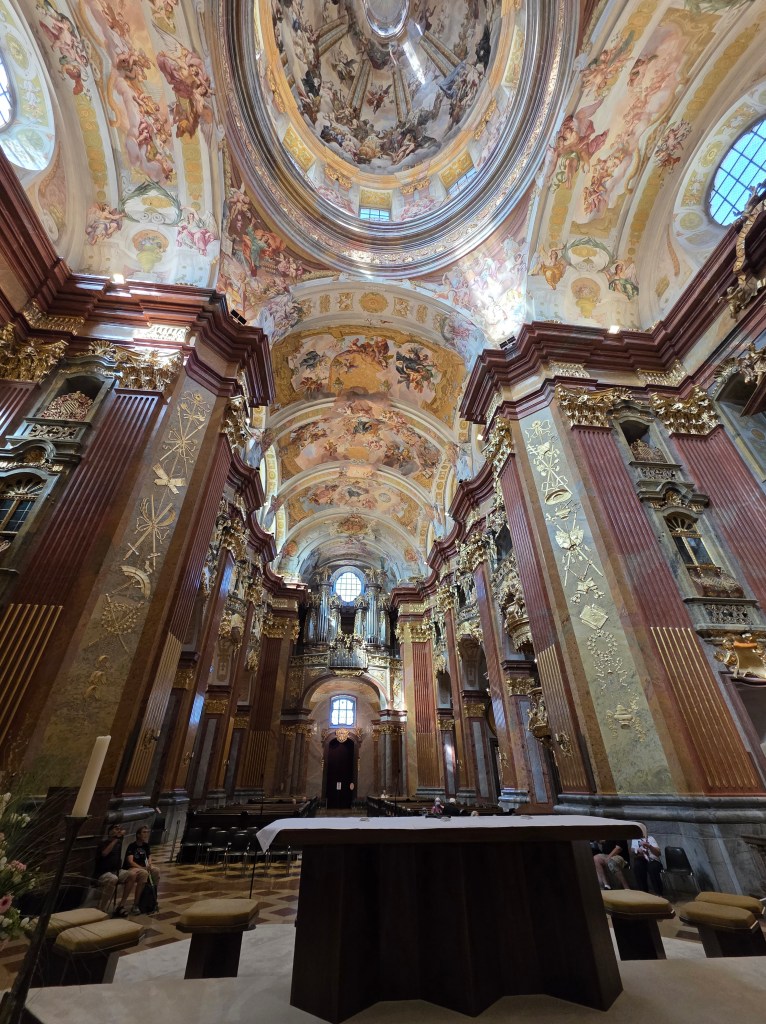
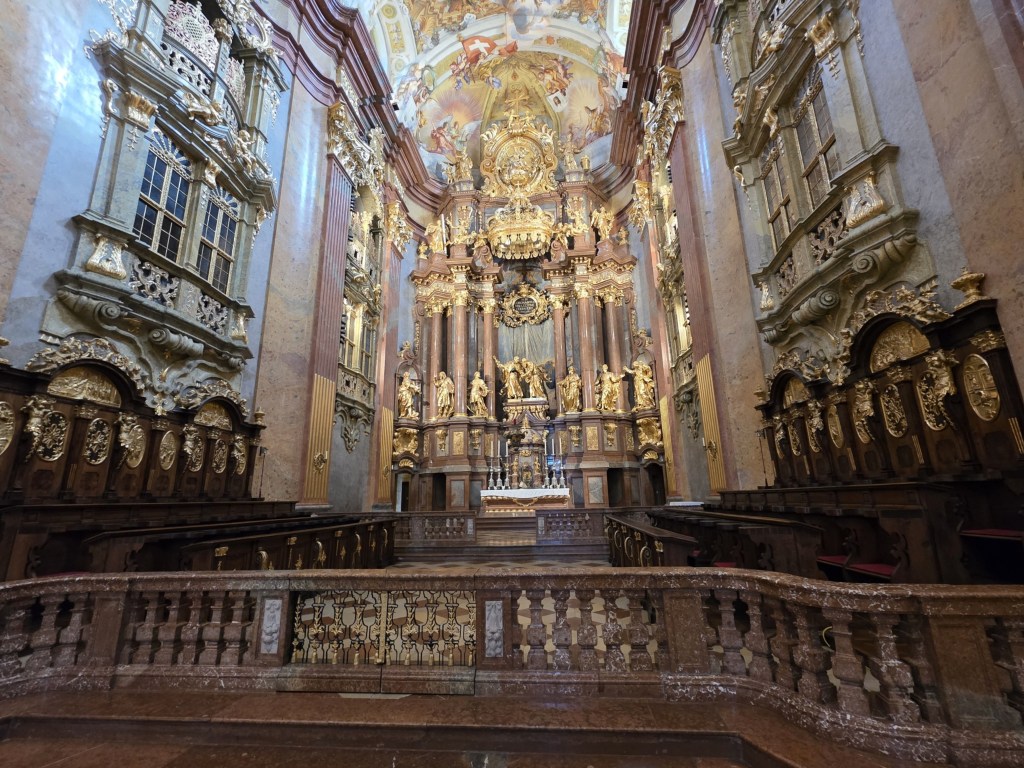
The church, however, is huge and unrestrained and not too crowded.
The special exhibition in a rather ugly modern building in the grounds includes a Star Trek pin ball machine. A cup of coffee in the summer pavilion is €5.10.
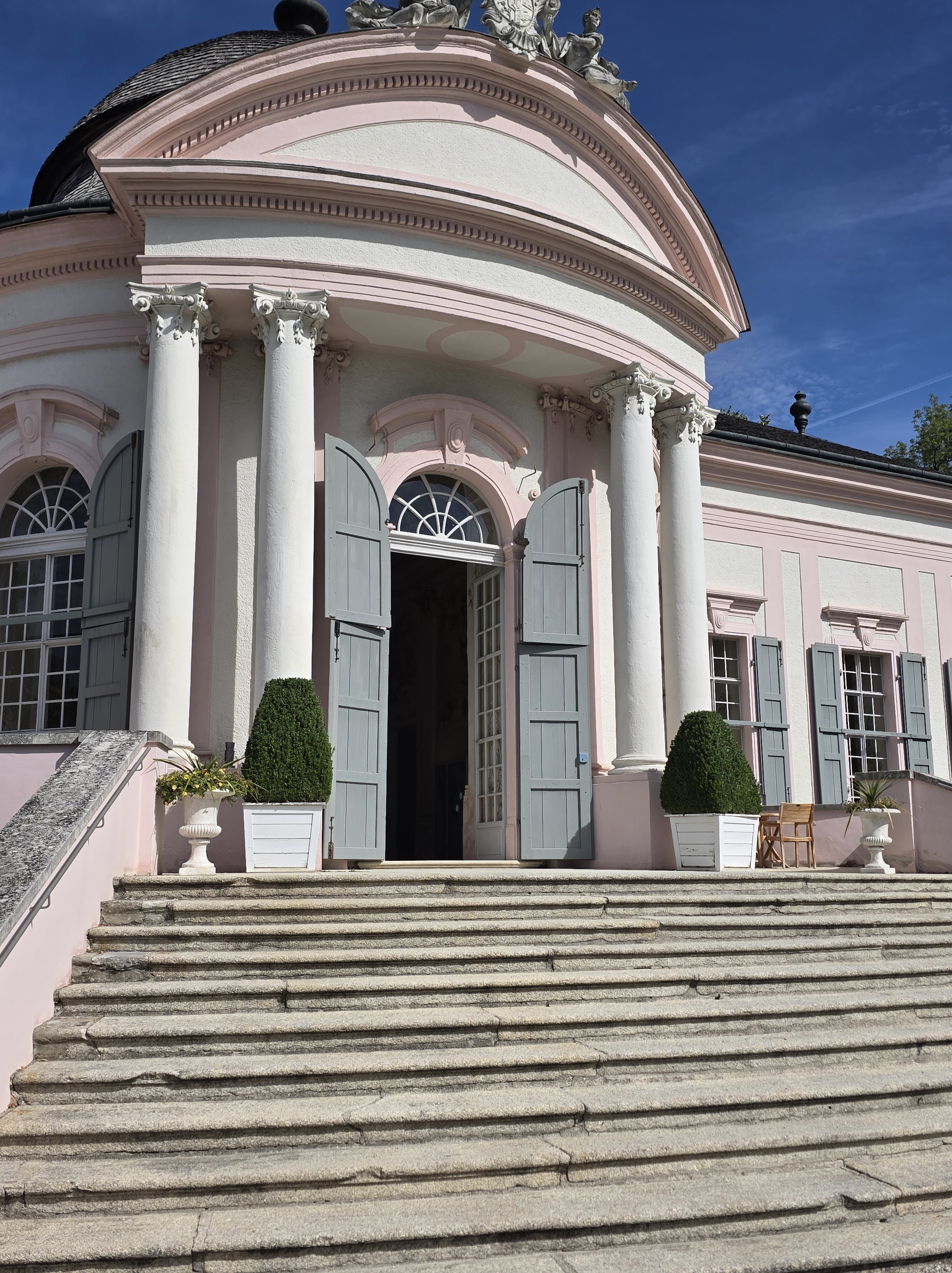
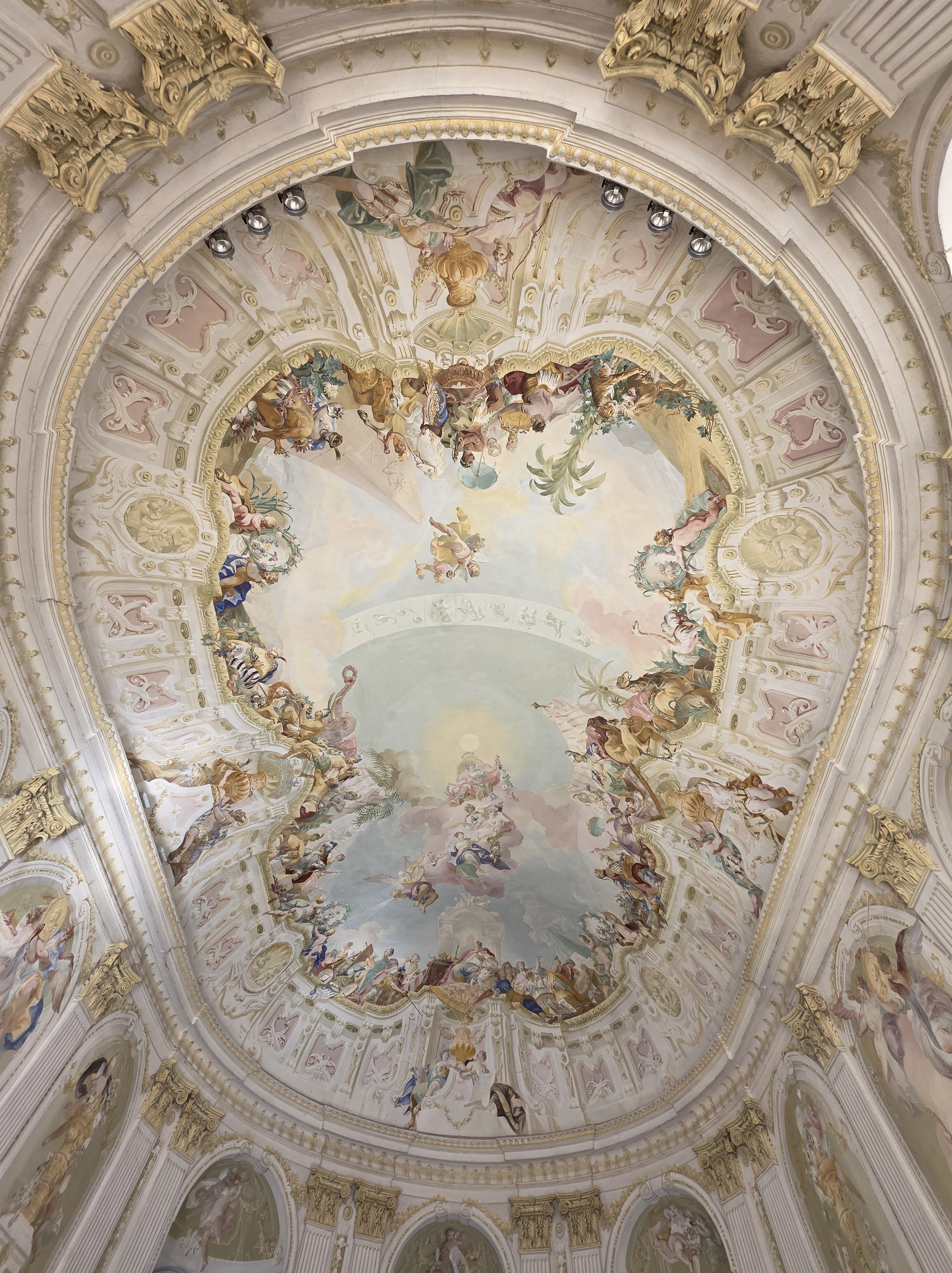
The surprise star is the garden which is beautifully laid out with a herb garden, arbors and artistic installations.
By this time, my phone is out of charge so we add the 12.40 to St Polten to my interrail card after we have boarded which, being outwith the rules, makes J nervous.
St Polten is sunny and pedestrianised and not crowded. Gulasch soup and Flammkuchen in a baker’s cafe. Flammkuchen is traditionally an Alsatian and German flatbread, but it is widely popular and adapted across Austria. It is composed of bread dough rolled out very thinly in the shape of a rectangle or oval, which is usually covered with fromage blanc or crème fraîche, thinly sliced onions and lardons.
Next: Admont and more schnitels

