Saint-Martin-aux-Bois, Picardy, France
Abbey of Saint-Martin-aux-Bois
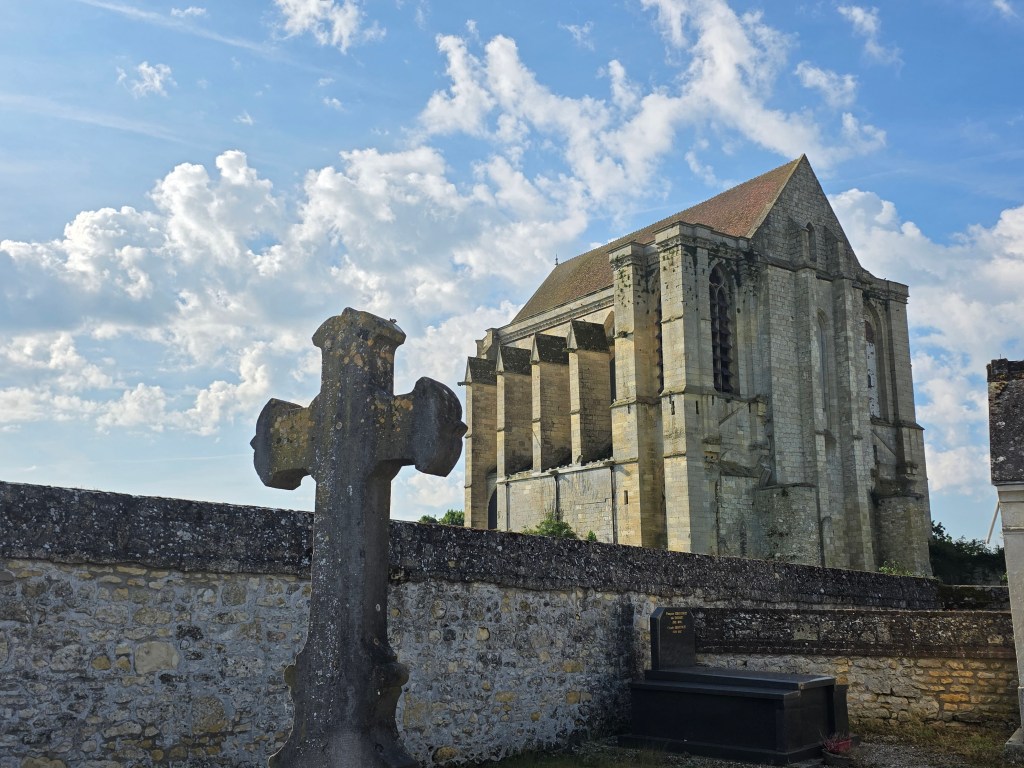
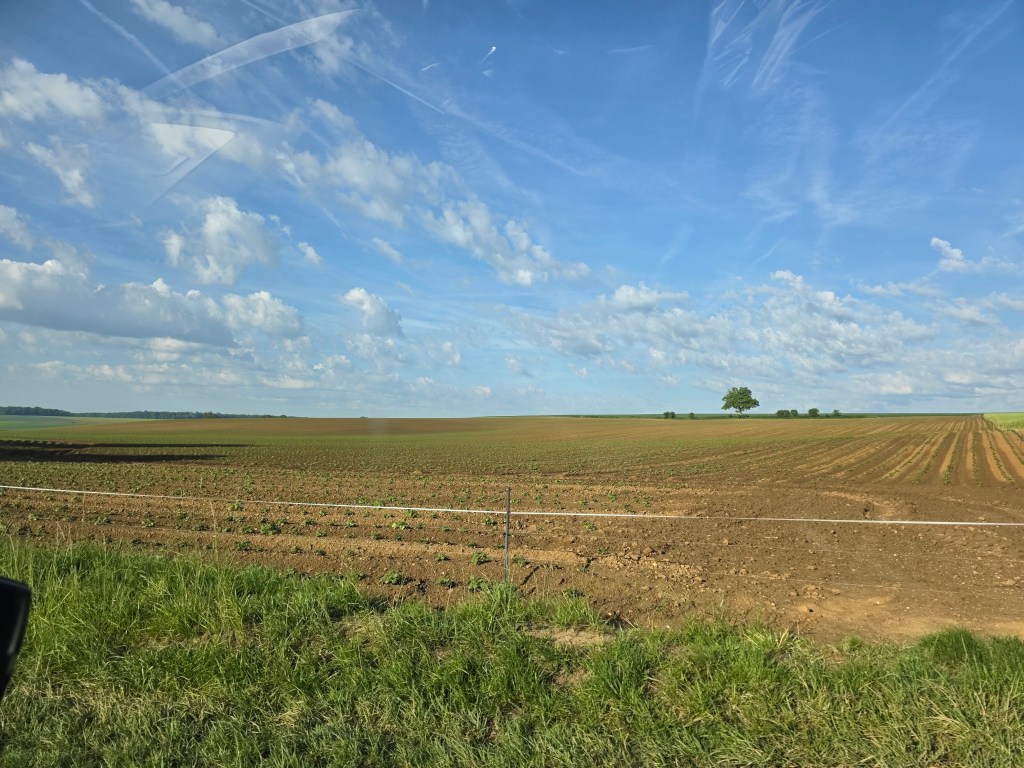
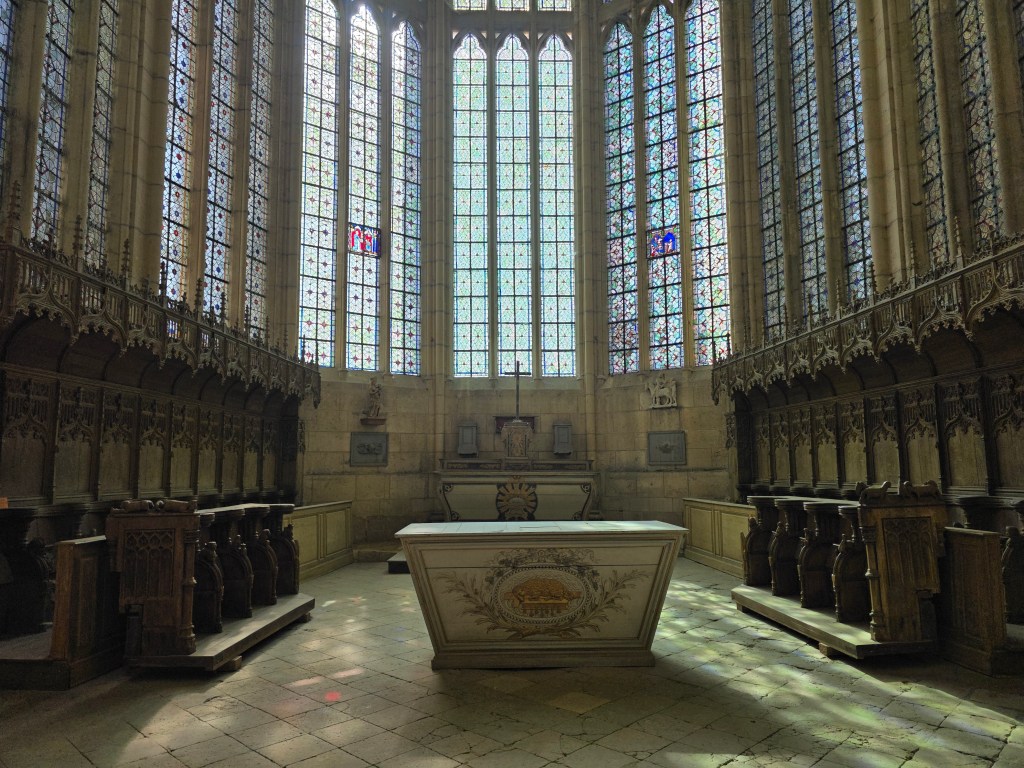
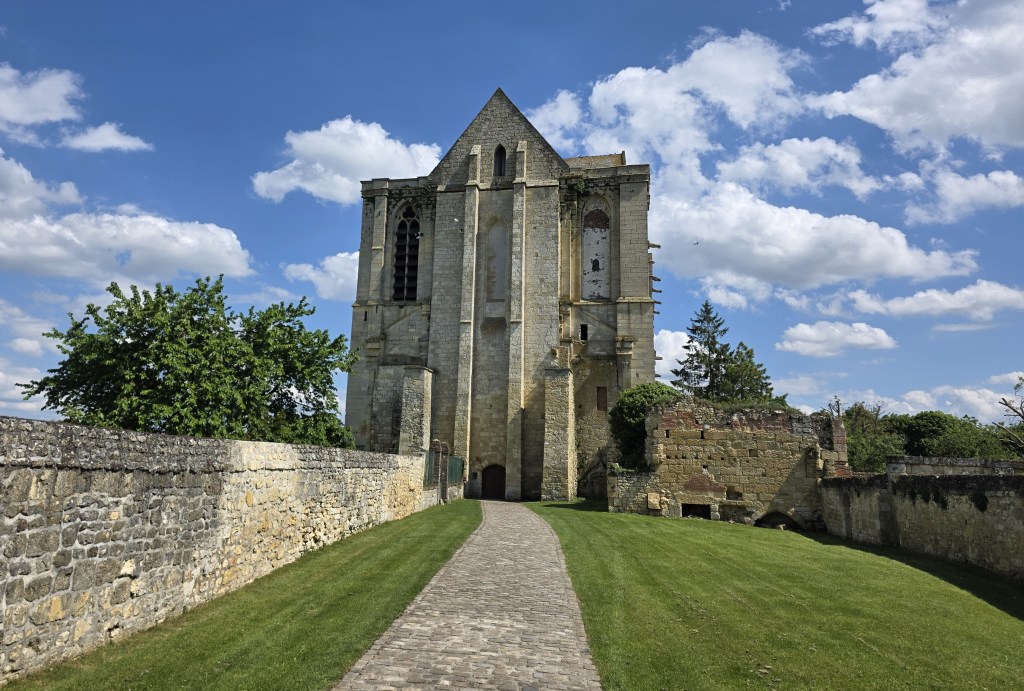
Built in the 13th century, the Abbey is a very striking building: the 27 meter vault gives an impression of scale emphasised by the flat Picardy landscape, substantially free of the woods that gave the village its name.
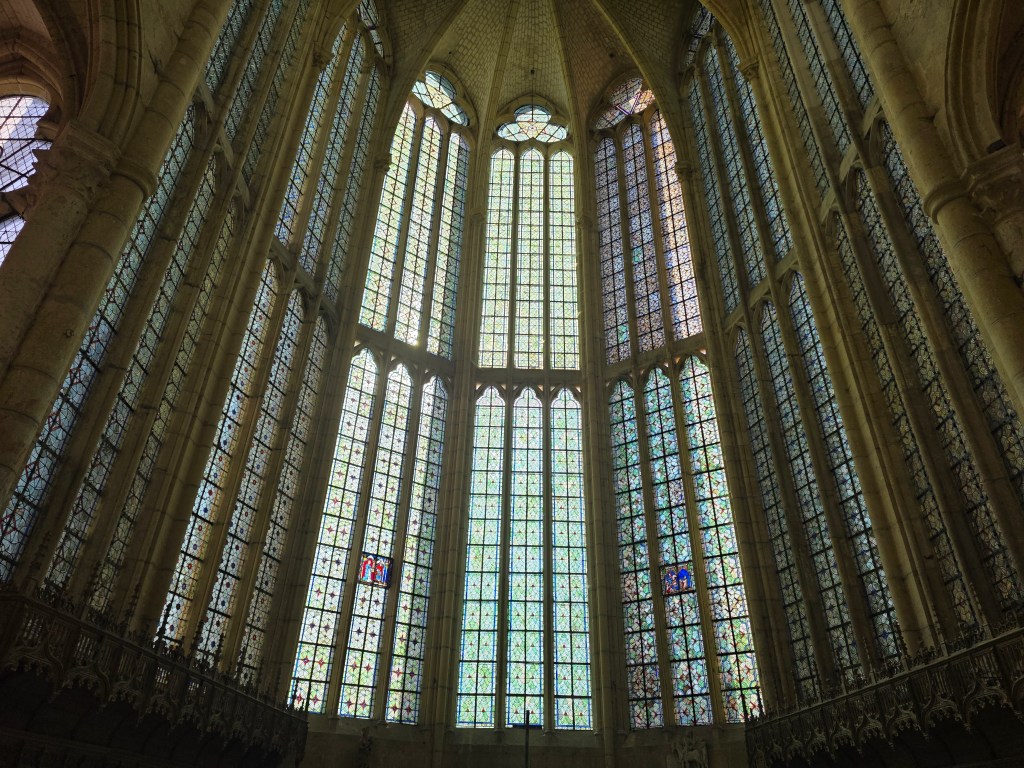
Internally, the apse has seven stained-glass windows that rise to the top of the building amplifying this effect of elevation and intensifying the brightness of the building.
Although classified as a historical monument in 1840, the building is in a dire state:
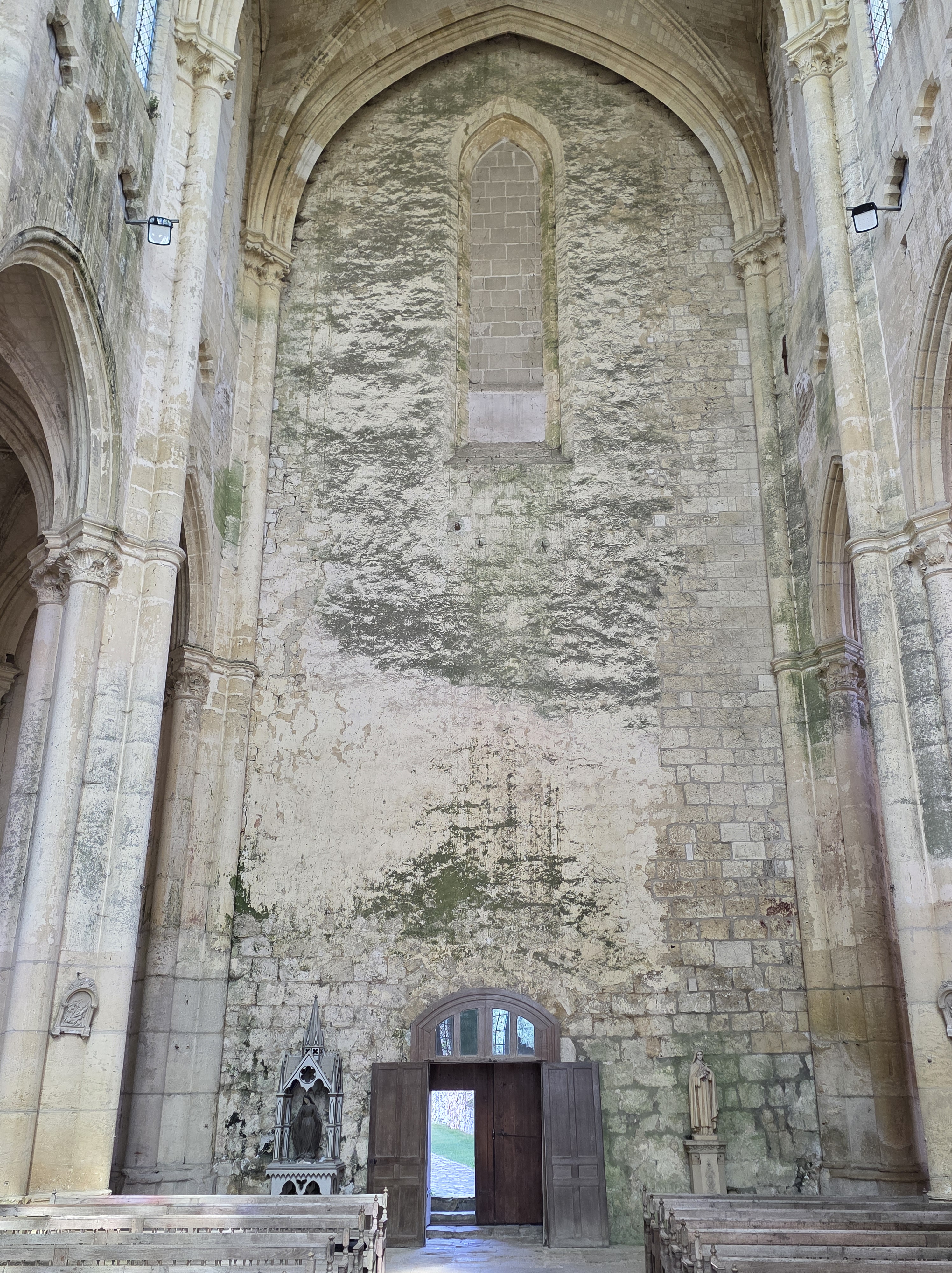
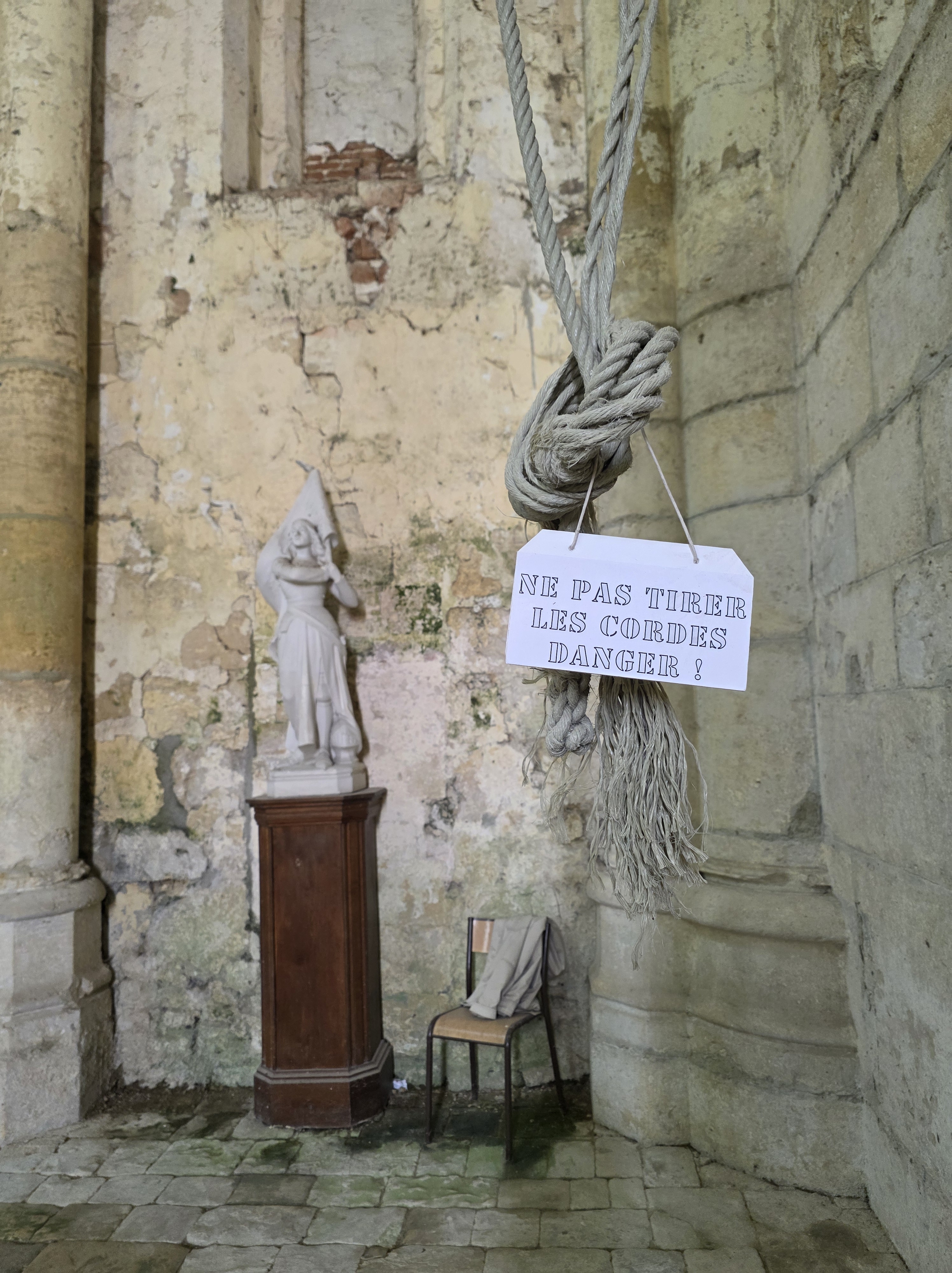
The 7 bays of the apse are also deteriorating considerably, as are the mullions which weaken the entire building, making a large-scale intervention urgent. The municipality of Saint-Martin-aux-Bois has launched an appeal for the restoration of the majestic stained-glass windows of its abbey.
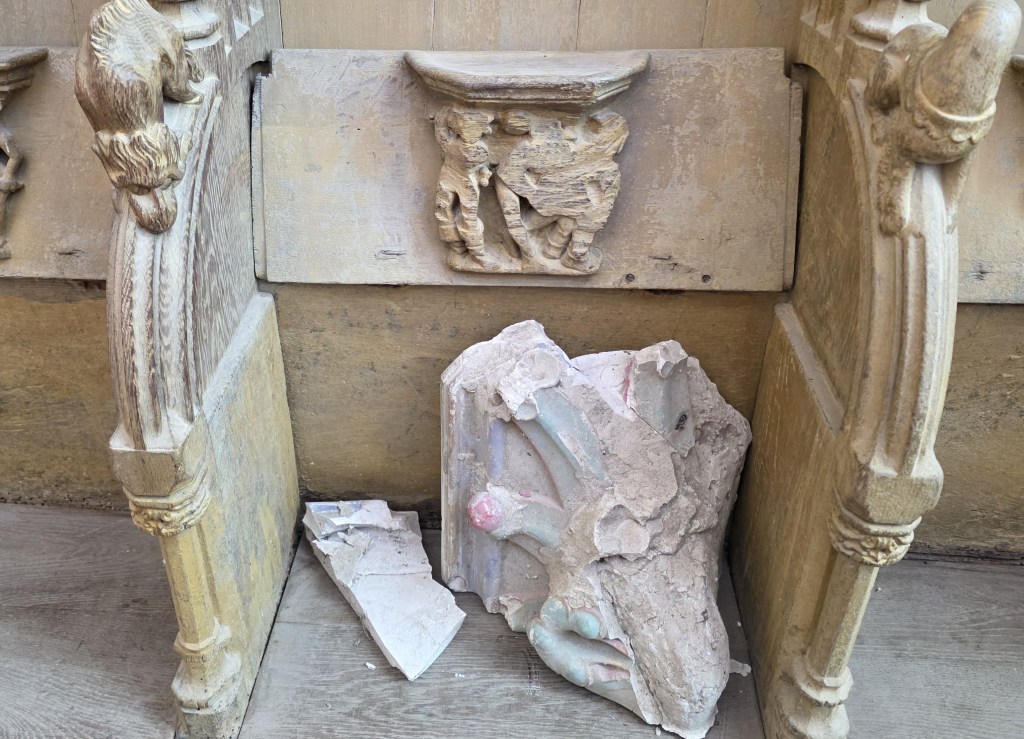
Picardy Stalls Association has been founded to promote, enhance, and preserve the church of Saint-Martin-aux-Bois and its furnishings, choir stalls, murals, stained-glass windows.
The Misericords
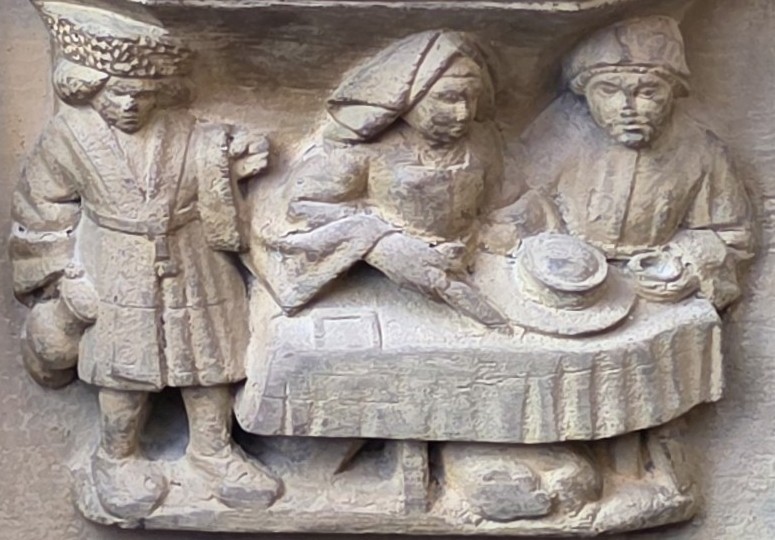
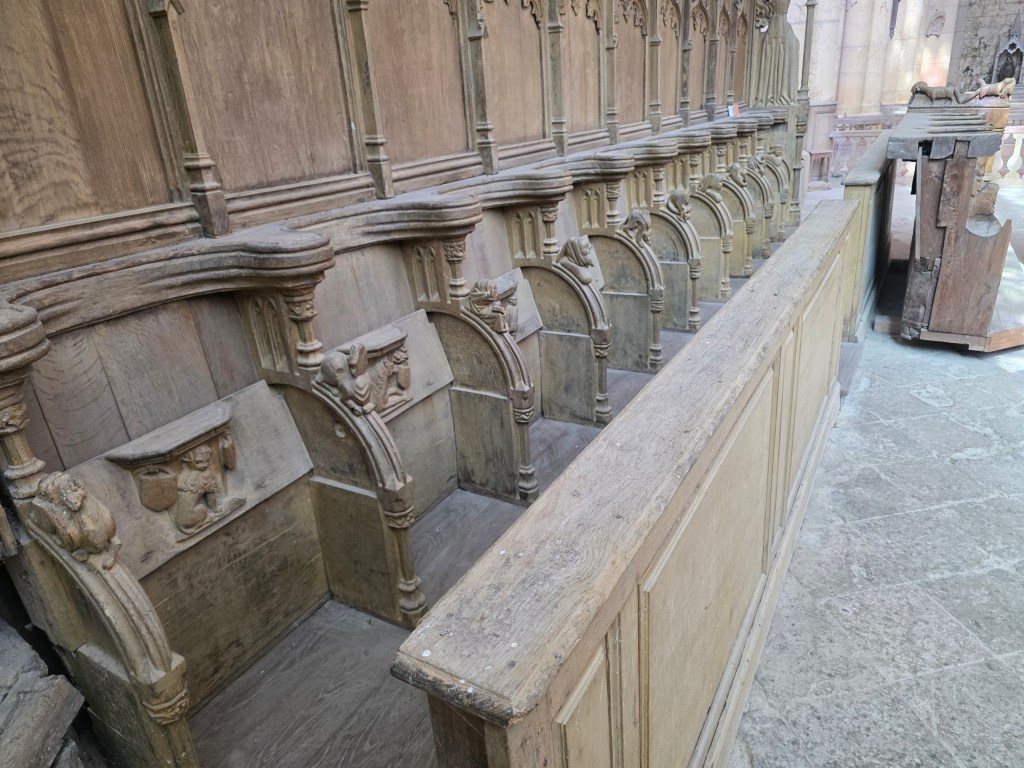
There are two rows of misericords on each side of the apse, the left being more northern than the right. What remains nowadays is two rows of ten high stalls and two rows of four lower stalls at the bottom of the apse.
The stalls were restored in two phases: the lower stalls in 2002; the Historic Monuments department asked the restorer to carve four misericords that had disappeared. The upper stalls were restored in 2014-2015 and underwent analysis, which made it possible to date their installation precisely between 1498 and 1501. A small group of three stalls that were still in the church at the end of the 19th century are now in the Isabella Stewart Gardner Museum in Boston.
I use the same scheme for identification of stalls as the detailed guide by the Picardy Stalls Association, numbering the misericords away from the camera with H for the higher back row and L for the lower front row, N for north on the left and S for south, on the right.
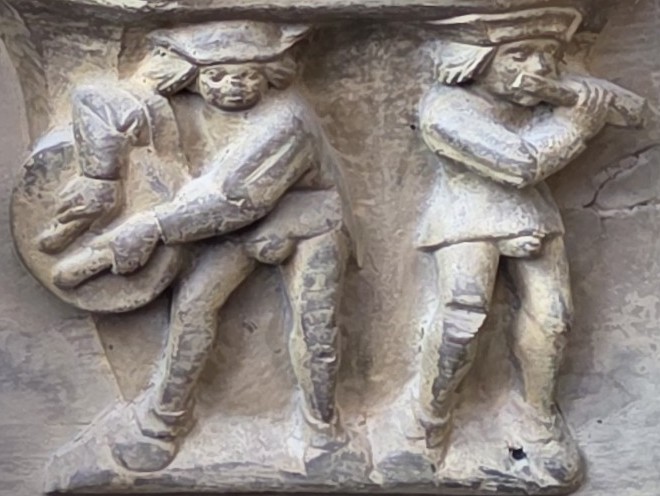
The carvings are a mix of proverbs and improving mottos with good deal of early heraldic theming and general entertainment such as that provided by these two musicians.
North Higher (back) Row
NH1
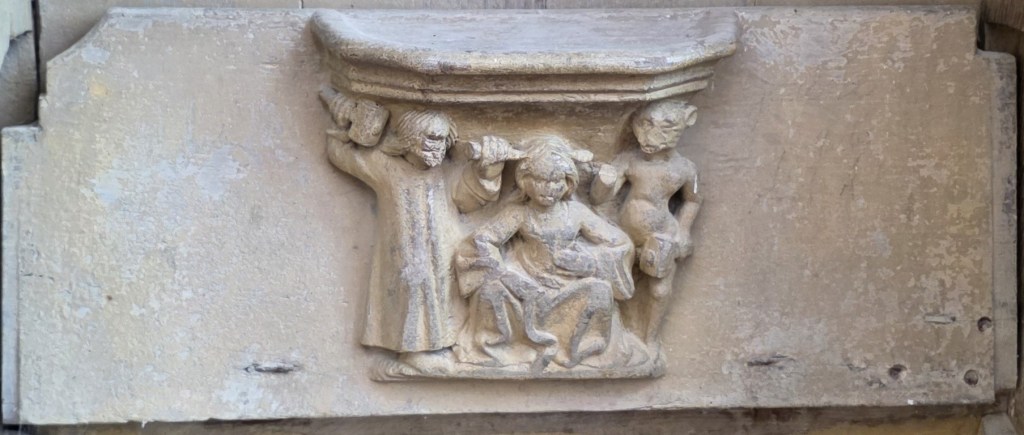
This is God and the devil creating woman with stonemason’s tools.
NH2
NH3
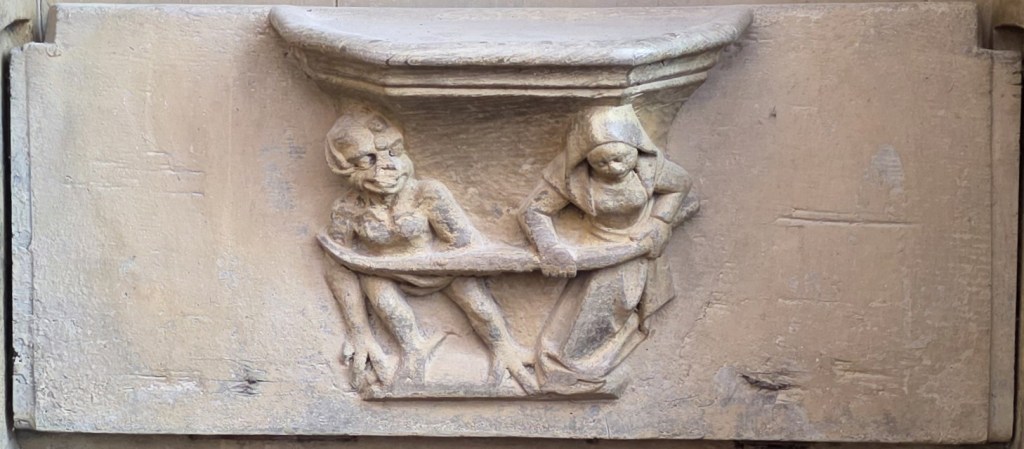
This pious woman is taking on the devil with a saw.
NH4
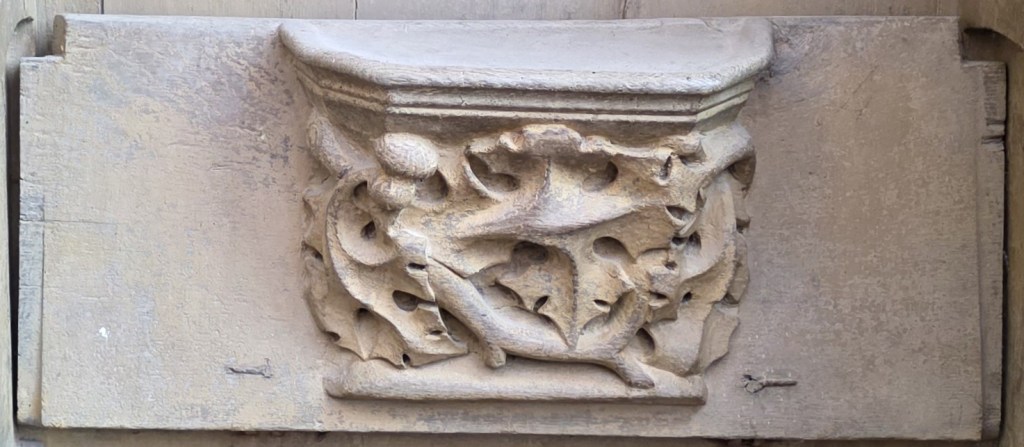
NH5
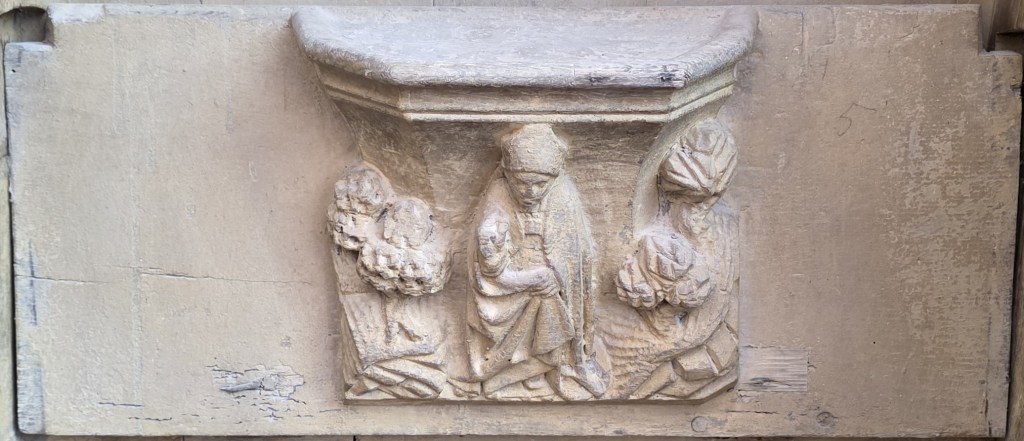
NH6
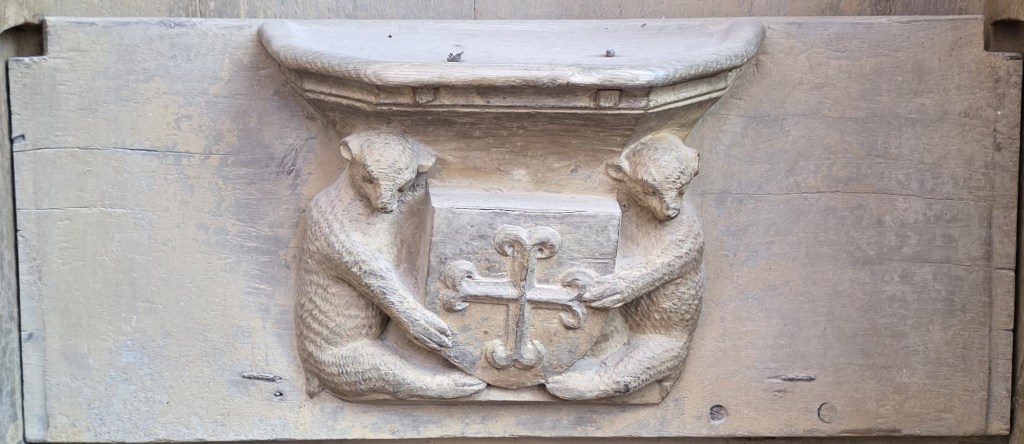
The shield features a carved cross fleury, where each arm terminates in a stylised fleur-de-lis lily, the symbol of the kings of France. Bears were also coming in as heraldic features in the early days of the 14th century though this bear seem to be playing rather than guarding.
NH7
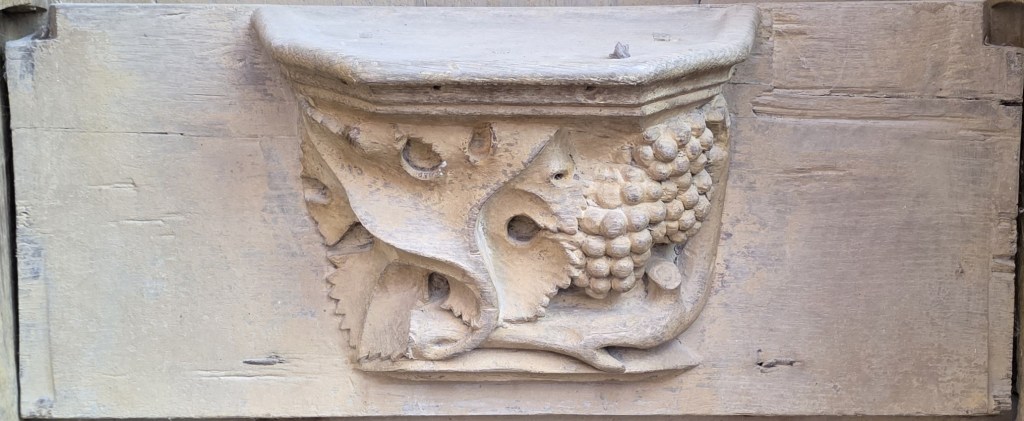
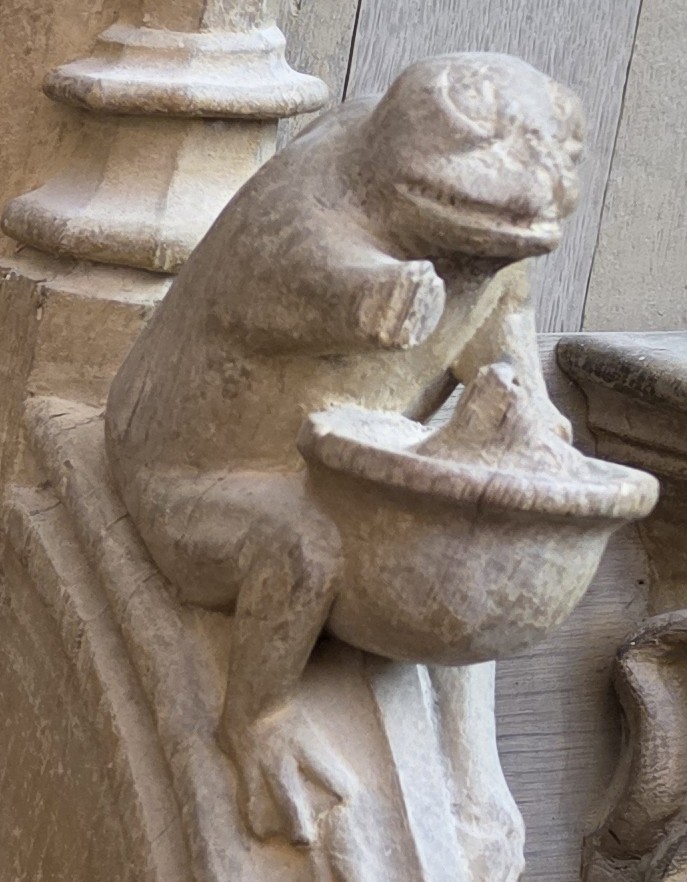
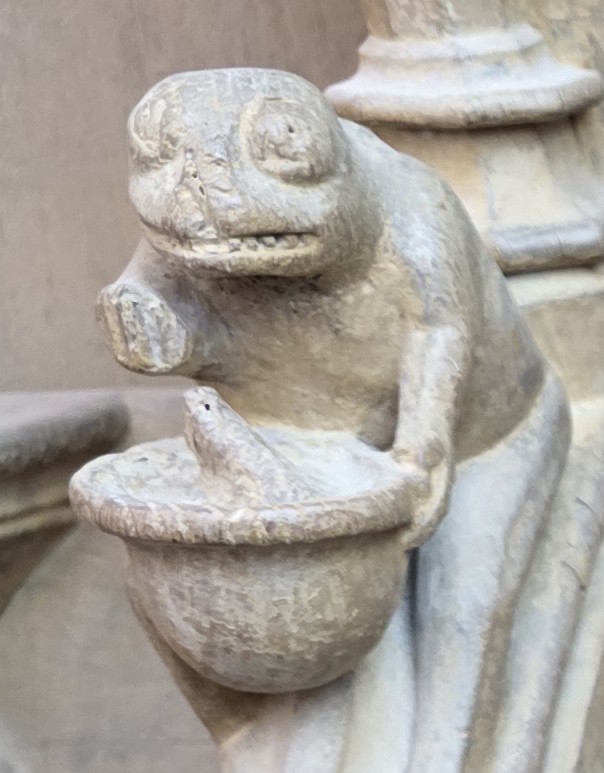
This toad stirring a cooking-pot is one of the best-surviving shoulder carvings.
NH8
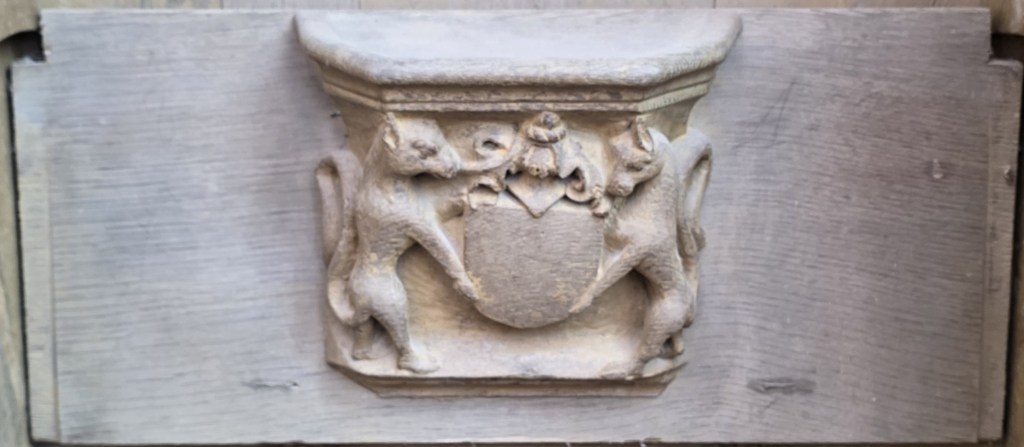
A more serious bit of heraldry.
NH9
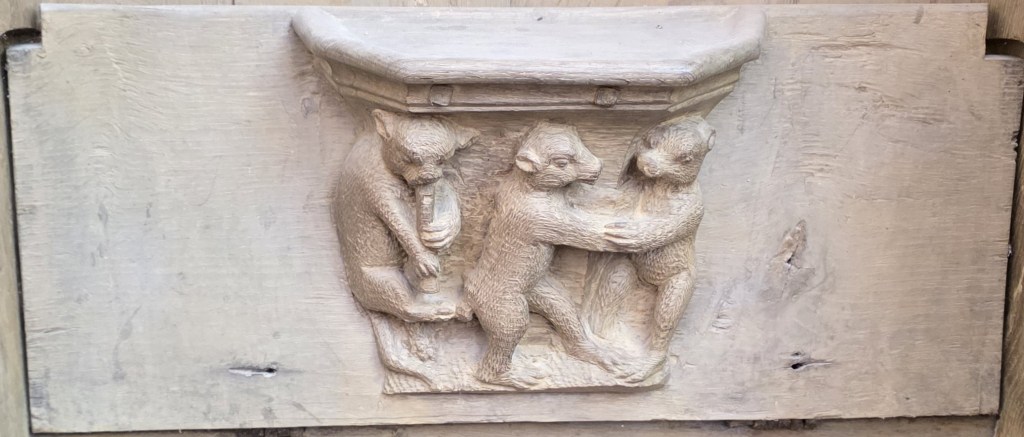
More bear frivolity; two dance to the music of a third.
NH10
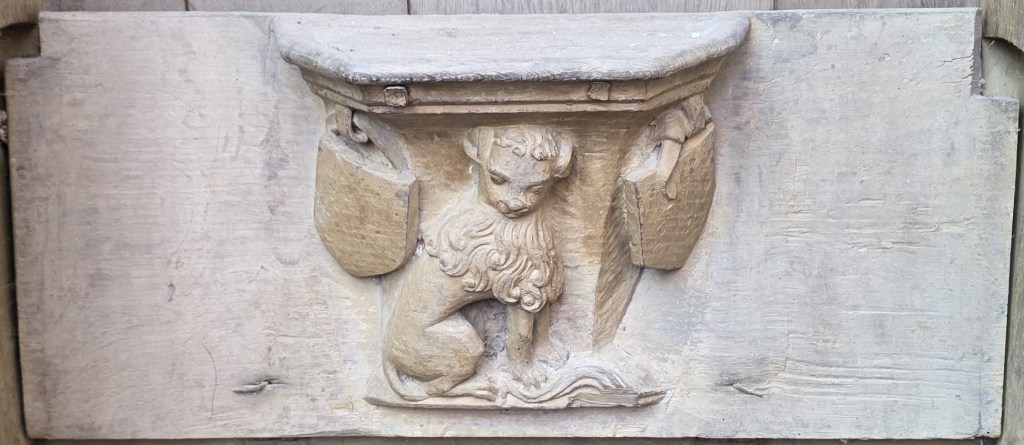
North Lower (front) Row
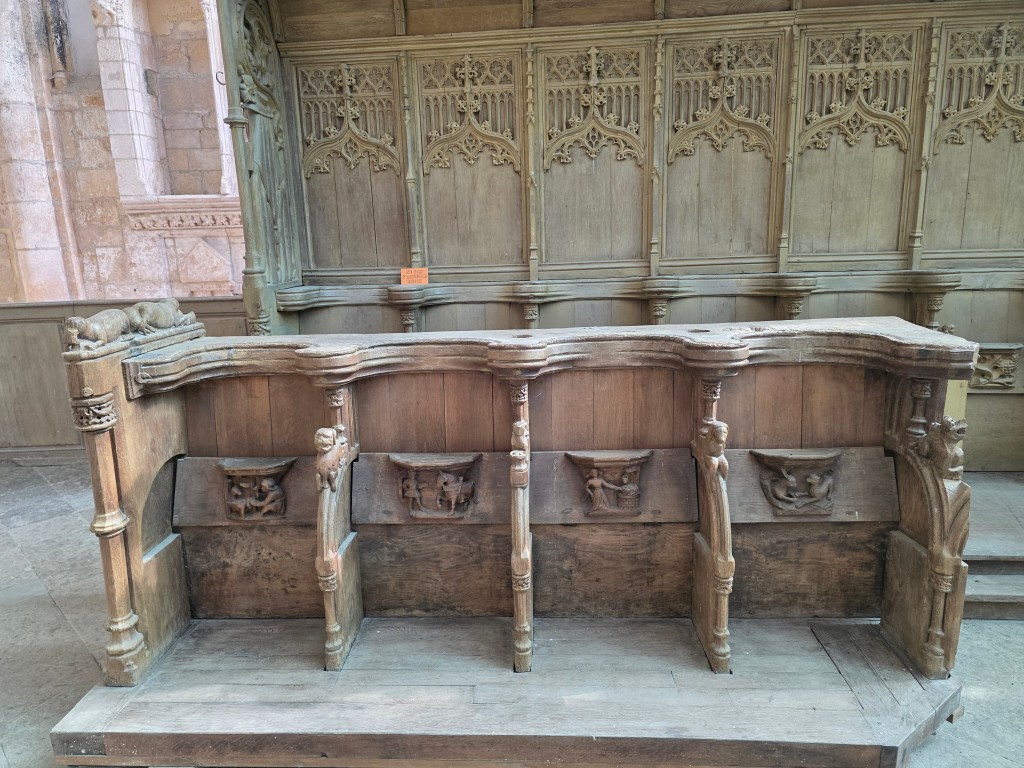
NL1
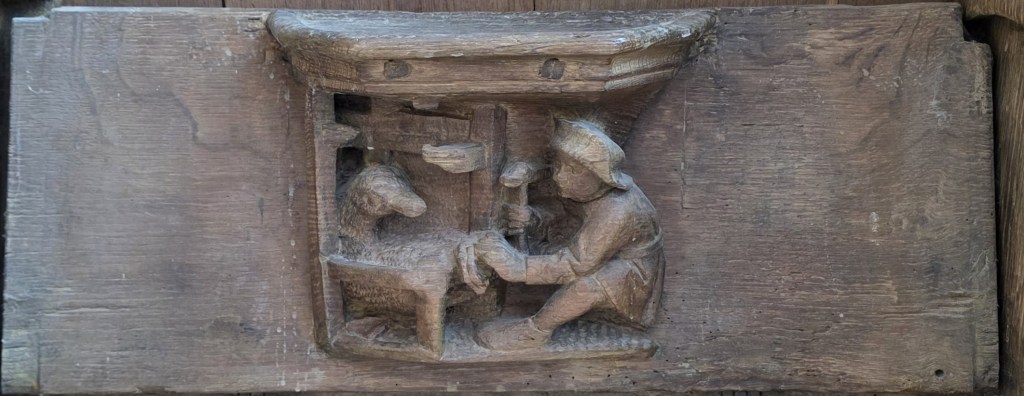
This man is apparently trying to put a shoe on a duck, a proverbially misconceived enterprise.
NL2
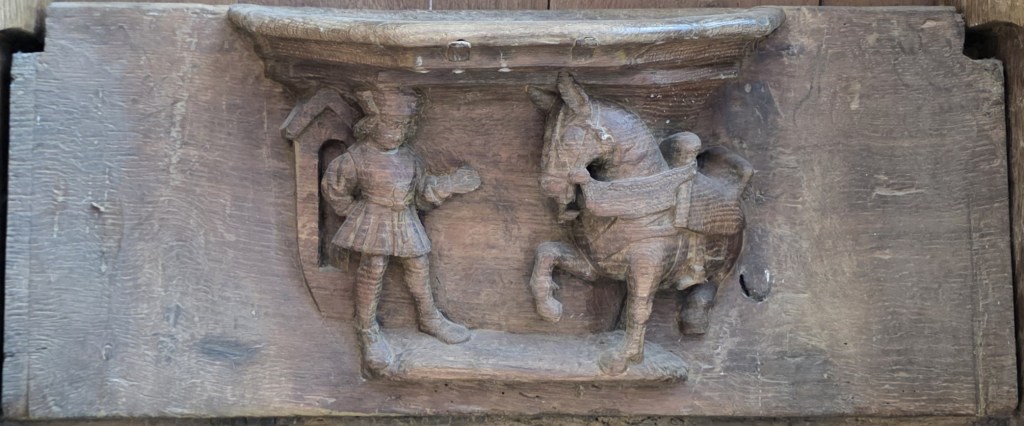
NL3
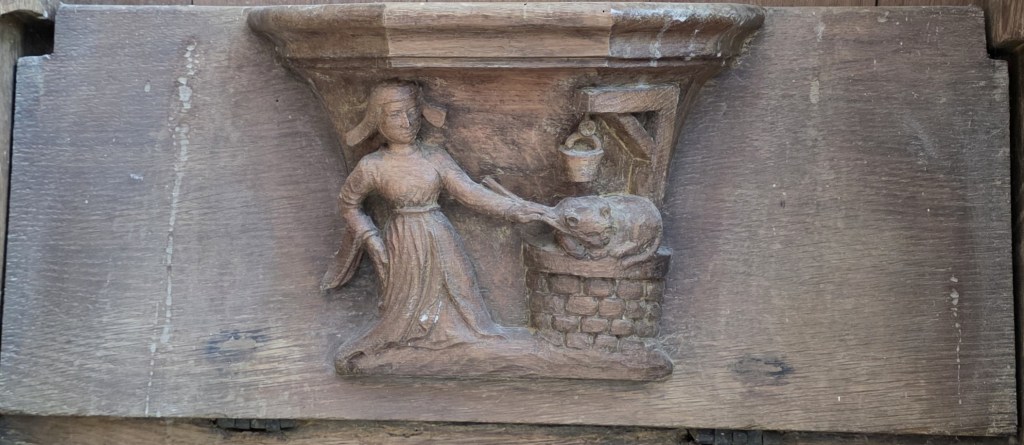
This carving of a woman stroking a cat sleeping on the edge of a well was created by the cabinetmaker who restored the stalls in 2002.
NL4
South Side
SH1
SH2
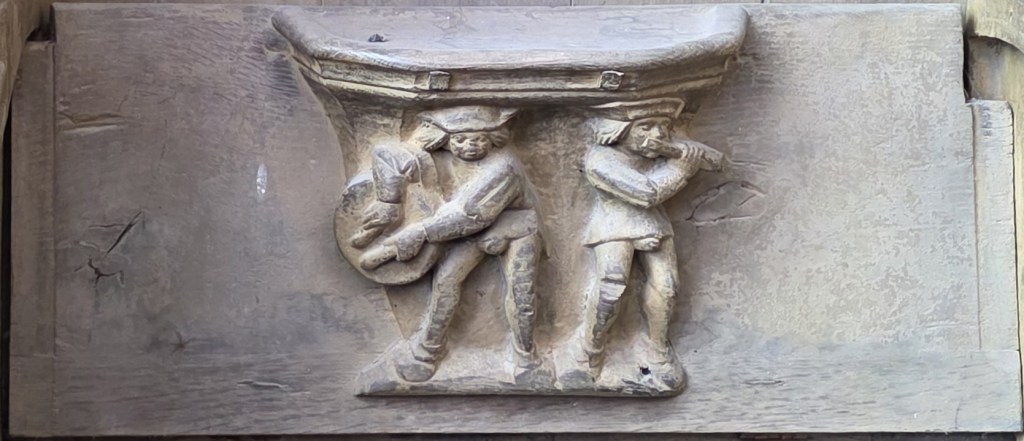
SH3
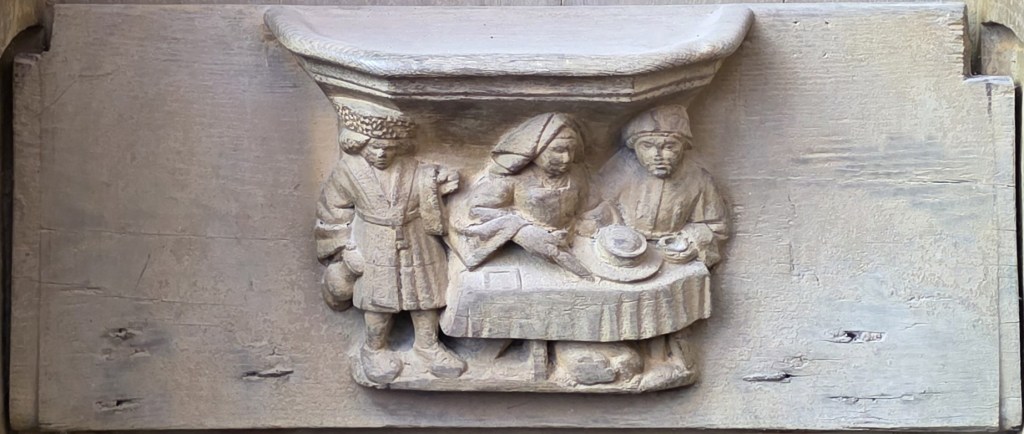
SH4
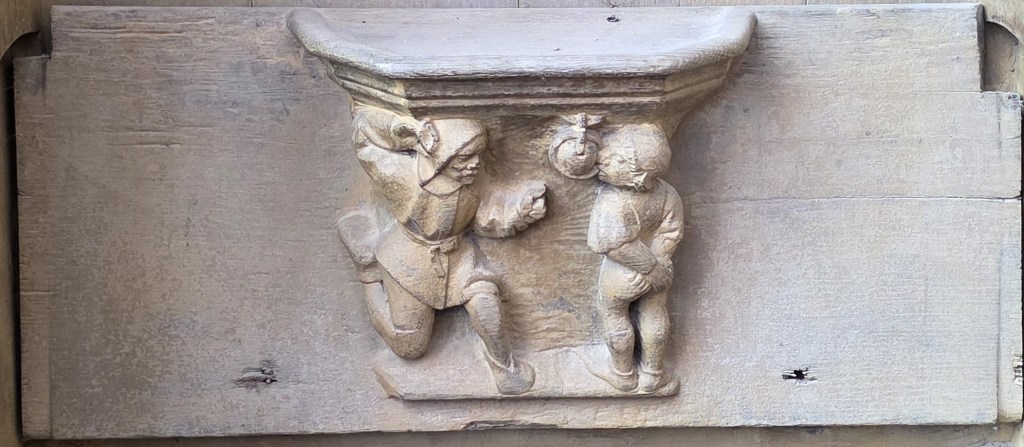
SH5
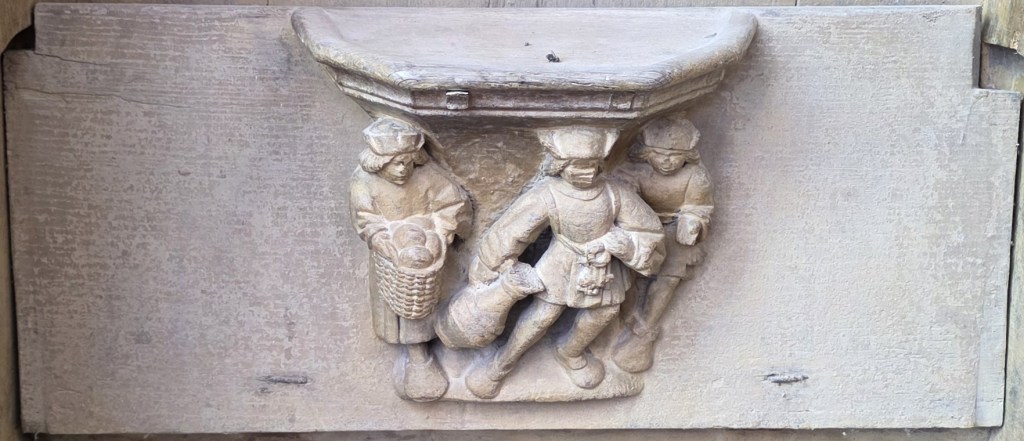
SH6
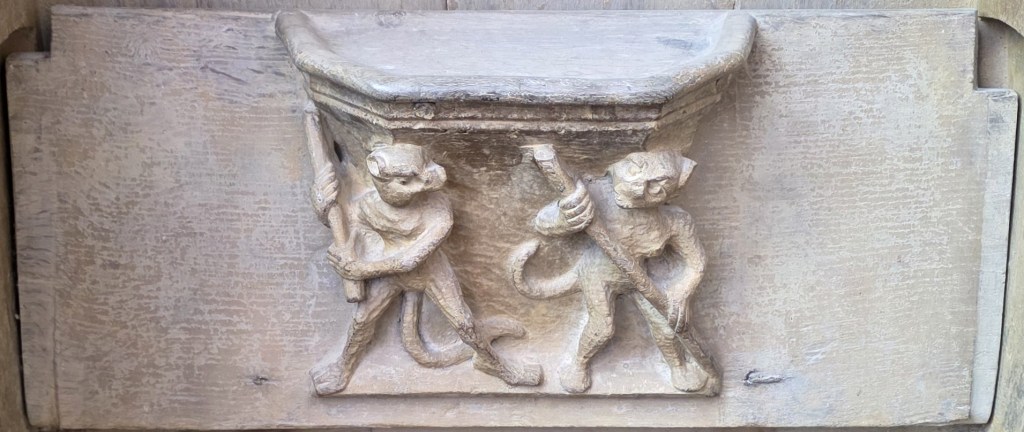
SH7
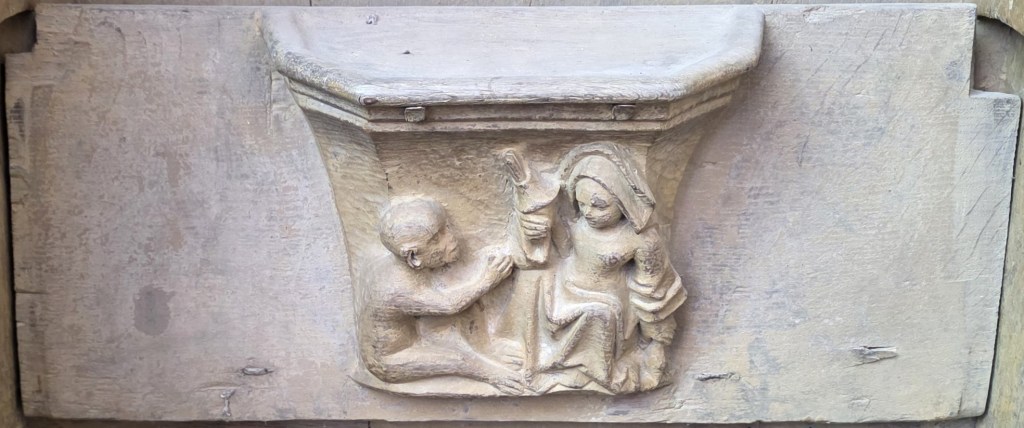
SH8

SH9
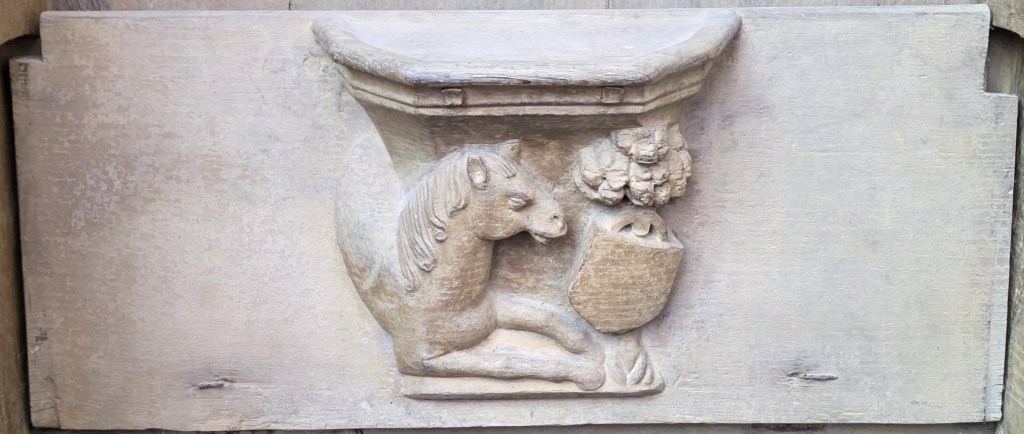
SH10
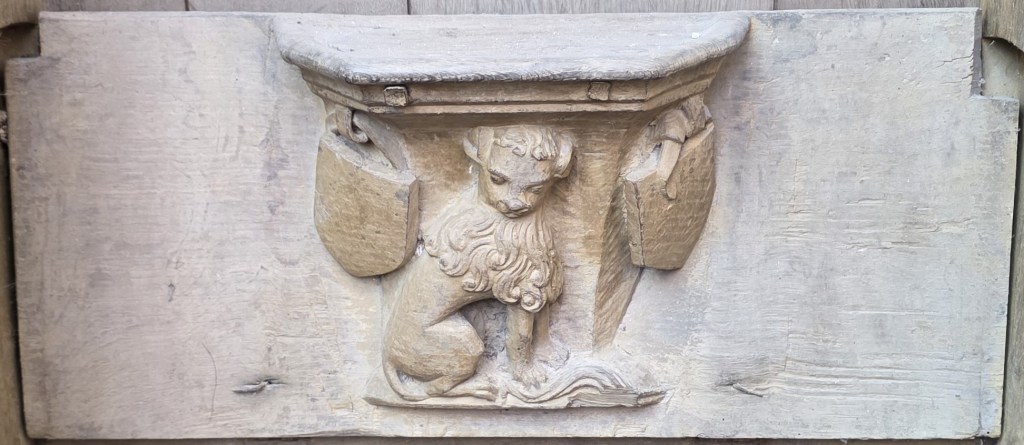
South Lower
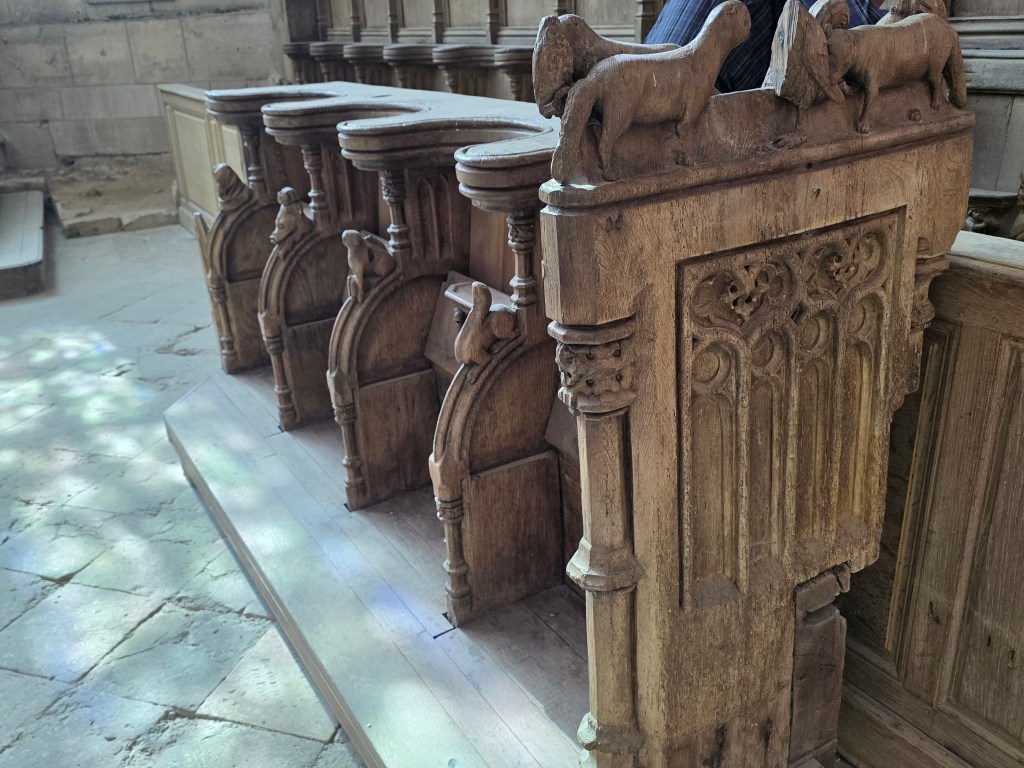
SL1
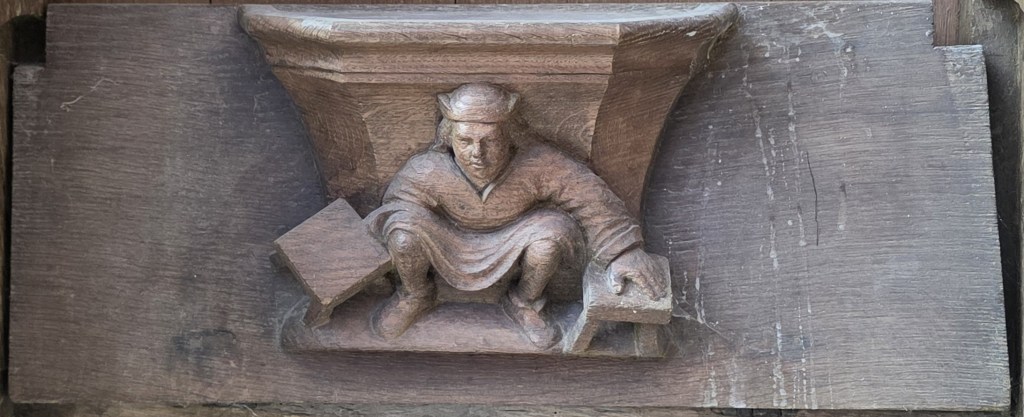
SL2
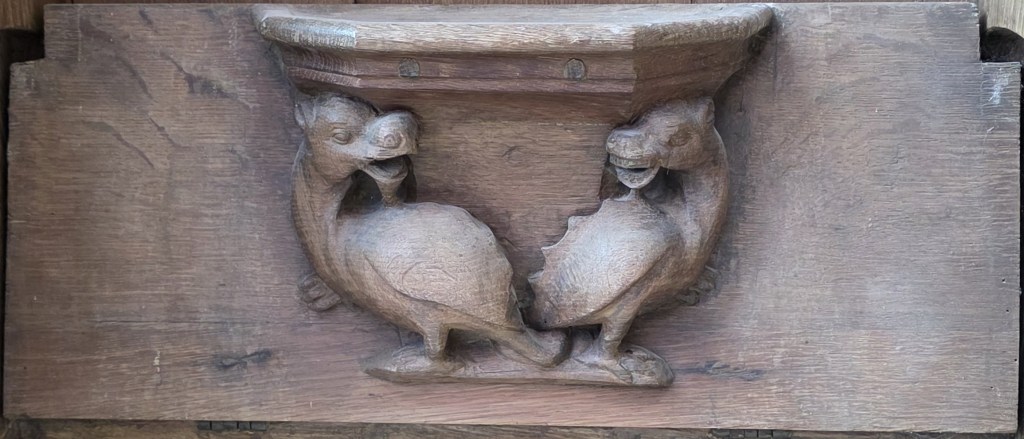
SL3
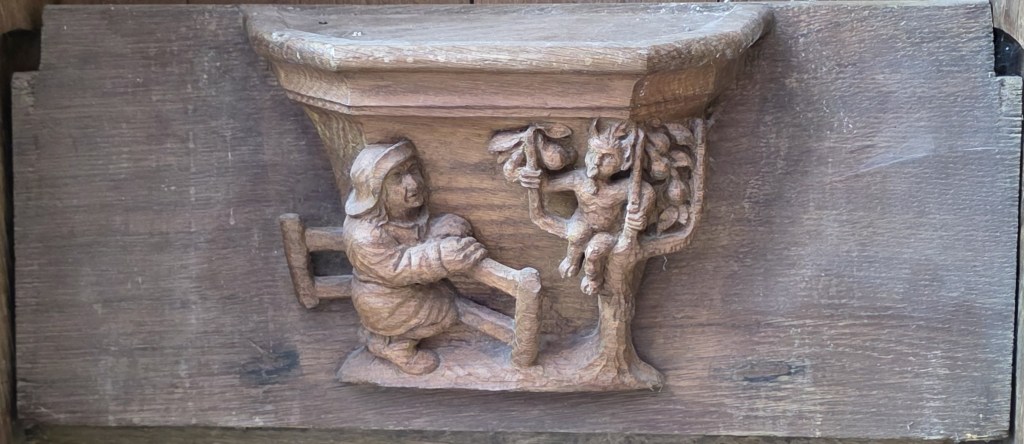
SL4
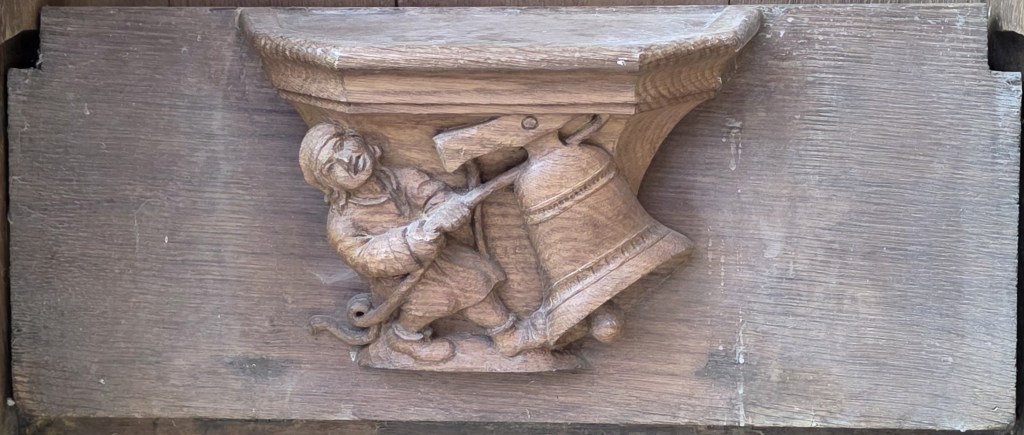
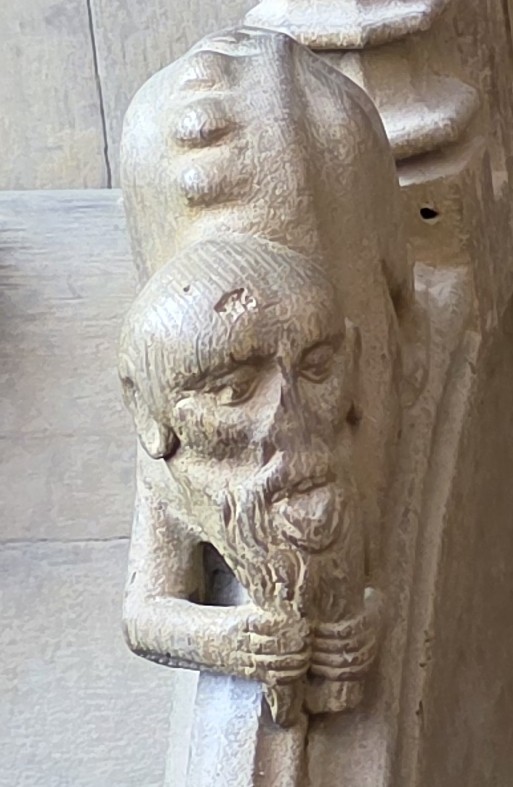
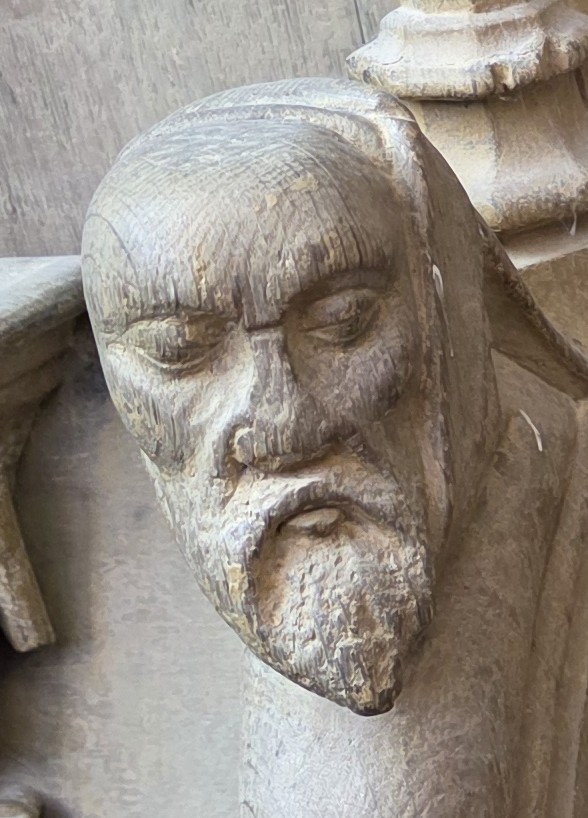
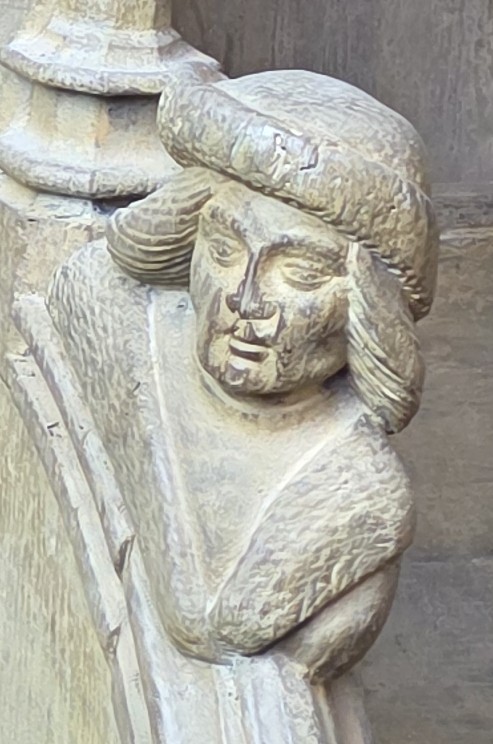
Shoulders – some of the best of the arm rests
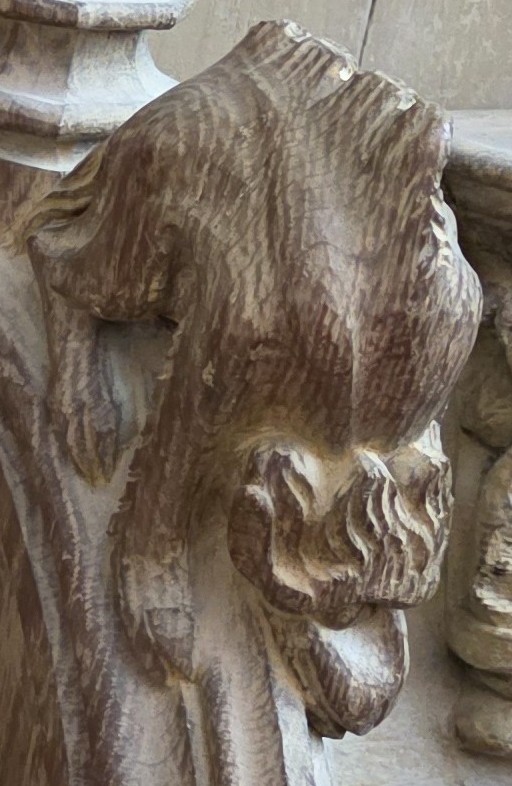
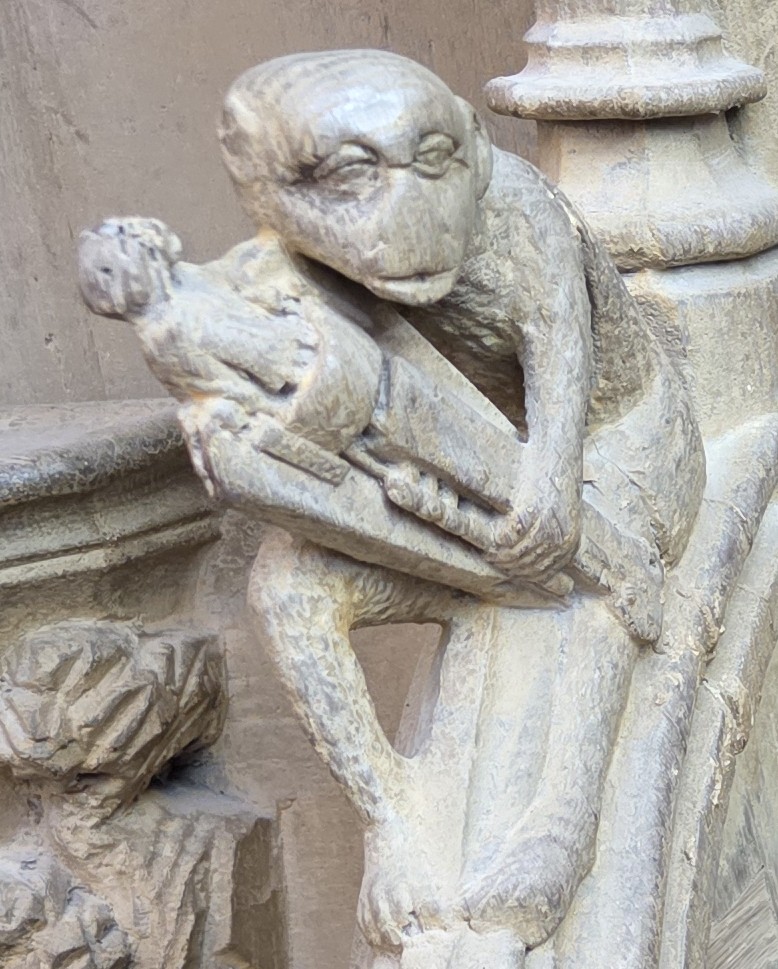
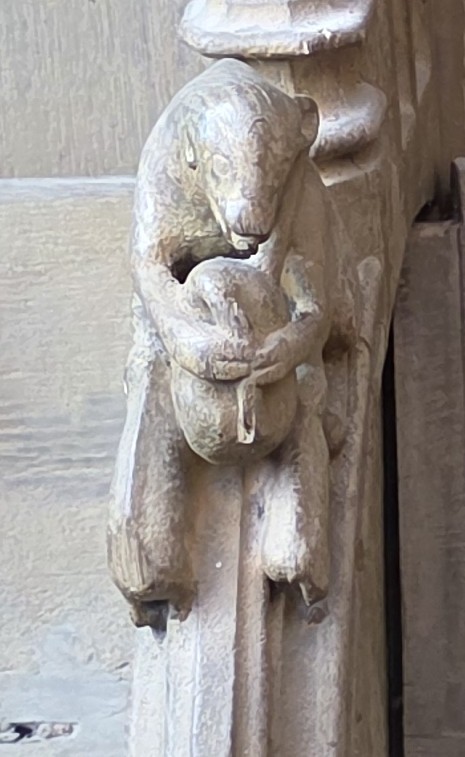
Sources: Fondation du Patrimoine; Picardy Stalls Association; Les stalles de l’eglise de Saint-Martin-aux-Bois Kristiane Leme-Hebuterne (Stalles de Picardie 2014)
Seville, Andalusia, Spain
Seville Cathedral


Iglesia Colegial del Divino Salvador

The Collegiate Church of the Divine Saviour is a Catholic church in Seville, located in the square of the same name . It occupies the site of a mosque built in the ninth century and demolished in 1661. The base of the old minaret from the Caliphate period can be seen at the foot of the bell tower. It was the main mosque in the city until 1182 and was Christianised under Ferdinand III after the conquest of Seville in 1248. In the 15th century it became a collegiate church as a result of which the choir came to have wooden stalls. Between 1512 and 1514 a new choir was built. The church deteriorated over time, falling below street level to the extent that it was necessary to go down about 20 steps to enter. In 1671 it was demolished and the current Baroque church was built by Leonardo de Figueroa between 1674 and 1712. The church stands out because of its gilded woodcraft, a beautiful main altar and numerous frescos.
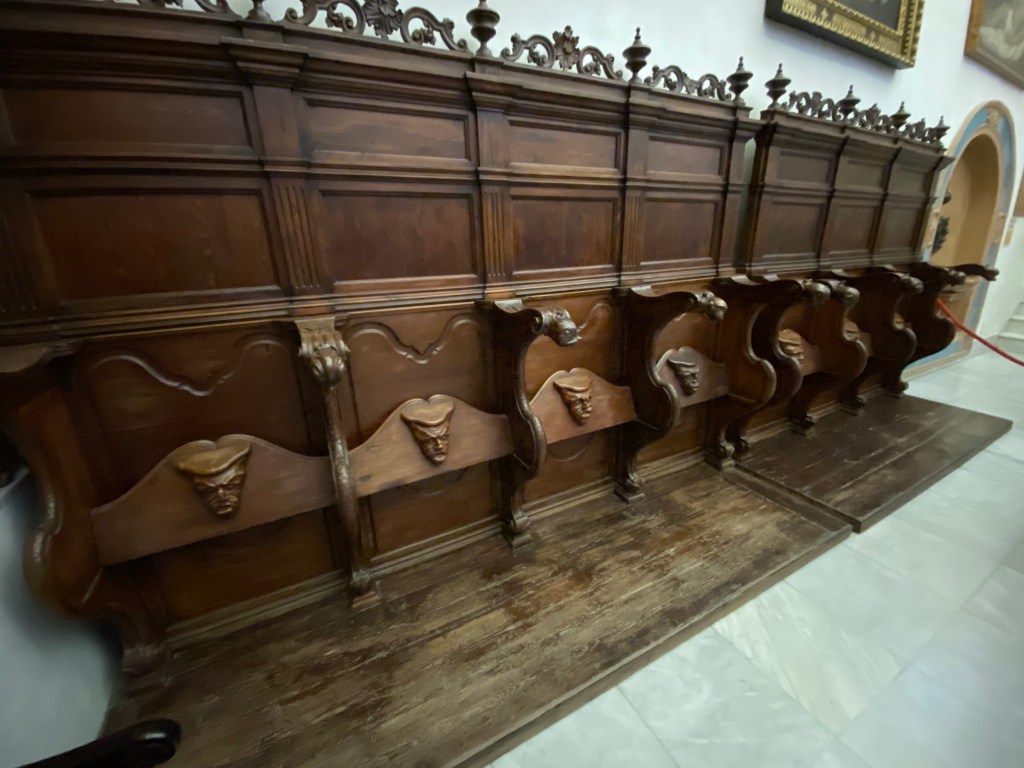
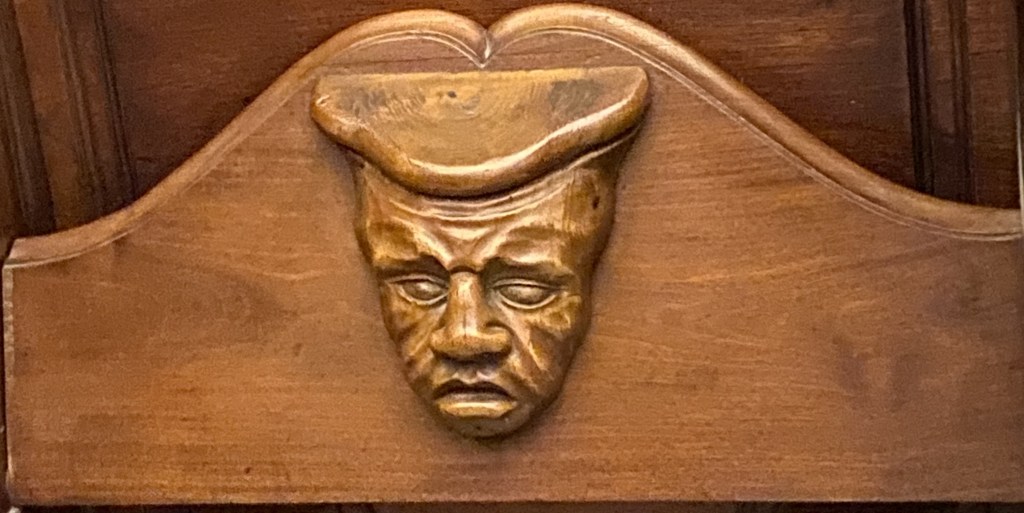
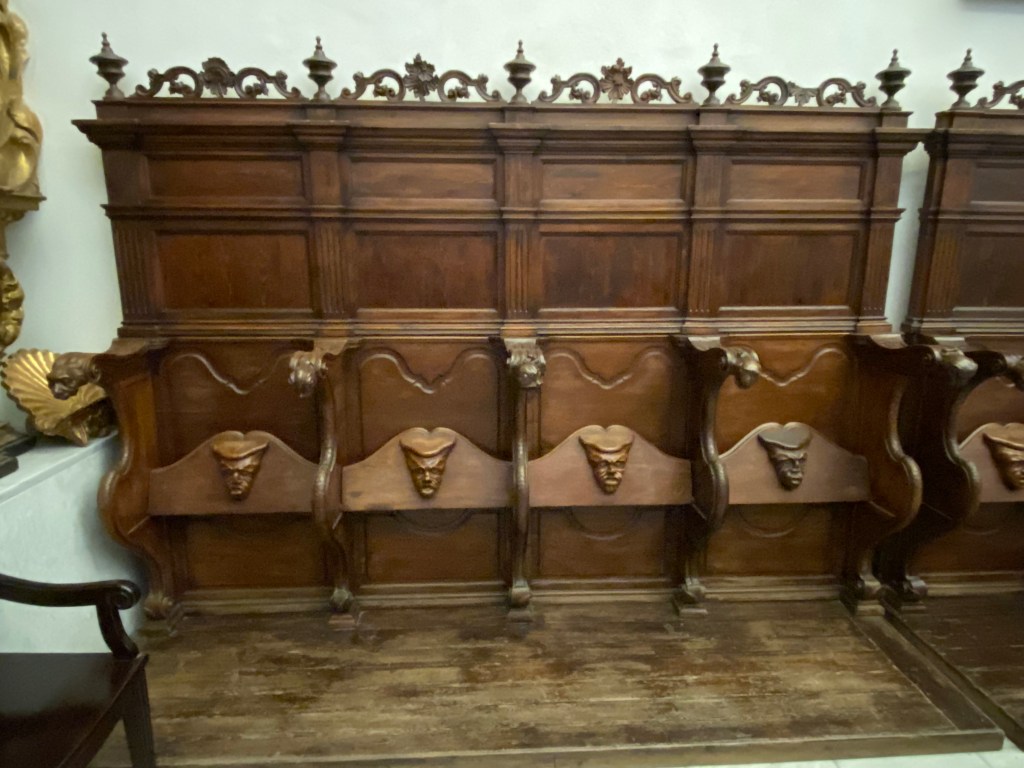
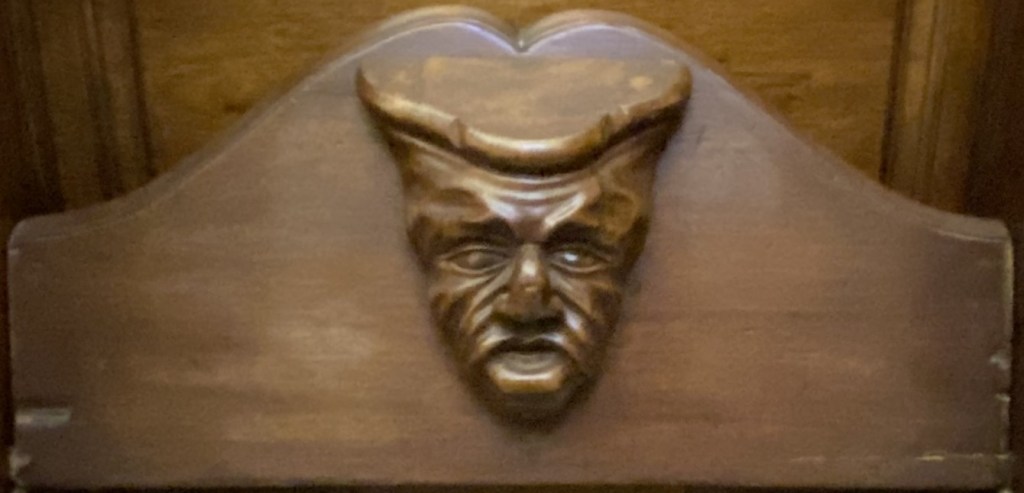
In the Sacristy there are eleven seats attributed to “José and Felipe González” and dated 1790. According to a detailed assessment by Antonio Martín Pradas in 2003, these are José Gabriel González and Felipe González Lobera and they were paid 540 reales de vellón. This was Castilian unit of count equivalent to 1/20 of the 8 real coin, also known as the duro. The misericords are made of mahogany, cypress and Flanders pine. The seats are 64 by 41 by 53 cm.
Pradas describes the images as “Anthropomorphic masks” and, indeed, they have something of the Comedia del Arte. In 1861 the choir was moved down the central nave to the foot. The 1865 inventory notes that part of the choir stalls had been reused for the new choir, so there were a number of stalls that were moved to San Andrés parish, where thirteen upper backs and four stalls are preserved.




Sources: wikipedia Church of the Saviour; Laboratorio de Arte, 16-2003 El Conjunto Coral de la Iglesia Colegial y Parroquia Del Divino Salvador De Sevilla (1512-2003): Sillería De Coro, Facistol Y Órgano 1 • Por Antonio Martín Pradas Art Laboratory, 16-2003 The Choral Ensemble of the College Church and Parish of the Divine Saviour Of Seville (1512-2003): Choir Stalls, Facistol And Organ 1 Antonio Martín Pradas Seville choir stalls: Analysis and evolution. Unpublished doctoral thesis, defended on February 6, 2002, with a unanimous grade of Outstanding Cum Laude.

