Lancaster Priory
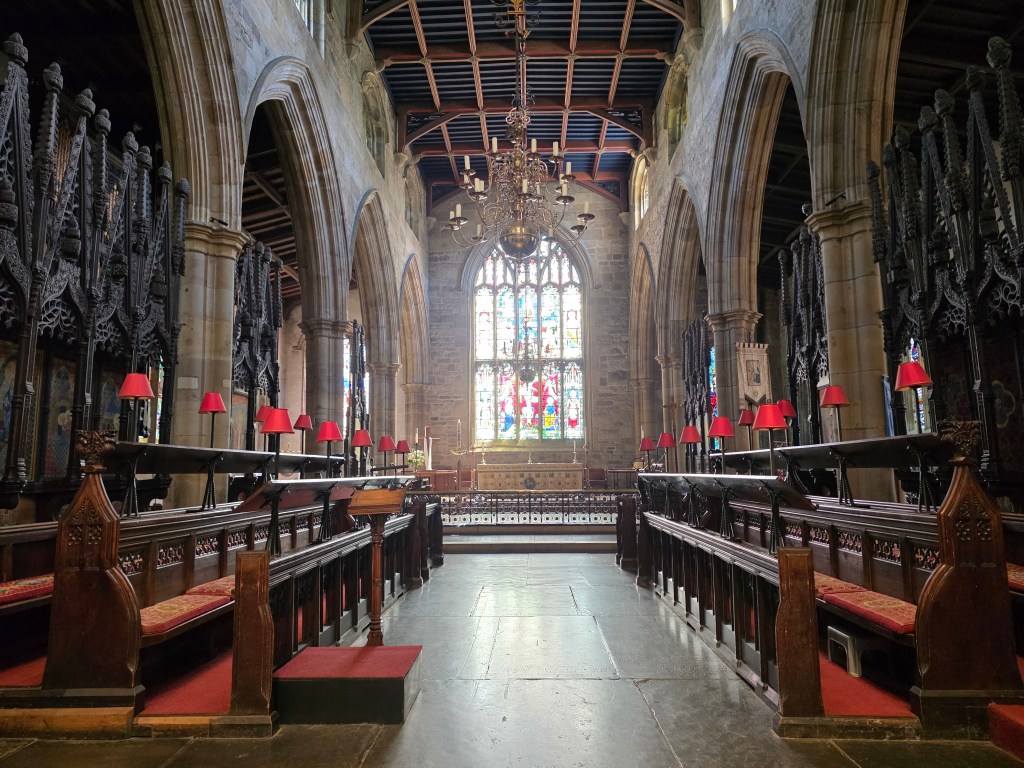
Lancaster Priory was founded in 1094 as a gift to a Benedictine monastery in Normandy by a Norman lord in the Court of William II. The subsequent history of the priory seems to be obscure but it is widely accepted that the fourteen stalls associated with misericords date from the 1340s. Most of the focus has been on what Howard and Crossley called the bewilderingly elaborate traceries and masterly foliage carving which showed what skill the wood-worker had acquired and how he could now beat the mason when he cared to try.
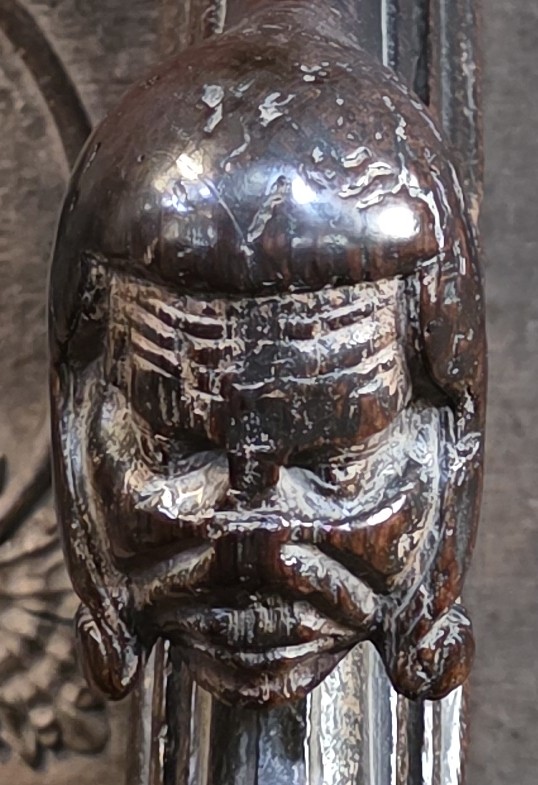
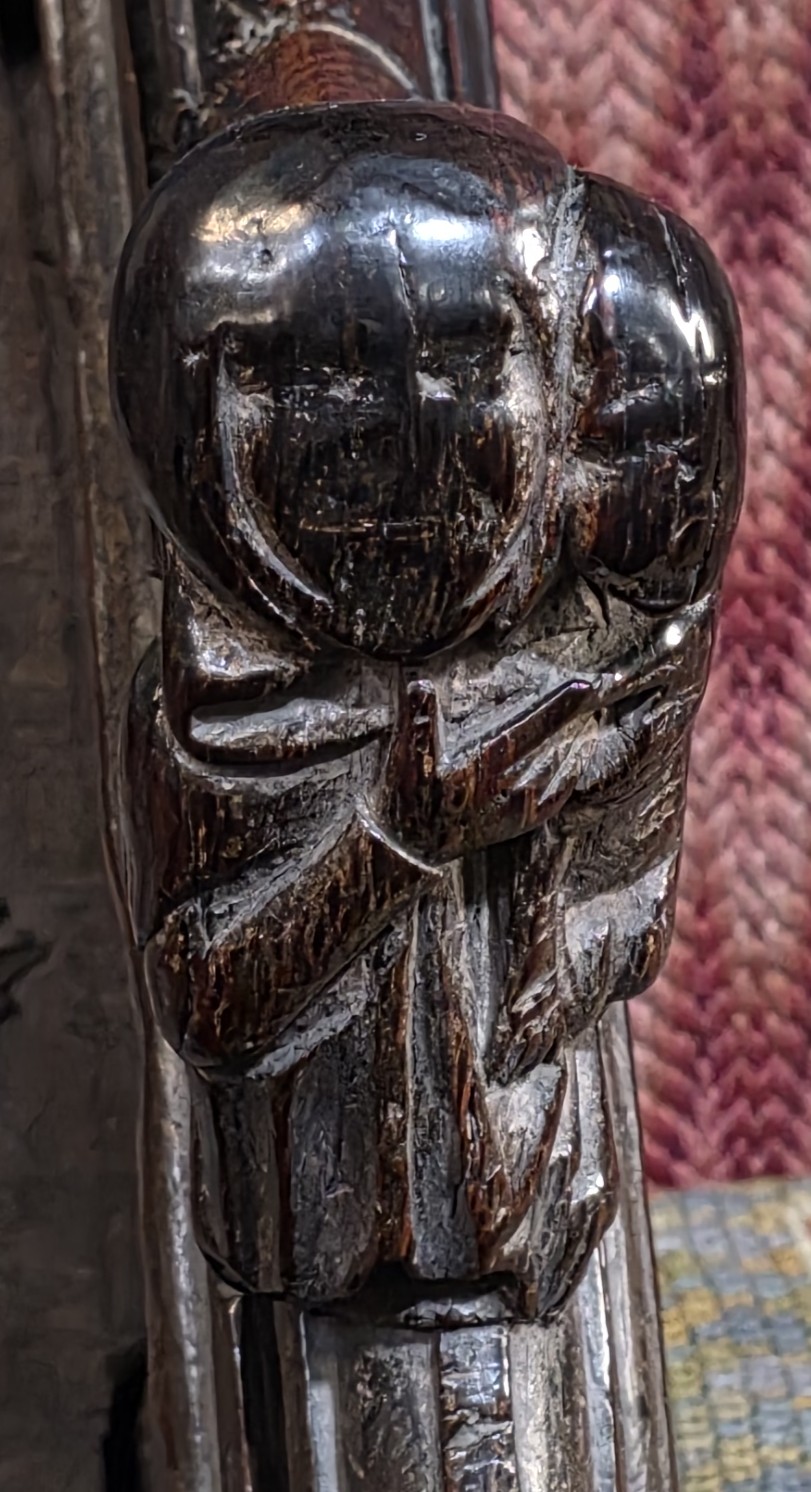
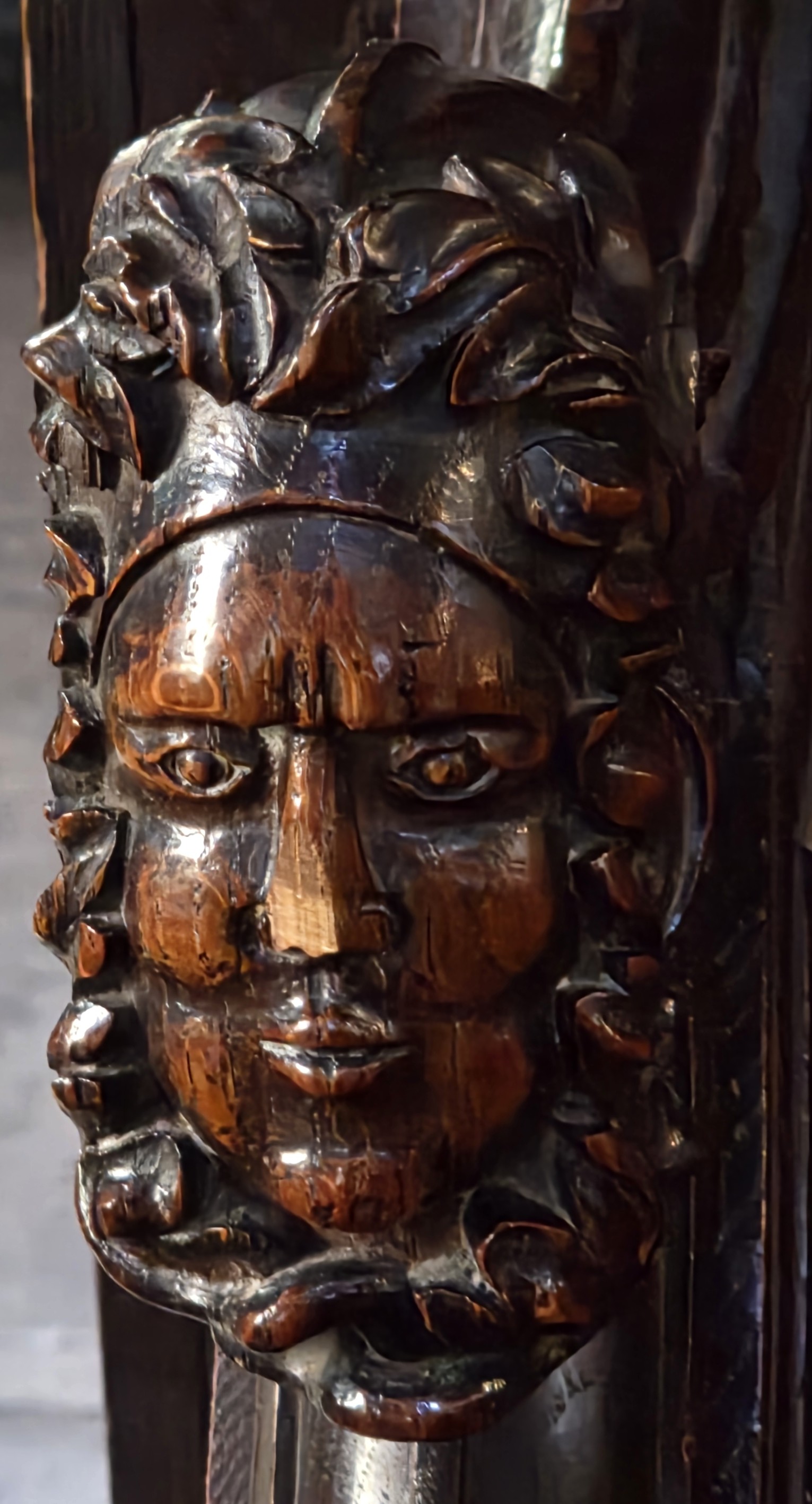
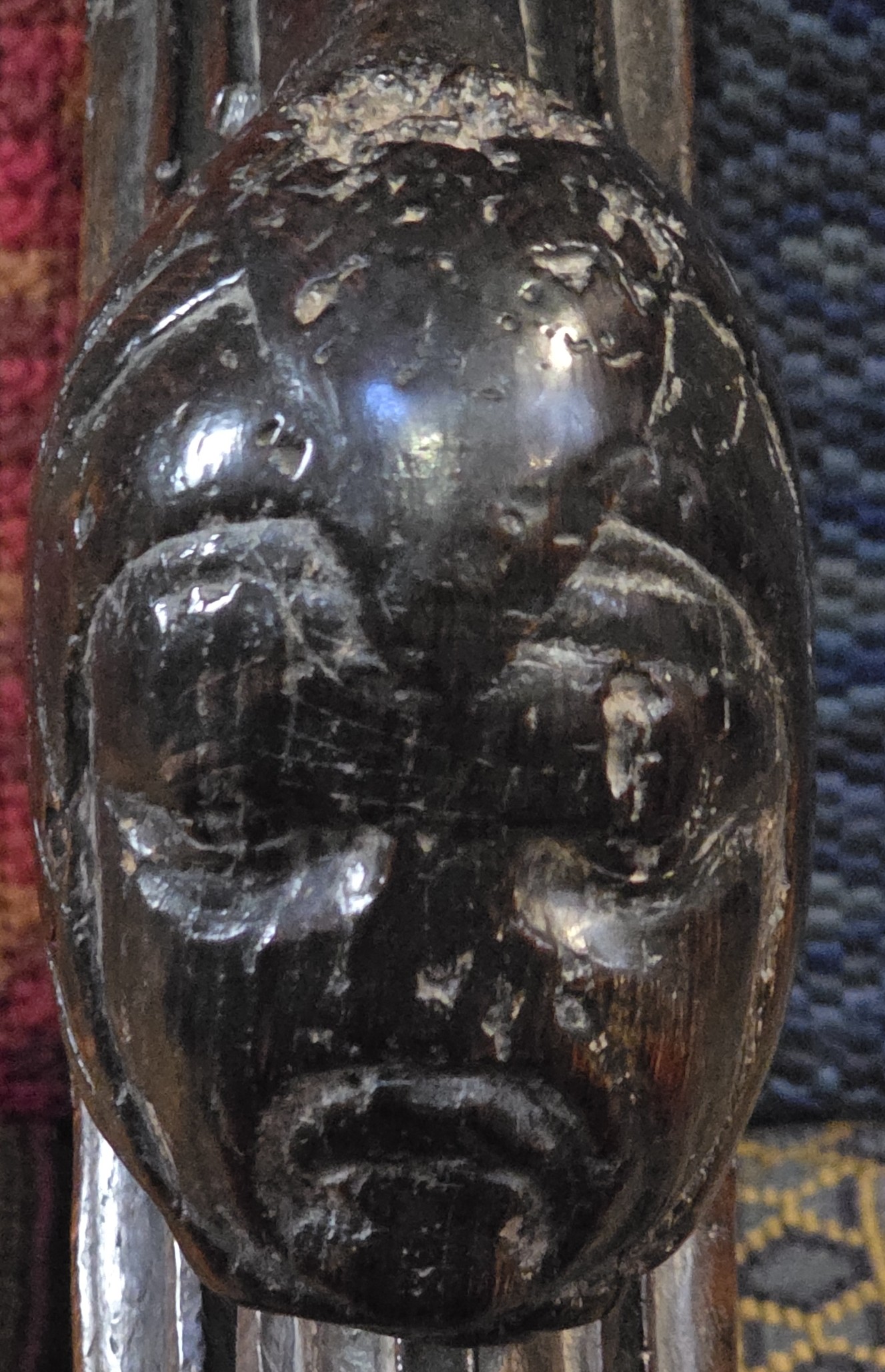
The layout shown at page 181 of Howard and Crossley (first published in 1917) seems to differ from the contemporary arrangements. None of the treatments I have seen deal with the issue of the carvings missing at S3 and S4. Writing in 1974, Alec Clifton-Taylor asked of the Lancaster misericords: “Did a set of stalls ever incorporate so many portrait heads as these?” As there are ony two portrait heads on the remaining misericords, this is presumably a reference also to the supporters on the arm rests.
N1 (on the left, furthest from the camera)
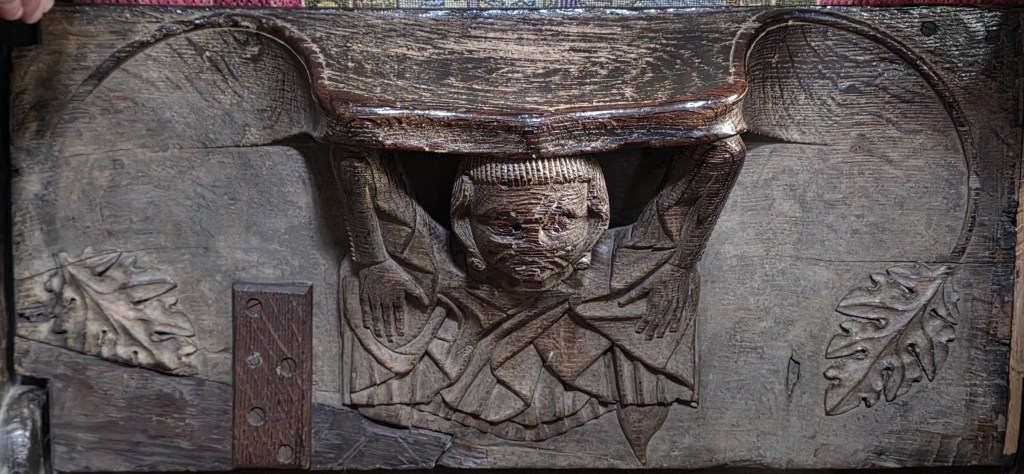
N2
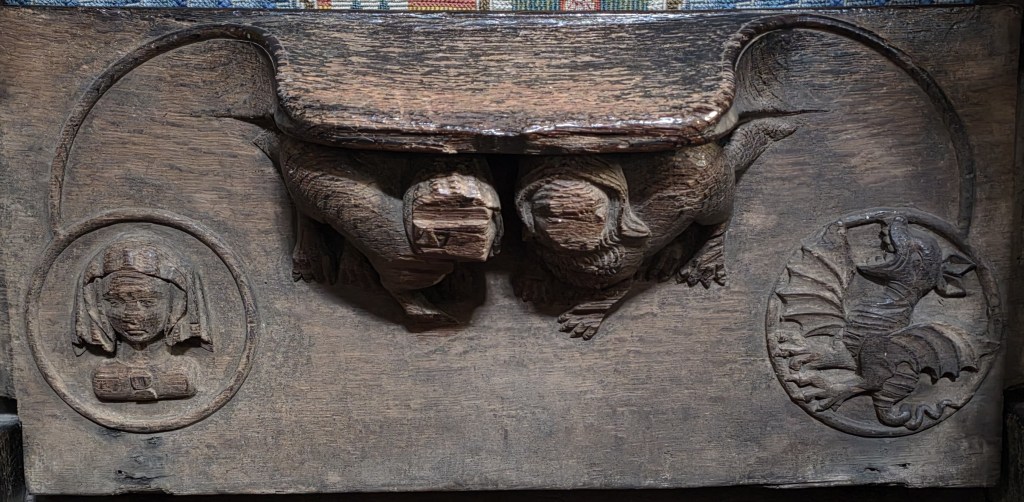
N3
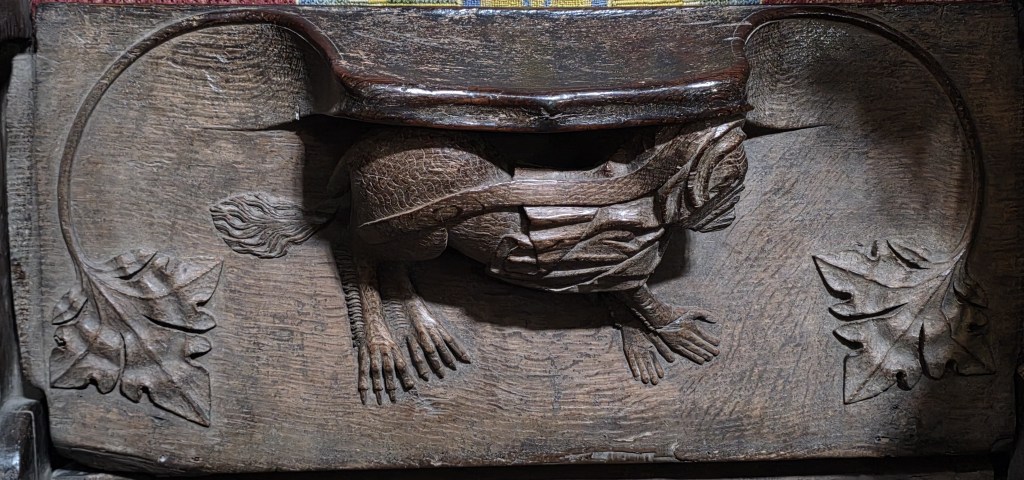
N4
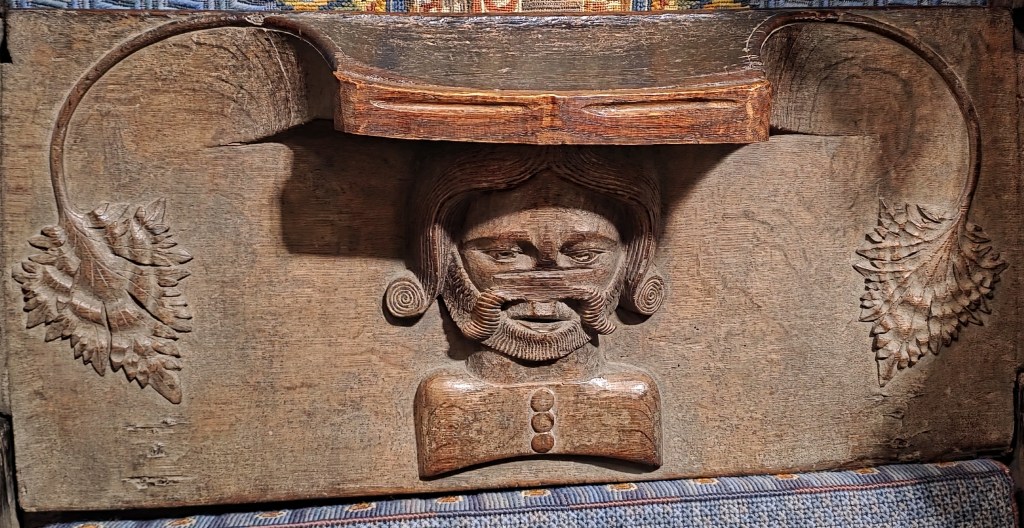
N5
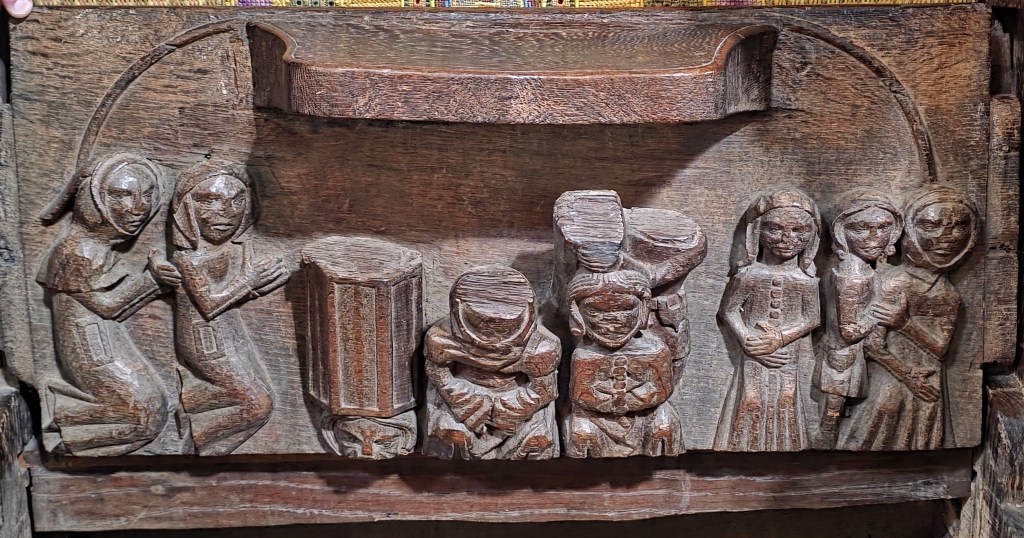
N6
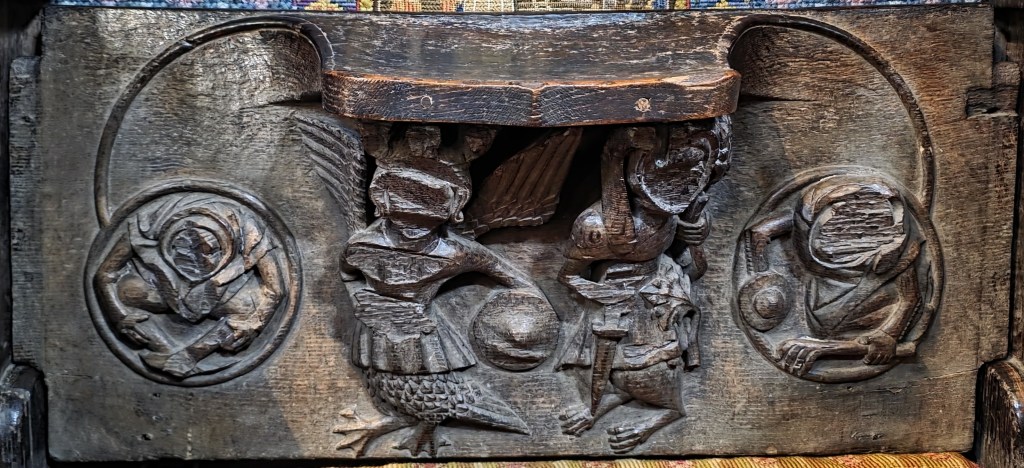
N7 (nearest on the left)
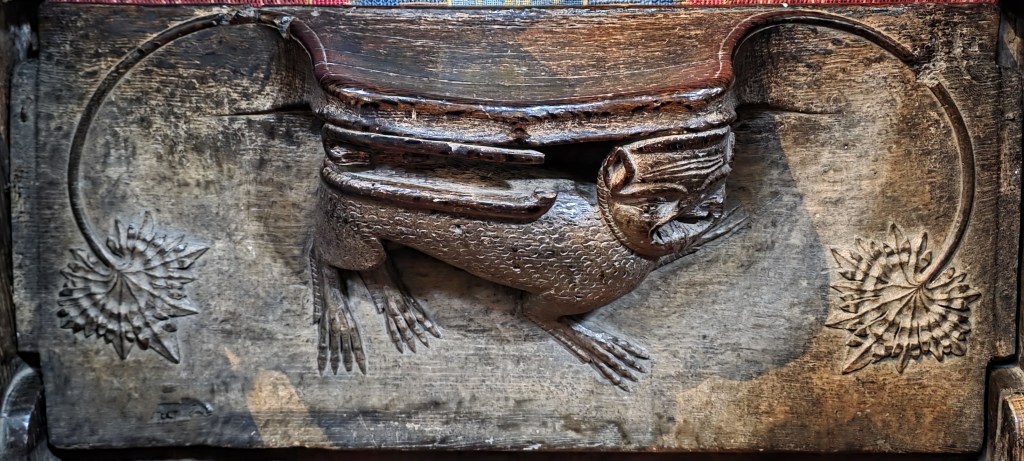
S1 (on the right, furthest from the camera)
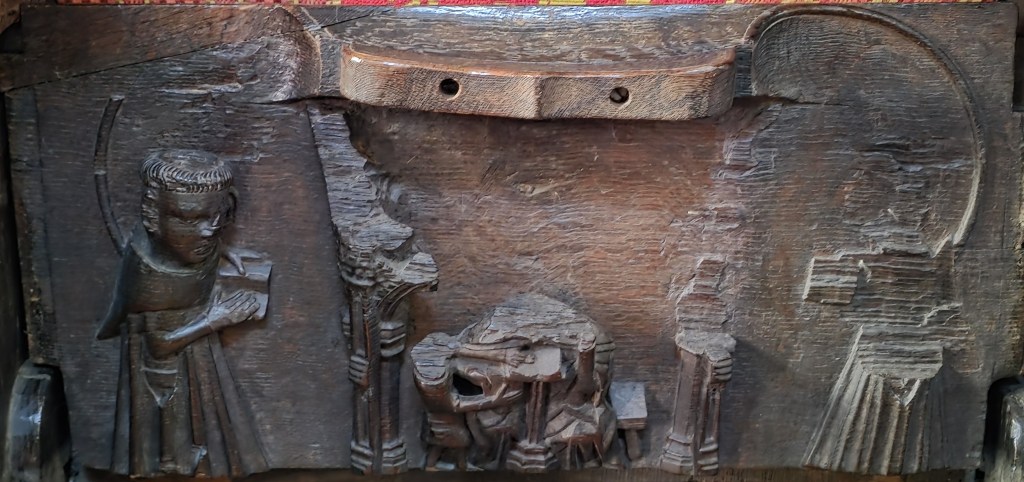
S2
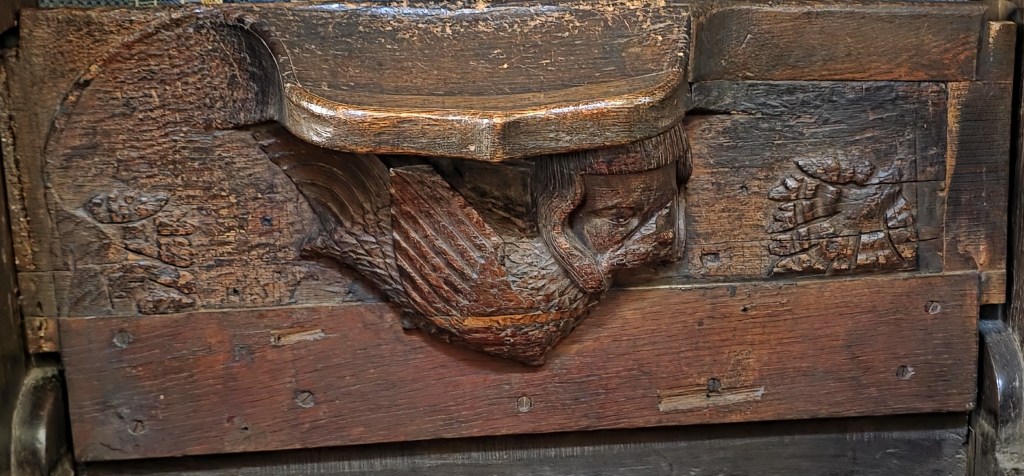
S3
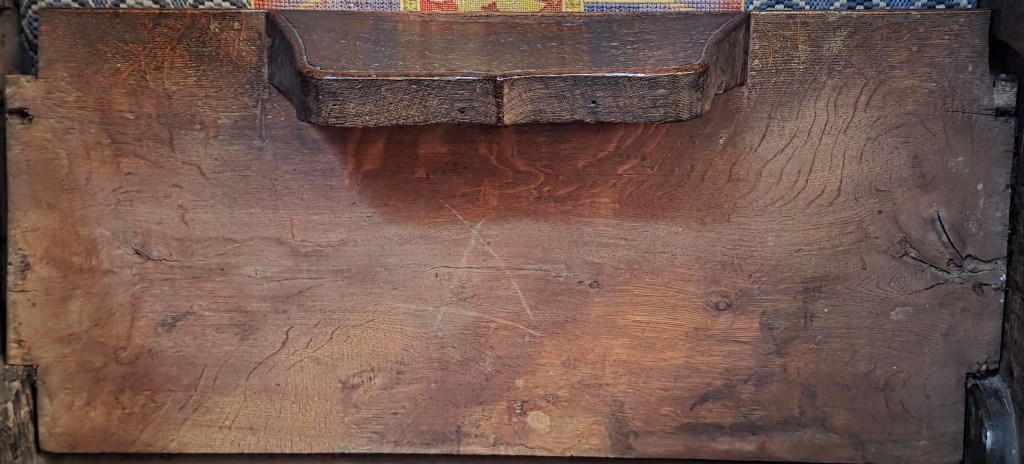
S4
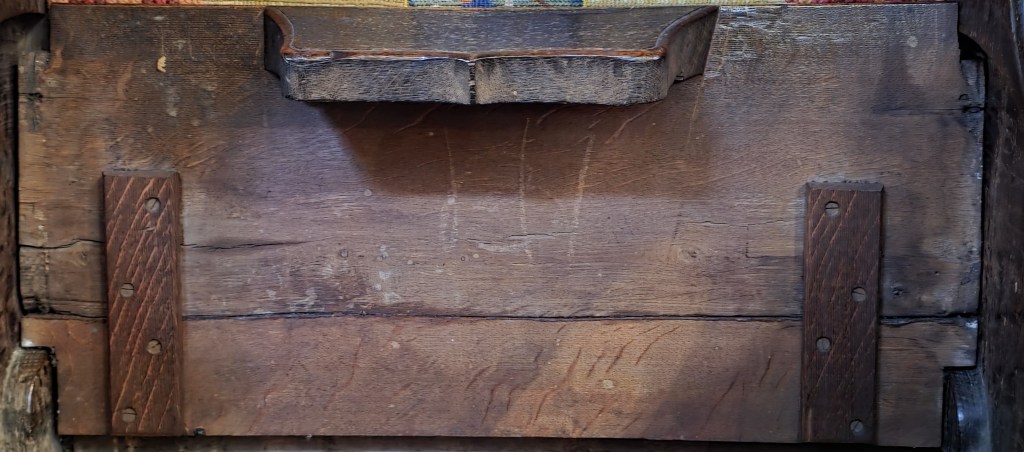
S5
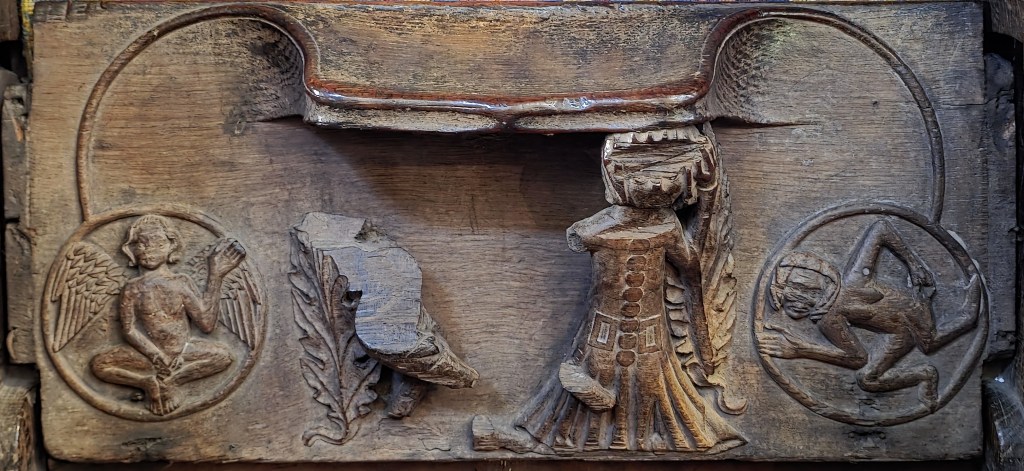
S6
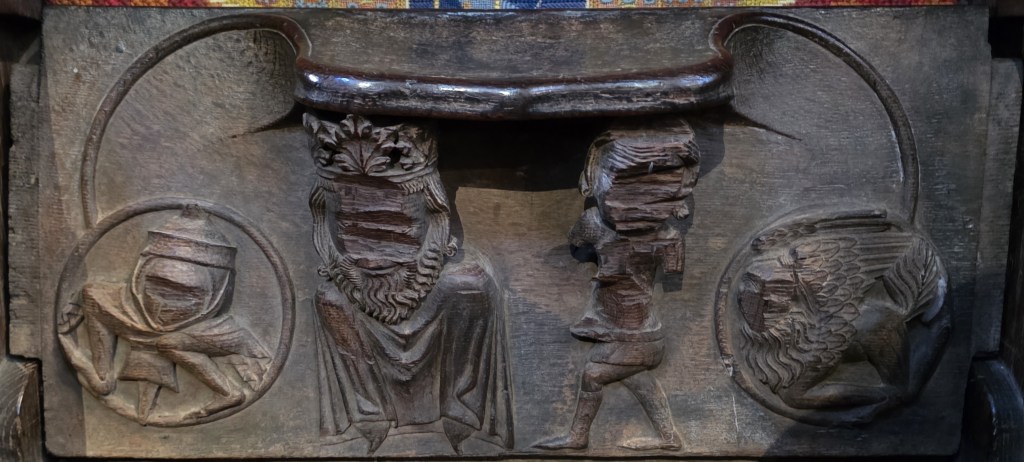
S7
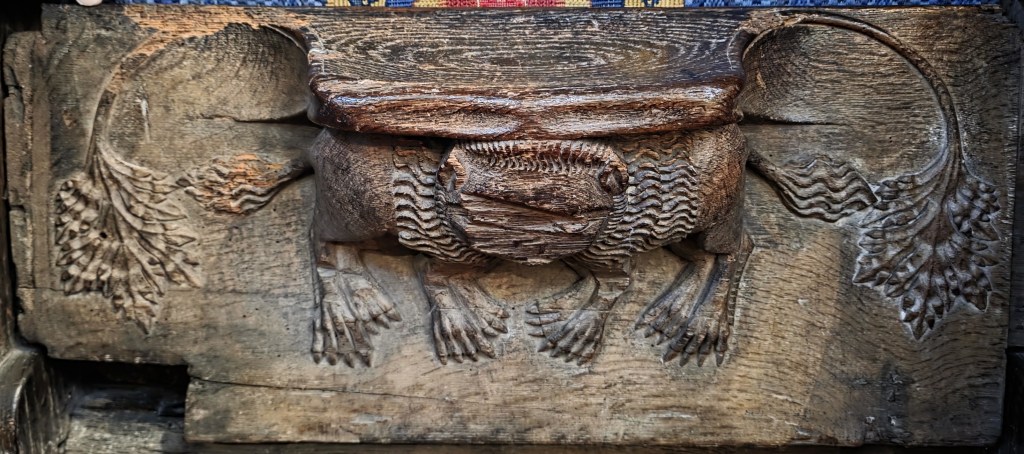
Supporters on the arm rests
Source: Misericords of North West England John Dickinson (Centre for North-West Regional Studies University of Lancaster 2008); English Church Woodwork A Study in Craftsmanship During the Medieval Period AD 1250 – 1550 Howard and Crossley (Batsford 1927); Engliash Parish Churches as Works of Art Alec Clifton-Taylor (Batsford 1974).
 undivided-back postcards