Barcelona Cathedral

A selection of La Seu’s sixty two misericords. The oldest of these (the back row) by Pere Sanglada, are sixty years older than the next Iberian examples, dating from 1394 to 1399. The second range (the front row) were done in 1456 to 1459 by Matias Bonafe.
Sanglada was the first great figure of international gothic in Catalonia. The Barcelona stalls are his greatest work. Although the terms of his contract indicate that he was already a prestigeous master, the Cathedral Chapter made him travel to France and Flanders both to see the work they were doing and to buy Baltic oak in Bruges.
Bonafe’s contract forbad the scuptor from introducing images, figures, or beasts of any kind, and required him to limit himself to leaf ornamentation. That went well.
Source: Gran Enciclopedia de Espana

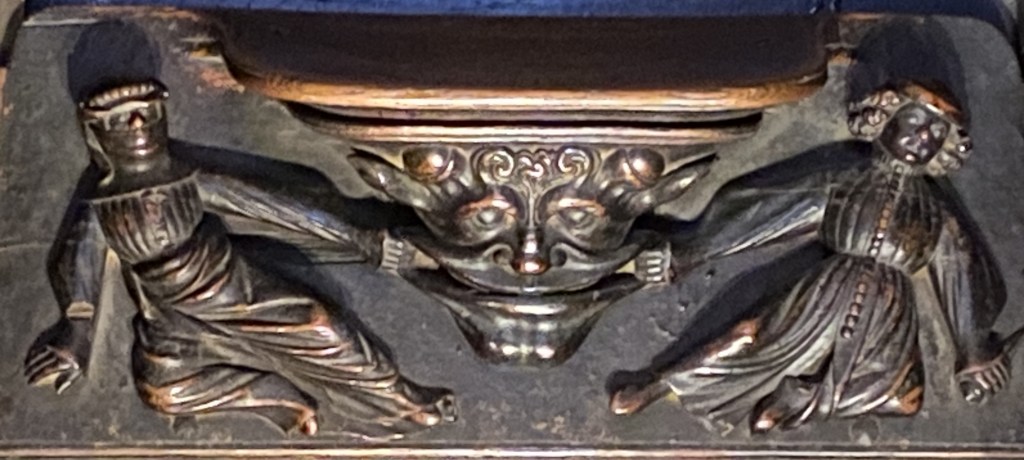
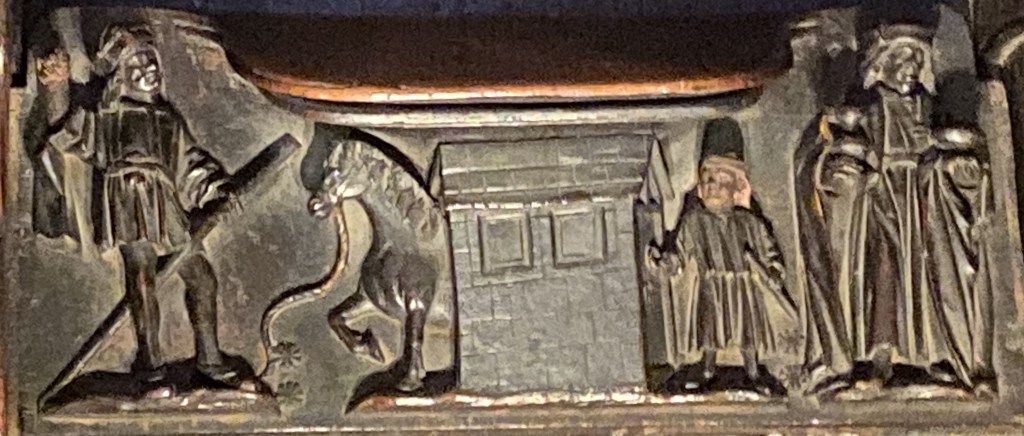
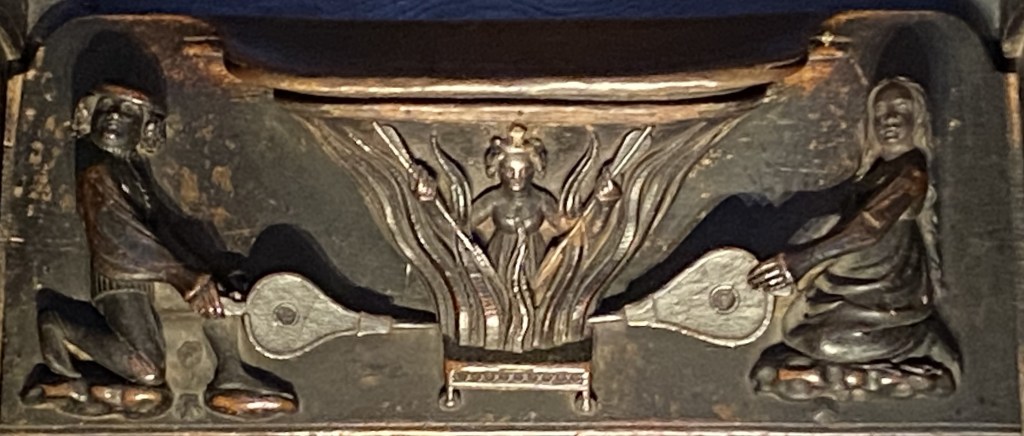

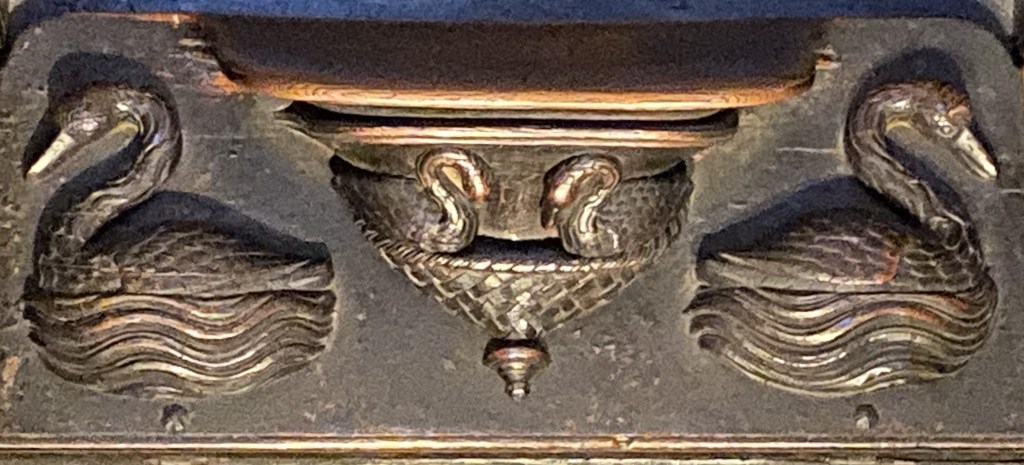


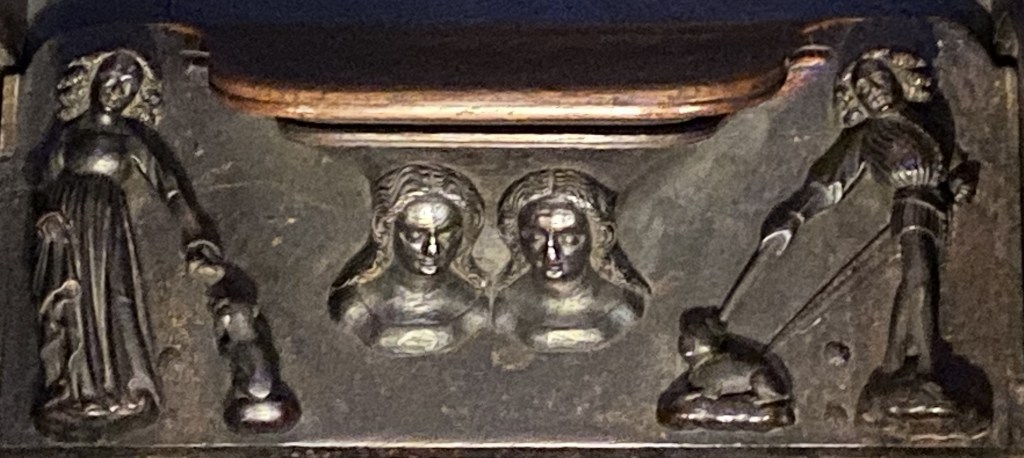


Sources: Misericords of the World; The Elaine C. Block Database of Misericords; The Gothic Choirstalls of Spain Dorothy and Henry Kraus (Routledge & Kegan Paul 1986)
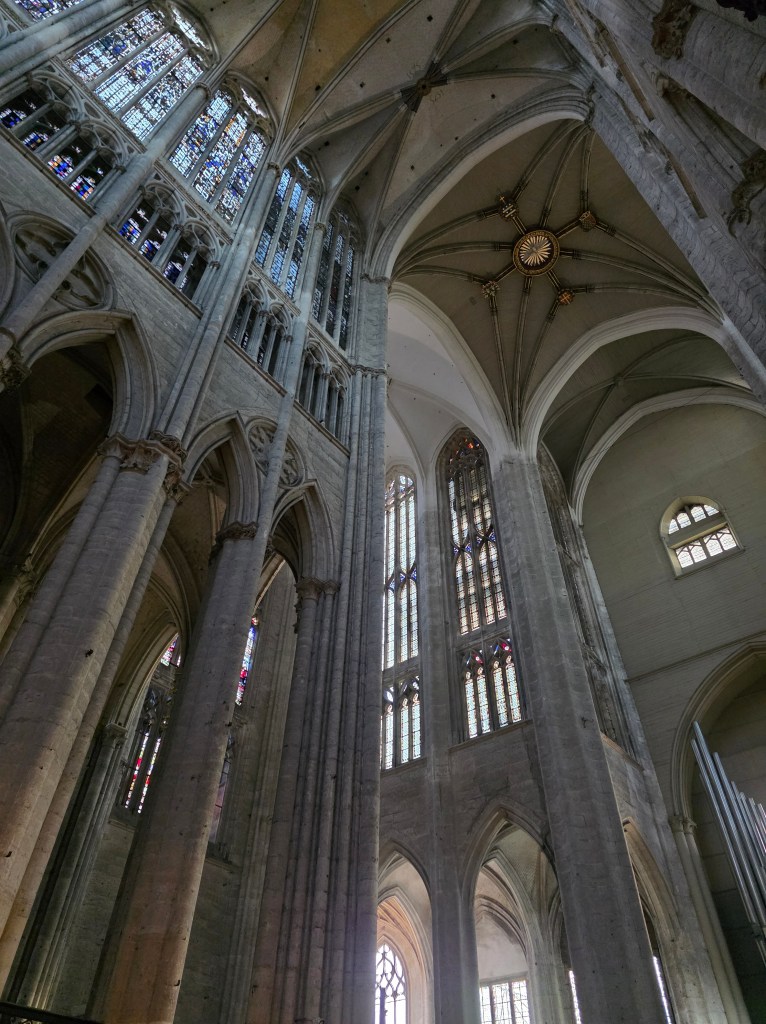
Beauvais Cathedral -article in progress
Dominican Friary of St Nicholas, Brecon, Wales
now Christ College, Brecon, Powys.

Saint Dominic was born in Castile (central Spain) in 1170. He formed a mendicant (begging) order of Friars Preachers in France which attracted Papal approval in 1218 and spread across Europe, arriving in England in 1221.
The Dominican Friary in Brecon was founded before 1269. Its great benefactor, along with four other Welsh Dominican establishments, was Queen Eleanor of Castile, wife of Edward I.
Little is known about the later history of the Dominicans in Brecon; Ancient and Medieval Architecture say that they were not involved in preaching which would certainly mark them out from other such establishments.
At the time of the dissolution of the friary by Henry VIII in 1538, they were one of the smallest Dominican houses in Wales with ten friars, six acres of land and a small garden. After the dissolution, the friary buildings were granted to the Bishop of St Davids who founded the “College of Christ” which in turn was re-founded as a public school in 1853.


Archdeacon Yardley’s mid-18th century description of the post-1541 seating arrangement of the prebendarys in Christ College gives details of 23 stalls in the choir and their occupants. This seating was removed in the late nineteenth century and disposed of. Six stalls with misericords were recovered from a garden in the 1920s. We do not know if the six are representative of the 23.
The striking feature of the misericords that survive is the primitive nature of the work. The images are unsophisticated and taken from a limited experience of life. The supporters are placed on the arms of the chairs (see below). The seats do not stay up without support.
Might it be that the Dominicans commissioned misericords soon after they arrived between 1221 and 1269 from the local carpenter who was engaged in the construction of their church? His unfamiliarity with the established norms of misericords not far away is self-evident. The lack of conventionally-located supporters might support the idea that he worked from instruction of friars recently arrived from Europe where misericords don’t usually have supporters.
There were only ten friars at dissolution but this doesn’t tell us how many there were earlier or how many seats they provided.
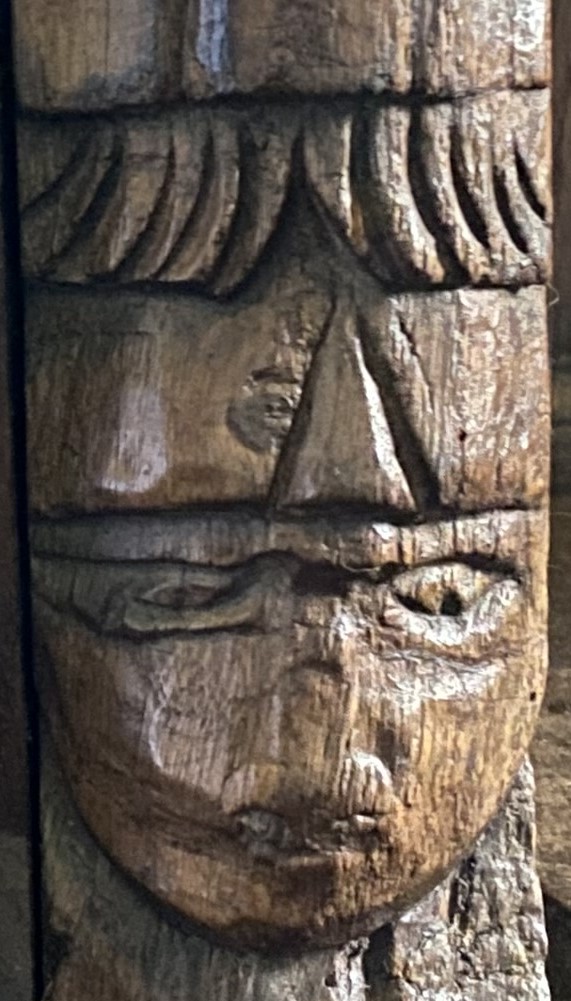
Details of the supporters on the arms of the stalls:


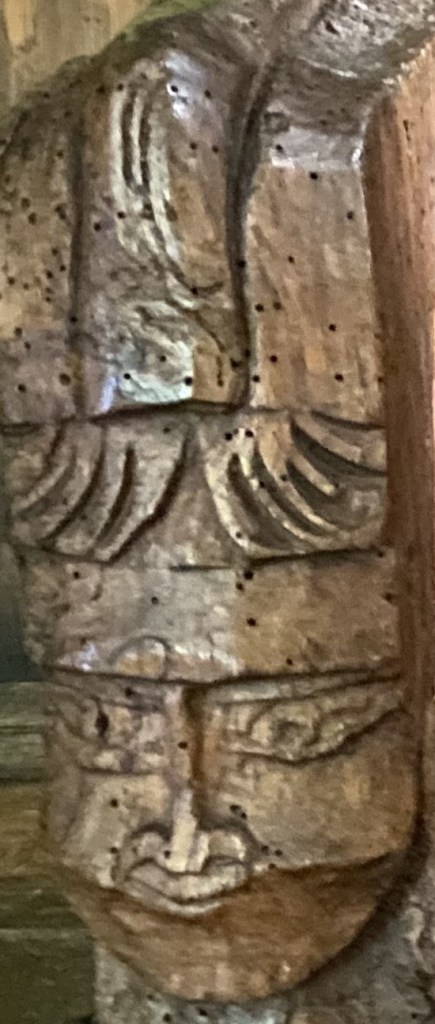


Meet the Friars
The supporters’ faces seem likely to be those of the first occupants of the chairs.


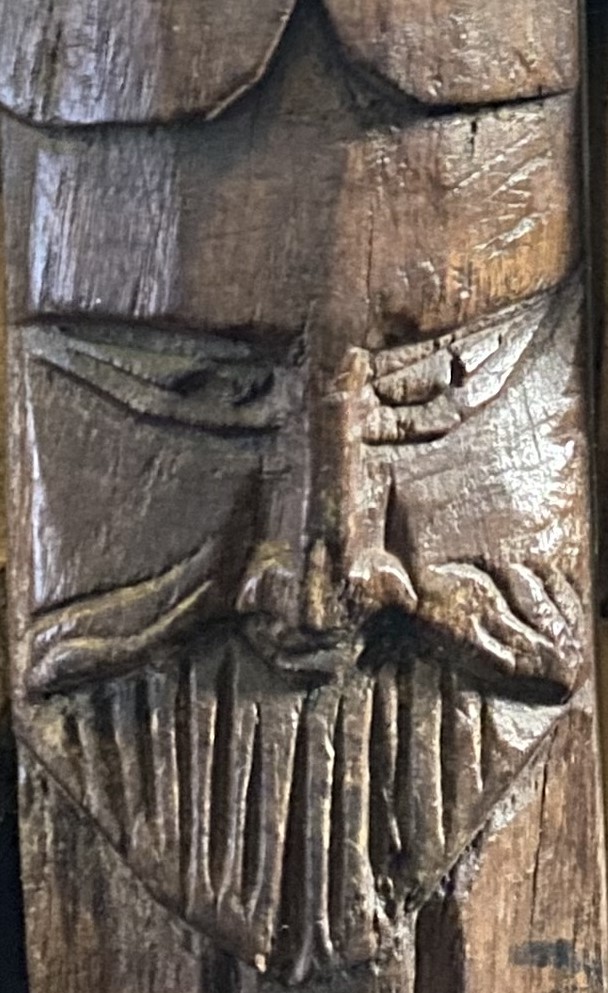

Sources: Ancient and Medieval Architecture; Monastic Wales; Menevia Sacra (Yardley ed. Green, 1927); Christ College, Brecon

