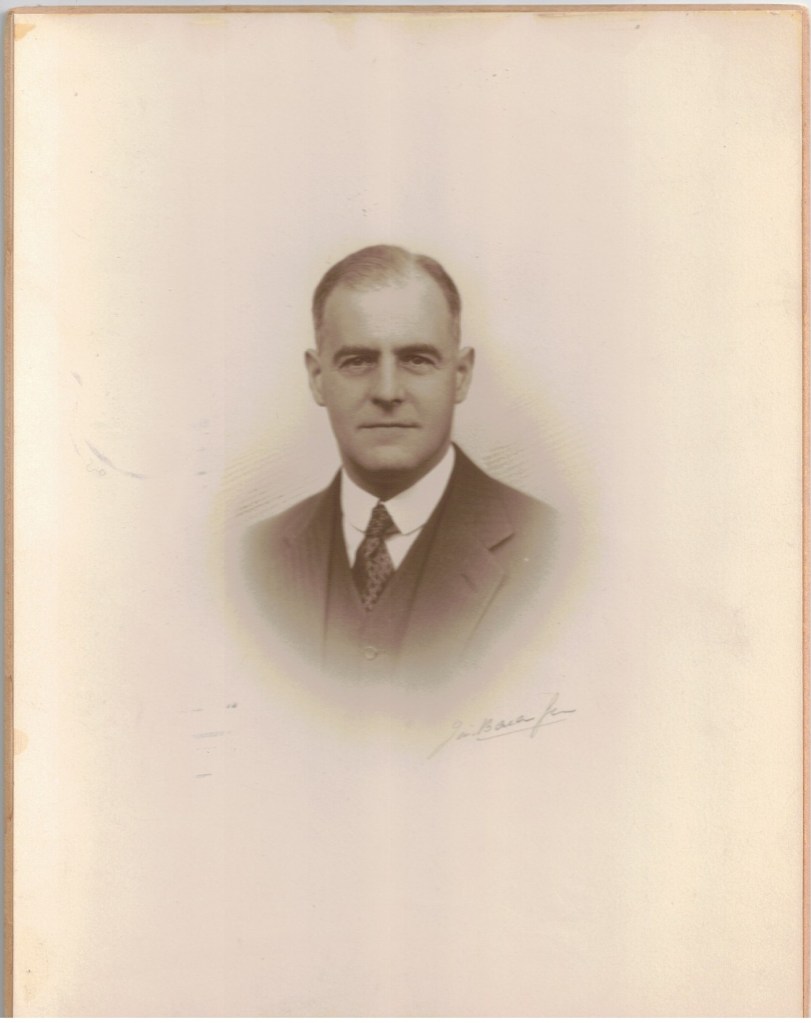
James Bacon and Sons
JAMES BACON AND SONS.
17-19, Basnett Street, Liverpool.
ALSO AT
130, PRINCES ST., EDINBURGH.
81, NORTHUMBERLAND STREET, NEWCASTLE-ON-TYNE.
38, COMMERCIAL ST., LEEDS.
HIGH CLASS MINIATURES ON IVORY AND CARBON PICTURES ON PORCELAIN CAN BE EXECUTED FROM THIS PHOTOGRAPH.
Additional Copies of this Photograph may be obtained at any time by quoting number below.
Registered No.
By 1892 James Bacon was already at Northumberland Street, Newcastle. On Monday 3 October, while some employes were at work at 20 Ridley place, an ignition of guncotton took place. Also known as an ambrotype, the collodion positive was invented by F. Scott Archer in 1822, and was in widespread use by the mid-1850s. To produce a collodion positive, a sheet of glass is hand-coated with a thin film of collodion (guncotton dissolved in ether) containing potassium iodide, and sensitised to the light with silver nitrate to create a collodion negative. The back is then painted black or covered with a piece of dark cardboard or cloth in order to achieve the effect of a positive image.
The accident was reported in detail in the British Journal of Photography:
Ernest Baker, thirty-seven years of age, who was using the cotton, was burnt on the face and cut about the arms, and the back kitchen was slightly damaged. Some of the woodwork caught fire, and word was immediately conveyed to Prudhoe street Police-station, from which place the alarm was raised at the Westgate-station. Superintendent Mathews, with a staff of firemen and the tender, at once proceeded to the place, but the fire was extinguished by a few people employed on the premises, and by some neighbours, before the fire brigade arrived.
By 1900 the business was James Bacon & Sons. Their Newcastle cabinet cards offered high class miniatures on ivory and carbon pictures on porcelain. The Newcastle branch took photographs that document the construction from March 1927 to October 1928 of the Tyne Bridge, one of the most iconic landmarks of the north-east of England.
Thomas Bacon was at 149 Woodhouse Lane, in Leeds between 1894 and 97, succeeded there by James Bacon, between 1898 and 1902 and James Bacon & Sons at 38 Commercial Street by 1904. They advertised as Photographers & Miniature Painters and Specialists in Group Photographs.
In January 1906 the Leeds studio took a photograph of the members of the Leeds Chorus made up of individual oval portraits arranged as a shield and all sitters named in a key published by the Yorkshire Weekly Post on Saturday 20 January. Earlier that month, a party of 300 people and supporters travelled from Leeds to Paris to perform in a choir concert accompanied by the London Symphony Orchestra.
David Blount
David Blount (1879 to 1948) made his living as a commercial photographer in charge of the Newcastle branch of James Bacon and Sons. Blount became a member of the Linked Ring brotherhood on 22 September 1902 with the pseudonym Interloper. The Linked Ring (also known as “The Brotherhood of the Linked Ring”) was a British photographic society created to propose and defend photography as being just as much an art as it was a science. Members dedicated to the craft looked for new techniques that would cause the less knowledgeable to steer away, persuading photographers and enthusiasts to experiment with chemical processes, printing techniques and new styles
Blount’s was regarded at the time as amongst the first rank of photographers during the early years of the 20th century. He was prominent both in anecdotal figure studies, where the image illustrates a story rather than being a formal, posed portrait, and landscape, using the gum process to modify detailed information in his photographs to achieve pictorial effect.
In 1903 his work was shown at the International Exhibition of the Photographic Society of New South Wales.
In 1905 Blount, judged the Gateshead Camera Club Annual Exhibition.
In the period to 31 August 1922, Blount was a partner with Richard James Bacon and William Herbert Bacon, carrying on business as Photographers, at 81, Northumberland-street. Newcastle-upon-Tyne, 130, Princes-street, Edinburgh, and 17/19, Basnett-street, Liverpool.
William Herbert Bacon (died ll March 1934) was the partner in charge of the branch at 130 Princes Street. Edinburgh. Bacon was living at 15 Randolph Road, Maida Vale, in Middlesex when he died.
On 9 February 1923 and again on 26 July 1949, James Bacon and Sons Limited was dissolved. In 1935 James Bacon and Sons Limited at 130 Princes Street were advertising as experts in wedding photography and Court Photographers.
Sources: photoseed.com; Leeds and Bradford Studios; V & A
Augustin Barbichon
Versailles, France
- A Barbichon – Jeannon & Guerronnan & Philippon – Entree 19 rue St Pierre – 28 Avenue de St Cloud Versailles
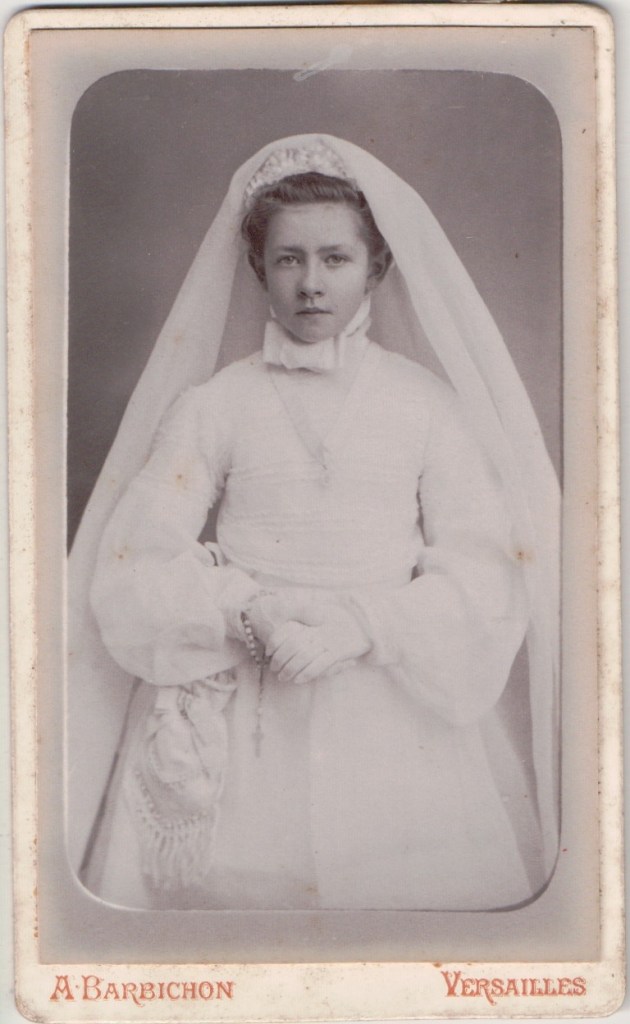

The son of a saddler, Marie Simon Augustin Barbichon (27 October 1855 to 7 May 1917) was born in Morey (Haute-Saône). At the age of 18, he enlisted for five years in a squadron of the train regiment where he was a saddler. The train regiment organised and coordinated military logistics, transport and support for movement (particularly road traffic) of the French Army . It was created in 1807 by Napoleon before which these functions were carried out by private companies under contract or requisitioned.
Returning to civilian life, Barbichon became a painter in Nevers (Nièvre) when he married in Brou (Eure-et-Loir) on 19 November 1883. His wife, Armandine Théodorine Briard, who was 18 years older than him, brought as dowry the earthenware factory she had inherited from her father. Barbichon ran it until it closed. In his spare time, he was a painter but also a photographer and, as such, a member of the French Photographic Society from 1892. In March 1893, he set up as a photographer in Versailles. Charles Guerronnan gave him his studio located at 26 avenue de Saint-Cloud with entrance at 19 rue Saint-Pierre. On 1 July 1898 he added the studio that Philippon operated at 17, rue Colbert. On the back of his photos, Barbichon presents himself as “Artist Painter Photographer, successor to Jeannon, Guerronnan and Philippon”.
Barbichon also had a branch in Brou which he closed in 1899. Barbichon was listed at 19 rue Saint-Pierre in 1901 but not in 1906. In 1911, he was a painter, residing at 25, rue de Beauvau in Versailles where he died.
This image displays an advertisement or business card for a “Photographer Painter”.The business also offered “REPRODUCTIONS OF ALL KINDS” and a “NEW SPECIAL PROCESS For Child Portraits.” PORTRAITS IN PASTEL & PENCIL created both FROM NATURE and FROM PHOTOGRAPHY.
The reverse also claims “3 Silver Medals in Versailles, Paris (1878), and Chartres (1880)” The Paris Exhibition of 1878 was France’s third World Fair held between 1 May and 10 November to celebrate industry and the recovery of France after the Franco Prussian War. As part of the exhibition international juries awarded bronze, silver and gold medals designed by French sculptor Jules-Clement Chaplain. But 1878 seems too early for Barbichon and there is no sign of a medal-awarding event in Chartres in 1880. So perhaps the claim was to medals won by one of the predecessor studios or perhaps there is even less to his credit?
Source: Des photographes en France (1839-1939)
James Brooks
Todmorden, West Yorkshire, England
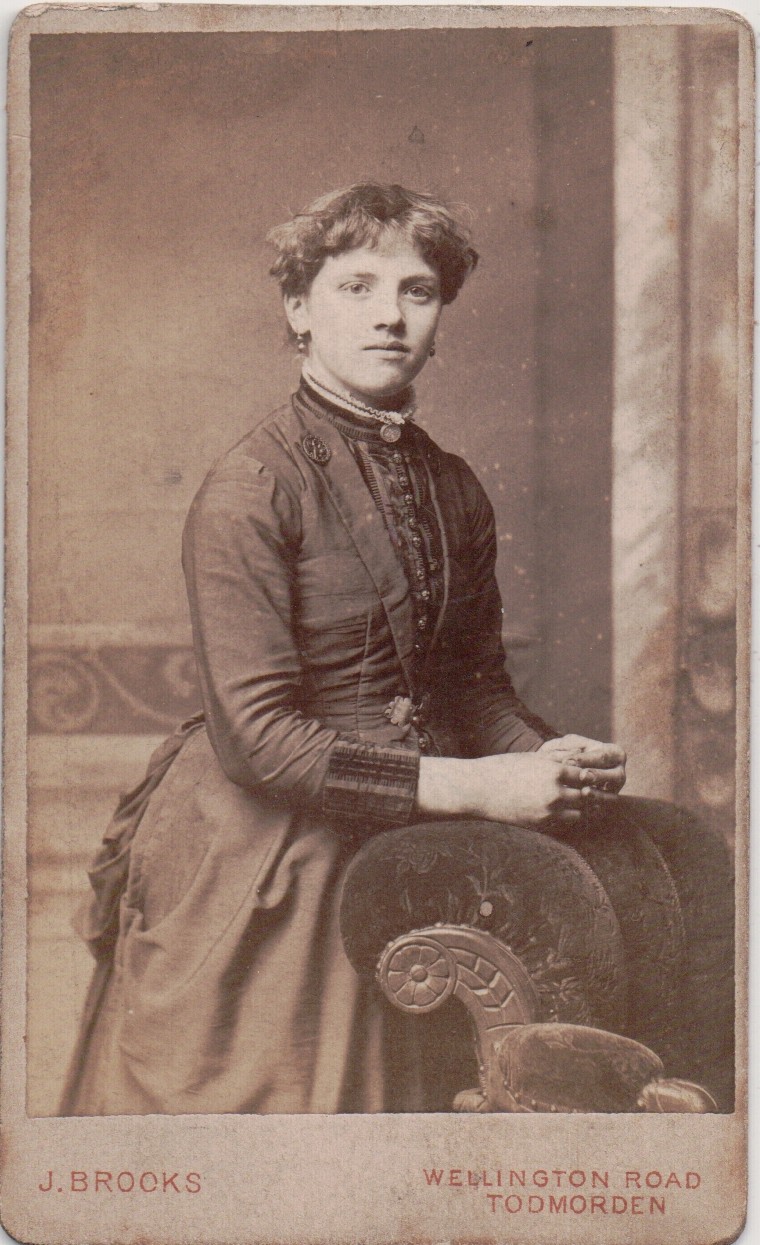
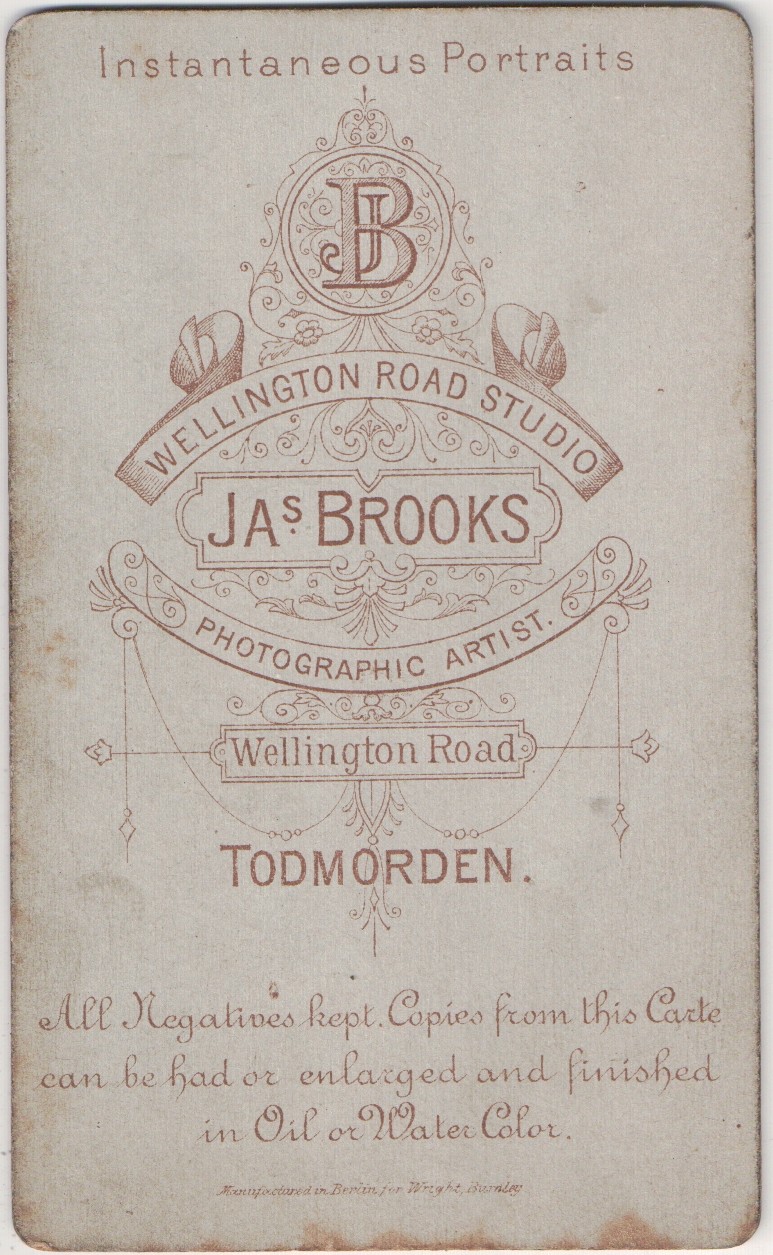
- Jas Brooks Wellington Road Studio, Todmorden. Instantaneous Portraits. Photographic Artist. All negatives kept. Copies from this Carte can be had or enlarged and finished in Oil or Water Color. Manufactured in Berlin for Wright, Burnley
According to the 1901 Census, Heywood-born Brooks was 49 years of age and in business on his own account. He was living at 78 Piccadilly Road, Habergham Eaves, Burnley with his wife Ada who was 36 and son David Brooks, a 21 year old sanitary ware worker, daughters Annie (18) and Martha (16) who were cotton weavers and Sarah (12) and three year old Hartley. Apart from Sarah who was born in Todmorden, all the children were born in Burnley, nine miles to the north-west.
Other CDVs described his place of work as the Todmorden Studio
James Brooks started the Coal Clough Lane Studio in Burnley around the turn of the century having previously been on Accrington Road. His father before him was also a photographer from around the 1870s. His son, Fred Brooks, photographer of Coal Clough Lane, was mentioned in the Burnley Express of Saturday 25 June 1927, and Saturday 19 February 1944. How this family history fits with James Brooks of Todmorden is not clear.
Sources: Burnley photographers; https://www.rootschat.com/forum/index.php
Thomas J. Burns, Edinburgh
- T. Burns 5 WEST MAITLAND ST. EDINBURGH
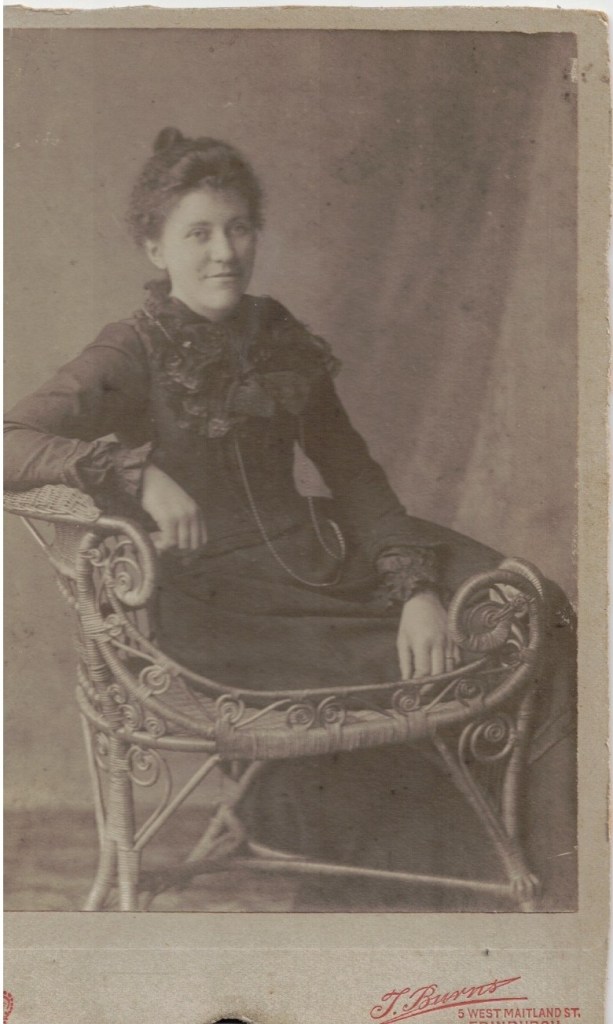
Thomas J. Burns (February 1845 to 8 February 1937) 5 West Maitland St. Edinburgh
Thomas Burns was a professional photographer in Fife from 1860-70, and again from 1872-83. In 1868, he published a book of his photographs of Old Edinburgh Picturesque Bits. From 1880 to 1910, he had studios in Edinburgh, producing silver and carbon photographs, finished in oil and water colours. In 1880-81 Burns was at 1 Grove Street Between 1882 and 88 he was at 39 Grove Street. In 1889 he was at 3 West Maitland Street. Between 1889 and 1910 he was at 5 West Maitland Street where his cabinet cards described him as an artist photographer.
He joined Edinburgh Photographic Society in the season 1884-85
Burns emigrated to Canada and in 1911 was living and working as a photographer in Moose Jaw in Saskatchewan.. After retiring, he operated as a photographer in Saanich British Columbia in the early 1930s and died there in 1937. His son George operated as a photographer at the same address in the 1940s.
Sources: Edinphoto; Camera Workers
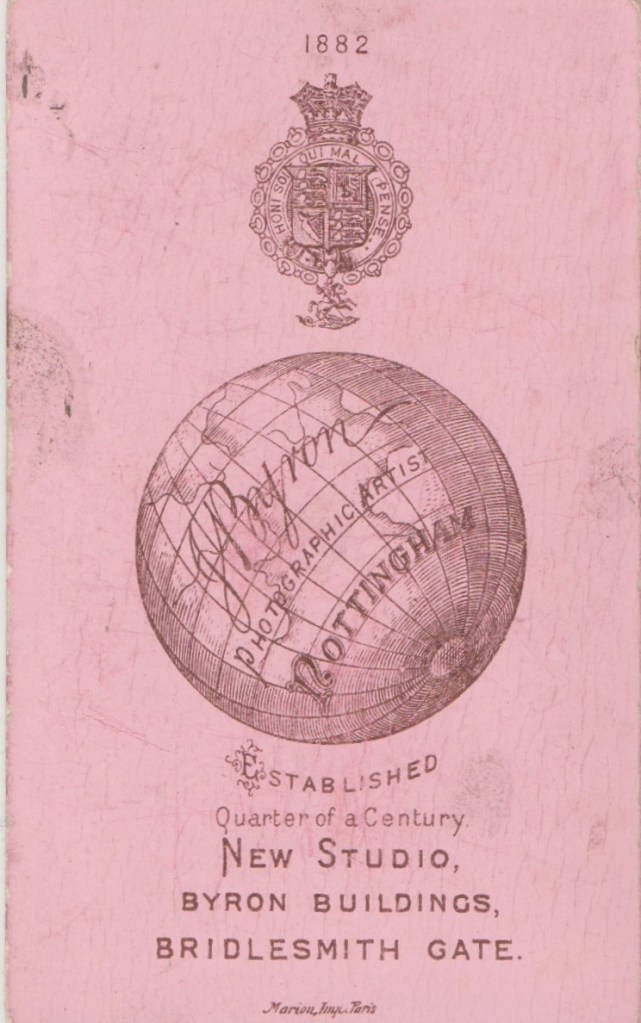
James Byron, Nottingham, England
- 1882 J. Byron, PHOTOGRAPHIC ARTIST, NOTTINGHAM ESTABLISHED Quarter Of a Century NEW STUDIO BYRON BUILDINGS BRIDLESMITH GATE Marion, Imp. Paris

This is a complex tale featuring three generations of the same Nottingham family:
- James Clayton (1802 to 1863) opened a photographic studio at Nottingham in the mid-1840s,
- his son Walter Clayton (1833 to 1893), at 8 Greyhound Street, Long Row, Nottingham in 1856.
- Another son, James Byron Clayton (1826 to 1880) opened a studio at 4 Ram Yard, Long Row East by 1857, operating under his baptismal second name Byron, so as to differentiate between his studio and that of his brother.
- James Clayton’s grandson Joseph Byron Clayton (1847 to 1923)
James Clayton senior had basket making work rooms in Greyhound Street.
The first documentary evidence of a member of the Clayton family working in the photographic profession appears to be when Walter Clayton opened a photographic gallery beside the basket-making business by the end of February 1856. In 1857 James followed suit, opening a studio in Ram Yard, off Long Row East. As a means of distinguishing his business from that of his brother, he traded under the name “James Byron.”
This was around the period when the daguerreotype patents lapsed and the patent-free wet collodion process developed by Frederick Scott Archer made the profession far more accessible. Nottingham experienced a wave of new practitioners between 1854 and 1858, and soon the Clayton brothers were amongst twenty or so photographers offering collodion positive and other photographic portraits in the town.
The census enumerated in April 1861 shows Byron living with his wife and fourteen year-old son Joseph in Parliament Street. It is likely that he began to offer the newly-popularised and much more affordable carte de visite format to his customers shortly after its introduction into Nottingham in 1862.
As James Byron he was listed in Wright’s Nottingham Directory for 1858, at the premises in Ram Yard. When joined by his son, he was at Long Row and, when in business with more than one son, at Ram Yard Market Place. These could have been the same place as Ram Yard is in Long Row.
Byron was at Bridlesmith Gate in 1882 and 1885.
By the mid 1880s, the business fell on hard times. Facing a possible bankruptcy, Byron, his wife and oldest daughter emigrated to New York where for a year he practiced as a freelance press photographer for the Illustrated American, among other publications, before breaking into stage photography. His son Percy followed in his footsteps, but eventually moved to Edmonton, Canada, where he established a photographic business with his brother-in-law.
The family business faltered during World War I, forcing Percy to move back to New York, where he again joined forces with his father, establishing a studio specializing in ship photography. Joseph Byron Clayton died in 1923, after which Percy Byron took over the Byron Company and continued to run it successfully until the middle of World War II, when business experienced a downturn and the company closed for good in October 1942.
Sources: If you thought selfies were a new craze, think again: Amazing self-portraits taken by pioneering photographer in 1909 put Instagram to shame Daily Mail Snejana Farberov 9 February 2014; Brett Payne’s Victorian & Edwardian Photograph Collection
Marion, Printers, Paris  (see also here)
By 1866 A Marion & Company of Soho Square, London were employed handling the wholesale publishing of ‘famous people’ carte de visites, for the top London studio of Mayall. By 1870 Marion were making the backs for sale to photographers, and must have had travelling salesmen pushing their product to the smaller studios using a standard catalogue of designs. The only way to get the price down to below the level of the customer’s local printer, would be by economies of scale, printing a lot of the same design to sell them to everyone. This they tried to do using muted colour cards with a simple border, a coloured line set in from the edge with rotating square shapes in the four corners, at the bottom in small print was Marion Imp, Paris. This simple border was soon generally replaced by other designs, but it kept going with some photographers until at least 1884.
Later, Marion printed postcards.
Sources: The Marion Date Code; cartes free uk

