J. S. Lambert & Company
Jarrow & North Shields, Tyne and Wear, England
- J. S. LAMBERT & Co. PORTRAIT PAINTERS & PHOTOGRAPHERS STUDIOS Ellison Street, JARROW & North Shields


J. S. Lambert & Co. photographer, Ellison Street, Jarrow & North Shields
Lambert, then at Northampton House, Jarrow, produced a photograph of three steamers stranded on the sands at South Shields in December 1876. His early CDVs described him as J S Lambert, Artist, Jarrow. By the time he moved to Ellison Street, he had added “& Co” and the studio in North Shields.
Source: Shields Daily Gazette 2 January 1877 www.thessvlbhistory.co.uk
G. W. Lawrie & Company, India
- G. W. LAWRIE & CO., LUCKNOW & NAINI TAL
The Scottish photographer G. W. Lawrie was in business in northern India from 1880 to 1921. In 1880 Lawrie went into partnership with Prussian photographer John Edward Saché (1824 to 1882) for whom he had previously worked, opening the studio Saché & Lawrie at Naini Tal. Saché’s sudden death in 1882 put an unexpected end to the firm.
That year Lawrie invited his brother-in-law Frederick “Fred” Bremner (1863 to 1941) to join him in establishing a studio in Lucknow. Bremner was born in Aberchirder, Aberdeenshire, Scotland. The son of a professional photographer, he joined his father’s studio on leaving school at 13. Lawrie was presumably married to Bremner’s sister. He later wrote:
“My father received a letter… offering me an appointment, which was accepted. Naturally to me the day was one of rejoicing – to go out to India and work there, travel and see the world, and you may have it instilled into the mind that you are out to make a fortune.”
Lawrie equipped his younger kinsman with a studio tent and despatched him into the field, first to Cawnpore, then Allahabad, Ferozepore [now Kanpur, Prayagraj, and Firozpur], and thence to his studio at Naini tal, “a charming spot… the summer residence of the Lieutenant-Governor of the United Provinces and most of the Government officials”, and the military stations at Ranikhet and Almorah. In 1889, after a brief break back in Britain, Bremner set up on his own and practised with great distinction. Photographer Sidney Herbert Dagg (1862 to 1930) moved to India in 1891 and worked as an assistant to Lawrie before establishing his own firm, with offices at Mussoorie and Allahabad.
Lawrie traveled around India, what is now Pakistan and sections of Afghanistan for years, taking majestic pictures. Many of the photographs focused on the palaces occupied by some of India’s sultans during British rule. Forces and local royalty featured in his studio work which was gelatin silver print on studio mount. CDVs were coloured to order.
Lawrie had several places of business over the years:
- Naini Tal (1883 to 1921). Nainital is a popular hill station in the state of Uttarakhand about 500 kilometers from Allahabad. In 1862, Nainital became the summer seat of the North Western Provinces. One of Lawrie’s daughters was born at Naini Tal on 11 April 1882. Another daughter was born there on 15 October 1889. Sache’s studio in Naini Tal served as his summer studio while Lucknow in Uttar Pradesh, was his winter studio. Lawrie may have done the same though the birth of his children in Naini Tal suggests permanence.
- Huzrutgunge Lucknow. Hazratganj is the central business district of Lucknow, the capital and largest city of the state of Uttar Pradesh. In addition to bazaars, it also contains shopping complexes, restaurants, hotels, theatres, cafés and many offices. It is connected to the Lucknow Metro by the Hazratganj metro station.
- Kussowlie Kasauli is a town and cantonment located in Solan district of the state of Himachal Pradesh. The cantonment was established by the British Raj in 1842 as a colonial hill station. The Lawries had a son here on 15 April 1881.
- Amballa Ambala is a city and municipal corporation in Ambala district in the state of Haryana, located on the border of the states of Punjab and Haryana and is in proximity to both states’ capital, Chandigarh.
- Mussoorie (1890 to 94) Mussoorie is a hill station and a municipal board in the Dehradun district of the state of Uttarakhand. It is about 26 kilometres (16 miles) from the state Winter capital Dehradun and 289 km (180 miles) north of the national capital of New Delhi.
- Allahabad (1892 to 94) Prayagraj, formerly and colloquially known as Allahabad, is a metropolis in the state of Uttar Pradesh. It is the administrative headquarters of the Prayagraj district. The city is the judicial capital of Uttar Pradesh with the Allahabad High Court being the highest judicial body in the state.
- Bareilly (1895 to 1908) Bareilly, also spelled Bareli, is a city in Bareilly district in the state of Uttar Pradesh. It is among the largest metropolises in Western Uttar Pradesh and.
- Ranikhet (1895 to 1915) Ranikhet is a hill station and cantonment town, near Almora Town in Almora district in the state of Uttarakhand. It is the home of the Military Hospital, Kumaon Regiment and Naga Regiment and is maintained by the Indian Army. In 1869, the British established the headquarters of the Kumaon Regiment as well as pargana Pali here and used the station as a retreat from the heat of the Indian summer.
The Families in British India Society database has digested ‘Domestic Occurrences’ in the Times of India of the time. The following entries seem relevant:
1878: April 4th at Cawnpore Emily Elizabeth wife of GW Lawrie aged 28 years
1879: Sept 4th at Kursowlie the wife of GW Lawrie Photographer of a daughter
1881: Apr 15th at Kussowlie the wife of GW Lawrie Photographer of a son
1886: Aug 7th at Naini Tal Lucy wife of GW Lawrie Photographer aged 27 years
1889: Oct 15 at Naini Tal the wife of GW Lawrie of a daughter
1889: Nov 13 at Agra the of of a son
On the face of it, Lawrie was widowed when Emily Elizabeth died in 1878 but remarried, to Lucy, who bore him a daughter and a son before she too died in her twenties, in 1886. He then married for a third time to a spouse who bore him a further daughter in 1889. The twin hazards of childbirth and the Indian climate give credibility to this scenario but there were a number of Lawries about at the time including GFW Lawrie whose wife bore him a son at Agra in November 1889. So it may be that some of the entries relate to others, particularly perhaps the ones that do not refer to him as a photographer. Cawnpore [now Kanpur] is eighty kilometers (fifty miles) south west of Lucknow and there is no sign of Lawrie being there.
Sources: Fred Bremner, My Forty Years in India, 2007 edition with additional material; Getty; European Society for the History of Photography; Families in British India Society database.
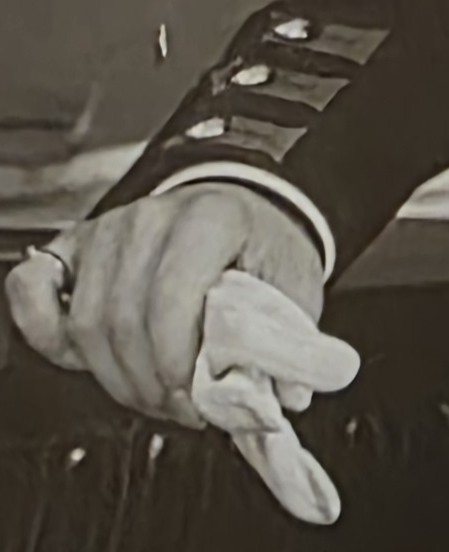
This Card: The crossed rifles on the left sleeve of this corporal’s army tunic indicate a marksman. He may be wearing an Indian Mutiny Medal, a campaign medal approved in August 1858, for officers and men of British and Indian units who served in operations in suppression of the Indian Rebellion of 1857. The siege of Lucknow was the prolonged defence of the British Residency in the city of Lucknow from rebelsepoys (Indian soldiers in the British East India Company’s Army) during the Indian Rebellion of 1857. After two successive relief attempts had reached the city, the defenders and civilians were evacuated from the Residency, which was then abandoned.
P. M. Laws
Newcastle-upon-Tyne, England.
- P. M. LAWS PHOTOGRAPHER 38 BLACKETT ST, OPPOSITE GREY’S MONUMENT NEWCASTLE-ON-TYNE.
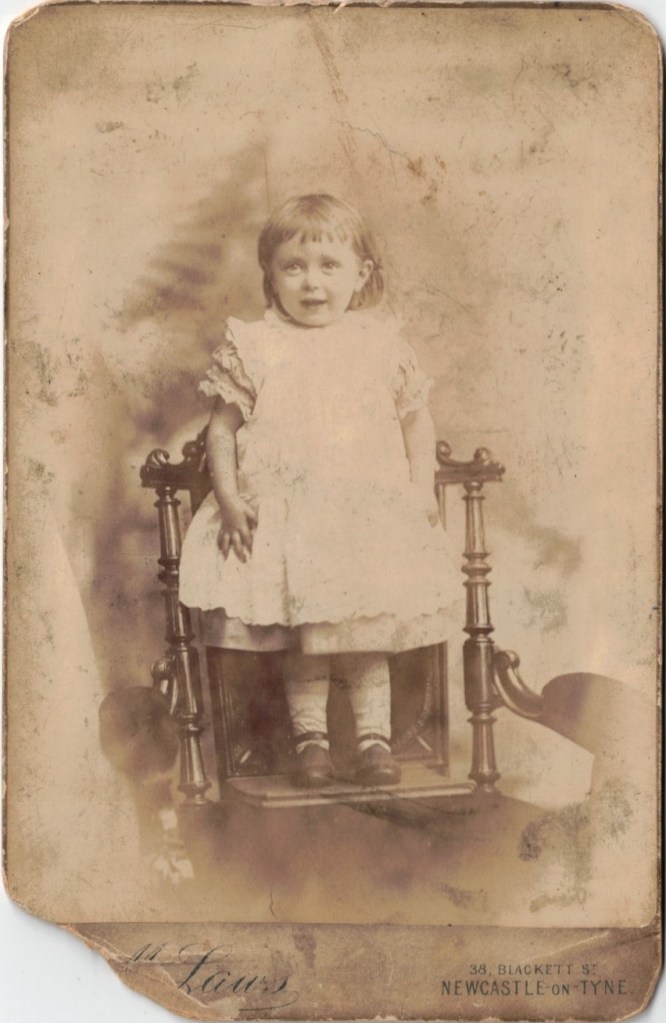
Peter Maitland Laws (about 1832 to 15 October 1906) and his son Thomas Maitland Laws, photographers, 38 Blackett Street, Newcastle-upon-Tyne. Thomas was born in Paddington on 2 July 1855 when the family were living in London where his father worked as a carpenter. By 1861, the Laws had moved back north with children Henry, Thomas, Sarah and Peter. The family lived in Grainger Street in the centre of Newcastle and Peter was now earning his living as a photographer.
Peter Laws was listed in the trade directories of 1859-60 as a ‘photographic artist’, living in Pilgrim St and operating from Northumberland Court, at a time when, although there were a number of ‘photographic artists’ practising in Newcastle, the occupation did not yet appear as a category in the classified listings.
In 1861 Laws was a member of the council of the newly-formed Newcastle and North of England Photographic Society, later becoming treasurer. At the society’s first meeting, he presented ‘two proofs of his very beautiful views of the ruins of Tynemouth Priory’.
Peter’s wife Isabella died on 3 August 1864 aged 32 years.
By 1871, Peter and Isabella’s elder son, Henry, had followed his father into the firm, while 16 year old son Thomas worked as a lithographer. Demand for their cartes-de-visite was high and they had relocated to a studio on Blackett Street opposite the Earl Grey Monument which Laws occupied until his death in Newcastle. Two of their cartes shown in my Photodating 1870s page here.
Thomas was thus exposed to photography from a very early age at a time of the development and popularisation of a still-new medium. In July 1867 when, aged 12, he was announced as the winner of the sum of five shillings, having achieved second place in the ‘Triple Kites’ category of a kite-flying contest on the Town Moor. The previous year a photograph to be taken by his father had been announced as the prize for the various winners.
On 2 August 1881 Peter was at 8 Claremont Place, Newcastle on Tyne when he registered a photograph from a painting of George Stephenson at the Stationers Company – an early form of copyright. In 1883 and 1885 he won medals in competition at exhibitions.
Thomas photographed the visit to Newcastle in August 1884 of the Prince and Princess of Wales. Thomas left the business on 16 August 1890 possibly when he lived in Heaton, during which time he owned a photography business based on Shields Road West. Peter continued to trade as P. M. Laws and Son.
Source: Heaton History Group

A. D. Lewis
Newcastle-Upon-Tyne & Tynemouth, England
- The North of England School of Photography A. D. Lewis, NEWCASTLE-UPON-TYNE & TYNEMOUTH PHOTOGRAPHER & ARTIST 111 & 113 Scotswood Road, NEWCASTLE ON TYNE AND 56 Front Street, TYNEMOUTH

Alexander Denholm Lewis, Photographer. Born in Scotland, Lewis operated as a photographer through his North of England School of Photography in Newcastle for around 20 years.
Some of Lewis’s CDVs described him as a photo artist of 5 Hinde Street East, Newcastle on Tyne (where he was living in 1871) while others gave his later addresses in Newcastle and Tynemouth or both addresses in Newcastle bearing the wording ‘Old No 5 Hinde St Studio Unchanged’, which suggests that he was working from both studios – maybe with an assistant. William Denholm, 21, another Scottish photographer was at the Hinde Street address in 1871. Denholm was a boarder at Houston Street by 1881. By 1881 Lewis was living at 111/113 Scotswood Road (Photographer’s Shop), still unmarried, having aged to 49 from the 35 he declared ten years earlier. He was at the same address in 1891.
An 1894 albumen cabinet card bore only the address 113 Scotswood Road, Newcastle. My card gives 111 to 113 Scotswood Road and 56 Front Street, Tynemouth.
A. D. LEWIS PHOTO ATELIER Is NOW OPEN for the season, under his own personal supervision. Ladies wishing their Children taken are invited to make an early call, before the commencement of the busy season. A. D. L. calls particular attention to his Chaste New Tynemouth Promenade Carte, which is a great favourite, and has been adopted by all the principal Photographers of the South, the Continent, and America.
The Shields Daily News 19 June 1882
Cartes de Visite from 5s per doz.
Malvern, Cabinet, Panel Portraits, and other styles taken direct from the Camera without enlarging.
Enlargements up to Life Size finished in Oils, Water Colours, and Monochrome.
So his Photo Atelier (workshop) in Tynemouth seems to have been seasonal. A new railway station had opened in Tynemouth bringing day trippers from across the region as well as families wanting to enjoy the delights of the new craze for seaside holidays.
Lewis’ studio at 56 Front Street was only a stone’s throw from Tynemouth sea front. His Tynemouth Promenade Cards described him as an inventor. Despite their name, they were studio portraits.
The Teignmouth Promenade Carte.— Mr. A. D. Lewis, of Newcastle-upon-Tyne, sends us half-a-dozen little portraits in shape something like an elongated carte-de-visite, and which he terms promenade cartes. The portraits are excellent in themselves, and, being upon black mounts and highly finished, they have a very natty appearance. Mr. Lewis forwarded us both bust and three-quarter portraits, but the “ cut-off” appearance of the latter makes them less effective than the others.
The Photographic News 8 April 1881
The Photographic News 8 April 1881
The 1901 census records that he was a retired photographer aged 67 (another random figure) and was an inmate of the Union Workhouse in Westgate Road, Newcastle.
Sources: rootschat; Photographic News 1881; Angus and Rosemary’s Miscellany of Malvern Local History;

W. Linnartz, Berlin
- W. Linnartz Berlin, Oranienstr 128
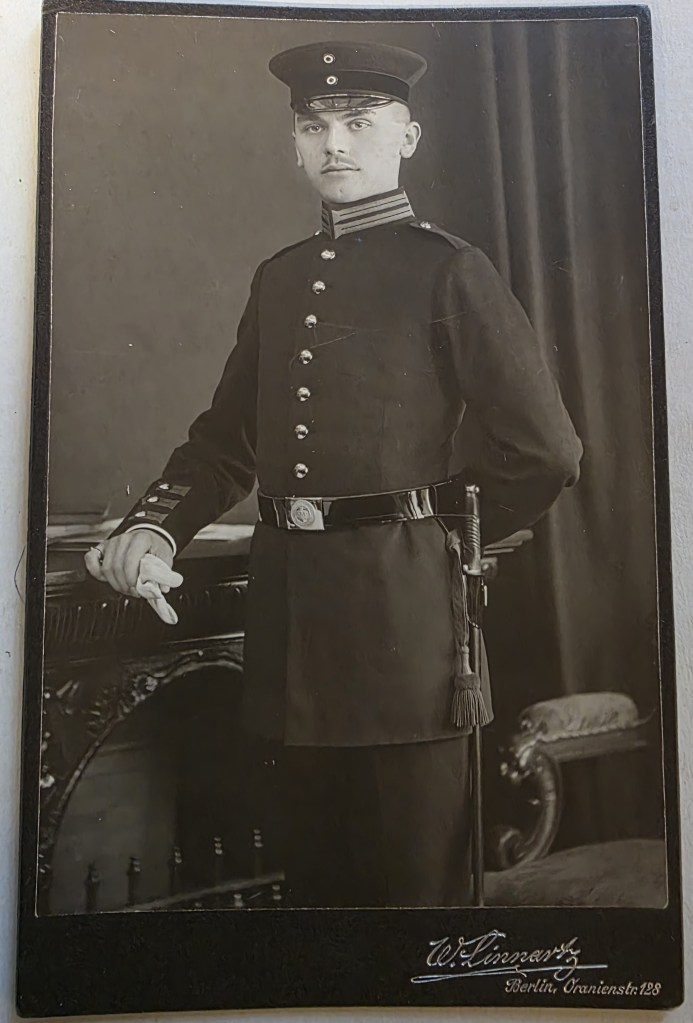
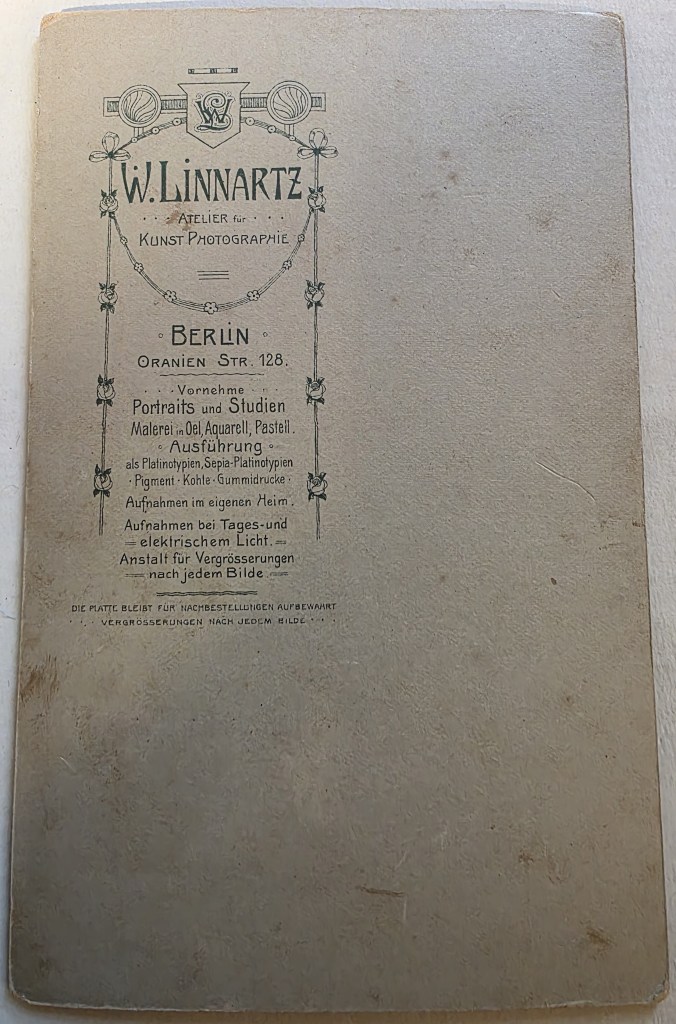
There is little information about Linnartz more than he put on the back of his cabinet cards:
W. LINNARTZ STUDIO for ART PHOTOGRAPHY
ORANIEN STR. 128, BERLIN
Elegant Portraits and studies. Painting in oil, watercolor, pastel.
Platinotypes, sepia platinotypes, pigment, charcoal, gum prints.
Photographs taken in my own home
Photographs taken in daylight and electric light. = Enlargement service after each image
THE PLATE IS STORED FOR REORDERS. ENLARGEMENTS AFTER EACH IMAGE
Linnartz’ promotion of his studio for art photography shows that he subscribed to the principal aim of pictorialism, a contemporary style of art photography, even though his principal output seems to have been studio portraits like this one.
Platinum printing (platinotype) [Platinotypie] is a photographic printing process invented by William Willis in 1873 and patented in 1878. Photochemically, it is based on the light sensitivity of potassium tetrachloridoplatinate. The process was particularly popular among the pictorialists between 1880 and 1914.
In 1900 the platinotype process could justly claim the pre-eminent place among the media for photographic printing; between a half and a third of the work exhibited at the Annual Exhibitions of the British Royal Photographic Society between 1893 and 1901 was in platinum, the nearest competitor being carbon, with a quarter to a third of the total. The excellence of the process was reflected in the good opinions of its most distinguished users, and any list of the best-known practitioners of platinotype read like a Who’s Who of pictorialism. However, platinotype was not the exclusive preserve of the photographic luminaries of the day: many examples of commercially produced platinotypes can be found in ordinary private albums dating from the turn of the century, showing that the medium was also in use for everyday pictorial souvenirs.
Sepia platinotypes, which Linnartz also offered, were prestigious too; around 1910 Eyre and Spottiswoode published a Catalogue of Sepia Platinotype Reproductions of Famous Pictures, with some five hundred entries.
Pigment printing, carbon printing [Kohle druck] is a photogravure process based on the application of potassium chromate and glue, which are exposed in a layer beneath a negative.
Gum printing [Gummidruck], also known as gum bichromate printing, is a further printing process. Originating in the 1850s, it reached its peak, particularly in art photography, at the turn of the 20th century. Gum prints created around 1900 by French German and Austrian photographers, are considered to be of particular artistic value.
Sources: Mike Ware Alternative Photography; wikipedia Platindruck Gummidruck
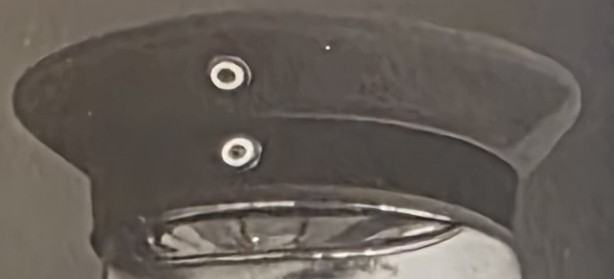
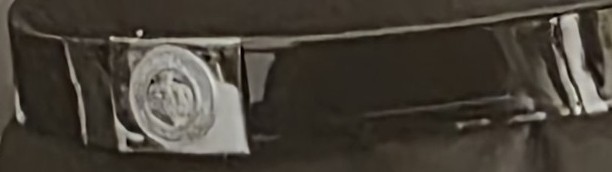
This card: This young serviceman is wearing his formal uniform.
 undivided-back postcards