East Midland Baptist Association
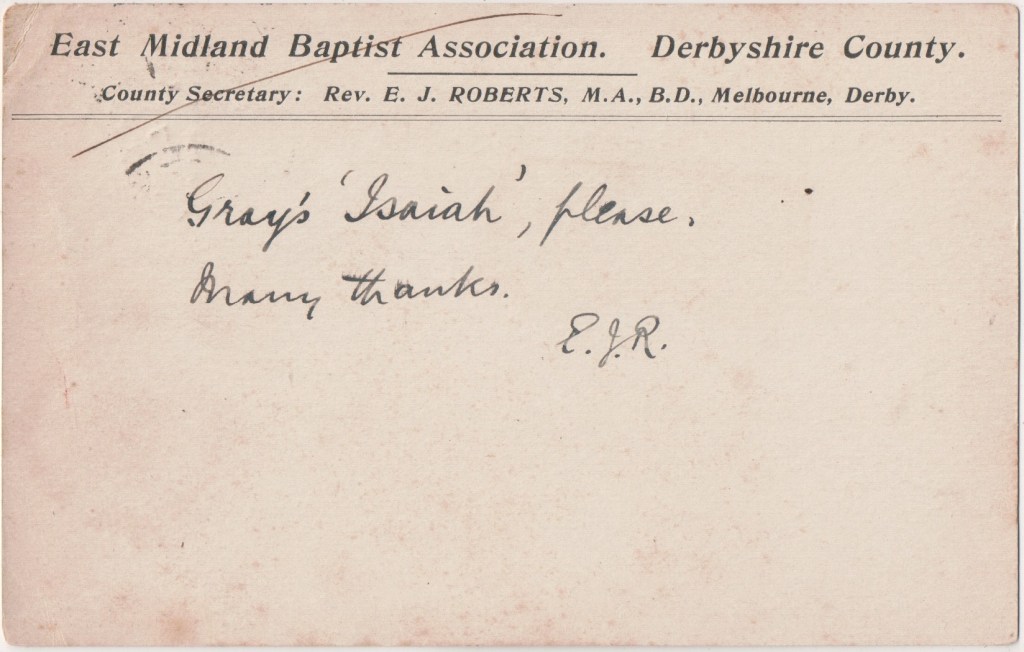
- East Midland Baptist Association. Derbyshire County. County Secretary: Rev. E. J. ROBERTS, M.A., B.D., Melbourne, Derby.
Derbyshire Baptist Lay Preachers Association was established in 1865. Although the Association did not formally close, it had effectively ceased to operate by 1918.
Today the East Midland Baptist Association (EMBA) is an Association of over 155 churches based in Nottinghamshire, Leicestershire, Derbyshire, Lincolnshire and Peterborough with one or two in Rutland, Northamptonshire, Staffordshire, and one in Spain. It was incorporated as a limited company on 10 October 2001.
Sources: Derbyshire Record Office; It All Began Here: The Story of the East Midland Baptist Association Fred M. W. Harrison (1986)
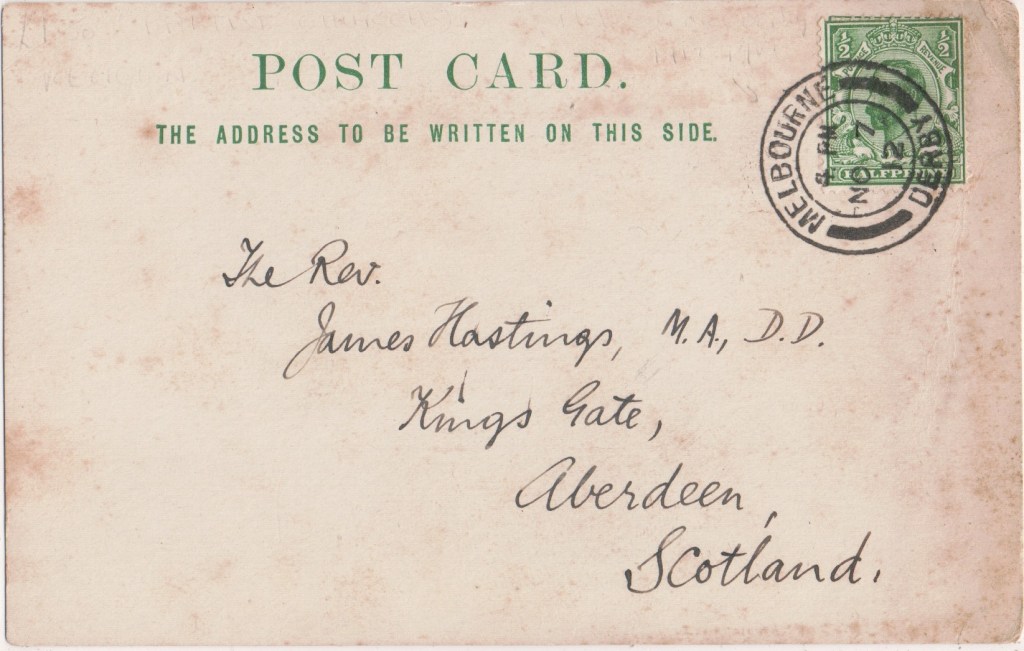
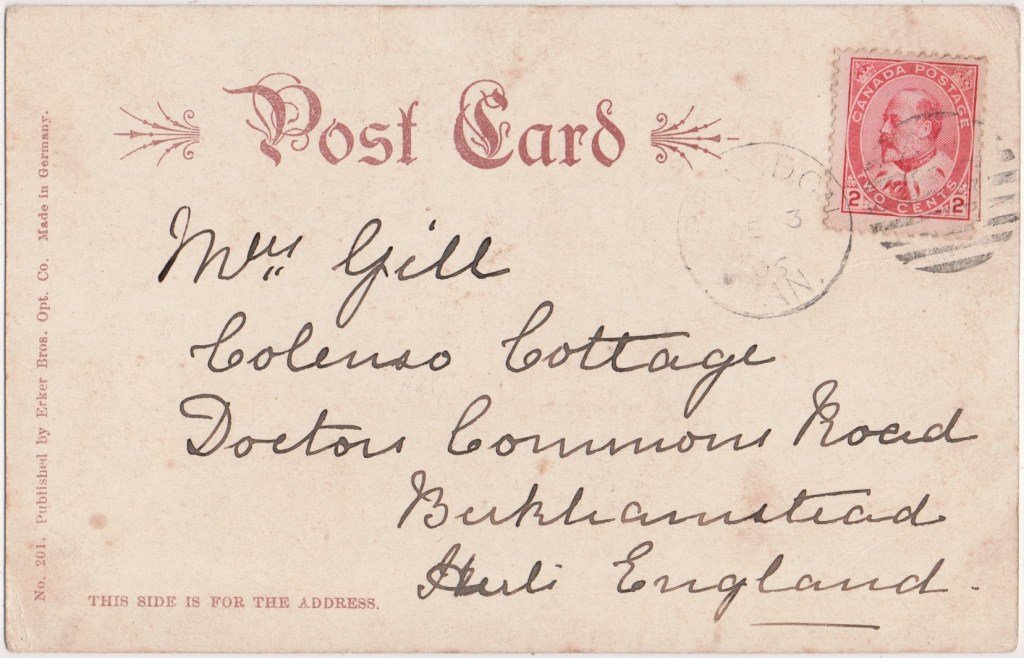
This card was postally used in November 1912 when the Reverend E J Roberts of Melbourne wrote to the Scottish theologian James Hastings in Aberdeen. Hastings had established The Expository Times in 1889 as an academic journal of biblical studies, theology, and ministry, still in publication. Melbourne is a market town and civil parish in South Derbyshire, England.
The whole content of the message is a request for A critical and exegetical commentary on the book of Isaiah 1-39. 40-66 by George Buchanan Gray, (1865 to 1922) published in 1912.
Roberts was a contributor to the Expository Times, contributing The Great Text Commentary in January 1911. I would assume that Mr Roberts was either offering to review Gray’s book or asking for the review copy.
Arthur Eckerlein
Lindau, Bavaria, Germany.
- Aufnahme u. Verlag: Arthur Eckerlein, Hofphotograph, Lindau.
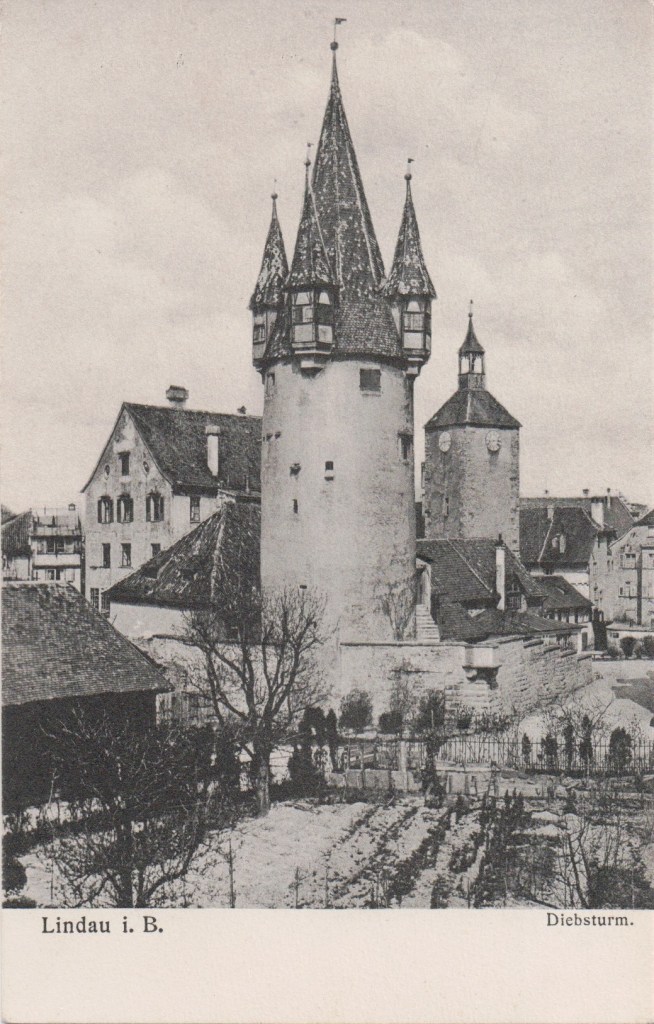
Arthur Eckerlein, Royal Court photographer and publisher, Paradiesplatz, Lindau where his telephone number was 134 and then 334. Lindau is a major town and island on the eastern side of Lake Constance/Bodensee. Eckerlein published studio portraits as cabinet cards. His cartes de visites boasted of success in European competitions in 1895 to 1899 and the warrant of Prince Ludwig of Bavaria. In 1916 Eckerlein’s studio was at Zwanzigerstrasse and the studio was still going in 1929.
Wilhelm Ecks, Hanover, Germany
- A. Wilh. Ecks, Hannover.
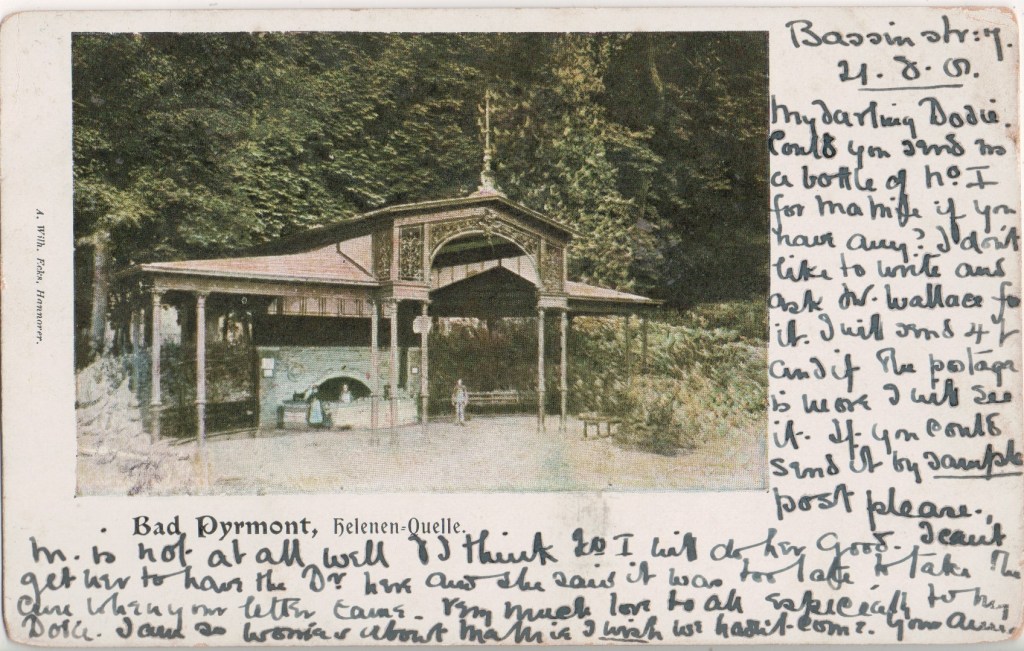
August Wilhelm Ecks, 10b Braunschweigerstrasse (entrance Kleine Aegidienstrasse) in Hanover was a book printer and folding-box factory. He also produced, among other things, postcards.
In 1901 Ecks published a multicoloured lithographed and artistically-designed postcard for the 50th anniversary of the Hanoverian men’s singing club. In 1903 he published a card for the 100 year Anniversary of the King Uhlan Regt. 1. Hann. No. 13.
In 1915, during the First World War , the game inventor G. Capellen had his illustrated brochure entitled Two New War Games! produce; for a chess game called “Freischach” and for the card game Matt made by Ecks. In the second half of the 1920s, the business had its registered office at 5a Klagesmarkt.
Source: wikipedia A. Wilh. Ecks
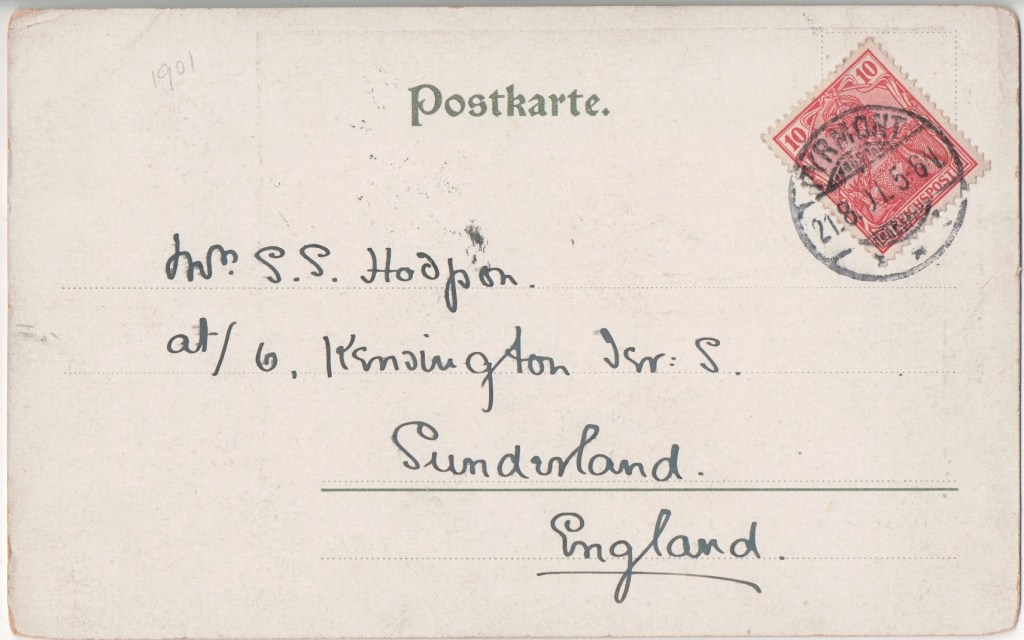
This Card: Bad Pyrmont is a town in the district of Hamelin-Pyrmont, in Lower Saxony, Germany, with a population close to 19,000. Bad Pyrmont is a popular spa resort that gained its reputation as a fashionable place for princely vacations in the 17th and 18th centuries.
Founded in 1844 by the Pyrmont spa doctor, the Helenenquelle source discovered by Karl Theodor Menke on Klosterallee was named after Princess Helene zu Waldeck and Pyrmont (1831 to 1888). The Helenenquelle is used for both drinking and bathing treatments. Because of its calcium content of 500-600 mg/l, it is used to support the treatment of osteoporosis. The Helenenquelle pours about 80 liters of water per minute.
Source: www.staatsbad-pyrmont.de
Eckstein & Stähle,
Stuttgart, Germany
- ECKSTEIN & STÄHLE STUTTGART, LITH
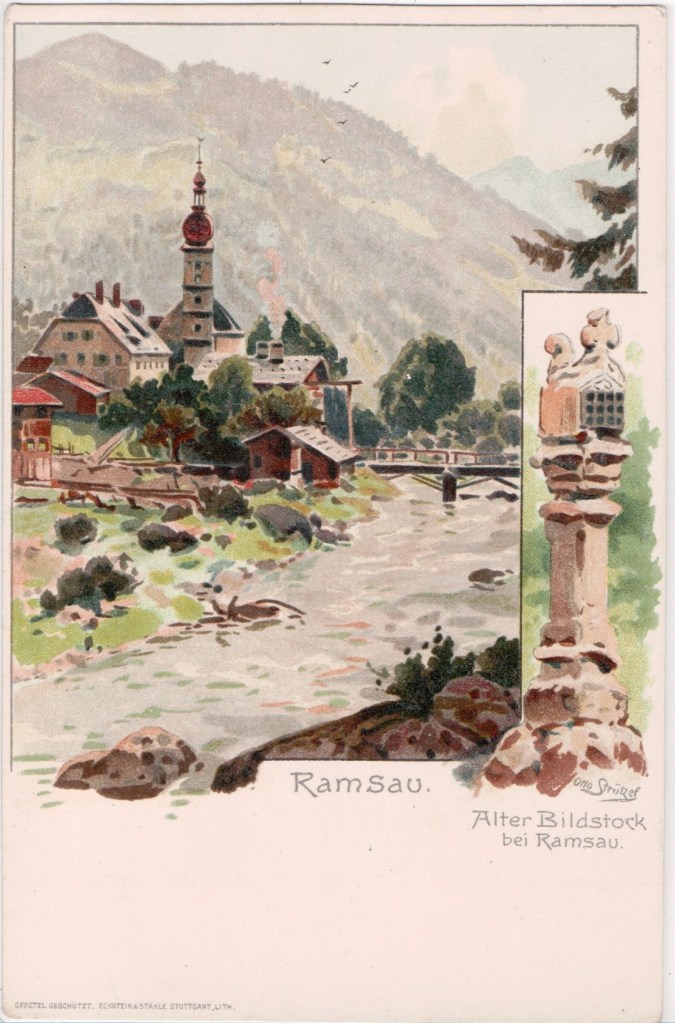
Eckstein & Stähle, printers, founded in Stuttgart in 1852 by Adolf Eckstein and Karl Staele. Early cards featured the art work of Otto Strutzel. In 1902, they were described as Königliche Hofkunstanstalt1 when they printed a book of fine lithographed botanical images which was published by Lutz of Stuttgart. In 1903 they were members of the Commercial Political Association of the German Art Print Industry2. Eckstein & Staehle moved into the former Bachner brewery at 70/1 Augustenstraße in the 1920s. The company stored their printing blocks, made of Sollnhofer slate, in the basement3. Eckstein & Staehle GmbH & Co. KG still seem to be engaged in the production of art prints, artistically valuable maps, globes, as a limited partnership.
Wilhelm Ehlert
Storkow in der Mark, Brandenburg, Germany.
- Verlag W. Ehlert, Buchhandlung, Storkow
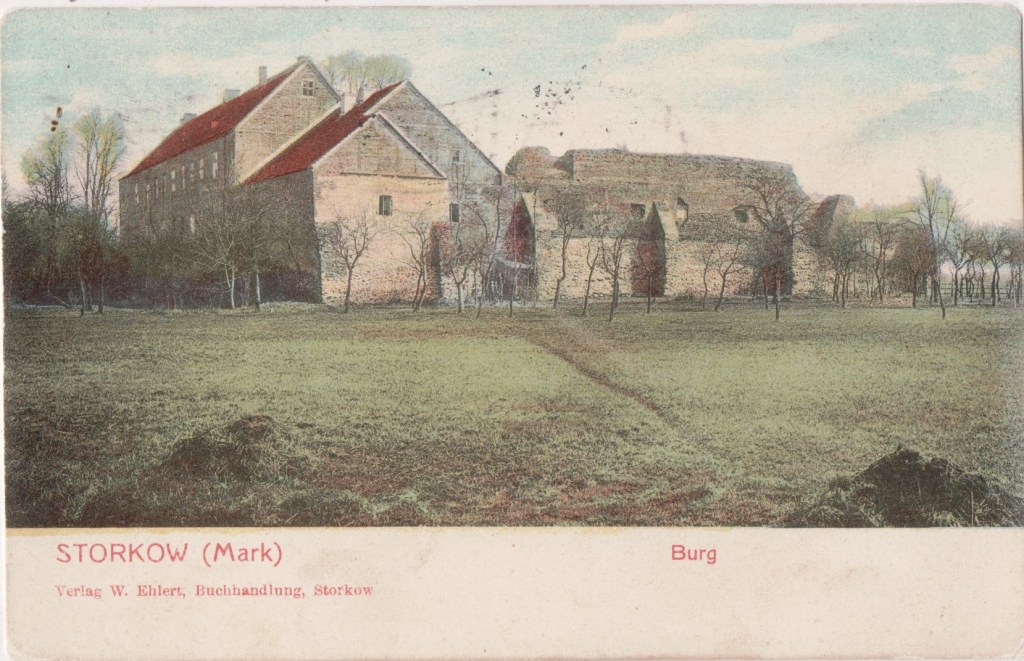
Wilhelm Ehlert’s, bookstore and bookbindery, Storkow, published local topographical cards.
Storkow is situated in the western part of Oder-Spree district, about 15 km (9.3 miles) southwest of Fürstenwalde. The reference to the Mark distinguishes it from a hamlet in Mecklenburg-Western Pomerania.
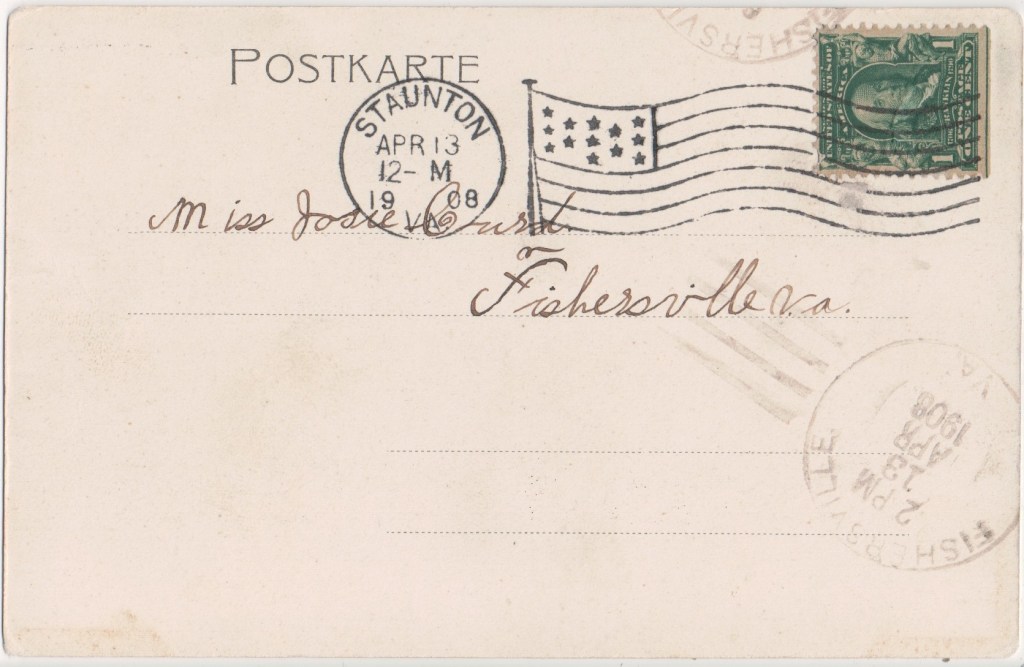
Theodor Eismann,
Leipzig, Germany
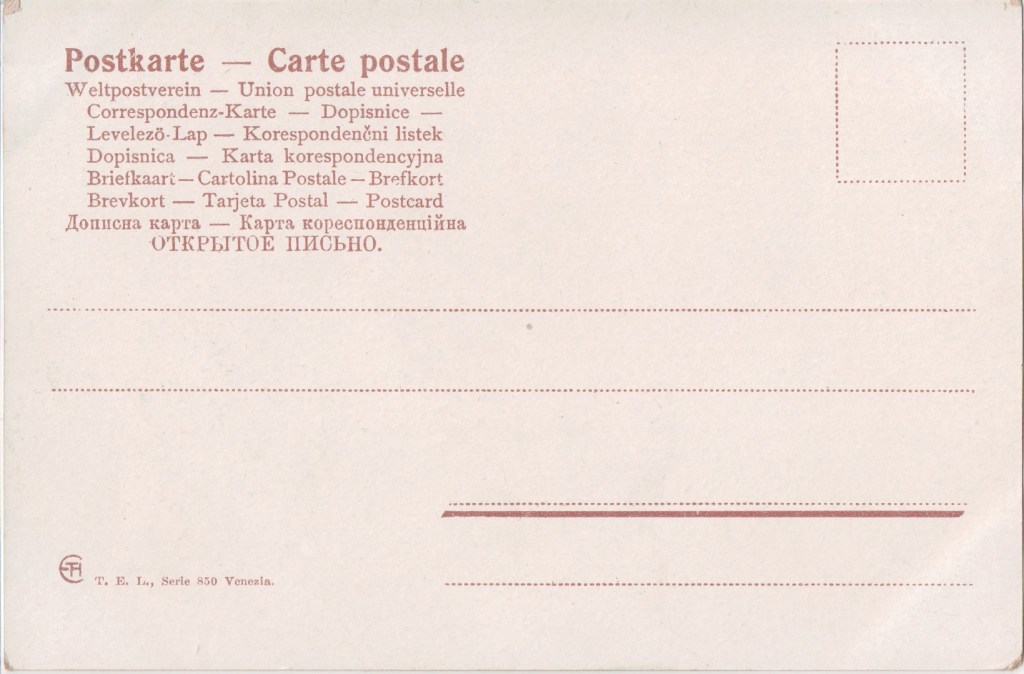
- T.E.L. monogram: TH inside an E in the form of a circle
- TH E. L.
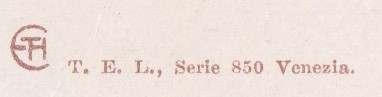
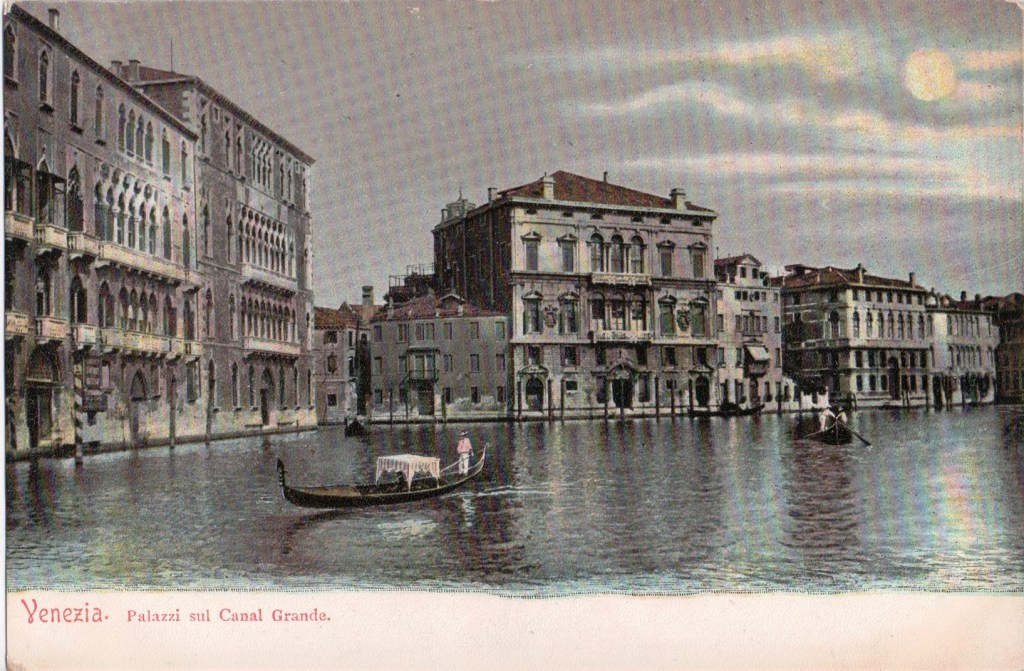
Theodor Eismann, Leipzig, Saxony. A fine art printing and publishing house that produced tinted halftone postcards, lithography, letterpress and chromolitho printing. Their topographicals stretched as far as Constantinople.
By 1898 the company was at 9 Breitkopfstrasse on the cornerenz Fromannstrasse. It appears to have specialised then on printing coloured illustrations for the huge Leipzig book trade business. By 1903 the business had moved to 28 (later 78) Bayersche Strasse and Eismann had retired. The firm was now run by his son Eduard Theodor Paul Eismann. The Leipzig register of companies for 1909 shows that Theo’s brother Professor Gustav Edmund Ernst Eismann was co-owner. Gustav lived in New York and led the Eismann branch at 124 West 18th Street4.
Costas Eleftheroudakis, Athens
- C. ELEFTHEROUDAKIS. ATHÉNES.
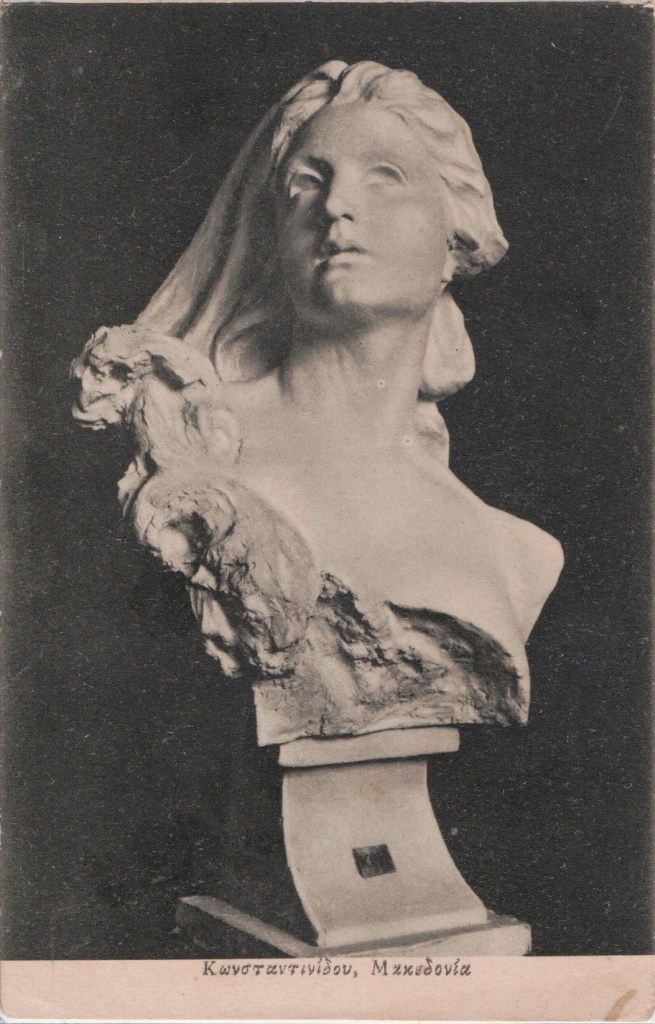
Costas Eleftheroudakis (1877 to 1962) bookseller, Athens. Eleftheroudakis started the business that became the largest bookstore in Greece in 1898.
The first recorded ski run in Greek history occurred in 1906, when Eleftheroudakis, woke to see Athens cloaked in fresh snow. On a whim he strapped on the skis he’d brought back from his time at university abroad and glided two kilometers through town and on the hill of Lycabettus. His pair of skis is on display at the mountaineering shelter in Parnitha.
Eleftheroudakis took up publishing and in 1924 began publication of the monumental 24-volume Eleftheroudakis encyclopedia, which could be found in numerous schools and homes. In 1925 he published a highly-regarded edition of Paparrigopoulos’ History of the Greek Nation.
For many years the bookstore was located in Syntagma Square before being transferred to Nikis Street where it was for 30 years. Eleftheroudakis’ work was continued by his son George, his wife Virginia and his daughters Sofikas and Marina. In 1995 a central store was opened at 15 Panepistimiou Street spreading over eight floors. Although primarily a Greek bookstore, the shop had special sections dedicated to titles in English and other foreign languages. After seven years of Greek economic crisis, it closed on 30 September 2016 just as Athens was named by UNESCO as the World Book Capital for 2018. It was being run by the founder’s great-grandchildren when it closed.
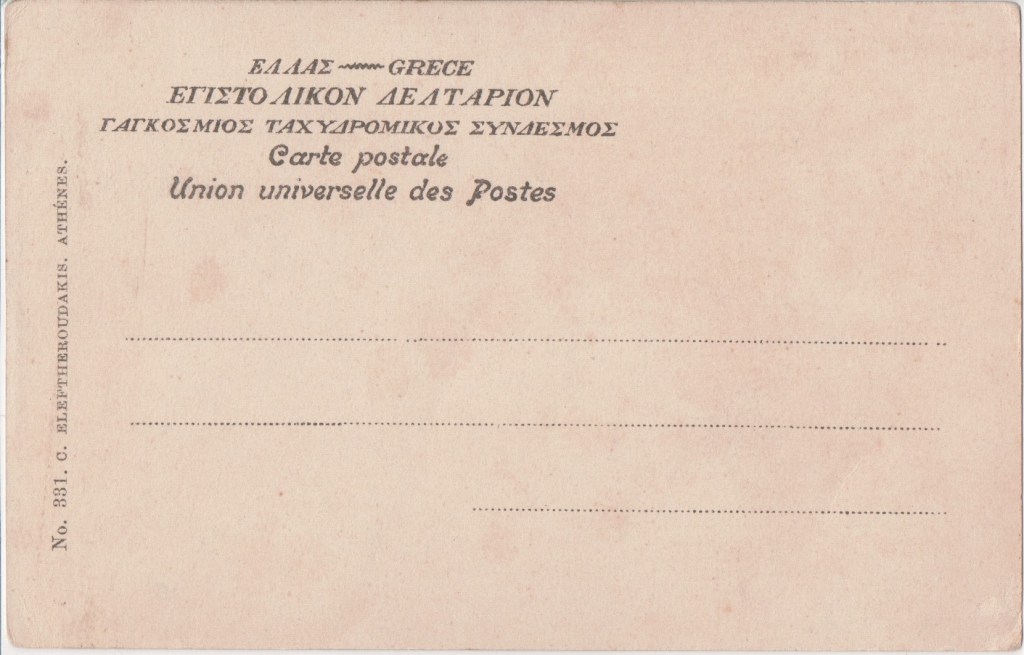
Axel Eliasson, Stockholm
- Axel Eliassons Konstforlag Stockholm
- A.E.
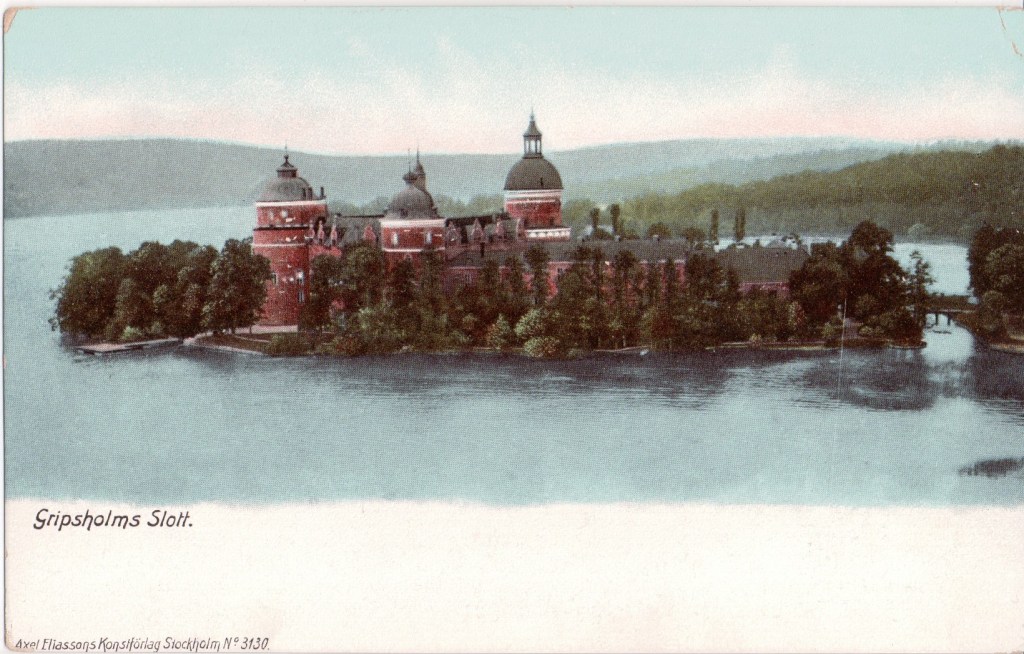
Axel Eliassons Konstforlag, Stockholm, Sweden’s leading manufacturer of postcards into the mid-twentieth century. Eliasson got the idea for postcard publishing during his studies in Berlin and started his art publishing house in Stockholm in 1890. Initially Eliasson himself was behind the camera and, unlike much of the competion, was able to capitalise on Swedish manufacture. His topographicals started out locally with Stockholm and Gothenburg and spread throughout Scandinavia. His official postcards of the 1897 Stockholm exhibition were a great success5. Another interesting ethnographical here.
Elizabeth Novelty Company
Elizabeth, Union County, New Jersey, USA
- Elizabeth Novelty Co
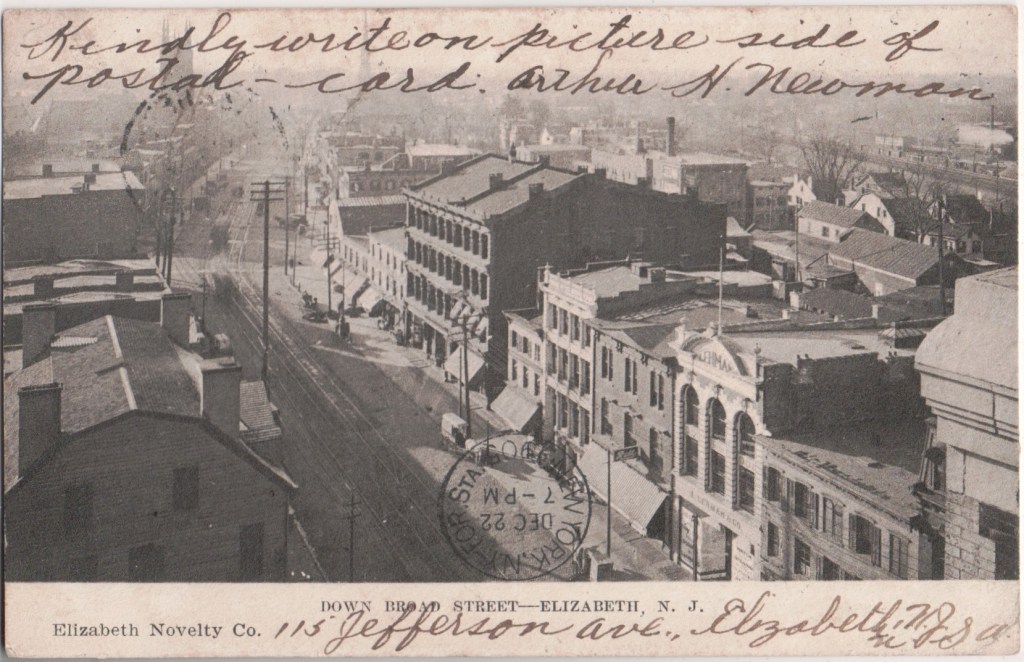
Elizabeth Novelty Company, 215-217 Broad Street, Elizabeth traded in office and personal stationery, sheet music, Kodak cameras, books, and sporting goods. They were specialists in photographic development and printing with a 24 hour service. Elizabeth is a city and the county seat of Union County. Originally called Elizabethtown and part of the Elizabethtown Tract, it was founded in 1664 by English settlers. The town was not named for Queen Elizabeth as many may assume, but rather for Elizabeth, wife of Sir George Carteret, one of the two original proprietors of the colony of New Jersey. Clinton Gilbert of the company was a member of the Elizabeth Board of Trade in 1907.
In 1915 the company were selling photographic supplies. They first advertised developing and printing services in the 1917 edition of the Elizabeth Directory. In 1918 the company published photographs of American touring automobiles. In 1916 the company published E J Grossmann’s map of Elizabeth.
In 1921 the company featured in an investigation by the Federal Trading Commission of the Check Writer Manufacturers Inc who had sold to the company as new a second hand check protection machine.
Source: Rooted in Elizabeth
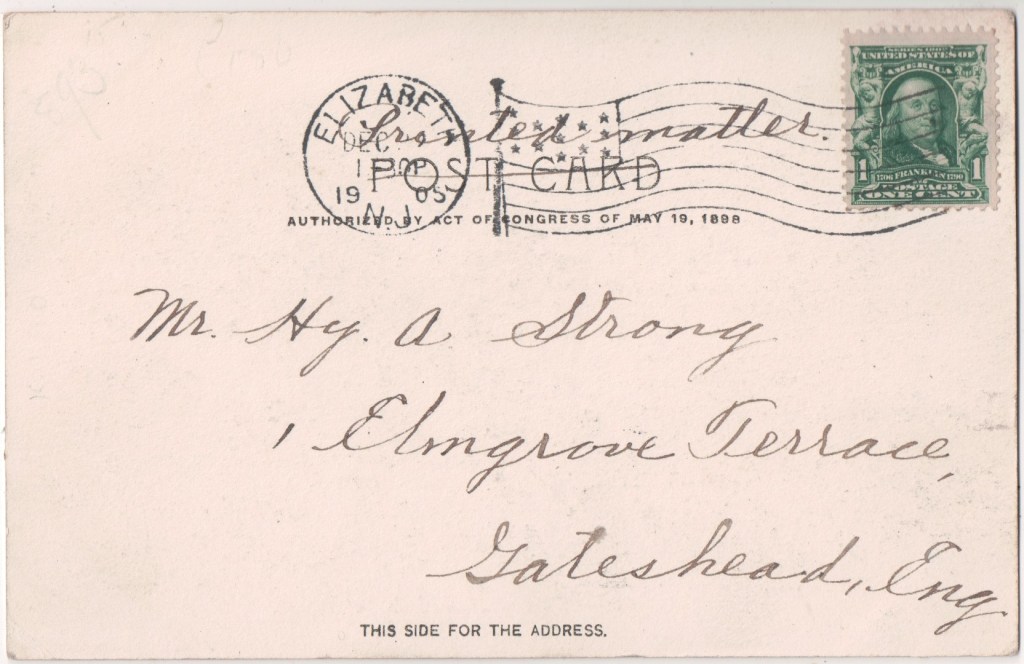
Alfred Ellis
- ALFRED ELLIS & WALERY
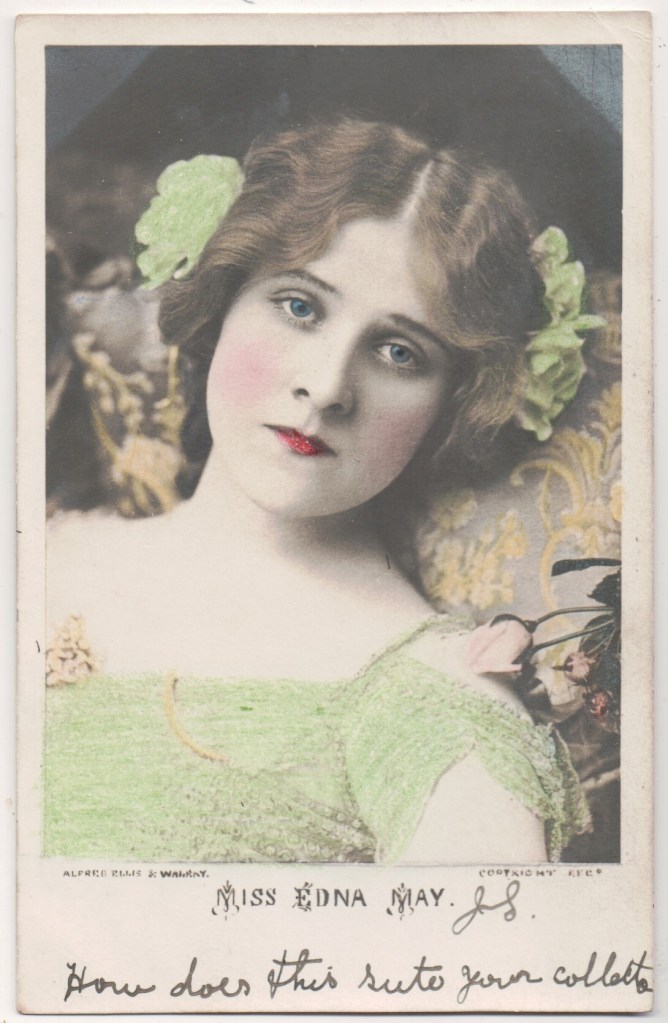
Alfred Ellis (1854 to 13 April 1930), English photographer, was born in the St. Pancras district of London. Ellis had a studio on Upper Baker Street, London from 1884 until 1898. Ellis specialised in theatrical photography and established himself as pre-eminent in that field. As well as studio portraits, he would photograph live stage performances or have the actors restage climactic scenes at his studio. His telegraphic address was Positions London.
Around 1890, Ellis entered into a partnership with Stanislaw Julian Ignacy (Count Ostrorog). The son of a famed photographer, Count Ostrorog adopted his father’s successful professional name, Stanislaw Walery (qv) hence, the the Alfred Ellis & Walery gallery. Their cartes de cabinet advertised Day and Electric Light at 51 Baker Street.
In 1883, Ellis became a member of what would later be known as the Royal Photographic Society. He was also one of the founding members of the Professional Photographers’ Association, serving as Secretary (1901-1903), President (1903 and 1919), and General Secretary (1919 until his death).
Ellis took a leading interest in the issue of photographers’ copyright, fighting several actions in High Court establishing that the presumption that copyright vests in a person who sits to a photographer may be rebutted where the circumstances show that the photographer was not commissioned to take the photograph, but took it on his own behalf, and that the sitter sat at his request either for a money consideration paid to the sitter, or in consideration for a copy or copies of the photograph, or for no consideration at all. He was the plaintiff in two landmark High Court cases; The first, Ellis v. Ogden (1894), involved the portrait sitting of actress Mary Moore, who posed at the photographer’s invitation, so there was no charge, and Ellis presented copies to her as a gift. When the Ludgate Monthly published one of these copies without permission, the photographer filed a lawsuit stating he owned the exclusive copyright to the image since it was a gift. The decision ruled in favour of the plaintiff, and determined that the photographer was the author of the work, and because the sitter did not pay for the portrait, Ellis retained ownership of the photograph. However, the outcome was different in the case of Ellis v. Marshall (1895), in which the photographer invited actors Harry Nicholls and Charles Kenningham to his studio to pose for two portraits – one in costume and one in plain clothes. Again, there was no payment asked for, and gratis copies were sent to both actors. However, the actors did pay the photographer for the plain clothes’ photographs, one of which was submitted to the Ludgate Monthly to accompany an article on Harry Nicholls. Mr. Ellis argued that as photographer, he possessed the copyright on both sets of pictures. However, Mr Justice Collins disagreed, stating that the plain clothes portraits were taken at the request of the actors, and since they compensated the photographer for them, he did not retain proprietorship of them. This led to Mr. Ellis co-founding the Photographic Copyright Union, an organization in which he later served as Vice President.

As well as registering his own photographs for copyright, he also owned copyright on photographs taken by Walery and Alexander Corbett. Copyright on some of Ellis’ photographs are also owned by a Joseph Bruce Ismay. Alexander Corbett in turn produced photographs which were registered for copyright by both Alfred Ellis and George Bryden Phillips. This card bears the wording Copyright R. F. C. which doesn’t fit with any of these.
Although Ellis’s Upper Baker Street studio was demolished in 1899, Alfred Ellis & Walery remained active until 1918 in both portrait photography and catalogue publishing.
Source: National Portrait Gallery; Historic Camera; National Archives Blog: Analysing professional photographic networks in 1900 15 May 2020 Katherine Howells
This card: Edna May Pettie (2 September 1878 to 1 January, 1948), known on stage as Edna May, was an American actress and singer. A popular postcard beauty, May was famous for her leading roles in Edwardian musical comedies. May was born in Syracuse, New York, to Edgar and Cora Petty. The family later changed the surname to Pettie. She studied music at the New York Conservatoire as a teenager. In 1897, May played Violet Grey in The Belle of New York with only moderate success. The following year, the production played in London, becoming a hit and running for 697 performances, making May a star. May was known for her beauty and received tremendous attention from male admirers. In 1907, she married millionaire Oscar Lewisohn causing her retirement from the stage. The couple settled in England.
Source: Wikipedia: Edna May
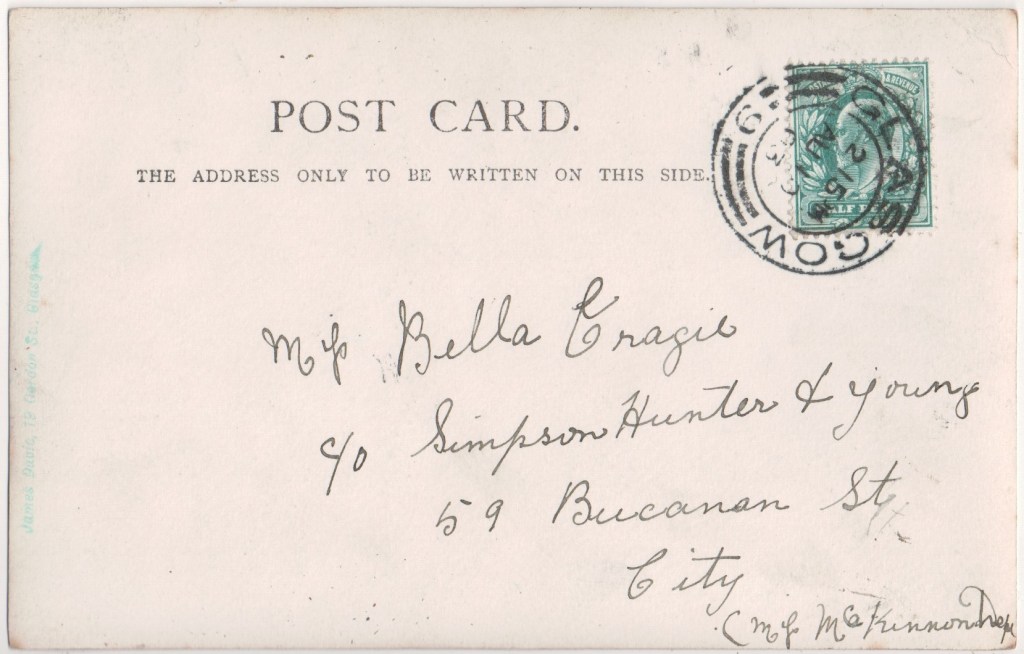
T.F. Ellis, Mt. Vernon, Virginia, USA
- Published by T.F. Ellis, Mt. Vernon Railroad Station
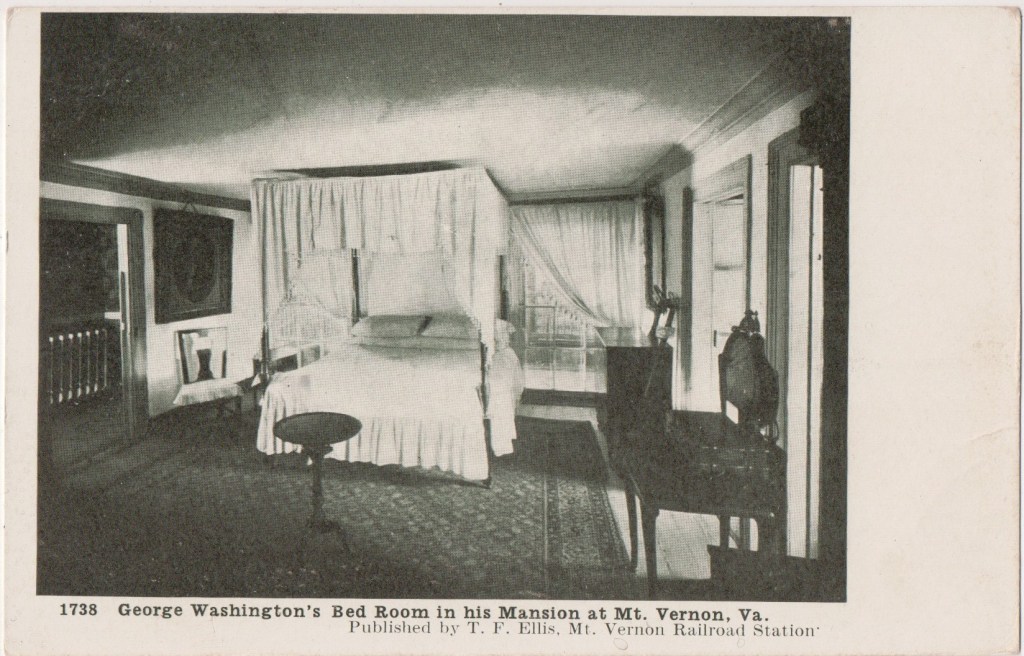
T.F. Ellis, photographer, restaurateur and publisher, Mt. Vernon Railroad Station.
Mount Vernon, the home of George Washington, is eight miles south of Alexandria in Virginia. The former plantation of the founding father, commander of the Continental Army in the Revolutionary War, and first president of the United States George Washington and his wife, Martha is less than twenty miles south of the White House. An American landmark, the estate lies on the banks of the Potomac River in Fairfax County, Virginia.
The Northern Virginia trolleys were the network of electric streetcars that moved people around the Northern Virginia suburbs of Washington DC from 1892 to 1941. In 1890, the Alexandria and Fairfax Passenger Railway was chartered to provide a faster way to reach Mount Vernon than the steamboats that had been used since Mount Vernon opened to the public three decades earlier. In 1892, it changed its name to the Washington, Alexandria, and Mount Vernon Electric Railway and began operating between Alexandria and Mount Vernon.
By 1906, the railway had transported 1,743,734 passengers along its routes with 92 daily runs. The route became known as the “Road of the Presidents.” Passengers and others could read a 122-page Hand-book for the Tourist Over the Washington, Alexandria and Mount Vernon Electric Railway by WH Snowden that described in detail the railway’s routes and stations as well as the landmarks, history and geography of the area through which the railway travelled.
In 1907 they finished work on a new terminal at Mt. Vernon at a cost of $25,000 for the station, waiting room and Mr Ellis’ restaurant. This was a large establishment, open all year and offering al fresco dining on the balcony. It was reputedly one of the finest dining rooms in the country, made famous by the chicken dinners and lunches served.
The Mount Vernon Memorial Highway was authorized by Congress on 23 May 1928 as an activity of the United States Commission for the celebration of the two hundredth anniversary of the birth of George Washington. The highway was designed and constructed under the direction of the United States Department of Agriculture Bureau of Public Roads. Construction started on 12 September 1929 and the road opened to traffic on 16 January 1932. The highway replaced the Mount Vernon Railway which ceased operations two days after the highway opened to traffic.
Ellis published photocards of photographs of local attractions into the divided-back era (1907). Ellis seems to have had some connection with Louis Kaufmann & Sons, Baltimore, Maryland but this card is by Adolph Selige (qv), overprinted with Ellis’ name.
Not to be confused with: Mount Vernon railway stations in New York and Glasgow.
Sources: The Historical Marker Database The Mount Vernon Memorial Highway Bill Coughlin; wikipedia Northern Virginia trolleys
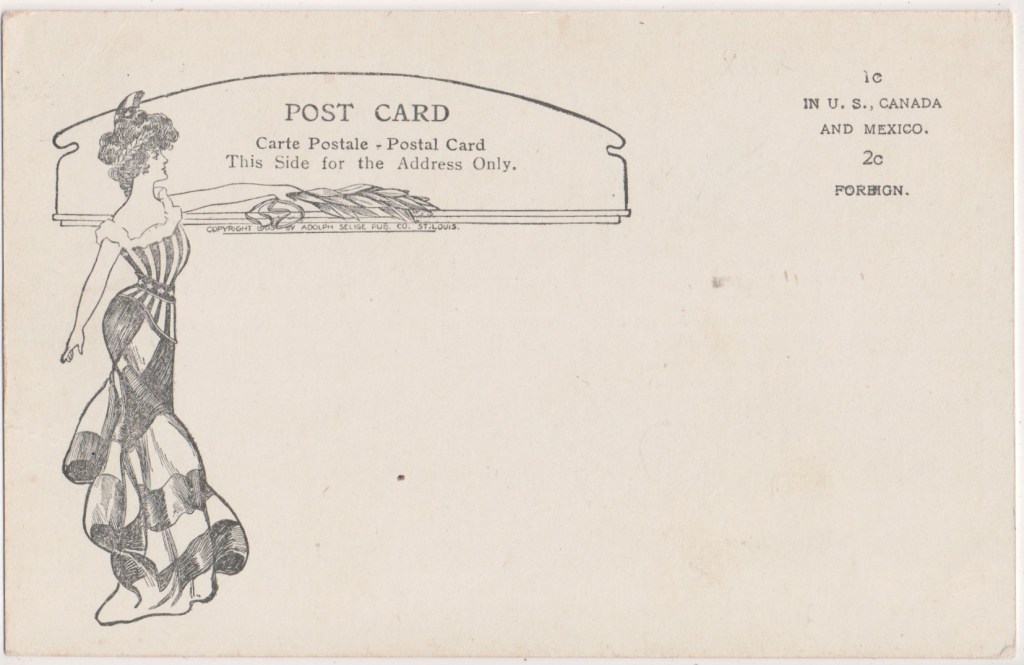
N.G. Elwert’s University Bookshop
Marburg, Hesse, Germany
- N.G. Elwert’sche Universitats-Buchhdlg.
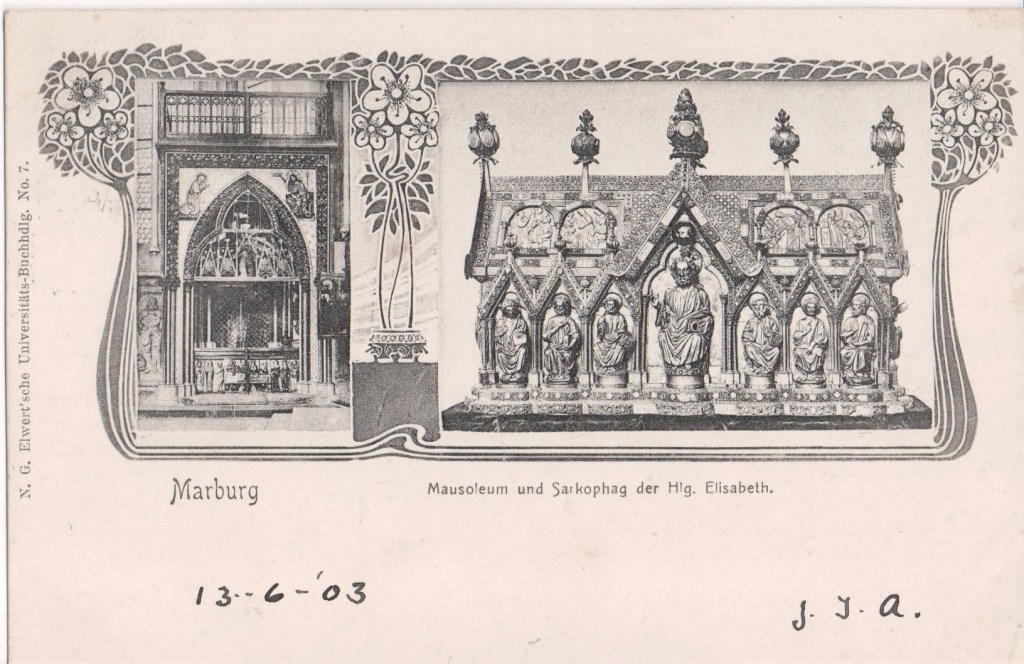
Noa Gottfried Elwert (9 September 1807 to 6 November 1873). Born in Reutlingen, Elwert trained as a printer and came to the Kriegerische Buchhandlung a book-printing and antiquarian bookstore in 7 Reitgasse Marburg in 1828, which he acquired on 1 January 1831. Elwert ran the business under his own name and soon expanded the publishing side.
After Elwert’s death, his nephew, Wilhelm Braun (born 29 May 1842 in Reutlingen) came into the possession of the bookstore. The publishing house passed to Braun’s brother-in-law, Carl Theile (born 1841 in Böhlen near Leipzig). A few years after Theile’s death on 22 July 1878, Braun bought the publishing house reuniting the former Elwert business except the printing which was sold to Robert Friedrich in 1875 on to K. Gleiser.
The business has been in the same building at Reitgassse since it was founded but doubled its size by purchasing the neighbouring building. By 1883 a music department was run as a branch in the north of the city under the W. Braun company.
Marburg was awarded town privileges in 1222, The University of Marburg was founded in 1527 and dominates the public life in the town to this day. The Marburg University Bookshop published scientific and other academic textbooks such as Basics of zoology by Carl Claus (1872), The Historical Development of German Metrics (1897), E. Maass’s Analecta sacra et profana (1901). It also published a number of scientfiic periodicals. The Bookshop has published histories of itself over the years up to 2001.
Noa Elwert’s biggest seller was Pandects by Adolf von Vangerow which ran to seven editions. The Pandects are a compendium of the Roman civil law in 50 books made by order of Justinian in the 6th century. Karl Adolph von Vangerow, (1808 to 1870) was professor of law at the Universities of Marburg and Heidelberg and an expert in the field of the Pandects which form the foundation of the modern German civil code. He was also a secret councillor. In the territories of the Holy Roman Empire and the later German monarchies, the Secret Council was a college of councils directly subordinate to the prince and mostly under his chairmanship over the most important State affairs, in particular regarding the issuing of ordinances.
Wilhelm Braun-Elwert (3 September 1915 to 3 April 2006) ran the business from 1941, the fourth generation of the Elwert family to run the university bookstore. His son Rudolf took over the role.
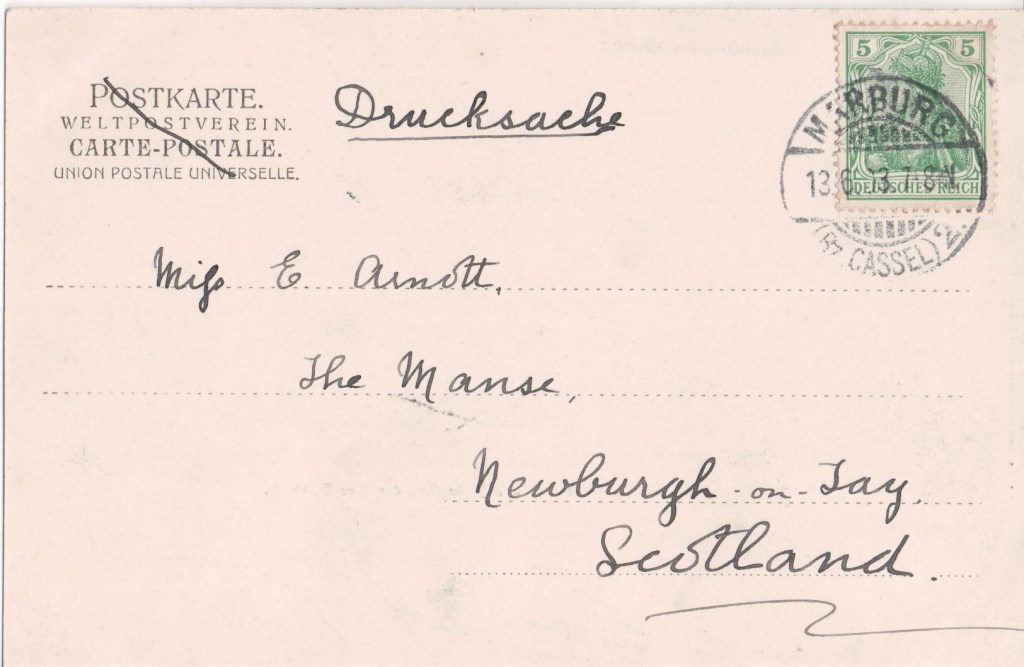
Ely, Boynton & Ely, Detroit
- E.B. & E
- E B E Co
- Design Copyrighted by E.B. & E
- Copyrighted 1904. Ely Boynton and Ely Detroit.
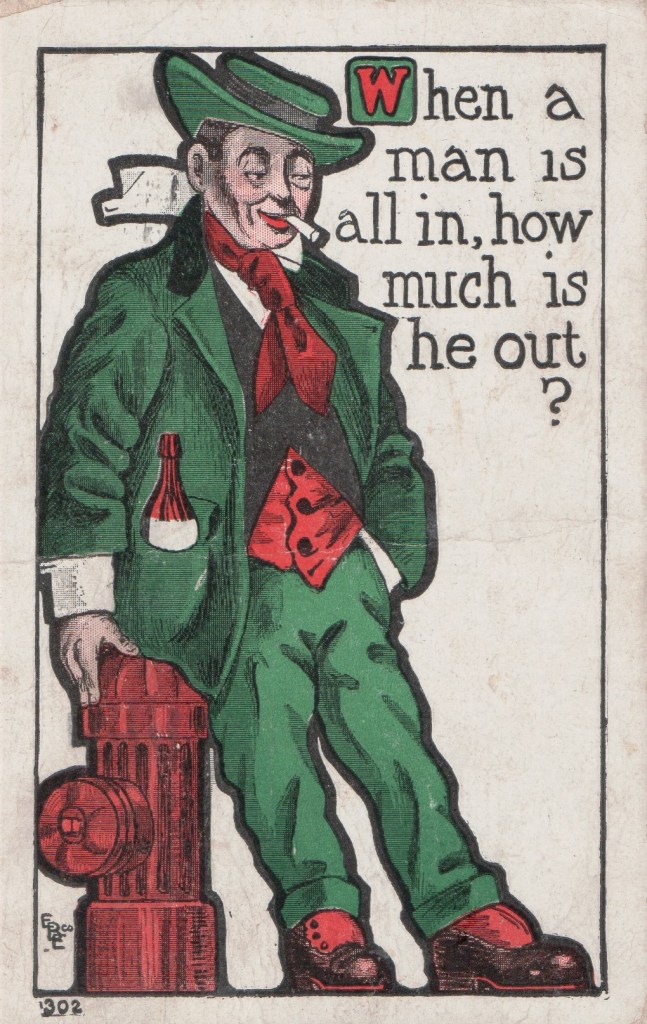
The firm of Ely, Boynton, and Ely were in operation from 1903 to 1908 and produced many original cartoon cards some of them featuring Jewish stereotypes6. The Detroit Free Press of Sunday, November 26, 1905 advertised a post-office in the show at the booth of Ely, Boynton & Ely, makers. On 16 December 1905 the same journal reported that Edward A. Ely of the advertising firm Ely, Boynton & Ely, was critically ill.
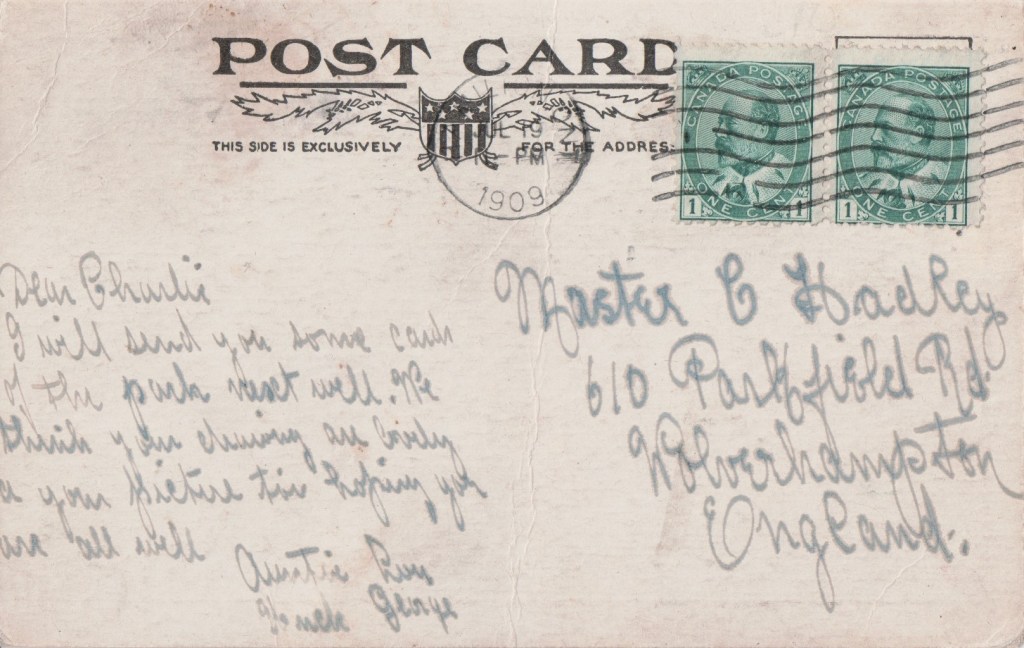
Frank L. Emanuel
- F. L. Emanuel

London-born Frank Lewis Emanuel (15 September 1865 to 7 May 1948) studied at the Slade School of Fine Art and at the Académie Julian in Paris. Emanuel was a painter, etcher, illustrator and writer. He was an opponent of modern art, publishing art criticism and topographical drawings in the Architectural Review and the Manchester Guardian. Emanuel wrote The Illustrators of Montmartre (1903) and Etching and Etchings (1930). He exhibited at the Paris Salon; the Royal Academy from 1886; New English Art Club and in Japan, Australia, America, Germany, Holland and elsewhere.
Emanuel convened a group called the Limners at his studio, artists and art-teachers whom he took under his wing and encouraged. The membership included young Isaac Rosenberg, WWI poet who died on the Western Front in 1918 as the age of 27.
Many of his paintings were reproduced as picture postcards by Raphael Tuck. Emanuel’s coastal scenes featured in Tuck’s “Art” Postcard series 698 and 1173 some of which he signed Frank Emanuel. In the divided-back era, he signed Oilettes Frank L. Emanuel.
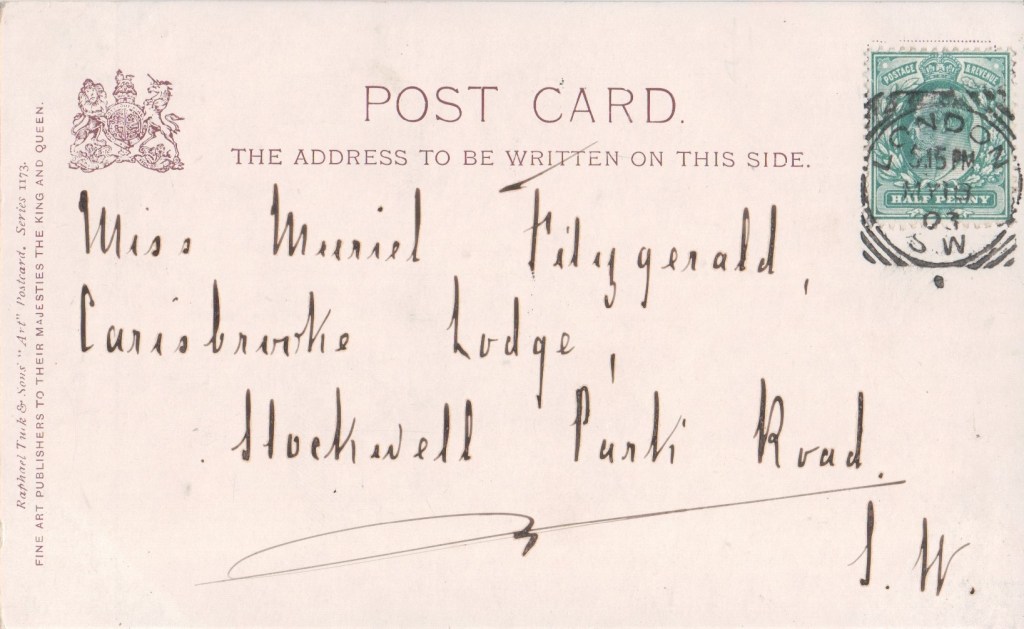
The Emporium, San Francisco
- Pub. by the Emporium, S.F.
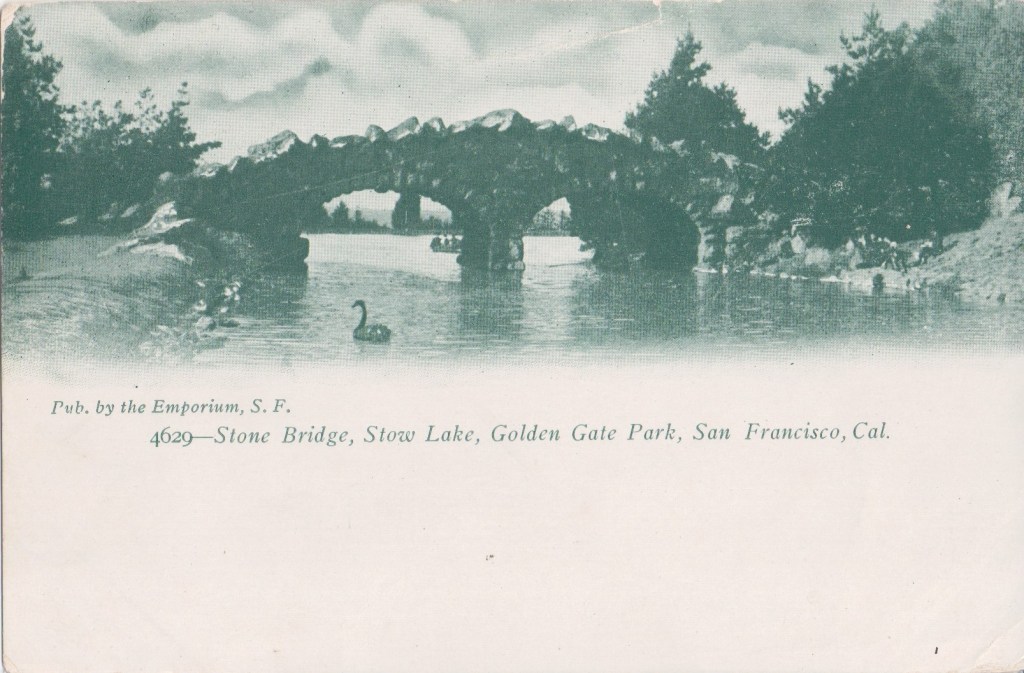
The Emporium, was a mid-line department store chain headquartered in San Francisco, which operated for 100 years, from 1896 to 1996. The flagship location on San Francisco’s Market Street was a destination shopping location for decades, and several branch stores operated in the various suburbs of the Bay Area.
The Emporium traced its roots back to 1872, its building to 1896 and its prosperity to 1897, when a manager named Henry Derman was brought in. His motto was Organize, capitalize, harmonize, systemize, economize, advertize!” and he made the store a big hit. The Emporium was the first West Coast department store to send buyers to New York, and they did so well at the Christmas season that the number of shoppers had to be restricted for fear the floors would collapse. At the turn of the century, the Emporium had its own orchestra, which played its own Emporium March under the glass dome. It was the biggest and the best.
It was a middle- and working-class store, on the wrong side of Market Street, a classic dividing line. One old lady was shocked when her daughter-in-law took her boys to see the Emporium Santa. “What kind of Santa,” she demanded, “would be found South of Market?” ,
The building weathered the 1906 quake, but not the subsequent fire; the heating plant blew up. The store was gutted, but was rebuilt, with the same facade on the same site, bigger and better than ever, with a new dome. In 1936, the Emporium was the first big San Francisco store to have escalators It was run with military precision; the doors opened to the sound of a recorded bugle call. The Emporium had an ice rink, gave golf lessons, even sold groceries.
The store’s popular saying: The Big E with the big selection included a discount basement called Market on Market. In the 1980s, the basement also had a Post Office, a shoe repair, and a full service deli. The Emporium and its sister department store chains were acquired by Federated Department Stores in 1995, and many converted to Macy’s locations though the main store was closed the next year.
Sources: wikipedia; The Department Store Museum; When S.F. gave Emporium, and its Santa, a final Christmas farewell
This card: Stow Lake is on the easternmost side of Golden Gate Park. Frederick Law Olmsted laid the groundwork for the creation of the park in what was the Outside Lands in the western end of San Francisco. The park was built from east to west, with Strawberry Hill and Stow Lake, in 1893, being among some of the first constructions.
Carl Engelberger
Stans, Switzerland
- Postkartenverlag Carl Engelberger, Stans
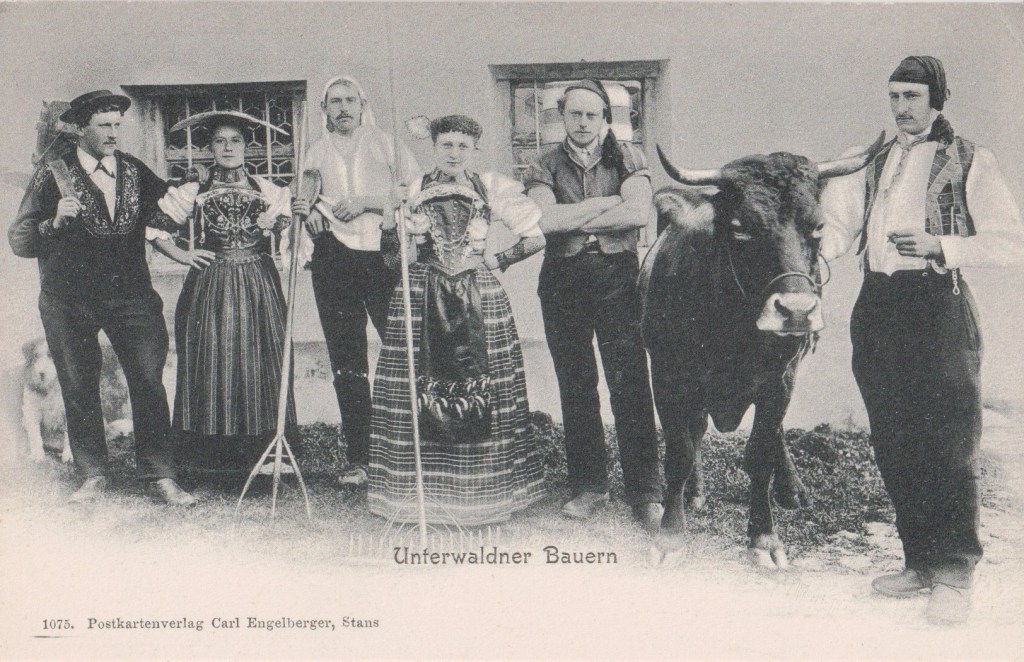
Carl Engelberger, (28 December 1852 to 11 August 1917), postcard publisher, Stans, a Swiss commune and the capital of the canton of Nidwalden.
Engelberger founded a print shop in Stans in 1896. He wrote, published and printed books and was a poet with the pseudonym “Erni am See”. His 1898 book A hundred years ago. Stories from Unterwalden contains four stories from the history of Switzerland during the French Revolution.
Engelberger published a series of photocards of country people of the Unterwald a Swiss region, made up of the two (half) cantons of Obwalden and Nidwalden. He printed the Nidwalden Annual Accounting Reports for 1900, 01 and 02. In 1902 he published a Guide to Stans and District.
widow Engel-Lievens, Spa, Belgium
- Veuve Engel-Lievens
- Vve Engel-Lievens
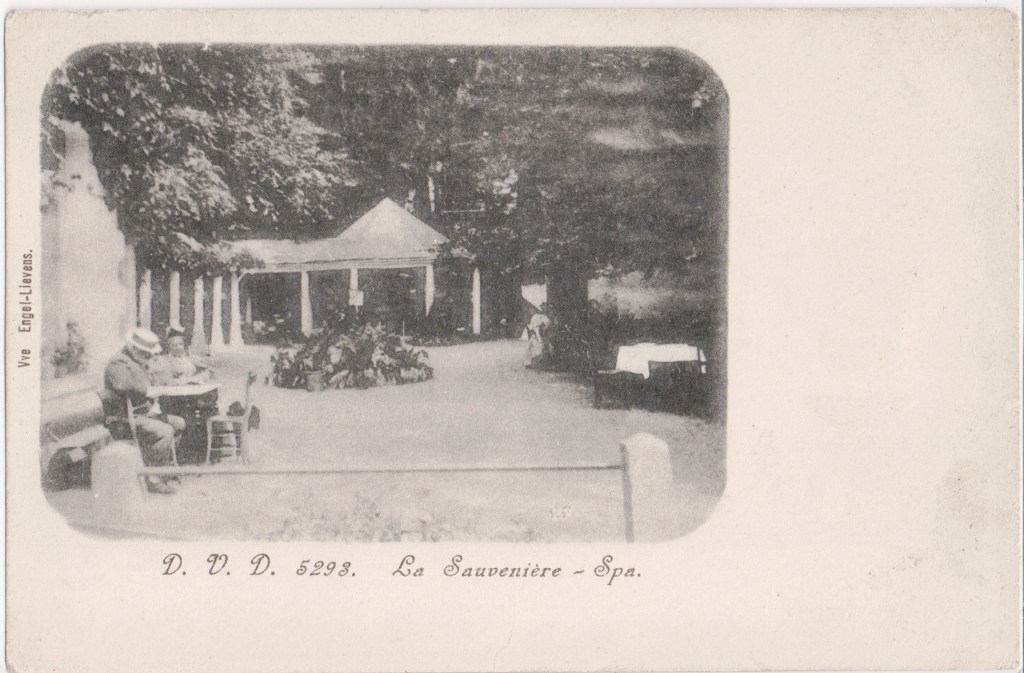
A. Engel-Lievens, printer, Spa, Belgium. In 1895 Engel-Lievens published Spa, les eaux et les bains. Lettres medicales by A. Poskin and E. Guilleaume. She produced viewcards of Belgium for Désiré van Dantzig (qv).
A Enz, Luzern, Switzerland
I read this card as indicating that it was published by A Enz, publisher, Luzern and printed by Co-operative Book Printing, also Luzern (qv).
Heinrich Ephron, Vienna
- E S W H EPHRON, WIEN
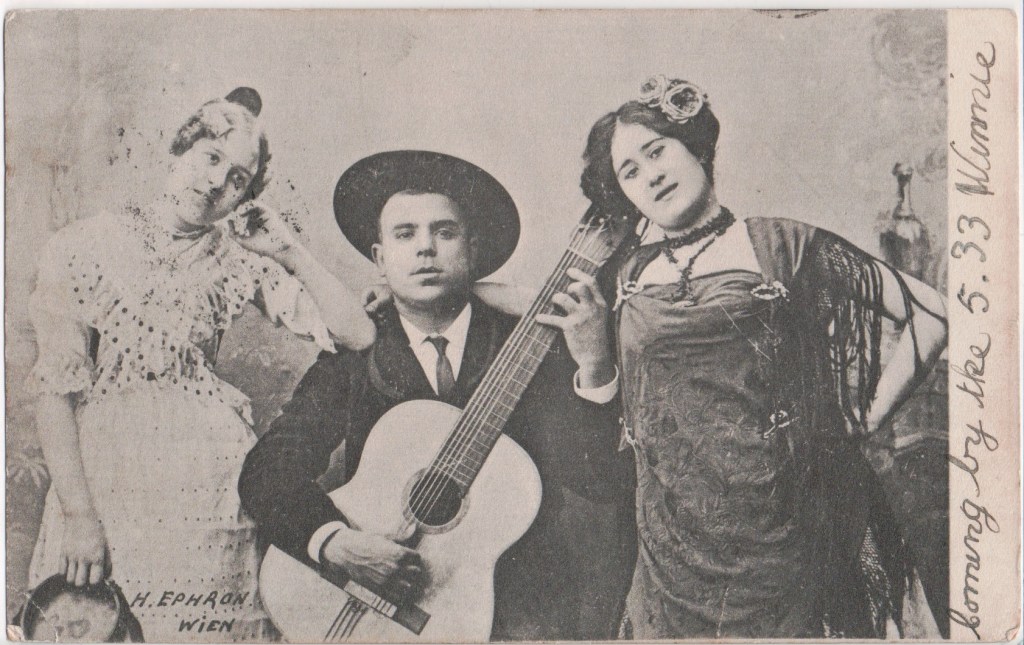
Jefim Heinrich Ephron (1862 to 27 December 1937), Austrian writer, photographer and antiquarian. Academic painter and photographer. He wrote in twelve languages and, as a lyrical poet published a book My Harvest.
A CDV from 1900 shows him working from 13 Mariahilferstrasse and 59 Märzstraße. He offered costume and interior photography and boasted medals and awards for his artistic photography. Emil Storch published his photographs as postcards.
In March 1901 Ephron’s photographic portraits of Felix Dörmann (1870 to 1928), Austrian writer, librettist and film producer and Elsa Ginsberg (22 August 1877 to 1 May 1932), Austrian writer were published in the Österreichs Illustrierte Zeitung. In 1905 Photographische Korrespondenz journal printed an open letter from Ephron and other photographers protesting against the inclusion of photography in the craft trades in a cooperative proposed in Vienna.
By the late 1920s he was in business with his son. Ephron created Almondo as a new world language to compete with Esperanto.
Source: ideopedia
Ephtimios Freres, Port-Said
- Ephtimios Freres, Port-Said
- Ephtimios Freres, Port Said
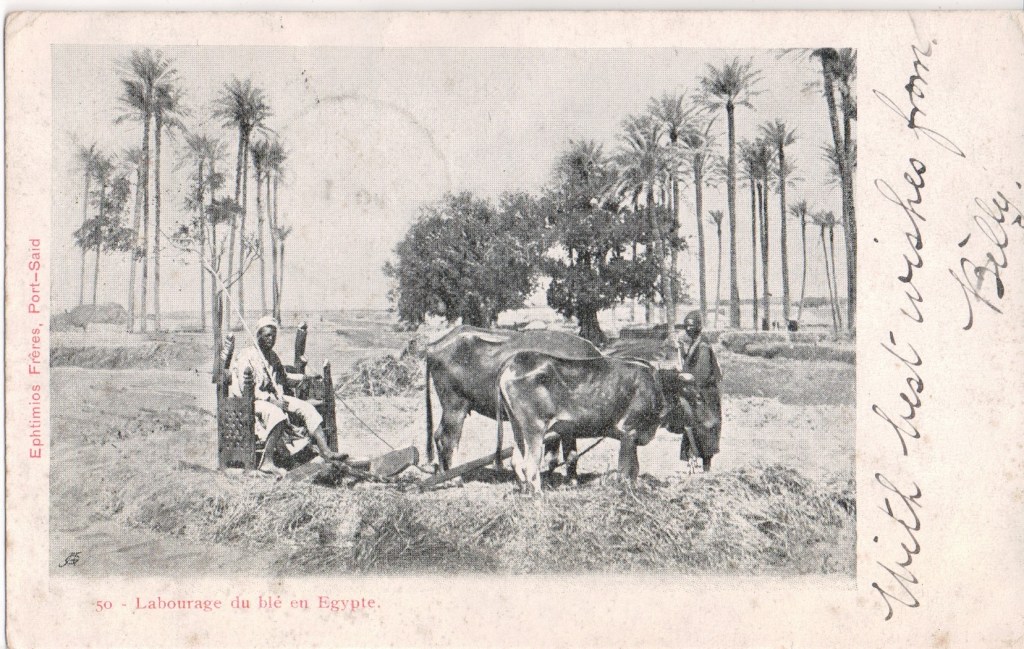
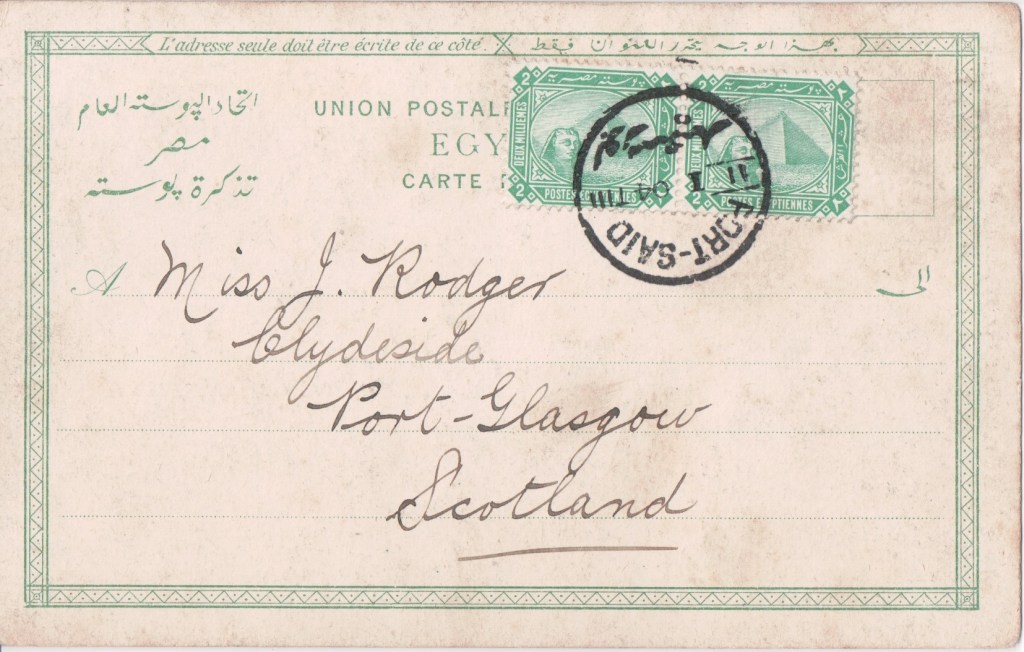
Ephtimios Freres worked as photographers, booksellers and publishers of postcards in the 1900s10. In 1904 Grand Oriental Stores Ephtimios & Marcoulides was opposite the Eastern Exchange Hotel. In 1913 both businesses were listed in the Egyptian Gazette. Ephtimios & Marcoulides were in rue Sultan Osman, quai Eugénie et rue du Commerce11. Ephtimios Brothers were listed under Oriental and Sudanese Products, travel products while the other business were listed under novelties.
Ephtimios and other postcard publishers who operated in Egypt in the first quarter of the twentieth century noticed the charm of Mansoura as a provincial town and started the photographic heritage of Mansoura12.
In 1919 Ephtimios Brothers Stores advertised Oriental curiosities13. The Official Gazette of the Government of Palestine published in Jerusalem on 1 October 1924 recorded the formation of a partnership between Damian and Issa Ephtimios both of Port Said Egypt and Steelo Elias Awad of Jerusalem as engineers, contractors and merchants. As the enterprise bore Mr Awad’s name and was he was the only executive partner, it may be inferred that the Ephtimios brothers were investing rather than branching out. R.S. Ephtimios and Marcolidis did less well – they were bankrupt by 193114. There has been a large community of Greeks in Egypt, also known as Egyptiotes, from the Hellenistic period until the aftermath of the Egyptian Revolution of 1952, when most were forced to leave. The Greek community in Port Said was founded in 1870. The Arab-Israeli wars of 1956 and 1967 contributed to the uprooting of the sizeable Greek community in the Suez Canal cities, especially Port Said15.
Sallo Epstein & Company,
Durban, South Africa
- SE c D [in lozenge]

- Sallo Epstein & Co.,Durban
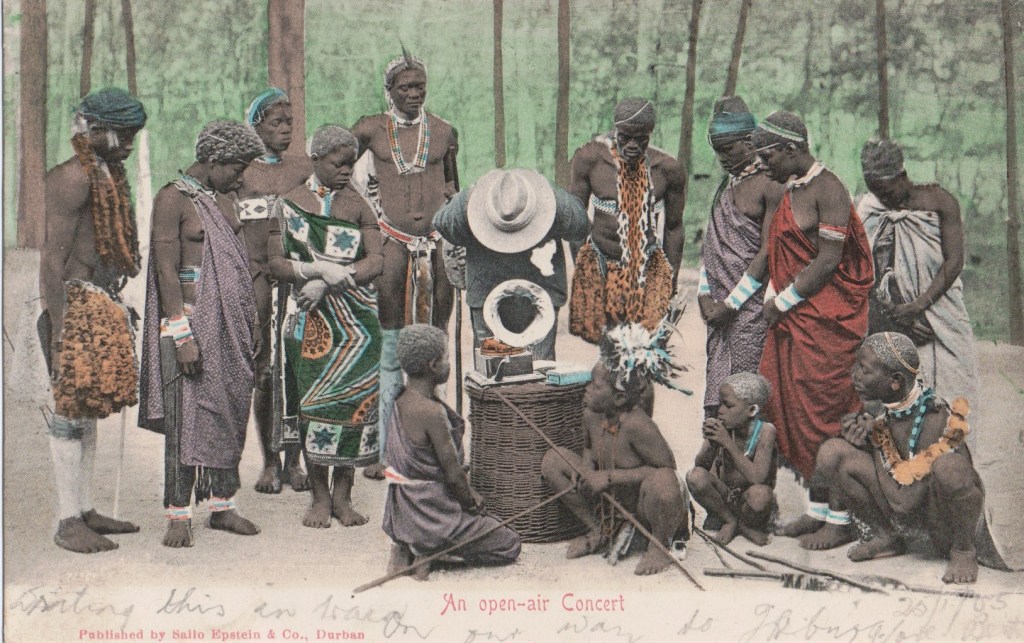
Sallo Epstein & Co.,Durban, South Africa In October 1892, a Dutchman named Mozes Booleman emigrated to South Africa. On the voyage he met Sallo Epstein and, through their mutual interest in philately, they became friends. In 1893 Booleman set up a business dealing in fancy goods and stamps. By 1896 he was selling stamps in Johannesburg from a location called Philately House under the name Booleman & Co. During late 1896 the firm went into liquidation. Booleman returned to the Netherlands and set up a successful stamp auction.
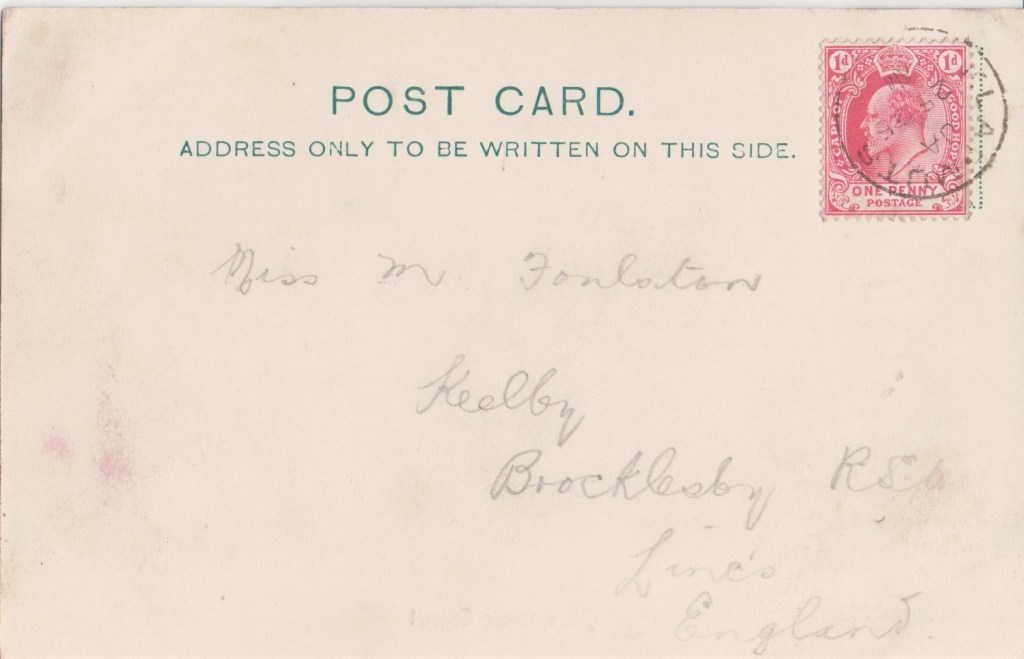
Around 1902, Epstein took over the business at Philately House in Johannesburg. During the Boer War, he expanded the business to a branch in Durban trading as Sallo Epstein & Co16. The business became the largest publisher of view-cards and types of South Africa and Transvaal. He produced over two thousand postcards in black & white collotype, some with hand colouring. While many of his cards captured everyday scenes, a small number of cards depicted animals, remembrances of the Boer War, and the funeral of President Paul Kruger in 190417. The dismantling of the Dutch Reformed Church was recorded on a Sallo Epstein postcard18. Another interesting ethnographic card here.
Henry Ericson
- ERICSON. PHOT. KOELLING & KLAPPENBACH, PUBS. CHICAGO
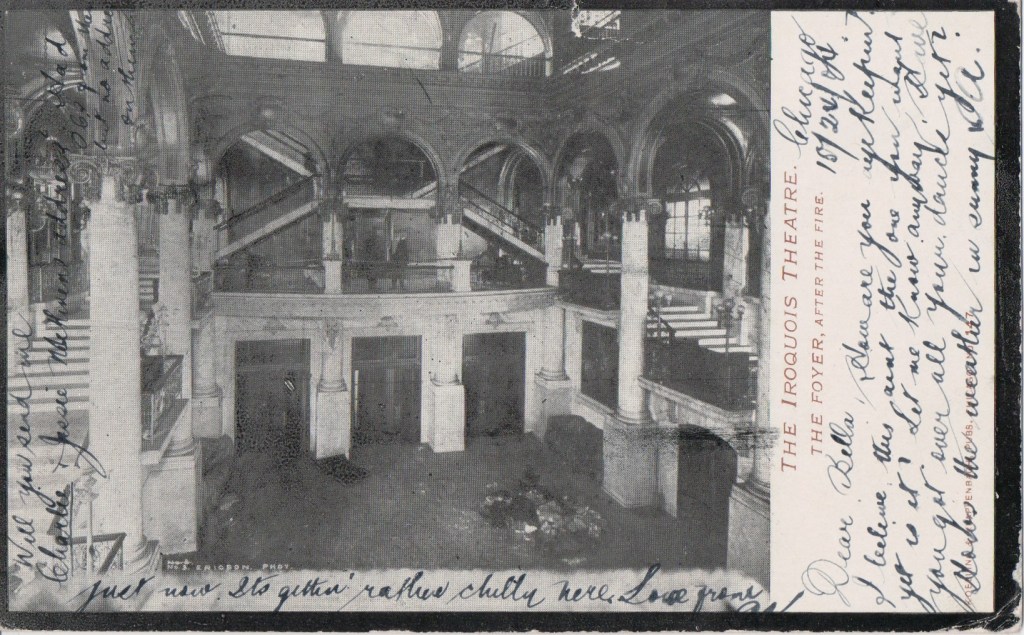
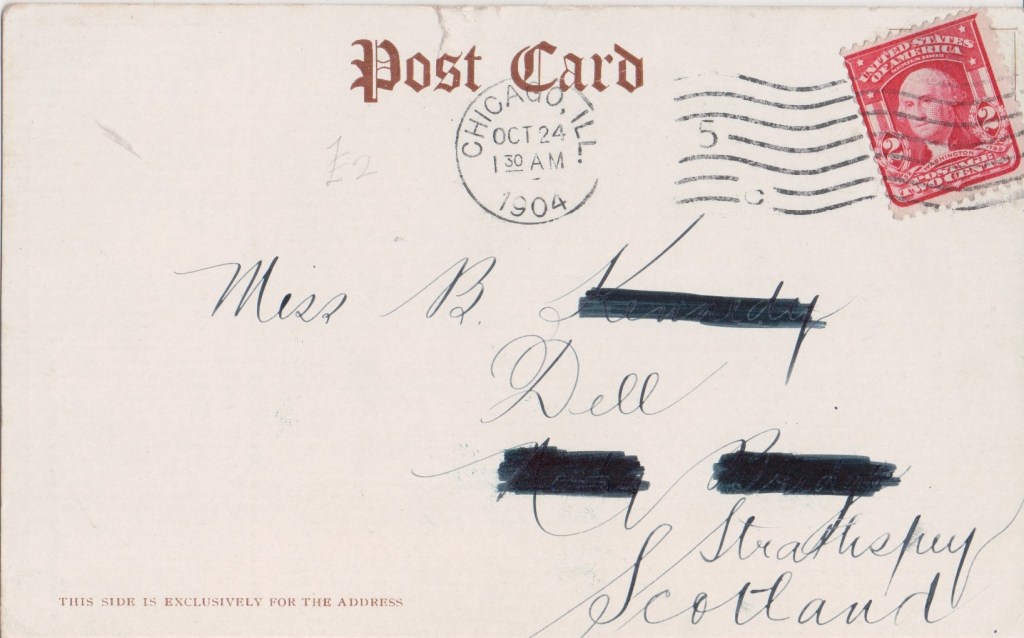
Henry Albert Ericson was the owner of the official photographic company for portraits from Cabinet size (4 by 5 inches) to 8 by 10 inches at the Louisiana Purchase Exposition, St. Louis for the duration of the Fair from 30 April to 1 December 1904. He seems to have taken a numbered series of photographs of the Iroquois Theatre in Chicago in the immediate aftermath of the disastrous fire there on 31 December 1903.
On New Year’s Eve 1903, Chicago’s Iroquois Theater was set ablaze when during a matinee performance of Mr. Bluebeard, largely attended by women and children, the fuse of a spotlight burst, setting fire to the muslin fly border of the stage. For a few minutes, the stagehands fought to put it out—stage electrician John E. Farrell climbed up to the top of the curtain and attempted to douse the fire with his bare hands—but it quickly grew beyond all reckoning. Farrell then hurried down to the stage door, opened it, and began to evacuate everyone backstage. When other workers attempted to slide open the large backstage freight doors, they released a draft that forced the fire into the theater auditorium. Described as a wall of fire and a cyclonic blast by various witnesses, the blaze billowed into the audience, blocking many of the fire exits. Other escape routes were un-labeled, locked, or difficult to operate. Eddie Foy, the headlining comedian at the performance, ran to the front of the stage and began to try to direct people safely out of the theater. But the loft above him caved in and brought the flames to the stage, forcing him to make his own way out. At this point, the lights went out.
In just ten minutes, as many as six hundred people—more than a quarter of the audience—perished. Most of the victims, many of them children or teenagers, had been trampled to death.
Source: Fire! A brief history of theater fires in New York City—and the regulations that helped people escape them. by Olivia Rutigliano https://www.laphamsquarterly.org/roundtable/fire
Further reading; www.iroquoistheater.com Website devoted to Iroquois Theater fire.
Dagmar Eriksén, Norrkoping, Östergötland, Sweden
- Forlag19 Dagmar Eriksén Norrkoping
Dagmar Eriksén Publishing company, Söderköping & 36 Drottninggatan Norrköping. Eriksen was active as a photographer in Norrköping in 1902-1908 and 1913-1917. On April 4, 1863 Agnes Arosenius opened a photographic studio on Hospital Street and became the first of some twenty female photographers who were active in Norrköping in the years up to the mid-1920s. Most academic programs were closed to women at this time, which meant that many were attracted to being photographers instead. The other women photographers included Constance Wikström and sisters Dagmar Eriksen and Hilda Winge. The sisters originally came from Denmark and had received their education from their father, Peder who did photography at home. As well as studio work Dagmar Eriksen and Hilda Winge photographed industries, station buildings and trains20.
Erker Brothers Optical Company
St. Louis, Missouri, USA
- Published by Erker Bros. Opt. Co.
Adolph P. Erker was a German immigrant who made his way to the United States in the late nineteenth century, with the goal of founding his own optical company. In 1879, he established The Erker’s Optical Company in downtown St. Louis, Missouri.
St. Louis was a major trading post with a rapidly growing population; riverboats were the main form of transportation, and a close proximity to the Mississippi River offered the ideal setting for a growing business. Once established, The Erkers Optical Co. became the first optical laboratory west of the Mississippi.
In the years following his founding of the company, Erker was joined by his brother, Olympic gold medalist August Erker, beginning a familial legacy carried to this day. August Casimir Erker (16 January 1879 to 29 November 1951) was an American rower who competed in the 1904 Summer Olympics; he rowed in the American crew, winning the gold medal in the coxless fours. Judging by the age given for him on wikipedia,he was only a few months old when AP Erker founded the business.
Before narrowing focus to eyewear, the Erker family was known for selling anything with a lens; A.P. Erker offered eyewear, cameras, microscopes, goggles, telescopes and binoculars in his optical store. They served as the official photographer for the St. Louis World’s Fair in 1904, with the founding father one of the faces behind the camera.
Source: Erkers
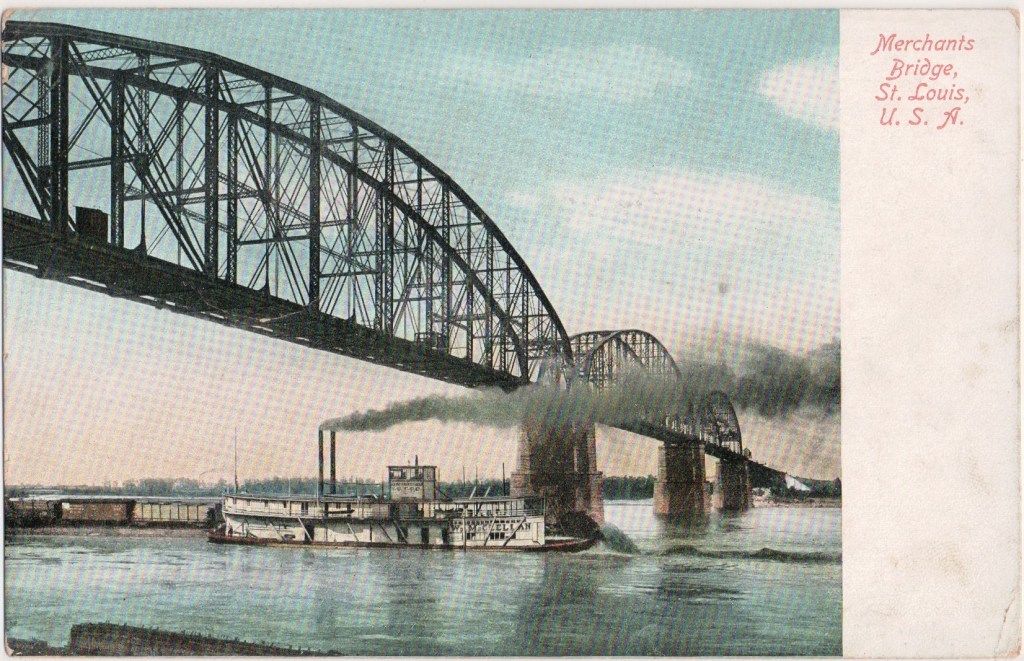
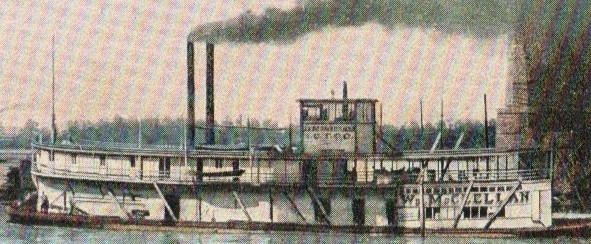
This Card: The vessel seen passing under the Merchant’s Bridge at St. Louis is a sternwheel towboat William McClellan built in 1901 at Jeffersonville, Indiana by Howard Ship Yard. Wiggins Ferry Company based her in St Louis and sold her to Baton Rouge, Louisiana in 1915.
Captain William McClellan (about 1743 to 24 February 1827) was born in Boutetourt County, Virginia. He was the son of John McClellan. McClellan served as an officer in the Loundoun County, Virginia Militia, during the American Revolutionary War. He is honoured for his service by the Society of the Daughters of the American Revolutionary War, as Ancestor #A075059. Applications for membership of the Society have been made by the descendants of his son, John McClellan.
In 1909 Captain William McClellan was the general manager of the Angola Transfer Company, Angola, Louisiana. His brother Captain James McClellan was in charge of the dredge Thomas of the Union Sand and Material Company.
Sources: University of Wisconsin-Madison; wikitree
Victor Ernult-Doncq,
Brussels, Belgium
- VED hand-written in bottom corner of monochrome photograph
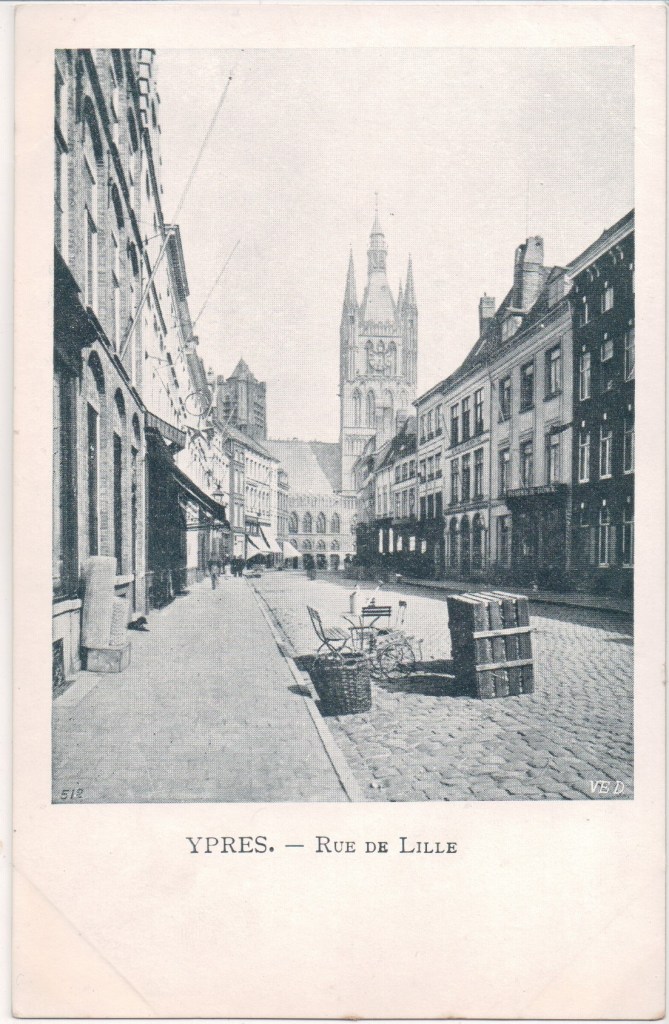
Victor Ernult-Doncq, printer and publisher, Brussels.
Victor Ernult and Aline Doncq were both born in Chimay a Walloon municipality located in the Belgian province of Hainaut where they married on 15 April 1896 when Victor was 28 years old. After the marriage they moved to 26 Rue des Chartreux in Brussels. Around the turn of the century, as well as printing cards for others, Ernult-Doncq began to produce view cards in his own right. In 1903 he moved to 16-18 Rue Lenglentier from where he advertised as V.E.D.. In an advertisement in 1904 V.E.D. claimed that his illustrated cards were recognised as the most profitable in the world for merchants, boasting that special equipment allowed him to offer unbeatable terms. He supplied photocards of Egypt for the local publisher Comptoir Philathélique d’Egypte. Active until at least 1910.
This Card: shows the 1304 Cloth Hall, extensively pictured in ruins during WWI.
Pasquale and Achille Esposito, Naples, Italy
- FOT. ESPOSITO RICHTER & CO. NAPOLI
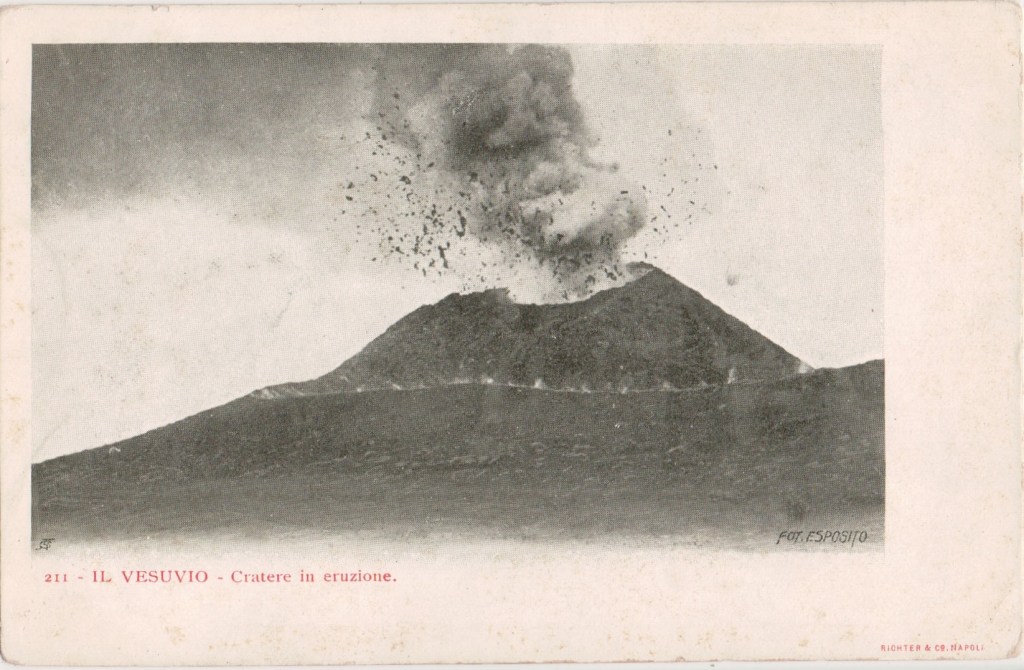
Pasquale and Achille Esposito, photographers, 123 Strada di Chiaia, Naples.
Pasquale Esposito took a dramatic photo of an eruption of Vesuvius on 26 April 1872. He was joined in the business ‘Artistic Photography Pasquale and Achille Esposito’ by his son Achille. As well as monochrome images, the Espositos produced coloured photo-chromolithographic pictures. Their work included significant urban and landscape views of Naples and its territory (Capri, Sorrento, Amalfi, Pozzuoli, Pompeii), but the most original and historically relevant part is made up of the shots of habits, customs and scenes of urban and sea life, described by the Espositos as “artistic scenes”.
In the Espositos’ images of popular Neapolitan daily life, three genres of “costume” photography can be distinguished, all dating from around 1880 to 1900: 1) Neapolitan customs and habits, small trades, street vendors, genre scenes and popular types shot in the studio or outside in authentic attitudes and gestures and with a snapshot character, without undue sentimentality. 2) Street scenes. This type can also include animated urban views. 3) Sea or beach scenes.
The Espositos’ shots often have the feel of being snapshots, sometimes taken in the context of the crowd itself, from close range and with dynamic angles. They are images that sometimes anticipate forms of photo-journalism that developed during the twentieth century.
The business’s production spans the crucial historical moment of a Naples undergoing transformation from being the capital of an autonomous kingdom to a city of the new Kingdom of Italy: a city that redefines itself in its new subordinate role, bringing with it all its existing political and social problems.
Leading firms including Richter (qv) and Ragozino (qv) published their work as postcards in the undivided-back era.
Sources: Italian Ministry of Culture; Archivio Fotografico Parisio Troncone; https://archiviofotograficoparisiotroncone.it/pasquale-e-achille-esposito/; Usi, costumi e scene di strada nella produzione fotografica dell’Ottocento a Napoli III. Pasquale e Achille Esposito Giovanni Fanelli 2018
Essanay Film Manufacturing Company
Chicago, Illinois, USA
- Essanay Indian Chief head logo COPYRIGHT ESSANAY FILM MFG. CO.
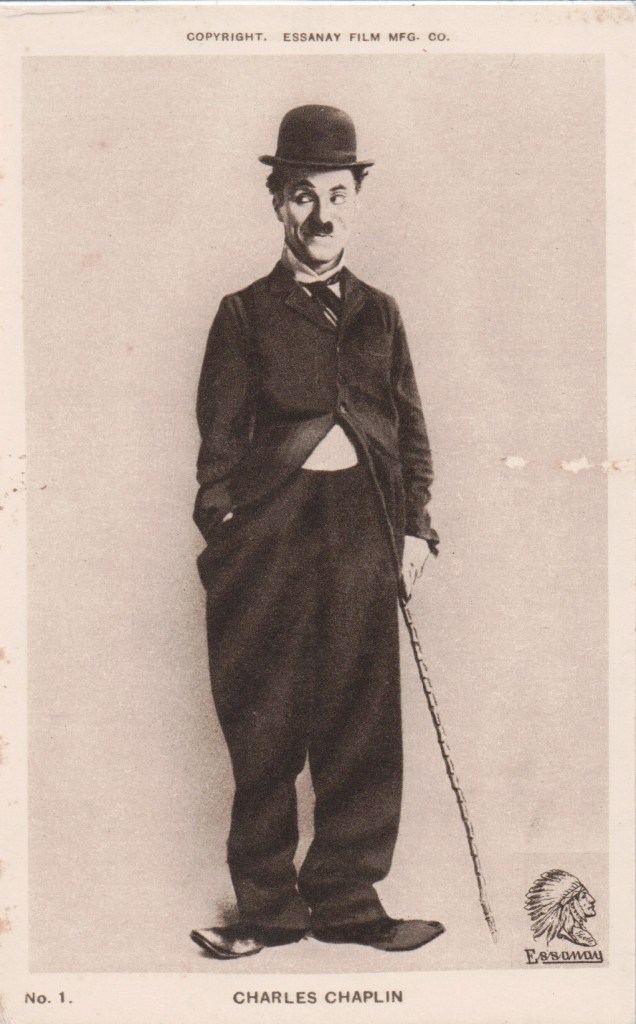
Essanay began in 1907 and a year later became a member of the powerful Motion Picture Patents Company. The name Essanay was formed from the surname initials, S and A, of its two founders: George K. Spoor, who provided the financing and managed the company, and G.M. Anderson, better known as “Broncho Billy” Anderson, cinema’s first cowboy star.
In 1914, after the expiration of his one-year contract with the Keystone Film Company, Charles Chaplin was lured to Essanay for the unprecedented salary of $1,250 per week, with a bonus of $10,000 for merely signing with the company. Shooting in its California and Chicago studios, he went on to make films that established him as the world’s favourite screen comedian. Unlike other screen stars at the time, Chaplin retained complete creative control over his films, from writing to casting and directing. Despite the strain that put on his relationship with Essanay, this fruitful period of his career saw him evolve his style, resulting in seminal works such as The Tramp, The Bank and The Champion.
The fourteen films he made for the company were distinctly marked and designated upon release as the Essanay-Chaplin Brand. Chaplin’s one year with the company was its zenith. The studio foundered after Chaplin left to join the Mutual Film Corporation and finally ceased operations in 1918. Essanay would most likely be largely forgotten were it not for Chaplin’s early association. Jeffrey Vance says:
If the early slapstick of the Keystone comedies represents Chaplin’s cinematic infancy, the films he made for the Essanay Film Manufacturing Company are his adolescence. The Essanays find Chaplin in transition, taking greater time and care with each film, experimenting with new ideas, and adding flesh to the Tramp character that would become his legacy. Chaplin’s Essanay comedies reveal an artist experimenting with his palette and finding his craft.
Source: Essanay – Chaplin Brand Jeffrey Vance
Max Ettlinger & Company
London & New York
- M ETTLINGER & CO., LONDON E.C. and NEW YORK
- M.E. & Co.
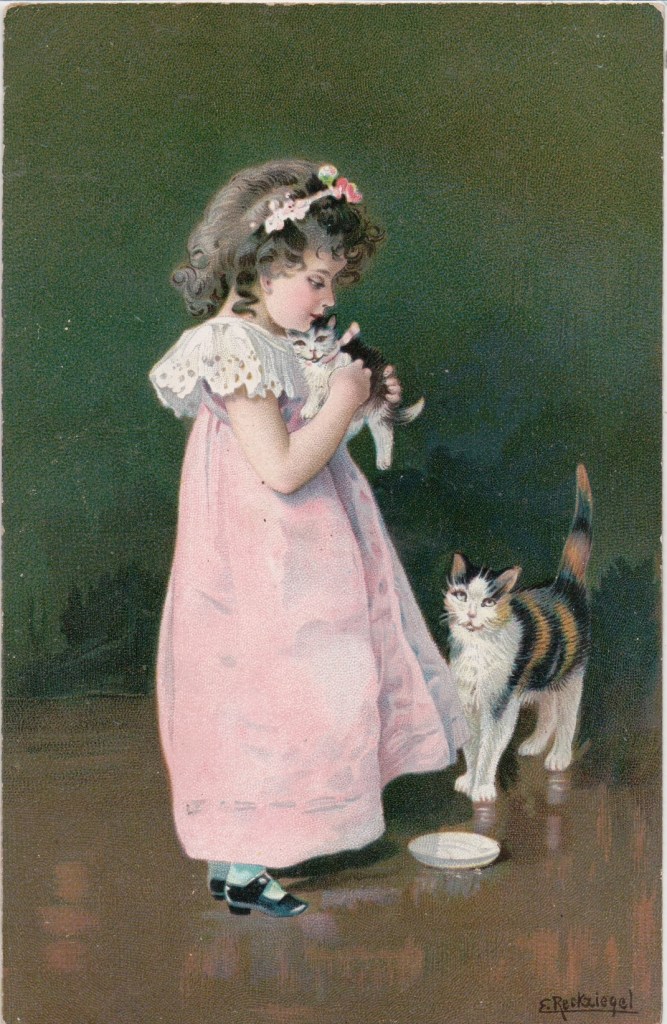
German Max Ettlinger started publishing postcards when he was 18 and, in 1902, moved to England where he became a British citizen on 23 October 1906 when he was living at 137 Maida Vale, London. One of his early successes was obtaining a monopoly of the sale of postcards at the 1903 Earl’s Court Exhibition.
The business published a wide range of subjects, including novelty cards, and comic cards. These included FS cards from The Law, Drink, and Soldiers sets as part of the Royal Series with the Ettlinger logo. Ettlinger’s squeaker cards were a popular early seller. In 1903 cards including real cigarettes were also sold.
Ettlinger marketed discal postcards in March 1905. The Discophone cards had recordings of popular songs and featured portraits of the singers. Retailers were provided with Discophone machines to play and the success was immense. Ettlinger was still selling the cards in May 1908. Such cards could be played on a standard turntable, but needed a clamp to keep them from slipping.
A limited company was formed but may have been neglected; Ettlinger was also in business at 6 East 17th Street, New York and, on 22 March 1909, a bankruptcy petition was filed against him in London in which he was described as a company director late of 19 Long Lane in London. Max Ettlinger & Co Ltd was struck off the Companies Register in May 1911.
Sources: Byatt pages 89 to 91; metropostcard;Taylor & Francis
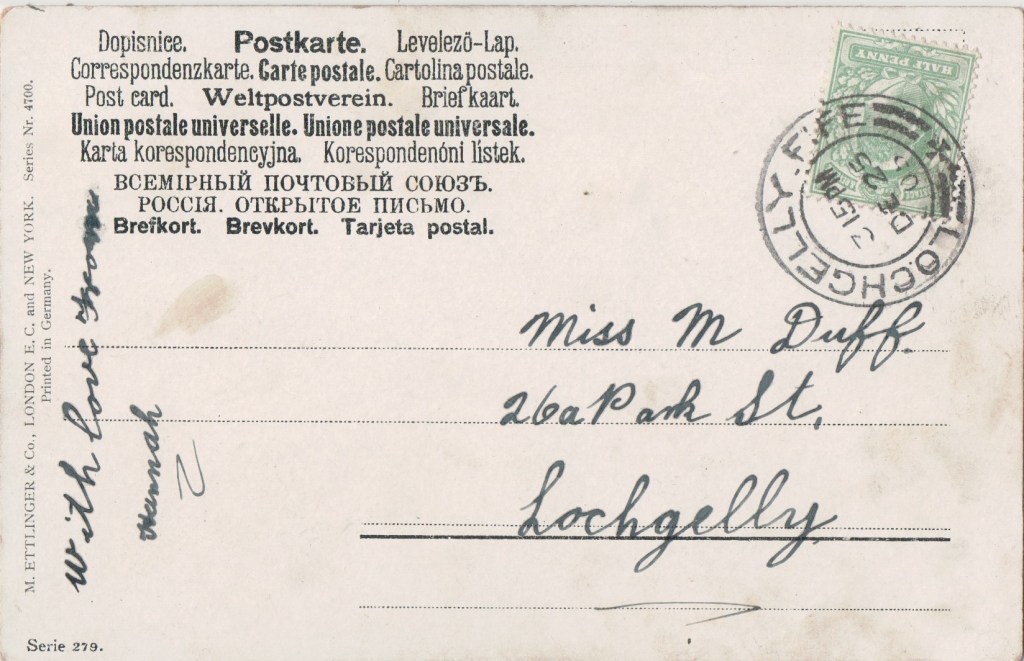
Excelsior Fine Art Publishing Company, London
- E.F.A. SERIES 545 artist’s monogram

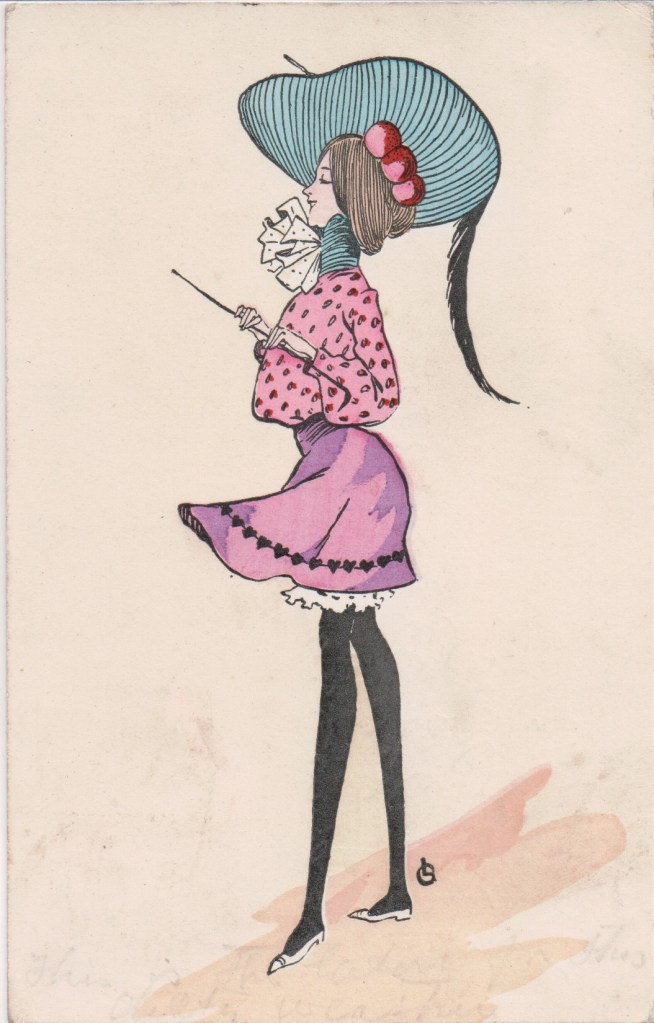
Excelsior Fine Art Publishing Company, 8 New Coventry Sreet London, W. According to Byatt, C. G. Pascalis was behind the business two years after he left Pascalis Moss (qv). They published Etchings of London, a hardback book of pictures of Victorian London consisting of 24 plates according to Ch. Legrand’s compositions. Their Coats of Arms and Flags Series was a reprint of the images in a set of Dutch trade cards also used as cigarette cards and appointment cards23. EFA are widely said to have been established in 1904 which makes the undivided back cards a puzzle – either they were published earlier than 1904 for the British market or in 1904 for the continental market where undivided backs were not allowed by 1904. The heraldry series may provide a clue – they were made in Netherlands and my undivided back may also have been commissioned rather than edited by the business.
This card: a remarkably avant garde design for 1904 by artist GL or LG.
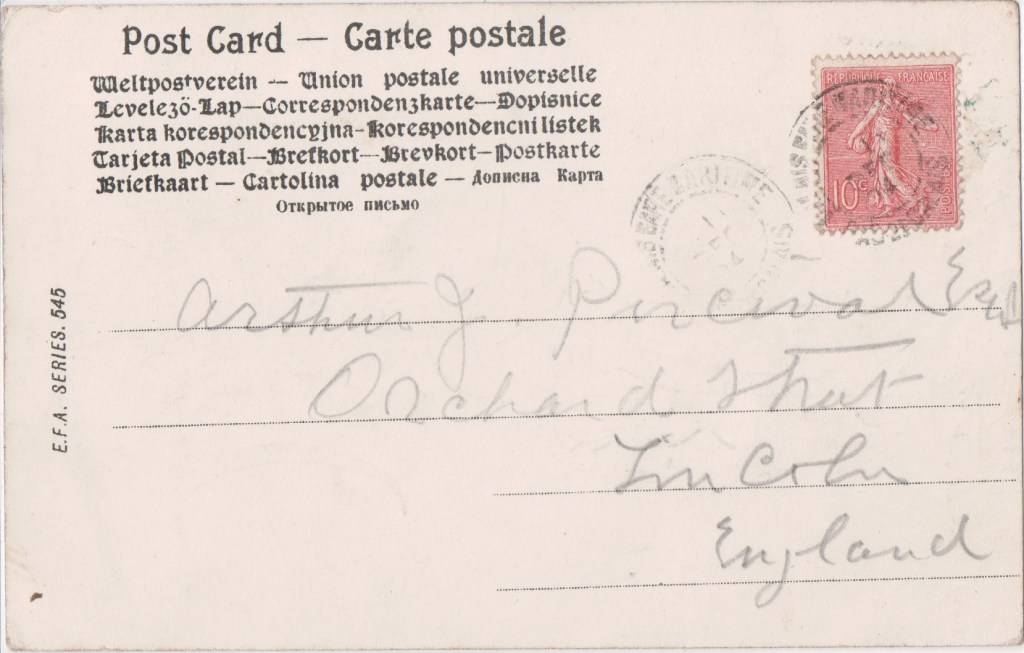
Excursions Suisses SA
Geneva, Switzerland
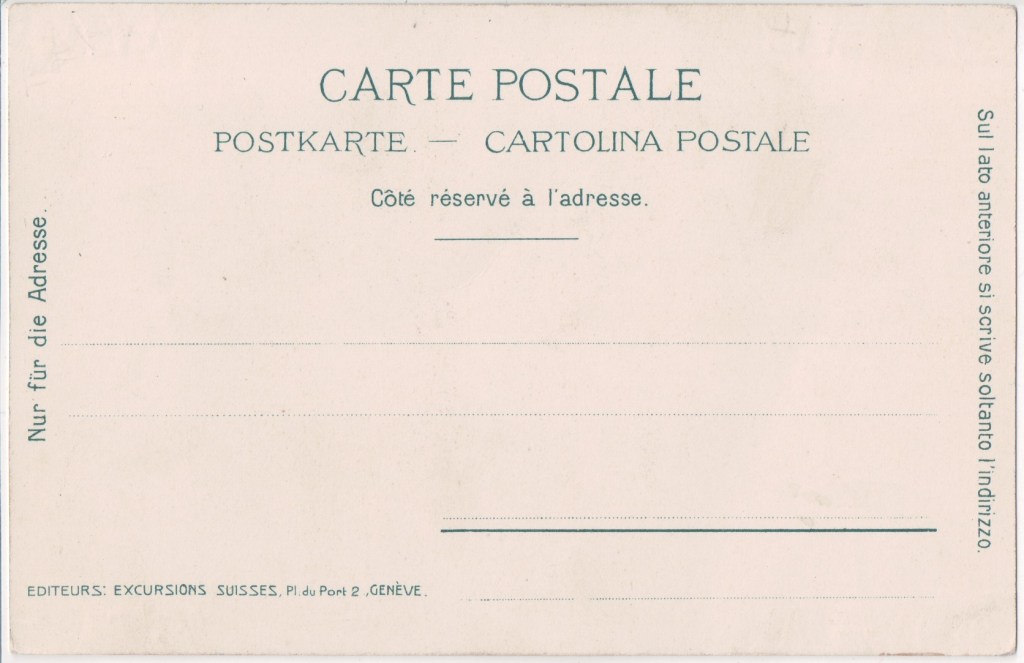
- EDITEURS: EXCURSIONS SUISSES, Pl. du Port 2, GENEVE.
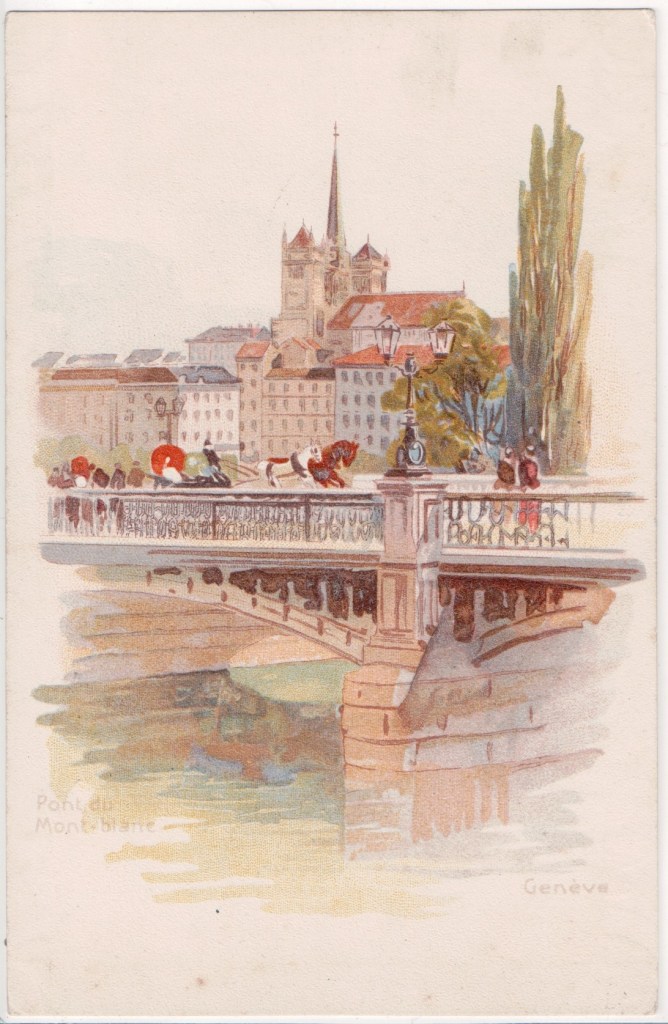
Swiss Excursions Limited were already in business in 1902. They published the Illustrated album of the Swiss railway network. They litigated in the Federal Court against Robert Ziegenbalg in relation to an advertisement for his college they published in 1905. In 1905 they resigned from Geneva French Chamber of Commerce. The company was wound up in 1915.
Friedrich Eyfried, Düsseldorf
- F.E. Above D in a scalloped shield
Friedrich Eyfried of Düsseldorf published topographical cards of Germany and Netherlands and sentimental depictions of children in popular stories. He was also interested in current affairs and published photo-cards of the 1902 Düsseldorf Industrial Exhibition and the Zeppelin over Duisburg.
Eyre and Spottiswoode, London
- Eyre and Spottiswoode
- the Woodbury Series
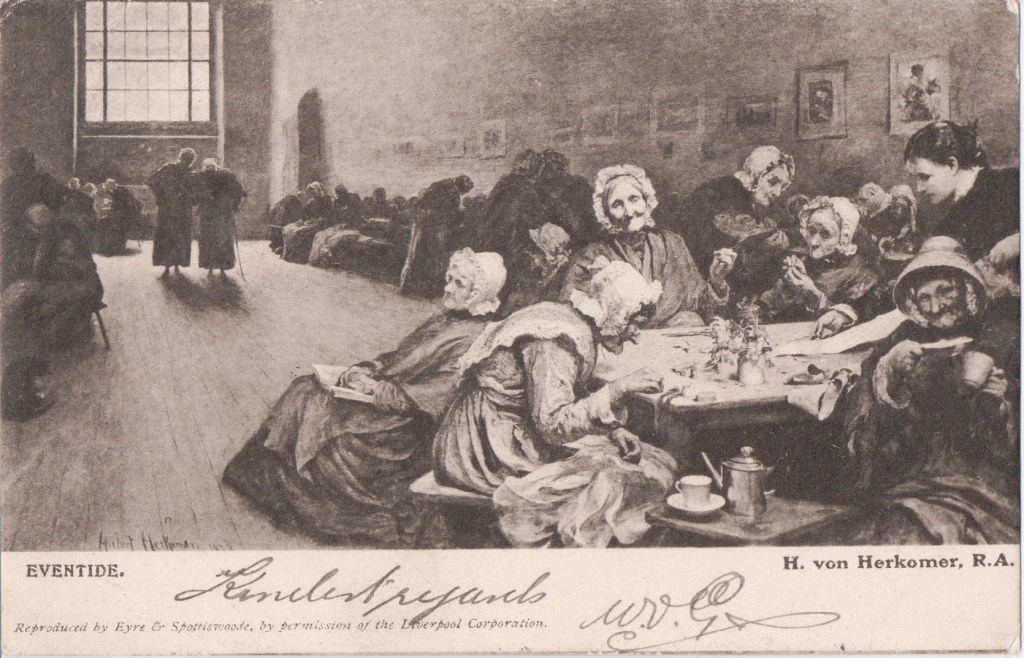
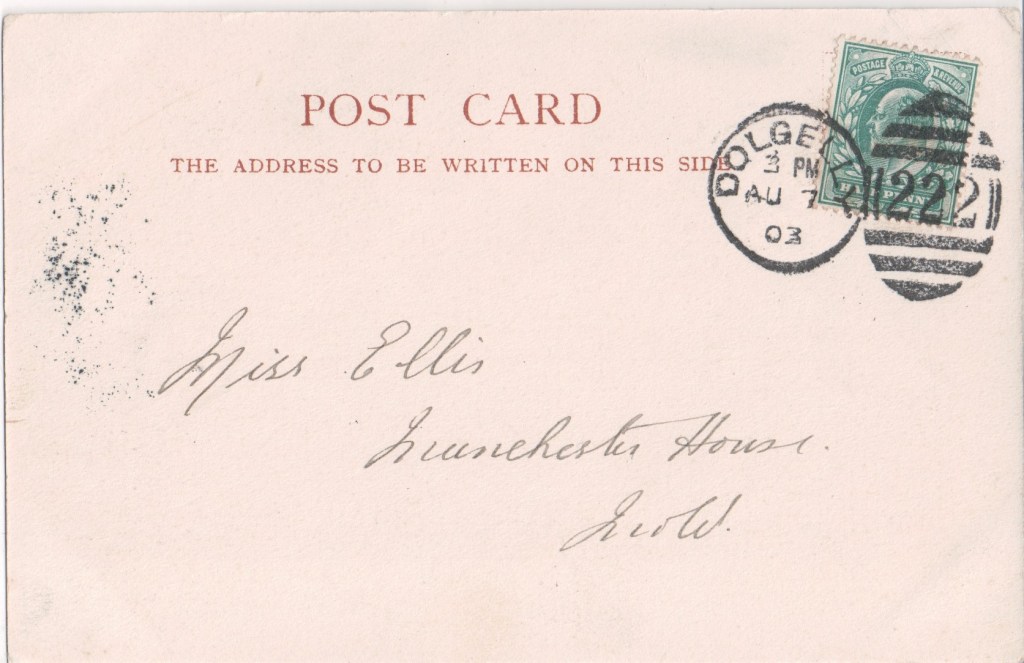
Eyre and Spottiswoode was founded by George Edward Eyre and Andrew Spottiswoode in 1845 on Fetter Lane, London. They were the King’s Printers, printing for His Majesty’s Stationery Office. They branched out into Christmas card printing, and by the late 19th century were also printing postcards under the Woodbury Series name.
Printed By George E. Eyre And William Spottiswoode, Printers To The Queen’s Most Excellent Majesty
Official Catalogue of the British Section for the 1878 Paris Universal International Exhibition
In the 1970s the company became part of Methuen Publishing and was then sold to Cambridge University Press in 198724. Many undivided cards were B&W reproductions of art owned by Liverpool Corporation.
This card: Sir Hubert von Herkomer CVO RA (born as Hubert Herkomer; 26 May 1849 to 31 March 1914) was a Bavarian-born British painter, pioneering film-director, and composer. Though a very successful portrait artist, especially of men, he is mainly remembered for his earlier works that took a realistic approach to the conditions of life of the poor. On her deathbed, Queen Victoria was initially photographed in study and eventually painted by Herkomer as an alternative to the more traditional mask produced in wax, which her son, the new king Edward VII, decried. Despite being a prominent member of Royal Academy of Arts, Royal Watercolour Society, and Royal Society of Painter-Etchers, as well as being on familiar terms with the royal family, Herkomer was never totally accepted by the British establishment, as he was ultimately a victim of the deteriorating relationship of Great Britain and Germany, which he shuttled in between, spending most of his summers in Bavaria. Source: wikipedia
Eyries Frères,
Nemours, Seine-et-Marne,
Île-de-France, France
- Eyries Frères
Eyries Brothers were publishers in Nemours who published some of Paul Lafaye’s (qv) photographs in postcards. The archives of the American Philosophical Society contains correspondence from the 1820s with Eyries freres & cie. Le Havre to that society25.
1Royal Court Art Institute
2 Handelspolitische Vereinigung des Kunstdruckgewerbes
3http://www.schutzbauten-stuttgart.de/de-de/bauwerke/luftschutzkeller/brauereikelleraugustenstr.aspx
4http://www.tpa-project.info/html/body_th__eismann.html
5 https://sv.wikipedia.org/wiki/Axel_Eliassons_Konstf%C3%B6rlag
6https://archive.org/stream/catalogofcopyri11libr/catalogofcopyri11libr_djvu.txt
8Publishing house
9 Publisher A Enz, Lucerne CO-OPERATIVE BOOK PRINTING LUZERN
10file:///C:/Users/MB/Downloads/OBJ%20Datastream.pdf
11http://www.cealex.org/sitecealex/diffusion/etud_anc_alex/LVR_000084_IV_w.pdf
12http://english.ahram.org.eg/NewsContent/32/138/90025/Search.aspx?Text=%20Mansoura
13http://collection.hht.net.au/firsthhtpictures/fullRecordPicture.jsp?recnoListAttr=recnoList&recno=52234
14Le Journal des Tribunaux Mixtes 2 April 1931
15https://en.wikipedia.org/wiki/Greeks_in_Egypt
16http://www.rhodesianstudycircle.org.uk/sallo-epstein-co/
17http://www.metropostcard.com/publisherse.html
18https://repository.up.ac.za/bitstream/handle/2263/52017/VanEeden_Study_2015.pdf?sequence=1
19Publishing company
20http://www.folkbladet.se/kultur-noje/norrkopings-forsta-kvinnliga-fotografer-7057017.aspx
21 A Walloon municipality located in the Belgian province of Hainaut.
22https://kortrijkpostkaarten.blogspot.co.uk/2017/07/v-d-b-de-uitgever.html
23 https://www.heraldry-wiki.com/heraldrywiki/index.php?title=EFA_Postcards
24http://postcards-of-the-past.co.uk/publishers.htm#e
25https://search.amphilsoc.org/collections/view?docId=ead/APS.Archives.IIb-ead.xml
 undivided-back postcards
Votre site est magnifique !!! Pierre Paulet, pierrepaulet51@gmail.com ; site de cartes postales : https://carpathea.com/
LikeLike