Day 5 Dresden to Nuremberg

Despite the unusually late night for us – 11pm by the time we were back in the hotel – we don’t sleep very late and so are underway in our 8am taxi by 7.59. The 8.52 is double decker and first class is comfortable – the guard serves coffee. But we come to a halt soon after we leave and then set off in the reverse direction which is disconcerting and makes us fear for our 17 minute transfer at Halle. We have to give up our table at Leizig but are at least spinning along. All other parts of the first class carriage have plenty of seats.
Very short transfer at Halle – platform 9 to platform 6. This is an ICE train to Vienna, even more crowded than the last.
Nuremberg is v hot and we make the first use of our €38 Nuremberg cards for two stops on line 1 of the U-bahn. On to the DB Rail Museum which has no cafe. This is a substantial former station on two floors with a wide range of displays including a whole room given over to lavatories on trains.


At the other extreme is mad King Ludwig’s fantastic carriage. Although the first floor is up to standard, the ground floor is less scrupulous about translating its information into English than the military museum.


Having had quite a lot of WWII in the Military and Rail museums, we decide not to do the Nazi rally sites or the war trials court tomorrow. And having experienced complete closure of public buildings on May Day in Paris last year, we check that our choices are open tomorrow.


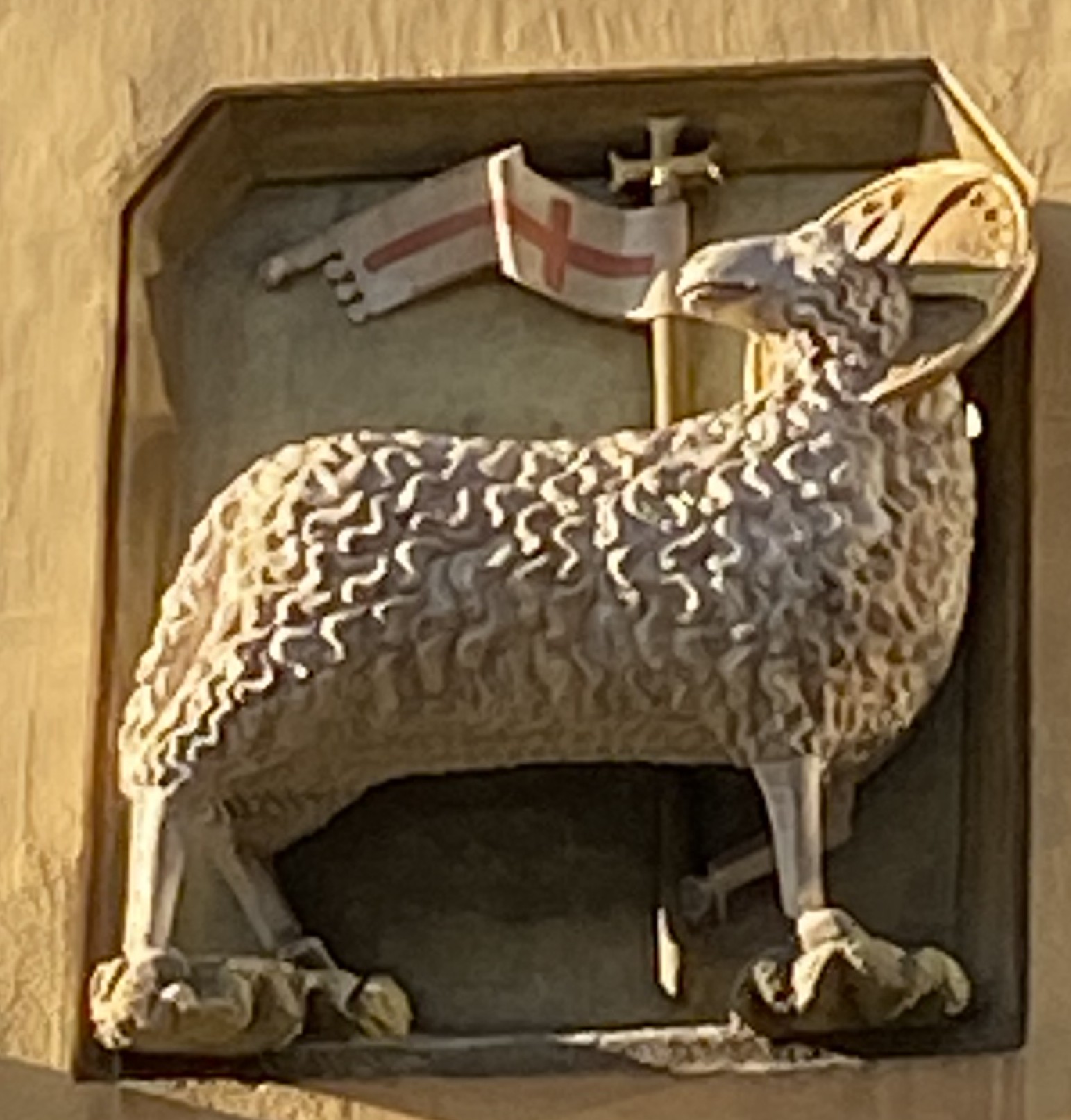


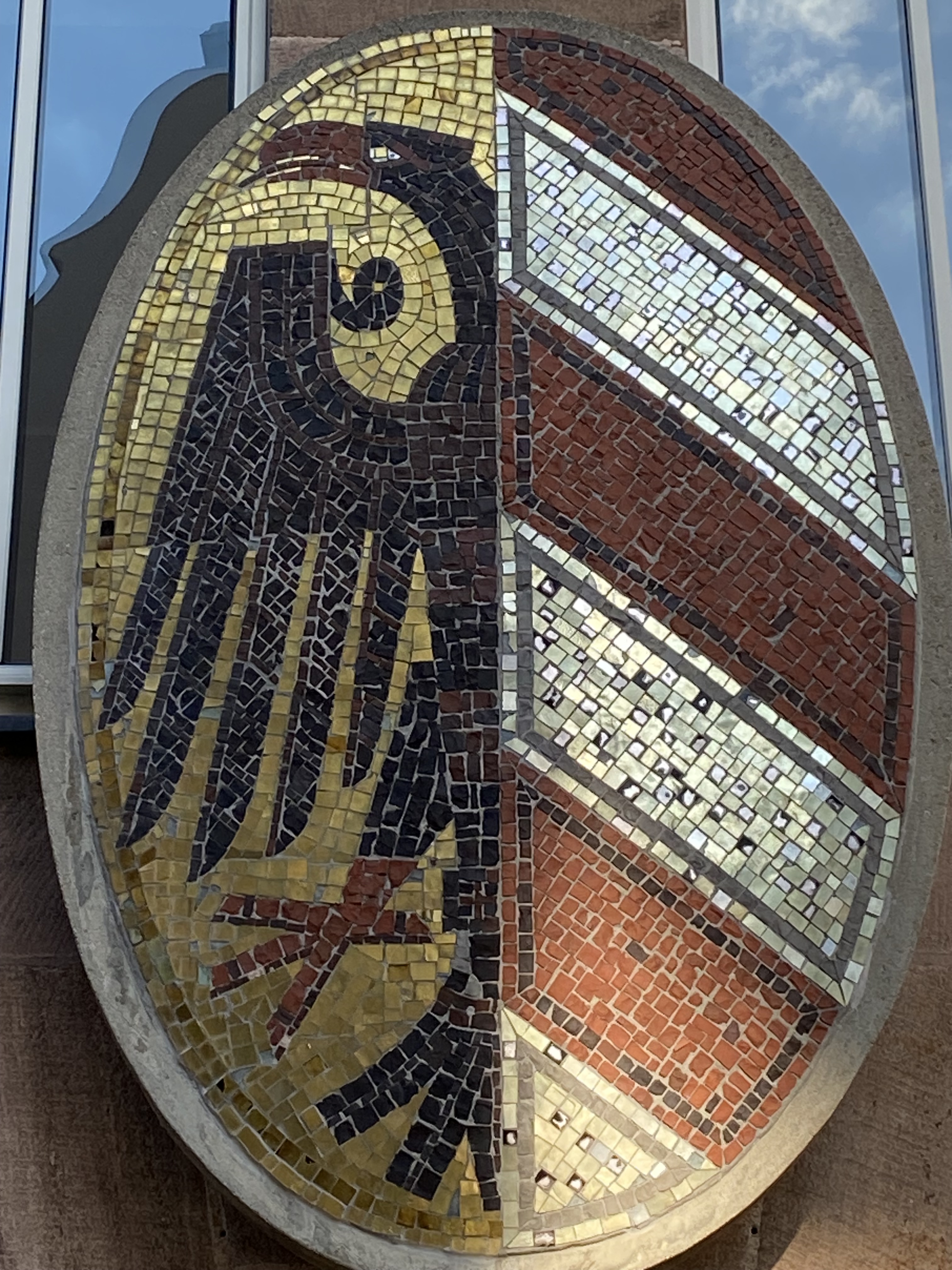

Another Chinese meal and then a pleasant walk round the town in the sunshine.
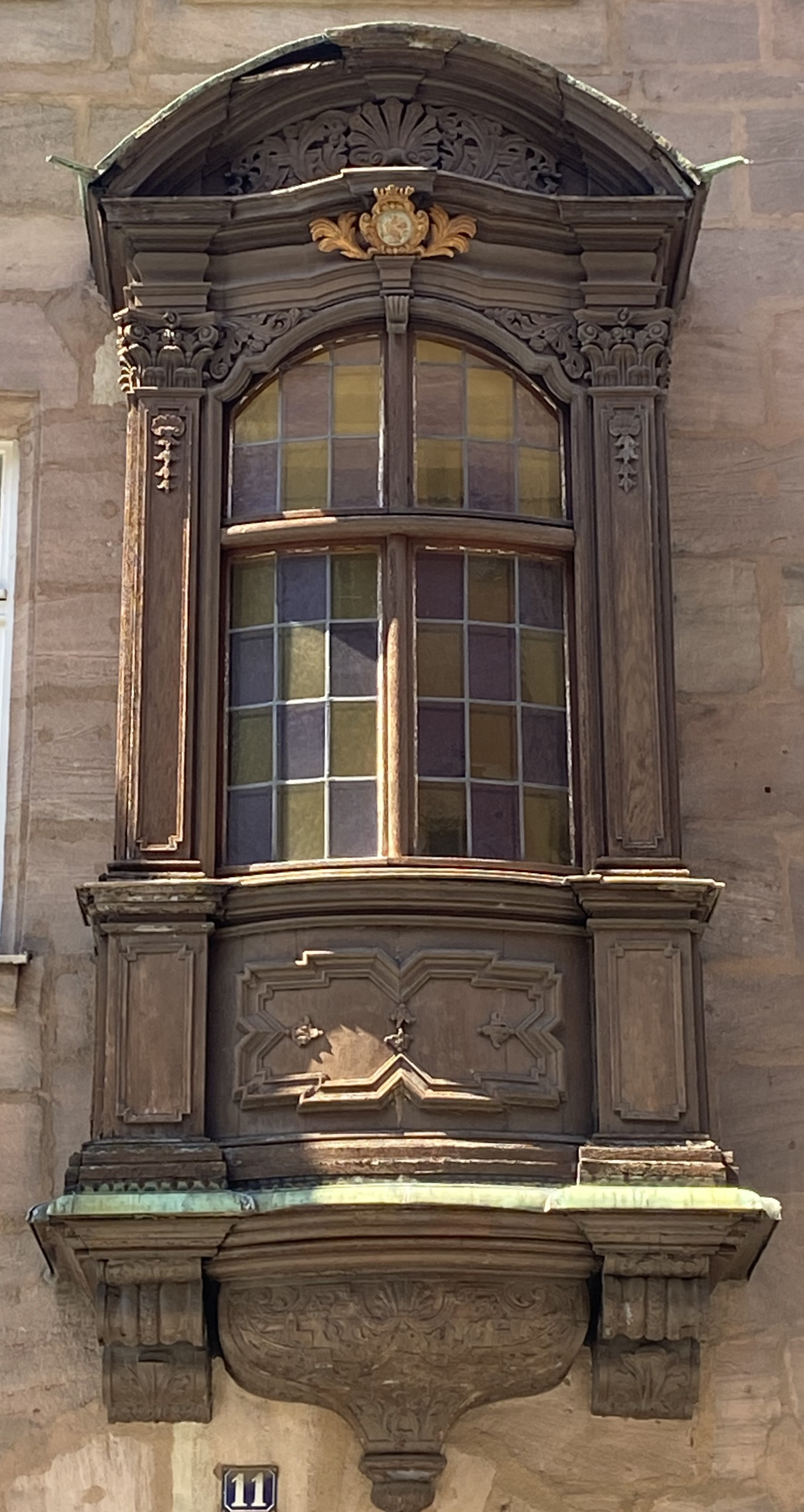
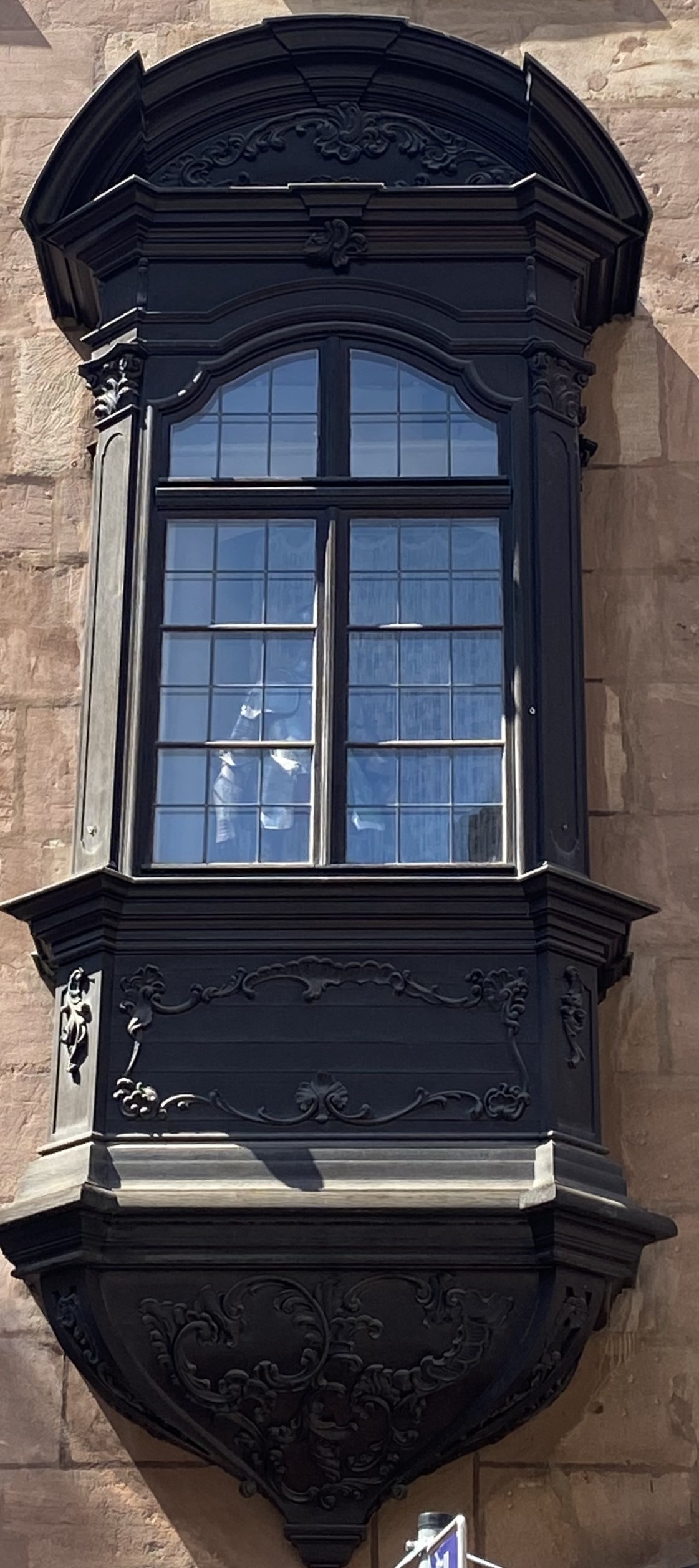
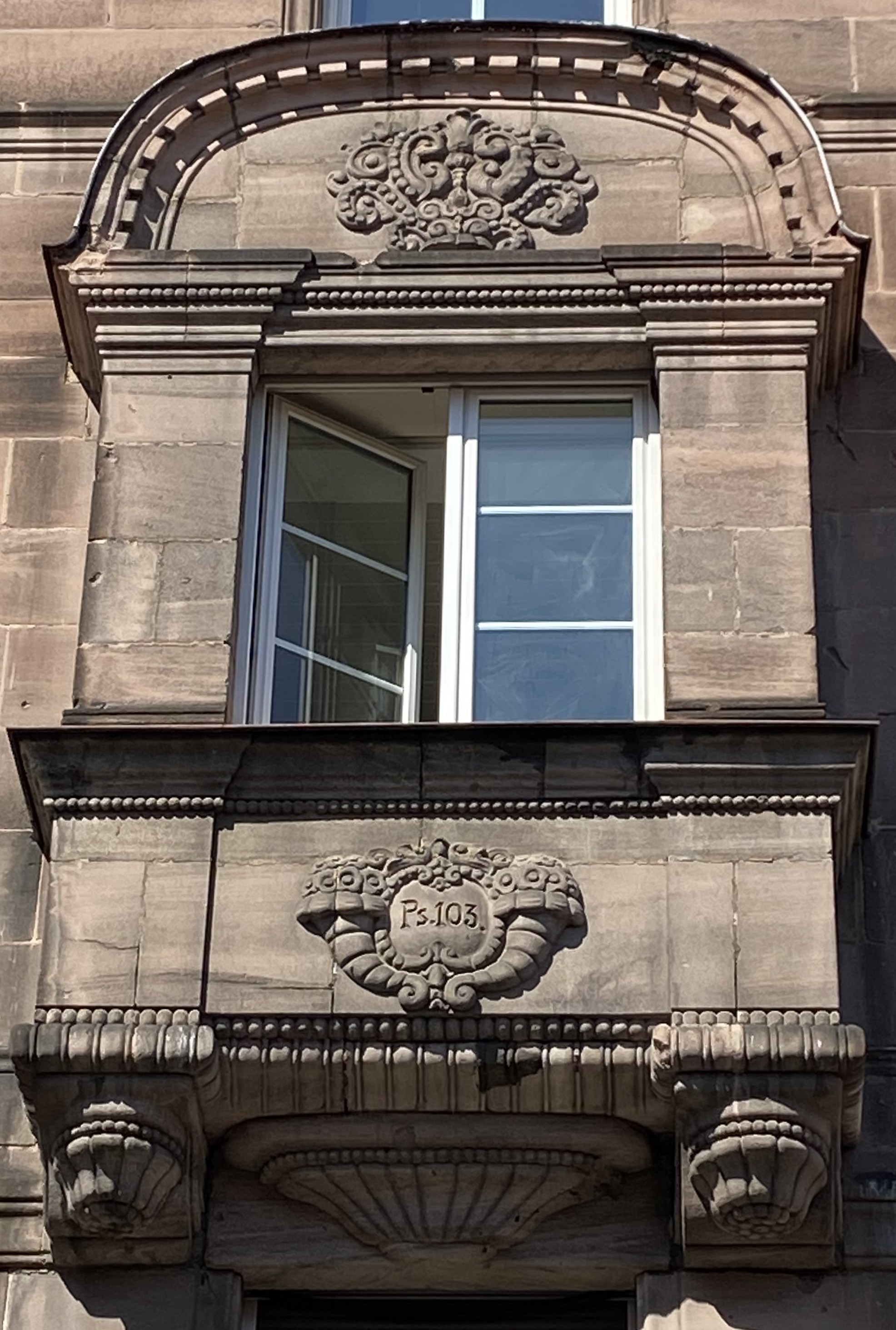
oriel windows in Nuremberg


Day 6 Nuremberg Museums

Holiday Inn has a good roofscape view and breakfast. Tourist Office that left a supply of street maps out after it closed yesterday gets another gold star for recommendation of a good-sounding restaurant for the evening. Coffee and cheesecake before the first museum of the day, the Fembo House – one of few untouched by the war. It has a good number of interesting and varied rooms and objects and history about the city.


Walk up to the Castle where we come across our first fellow tourists, having had Fembo to ourselves. The halls are modestly interesting but the tower gives a great view of the city.


On to the Durer House – the home of Albrecht Durer, rather busier and less impressive than the Fembo but very interesting on the artist and his work. Bratwurst Museum – small and modest but also included in the Nuremberg Card. A hard search in warm sunshine for gluten-free lunch ending with a burger bar that zaps the gf bun to death.
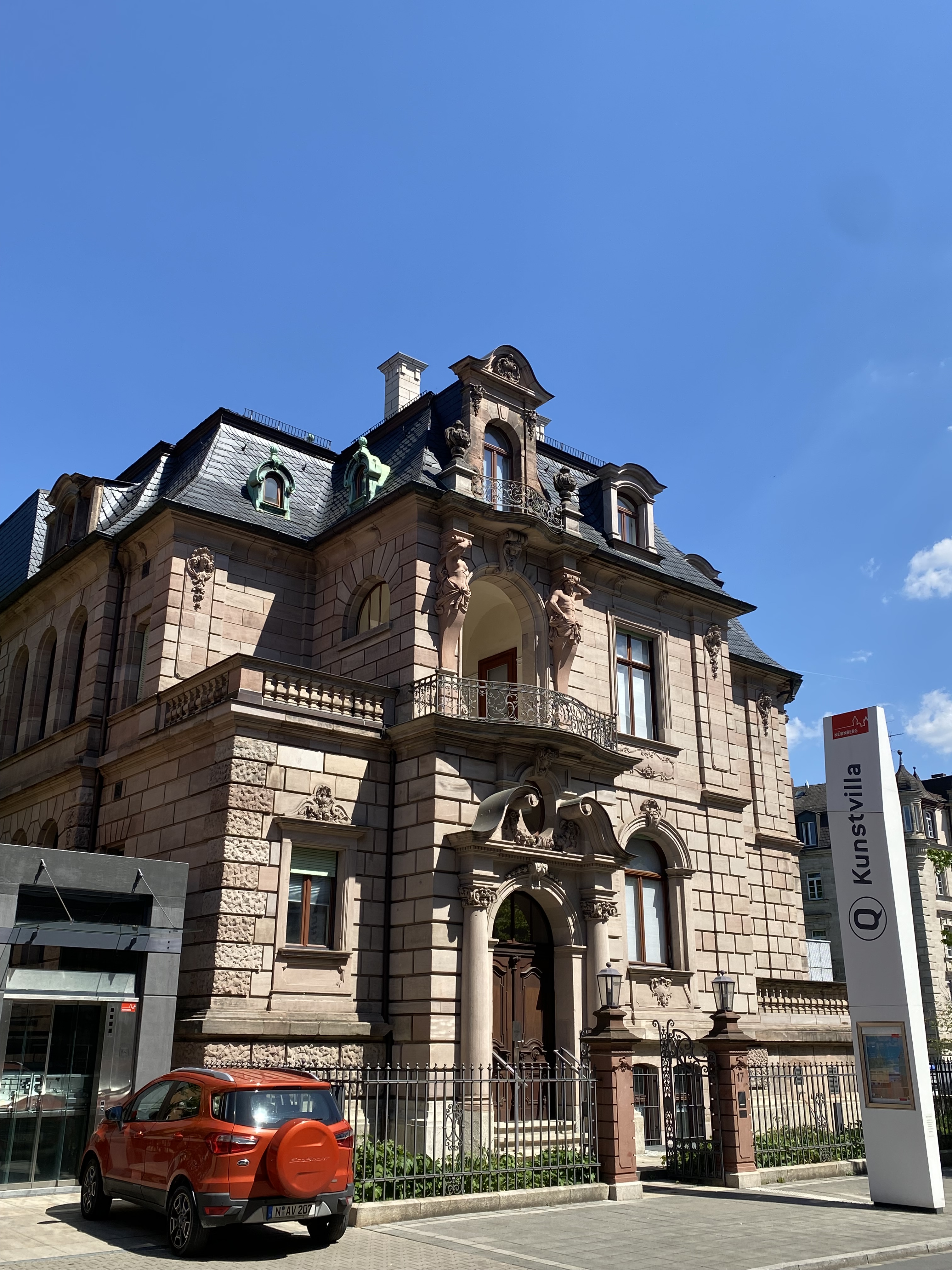
On to the Kunst Haus which is again our own domain and the Kunst Villa which has some nice work on the ground floor. But the rooms are plain and the hallways institutional.


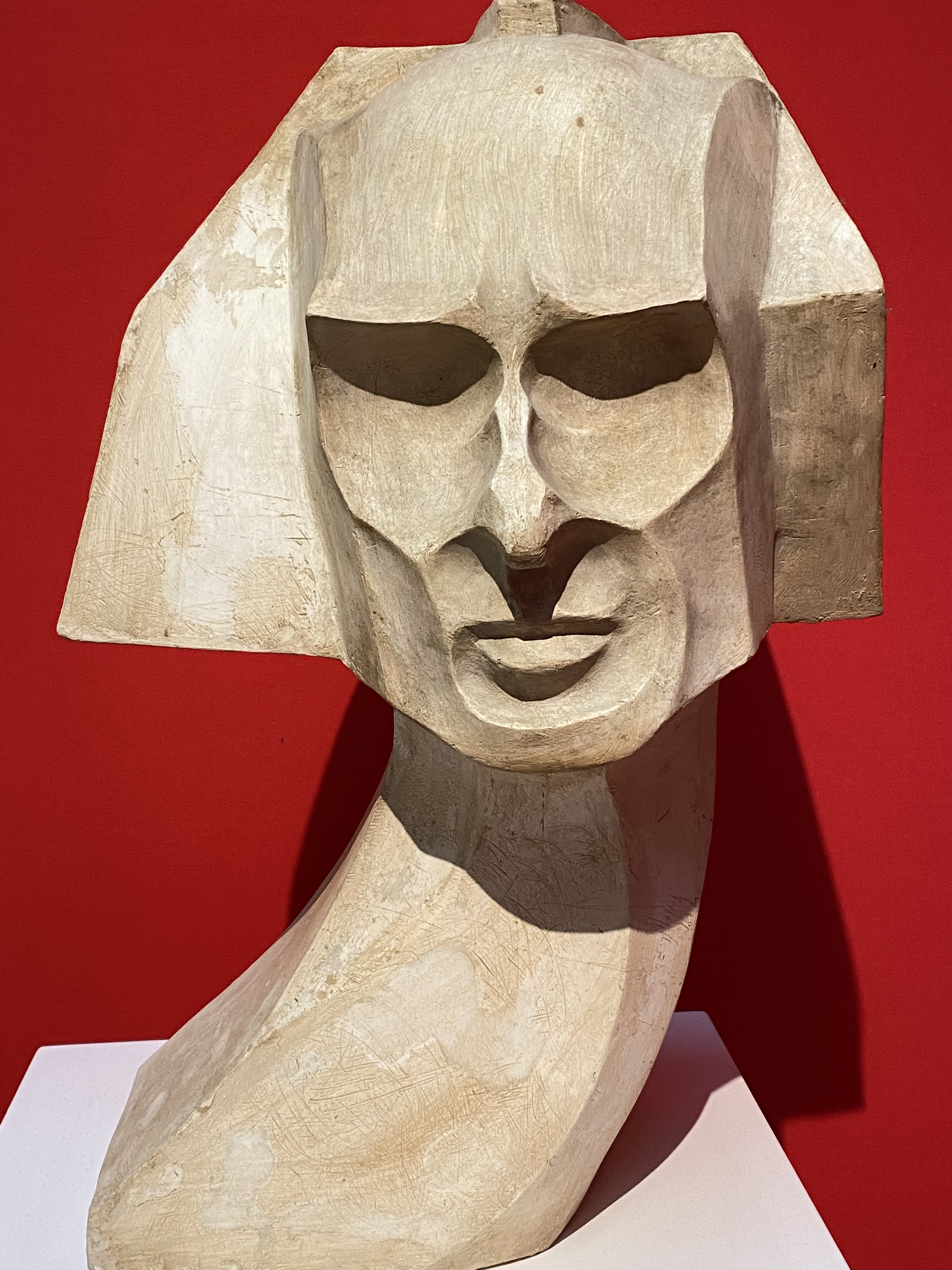
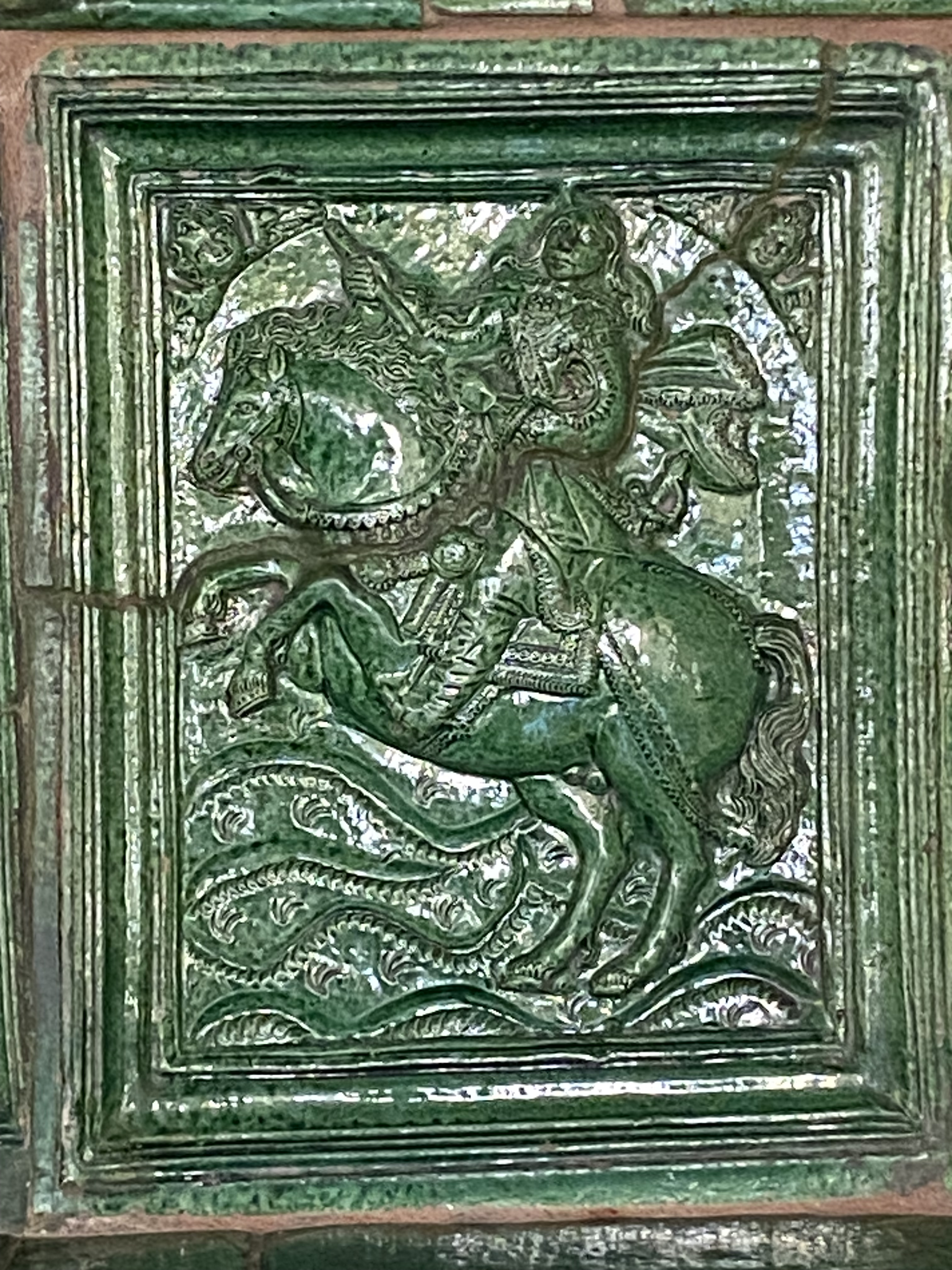
Finally, the German National Museum which has been built to incorporate a huge monastery and its chloisters. The display of 20th century art and artifacts is excellent.




Back to the hotel about five for a rest which is much-needed.
You have to ring the door bell at Essigbrãtlein; a man in chef”s whites answers the door and shows us to a table without asking our names. Three other tables are occupied and three more not. There are two members of staff serving both of whom speak to us in English. Five little bouchees before the seven courses even begin. When they do, the first few are vegetarian but very interesting and tasty, particularly the cucumber and kohl rabi. The beetroot course is the most spectacular-looking but tastes only of beetroot. The trout and duck dishes are excellent and the eucalyptus icecream desert complex and delicious. After all that, a toast rack with five different slabs of chocolate arrives leaving one very full. Overall a wonderful event even if the bill makes the eyes water.




Day 7 Nuremberg to Kaufbeuren
Start the day with the Museum of the Future which includes a coffee machine you have to persuade to serve you – though we had coffee and cheesecake en route and so save our charms for others. The displays swing between the incomprehensible and the obvious but overall the effect is worthwhile. Visit the moon through a headset though standing at the bottom of the rocket that will take us there is the most impressive part.


Shop for lunch and snacks at Lidl which seems to be the only food shop around. 12.38 to Augsburg – a stopping train with an upstairs first class that gives good views of the heat of the day.
We are staying in Kaufbeuren, about an hour from Füssen, really by mistake and it doesn’t have a lot to offer; the Hotel Felix has an Alpine theme complete with decals of cattle. Our meal takes a long time to come and we are late for the concert of baroque music in a nearby church – partly because of the number of white rectangular churches with towers surmounted by onion domes.


The concert itself is a soprano and gamba duo substantially spoiled by the bar that projects across the length of our pew back, creating discomfort that makes us glad it isn’t much more than an hour.
Day 8 Castles and Ludwigs and Asparagus

Gluten-free breads for breakfast and off for our last interrail day until Saturday. An hour to Füssen which is the end of the line – further progress south is blocked by the Austrian mountains, very Sound of Music.


Walk about an hour to the ticket office for the Castles; entry is by guided tour only and the next tours in English are at 11.55 and 3.05 so we have quite a long time to wait before the first of these – Hohenschwangau. This was restored in the first half of the nineteenth century by Bavarian Crown Prince Maximilian and often visited by his son who became Ludwig II.
Hohenschwangau is painted in a mustardy colour which shows up a substantial damp problem in its lower reaches but the tour is half an hour of audio guiding round some of the royal apartments. Much of the focus of the tour is on the painted decoration which is not of the first quality and everywhere we are crowded together. The prohibition on photography seems initially oppressive but quite soon it becomes welcome; certainly it would slow down the whole event if it were allowed.



Leaving the castle it is raining and we have no outdoor clothing or umbrella. Worse still, the restaurants are full other than one that seems to be shut. We approach it and a member of staff suggests that we may be able to get food in the bar. This proves to be Ludwig’s in the Ameron Hotel which is a v. upmarket event, free of other customers and dry and warm. A delicious asparagus (is there any other?) soup is €10 and a side order of sweet potato chips to J’s burger is €5 but we are well pleased. The corridors are patrolled by a self-driving robot cleaner which pursues one in a rather sinister way.

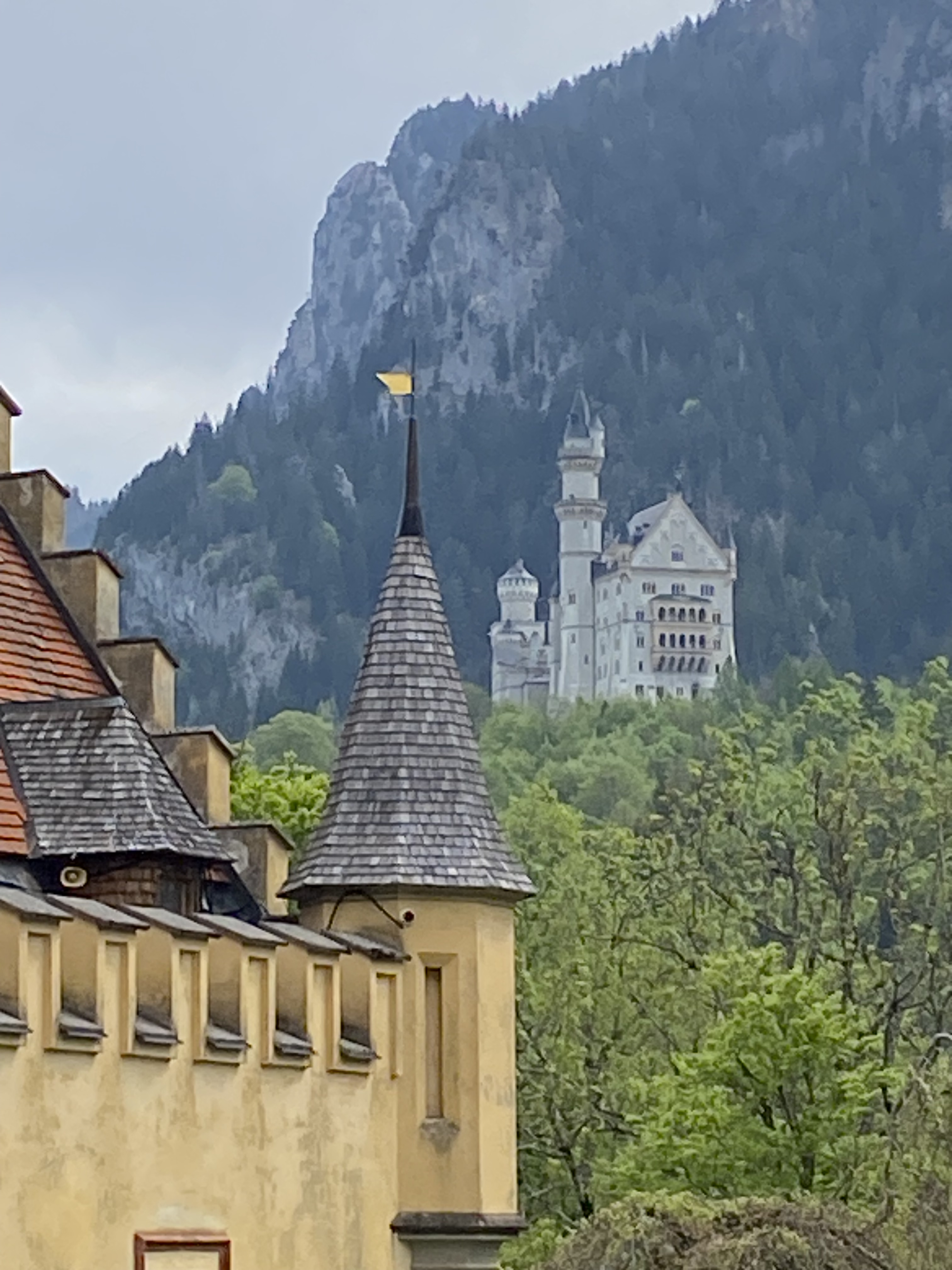
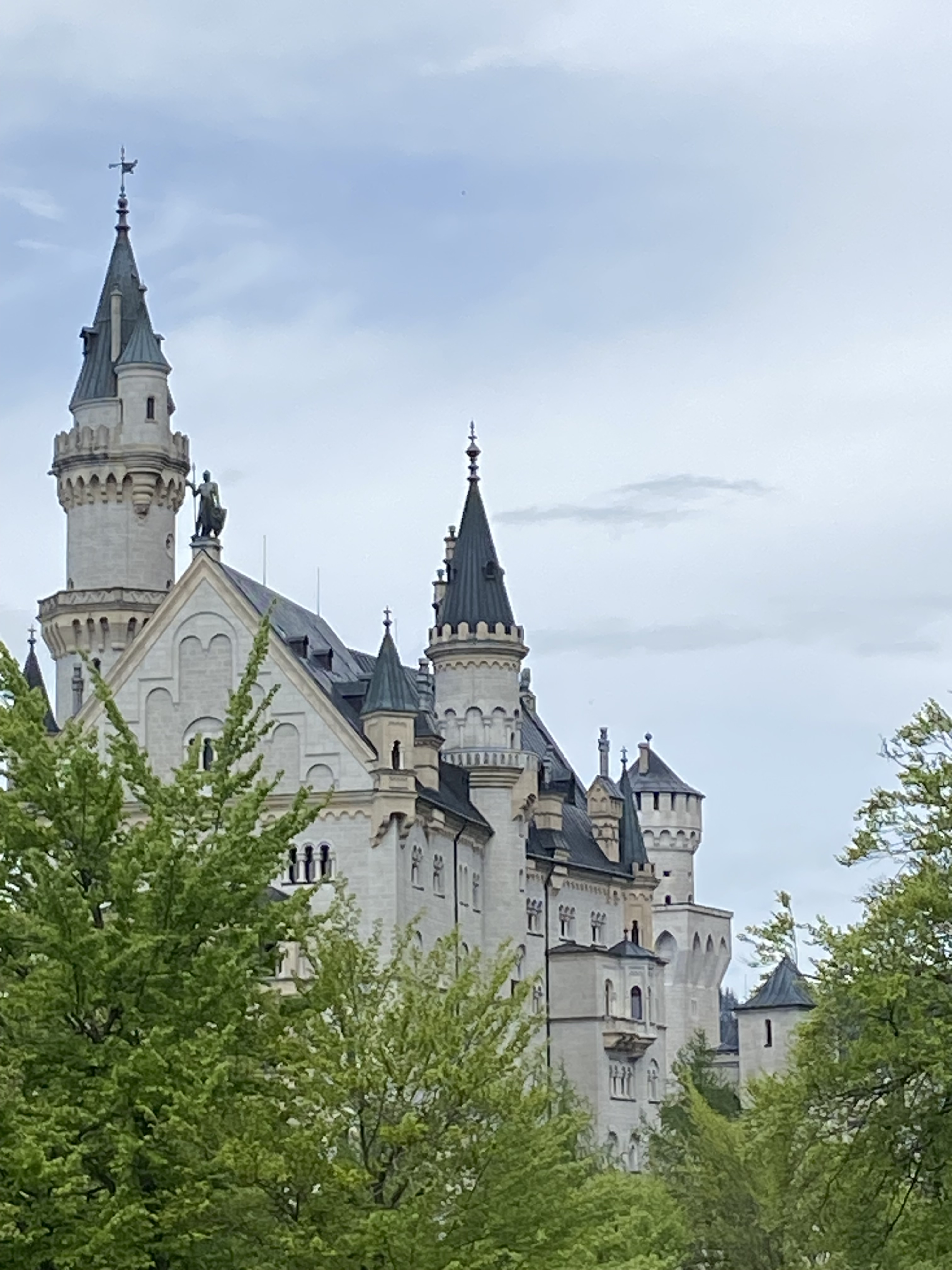
Off to Ludwig’s Neuschwanstein which is much bigger and more spectacular than his dad’s place across the valley. He designed it and poured public funds into it until the government rebelled and had him certified.


By this time, it is sunny and warmer and we walk back to Fussen for dinner in another Ludwig’s bar – more asparagus but rather overcooked this time.


Day 9 Kaufbeuren to Ulm


Three trains to Ulm 8.18 to 9.40 with changes as short as three minutes but all achieved without a hitch. This is our first hard-copy ticket as we are not using the interrail pass for this short journey. On arrival at the HBF it is raining and cool, the first such weather of this trip. Walk about a mile to the hotel crossing the Danube en route. The hotel is Brazilian-themed and hi tec; check in is entirely automated but, of course, we are too early and so have to speak to a member of staff to arrange to leave our bags. This takes us trooping behind the bar to a store room where an umbrella is offered and accepted – a welcome human touch against the techno grain.

Long walk to Wiblingen in the rain is not much fun but we are there soon after the Abbey opens at 11. In huge contrast to yesterday, we cross an empty courtyard and climb two flights of stairs entirely alone before we come to a very charming member of staff at a ticket desk. Tickets for the library and museum are €6 each, a fraction of the cost of yesterday’s enforced guidance.


The museum is in several rooms with German-only labels but the Library is the star and what a star it is, a fabulous hall with extensive gilding and white marble statues.
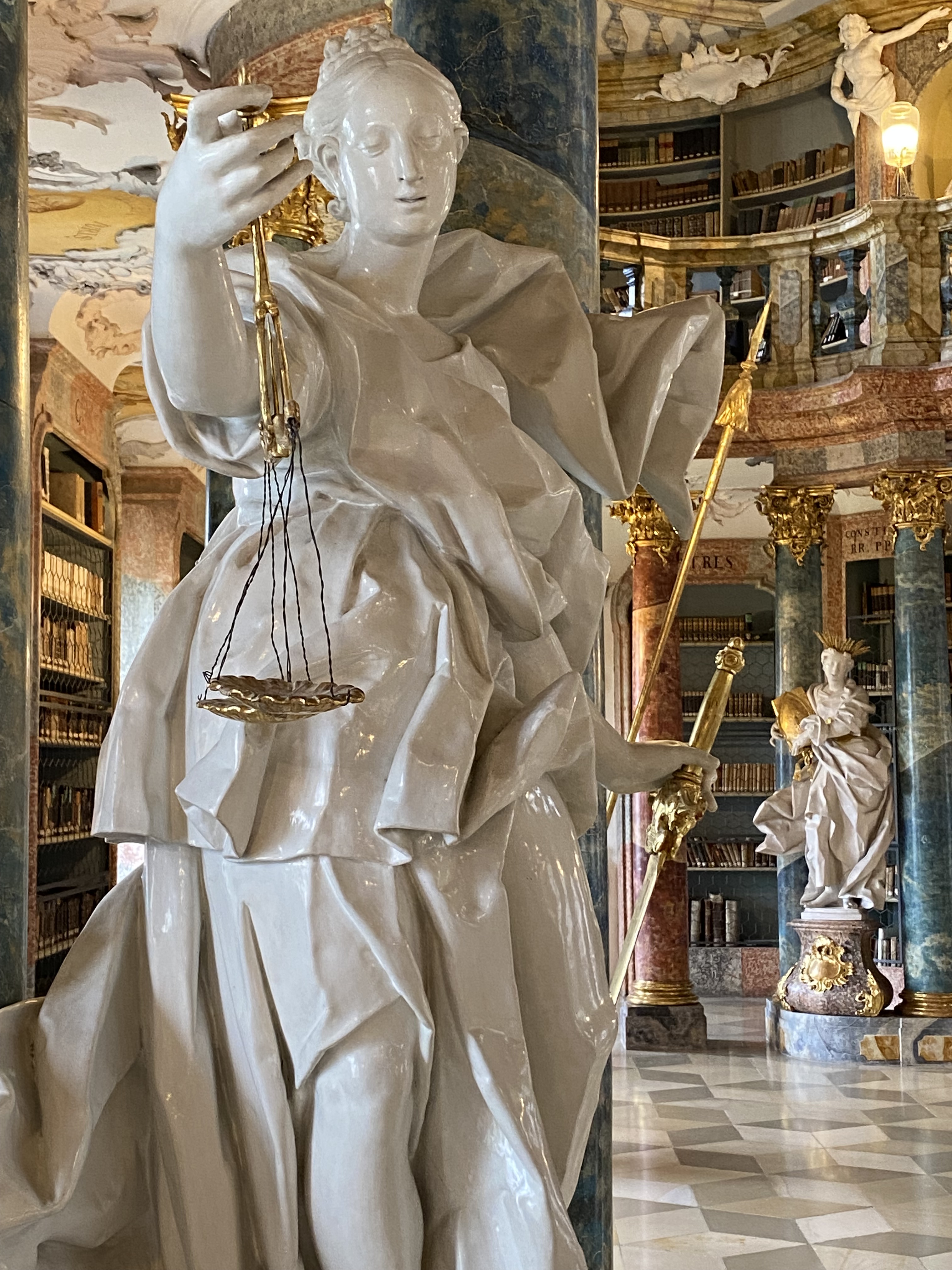
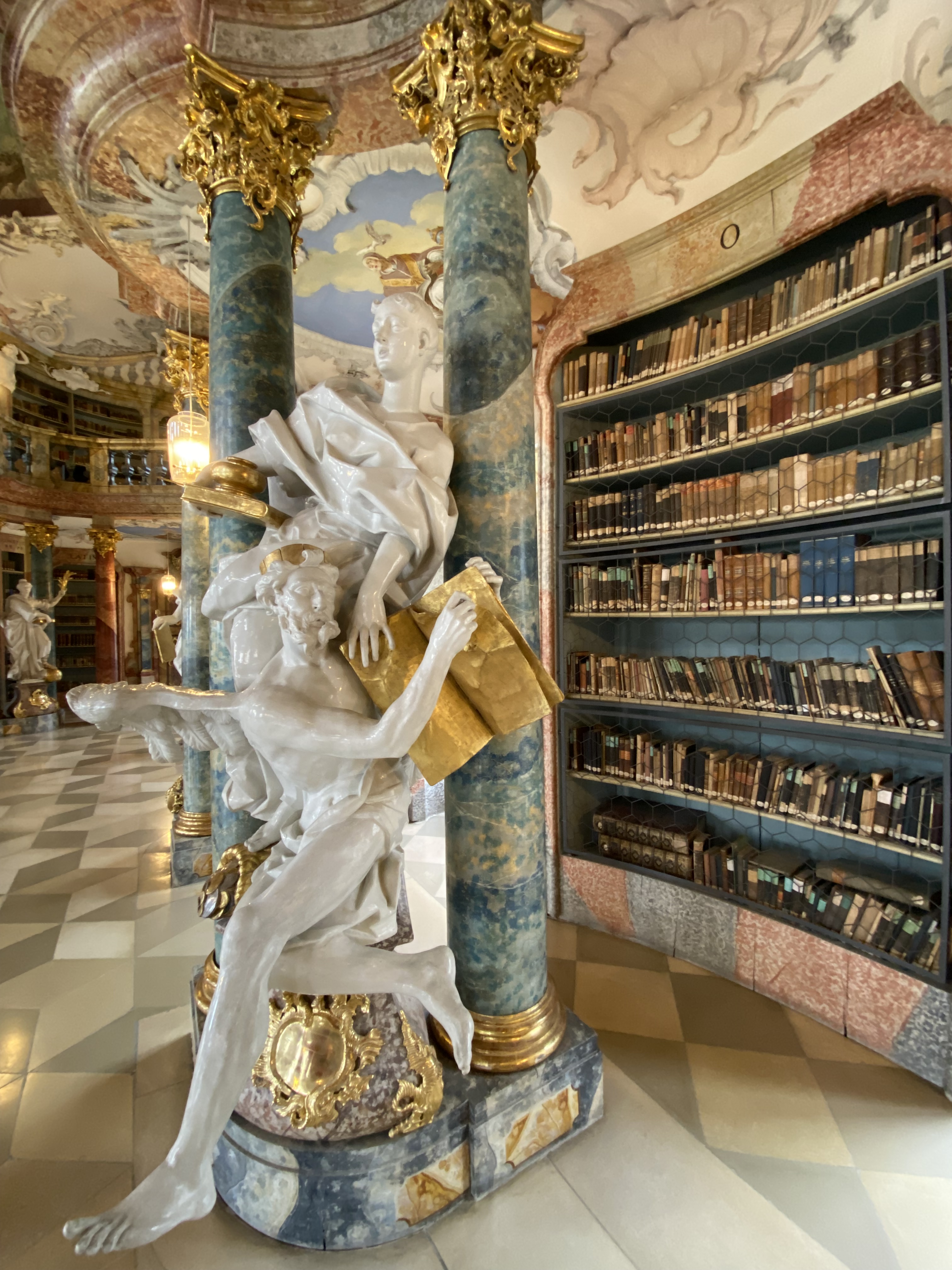


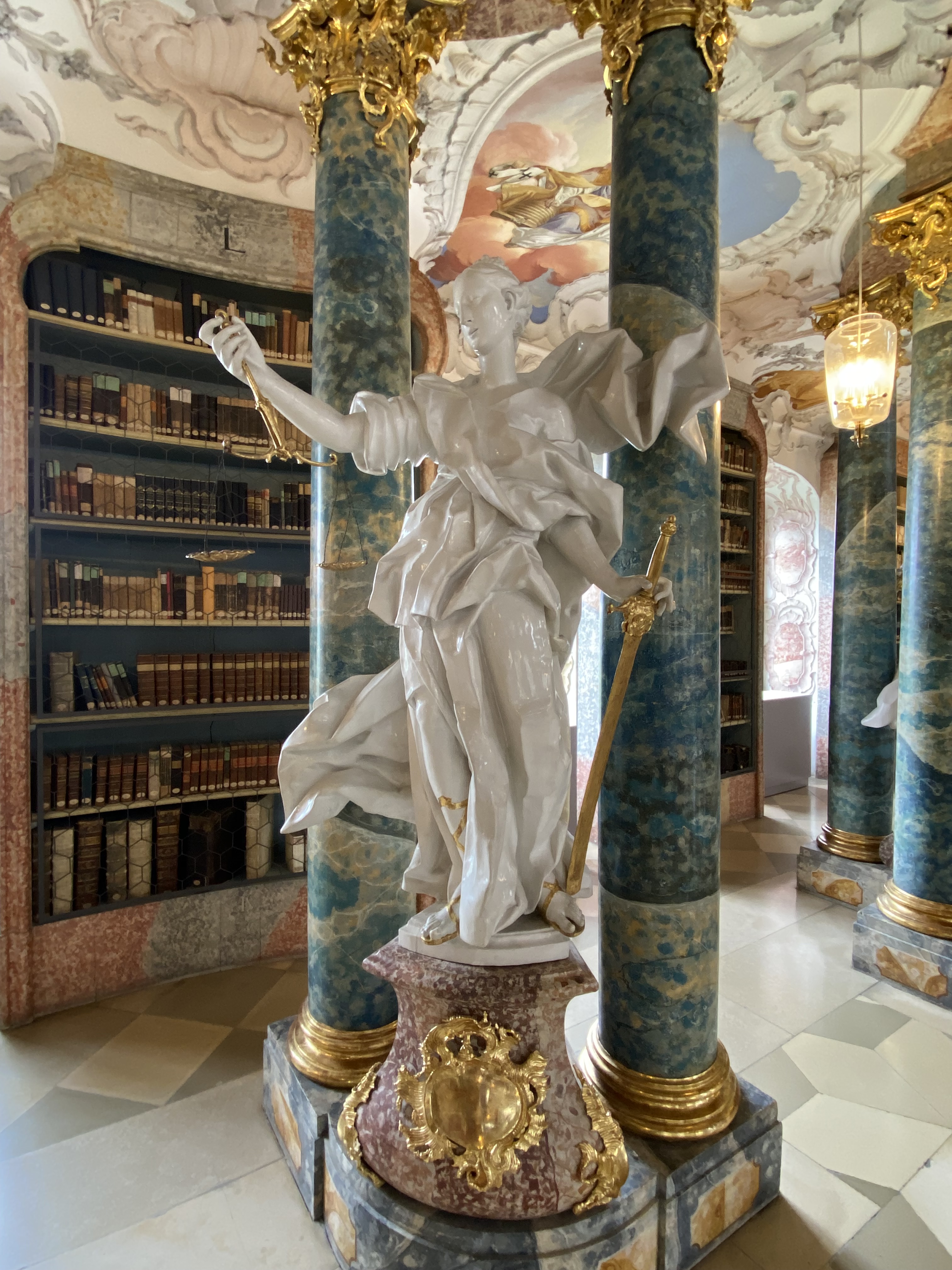
The artwork far exceeds the Schloss style we’ve had so much of. The most beautiful place I remember being in and almost to ourselves.


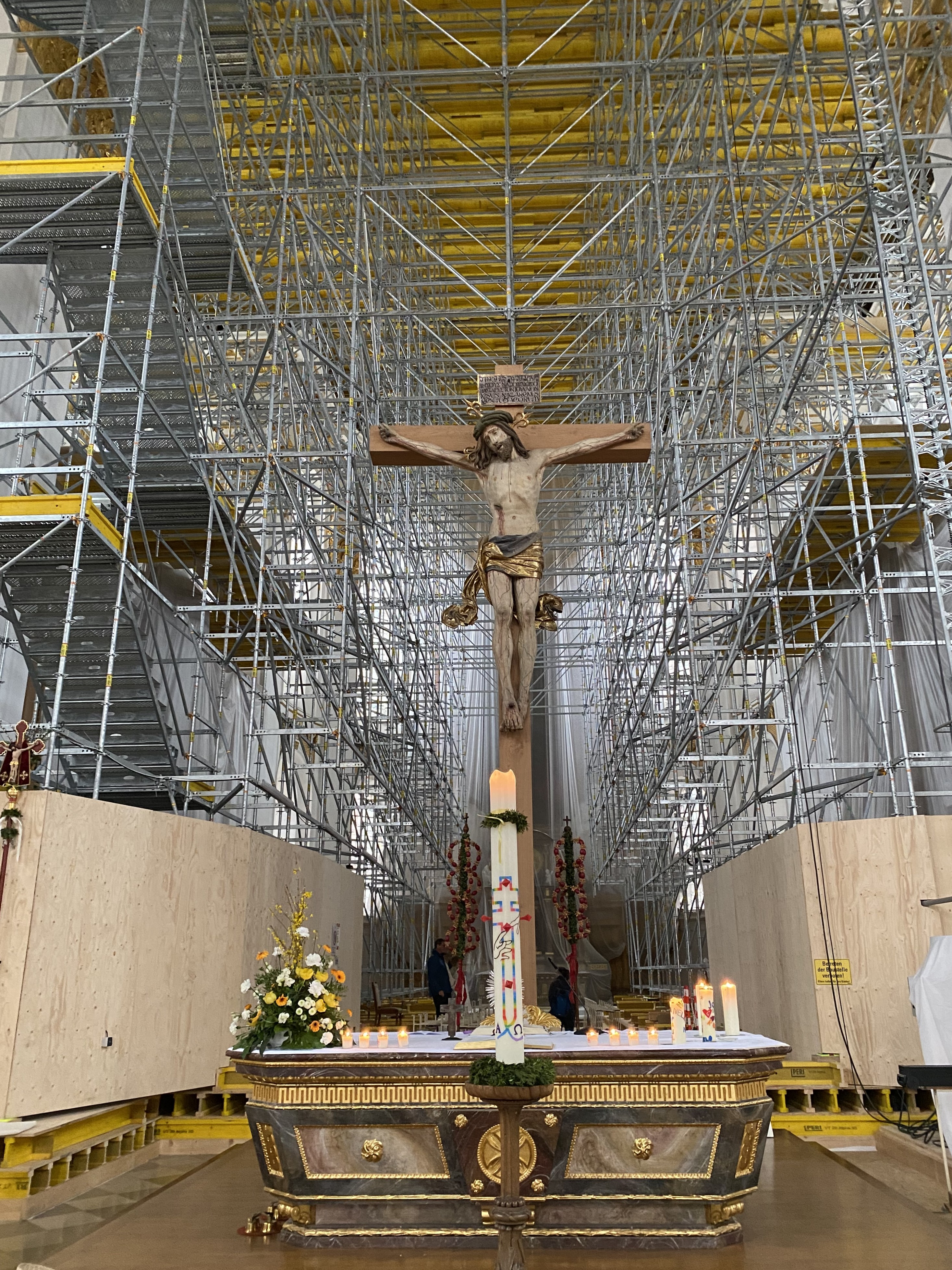
The church is stacked with scaffolding either side of the altar which makes it the most dramatic place of worship I have seen in a long time.

Bus number 4 takes us into the centre of the city with a reasonably alarming rapidity. It’s still raining. A painted building opposite the Minster contains a restaurant not called Ludwig but offering gluten-free pasta and pizza which makes a pleasant change. After lunch we set off in search of supplies for our first self-catering accom of the trip. But all the shops are closed. The tourist office is open and explains that while that is so in Ulm which is in Baden-Württemberg, Neu Ulm across the Danube is in Bavaria – “another country” – and they are opening today because of a festival. As we are staying in Neu Ulm this seems convenient. Both sides lack the corner stores we are used to at home though in Neu Ulm we get most of what we need for breakfast in a health food shop. But nearby there is a shopping centre with a supermarket which supplements breakfast and provides dinner for the evening.
At the hotel, the room is not yet ready as the last resident filled it with air freshener, perhaps to conceal the signs of illegitimate smoking? Eventually we get our room which has bold South American décor and black cupboards and wardrobes from which I don’t expect our belongings ever to emerge. The hanging wicker chair and the jungle-backed wet room shower add interest. The reason for booking this hotel was that it has washing machines to refresh our wardrobe half way through the trip. J has to sign up to an app with Miele in Netherlands to access this facility.


Day 10 Ulm
Another dull, cool day with highs of 8C anticipated, about 20 degrees cooler than last week. Britain begins four days of celebration of VE Day. Rain all day.
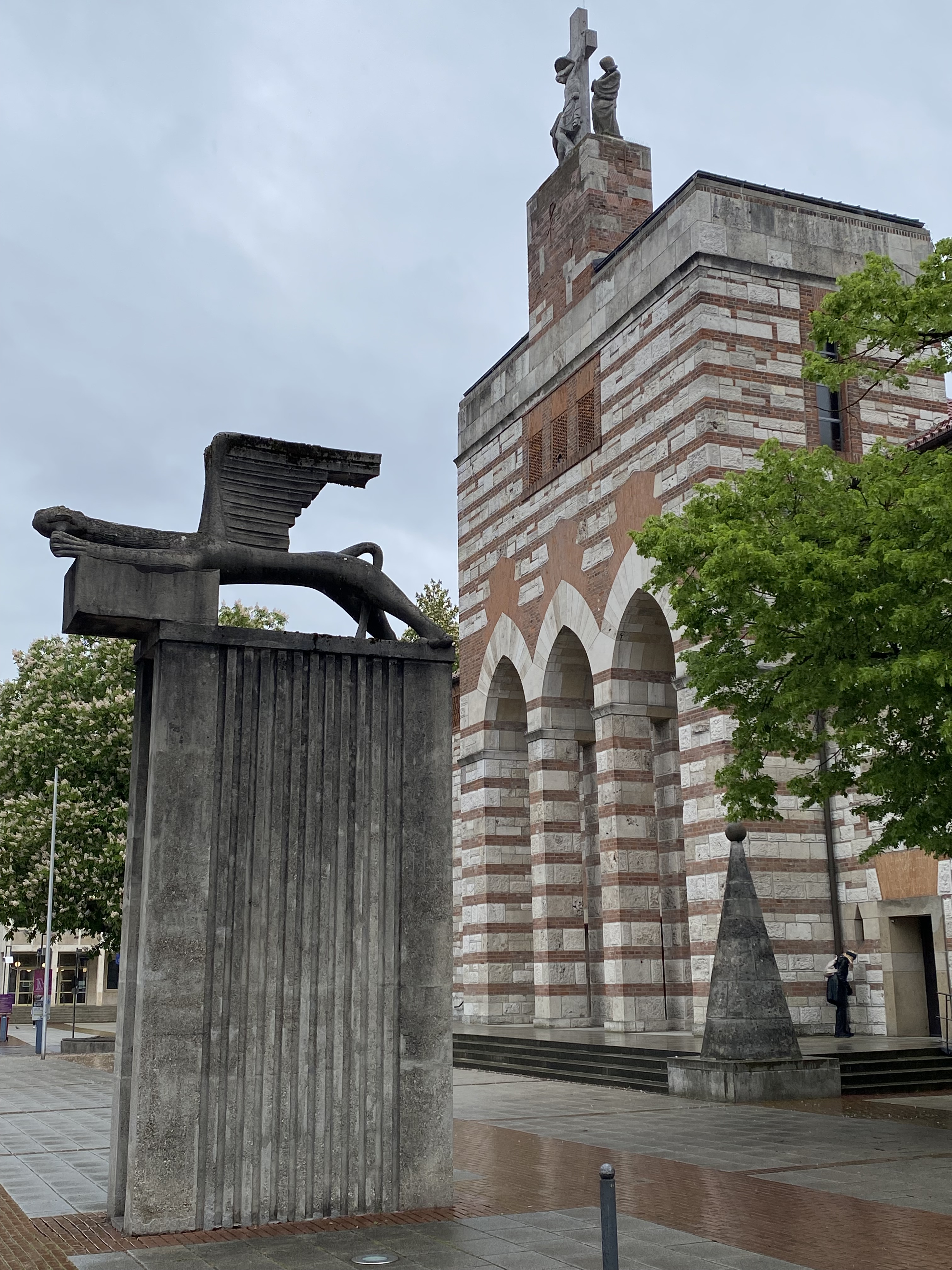

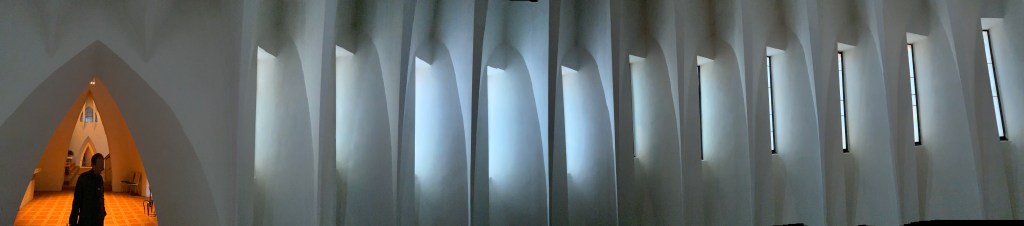
Re-borrow the brolly from the hotel and set off for Ulm, stopping en route to visit a rather striking church in New Ulm – the St John the Baptist by Dominic Böhm as an example of Expressionist Architecture built between 1921 and 1927.

This is an absolutely stunning piece of work with pointed arches and mathematical shapes everywhere. We have it to ourselves.


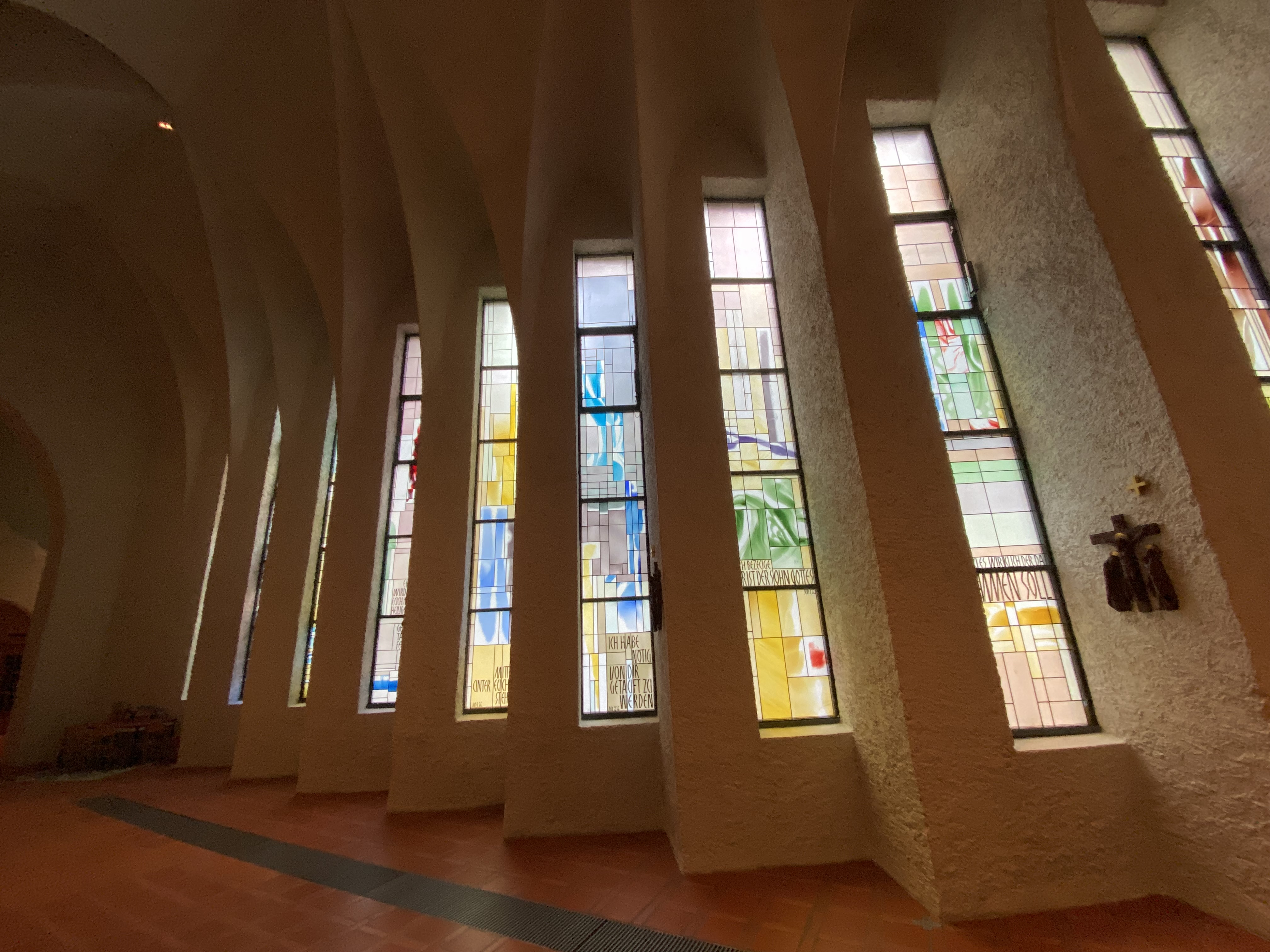
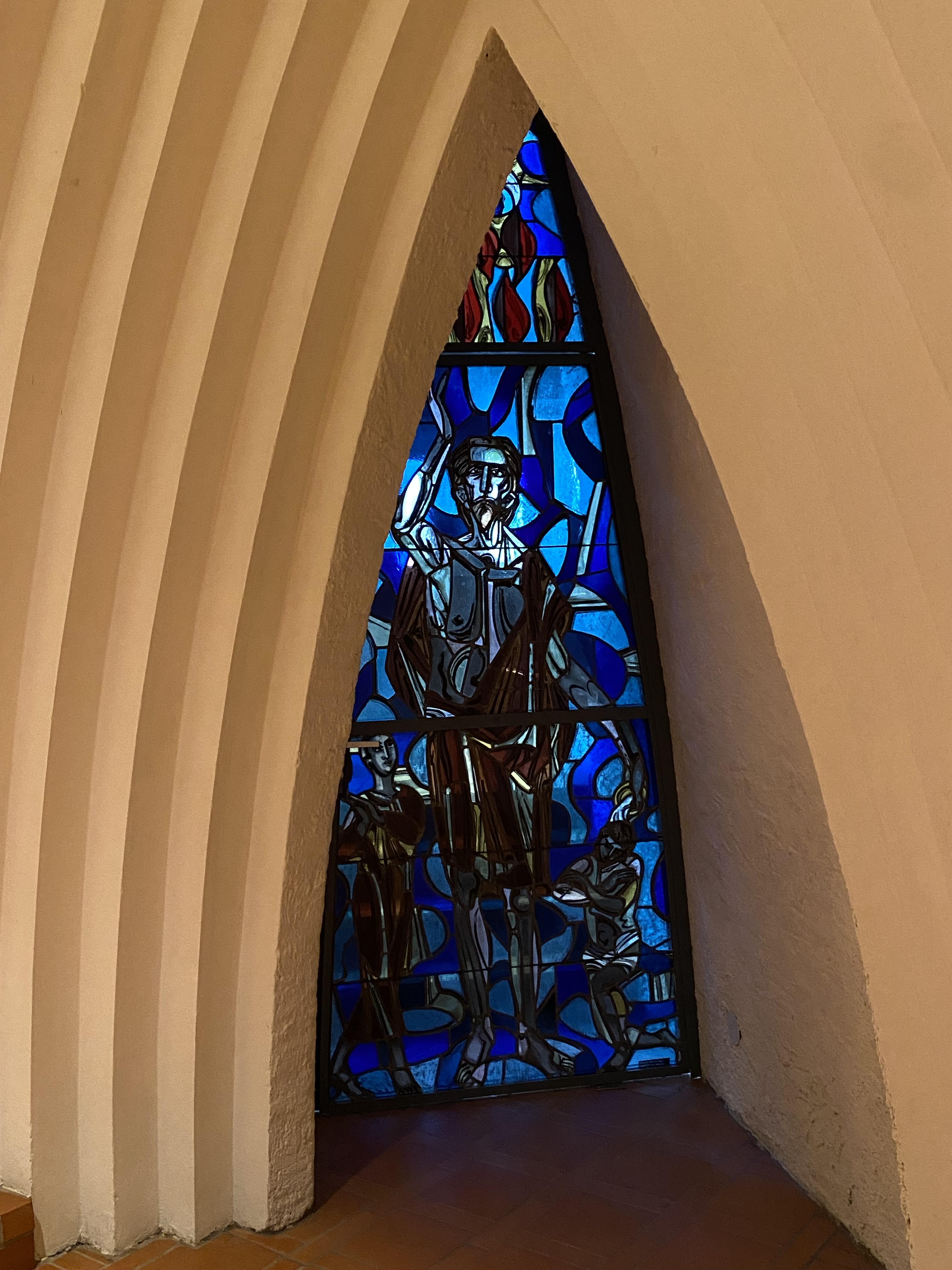


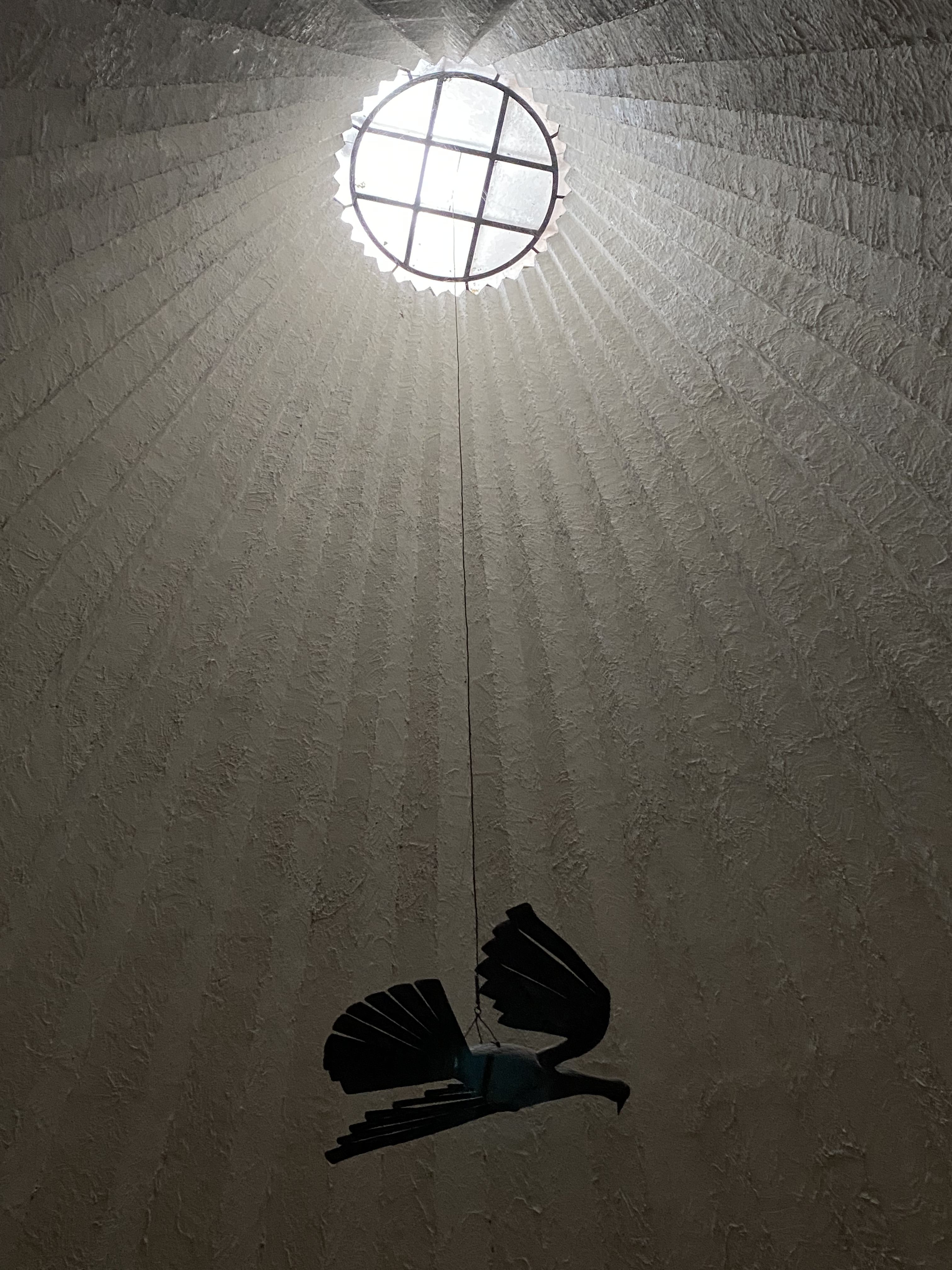
Many expressionist architects fought in World War I and their experiences, combined with the political turmoil and social upheaval that followed the German Revolution of 1919, resulted in a utopian outlook and a romantic socialist agenda wikipedia expressionist architecture
Our newly-acquired interest in expressionism is not reflected in the tourist office but we identify the Martin Luther Church which is closed when we arrive as many things are on a Monday.

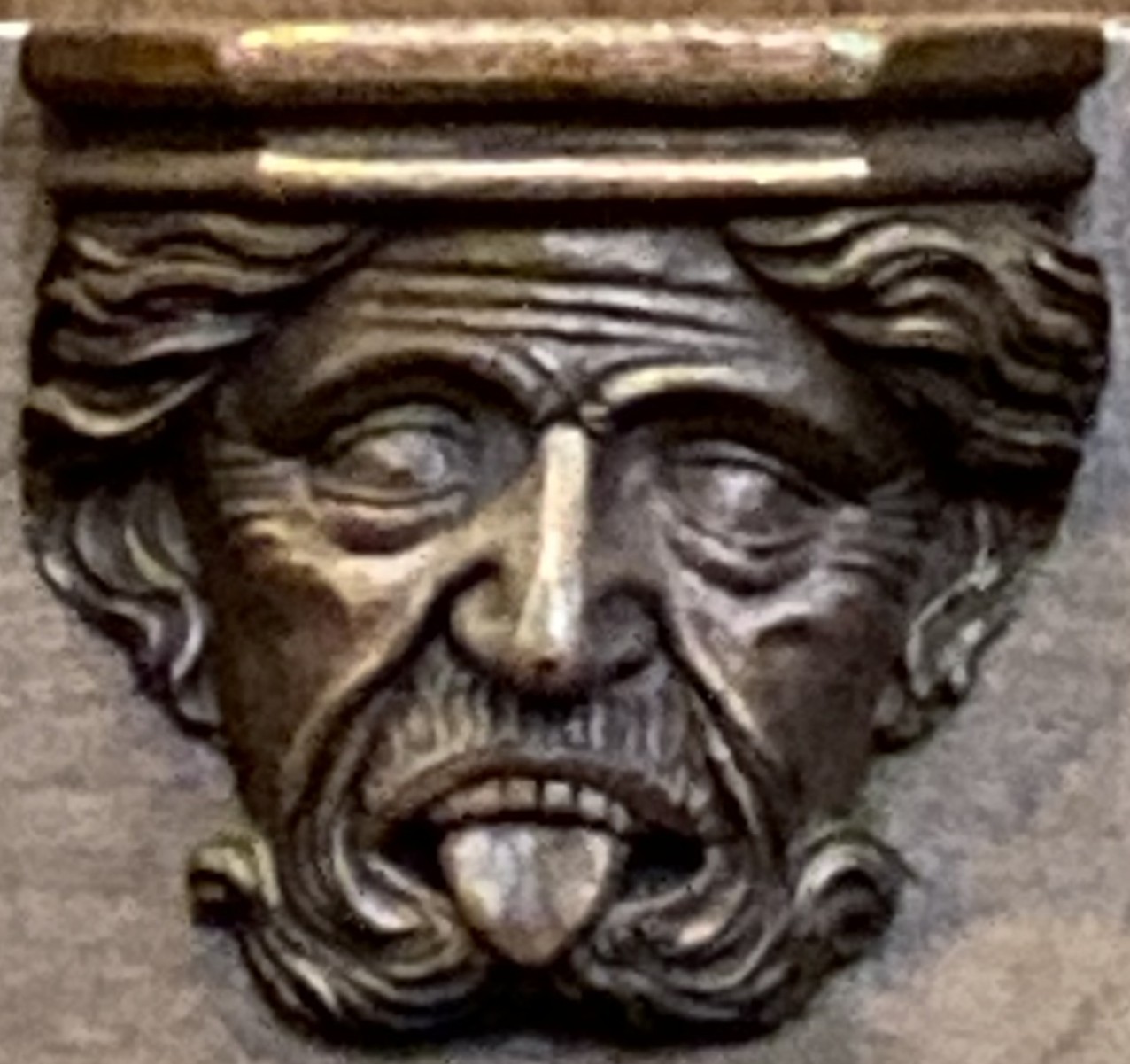
The Ulm Minster is conventionally gothic and huge, much of it undergoing builderwork. The full set of modern stained-glass windows are eye-catching and their 15th century misericords are well displayed.


Burger lunch and back into the rain.

Day 11 Ulm
Another cool day but no rain and a little sunshine. Ulm much more interesting and enjoyable in dry conditions but we are still museumed-out after the Nuremberg card.


Retrace our steps to the Martin Luther Church which served as the printing house for White Rose anti-regime leaflets in Nazi times. The church itself undramatic but the wood lining is striking and the cloche covering for the font and its wooden cover are all unusual.
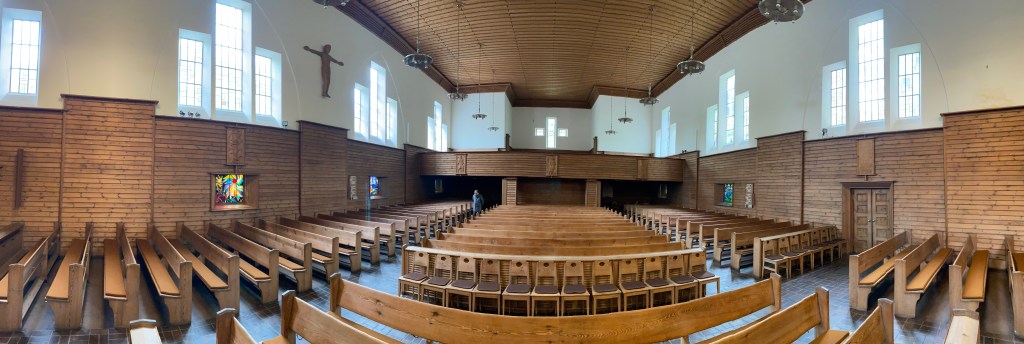
The windows stand out mainly because they are low down and so decorate the chamber in a way that church windows often don’t.
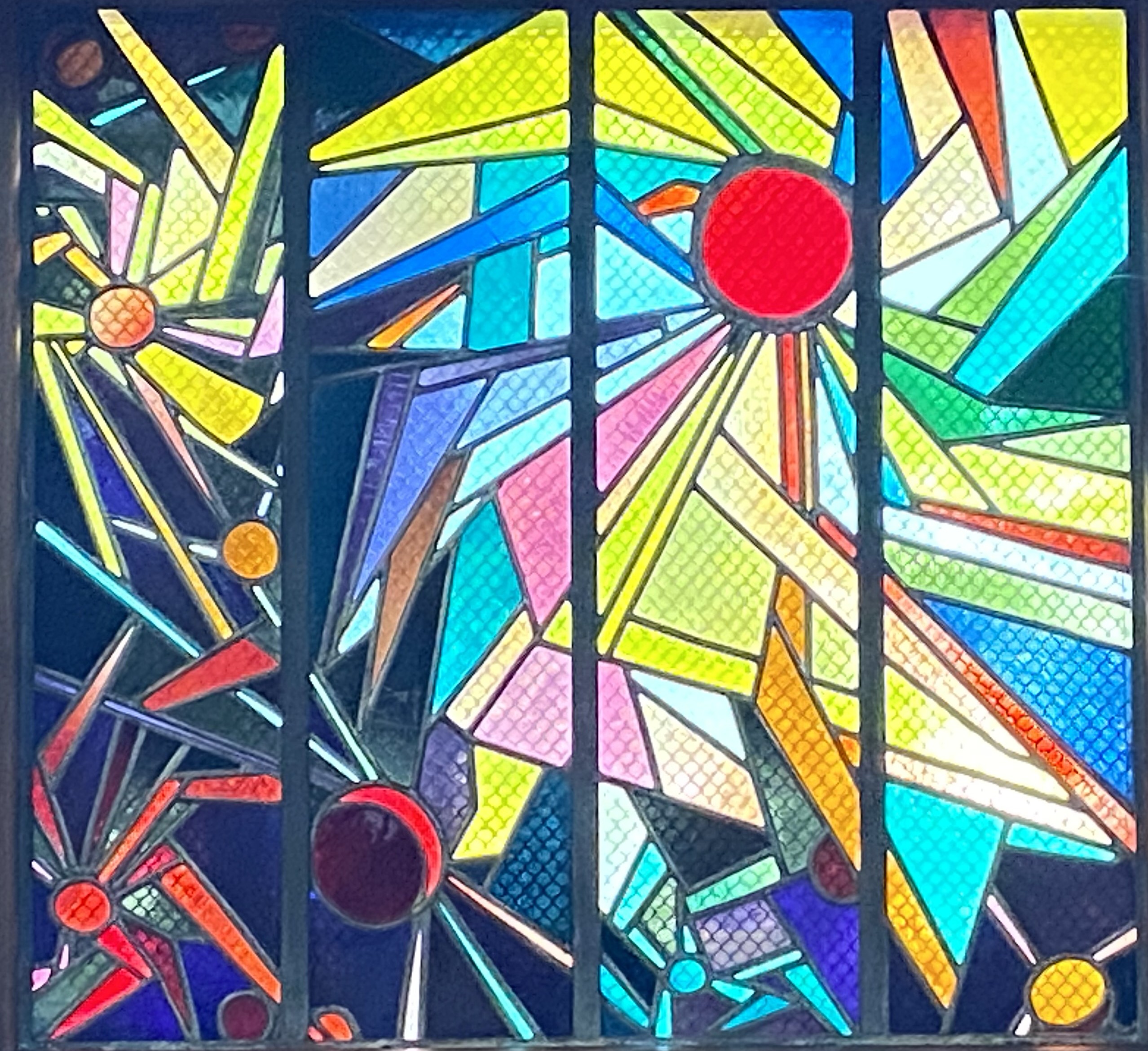

After lunch we visit two massive churches within a few hundred yards of each other, both completed in the first decade of the last century: The Paulus Church was the first concrete church and has lasted better from 1910 than that material would suggest. The animals standing guard at the front are good fun.


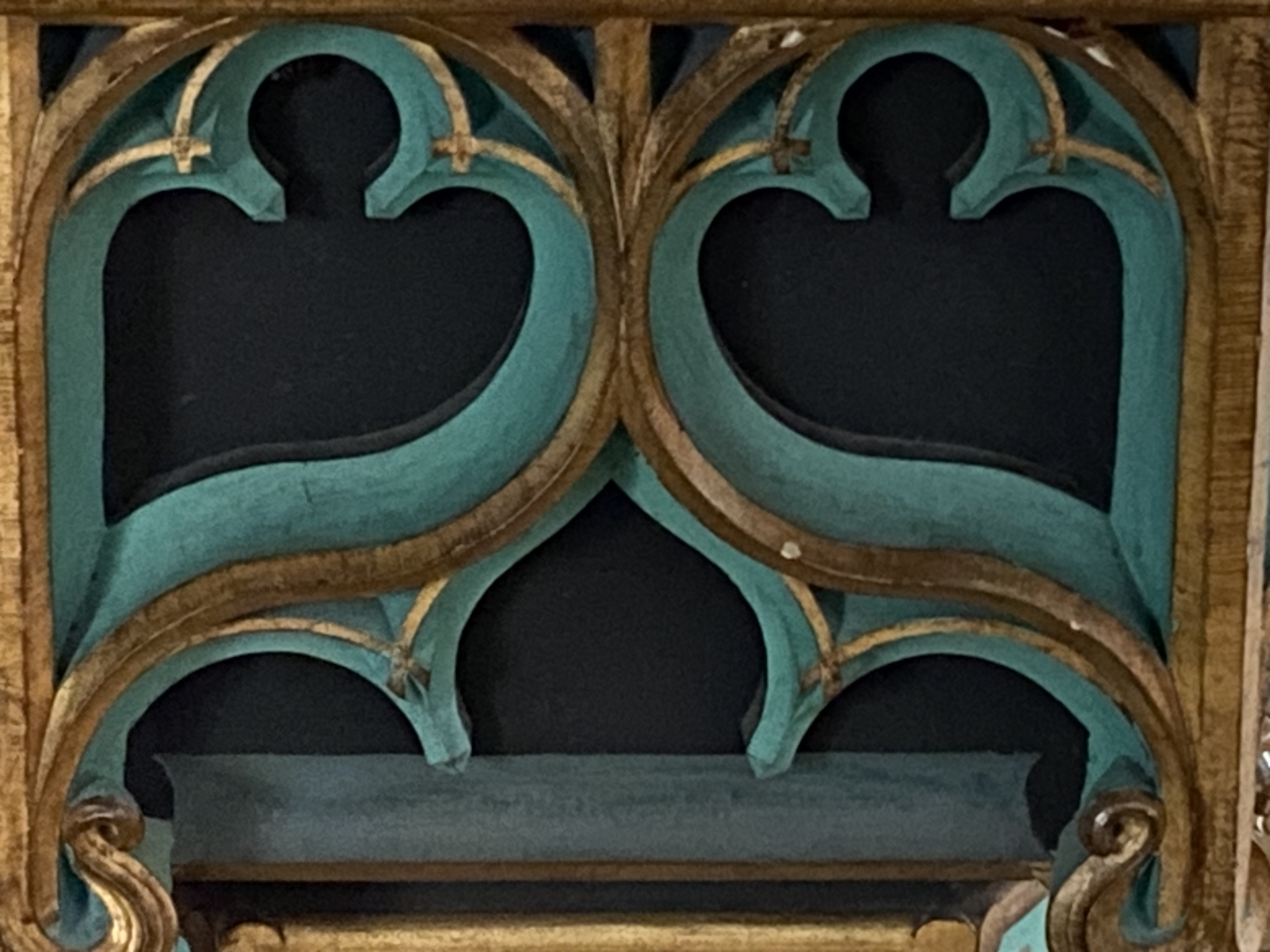
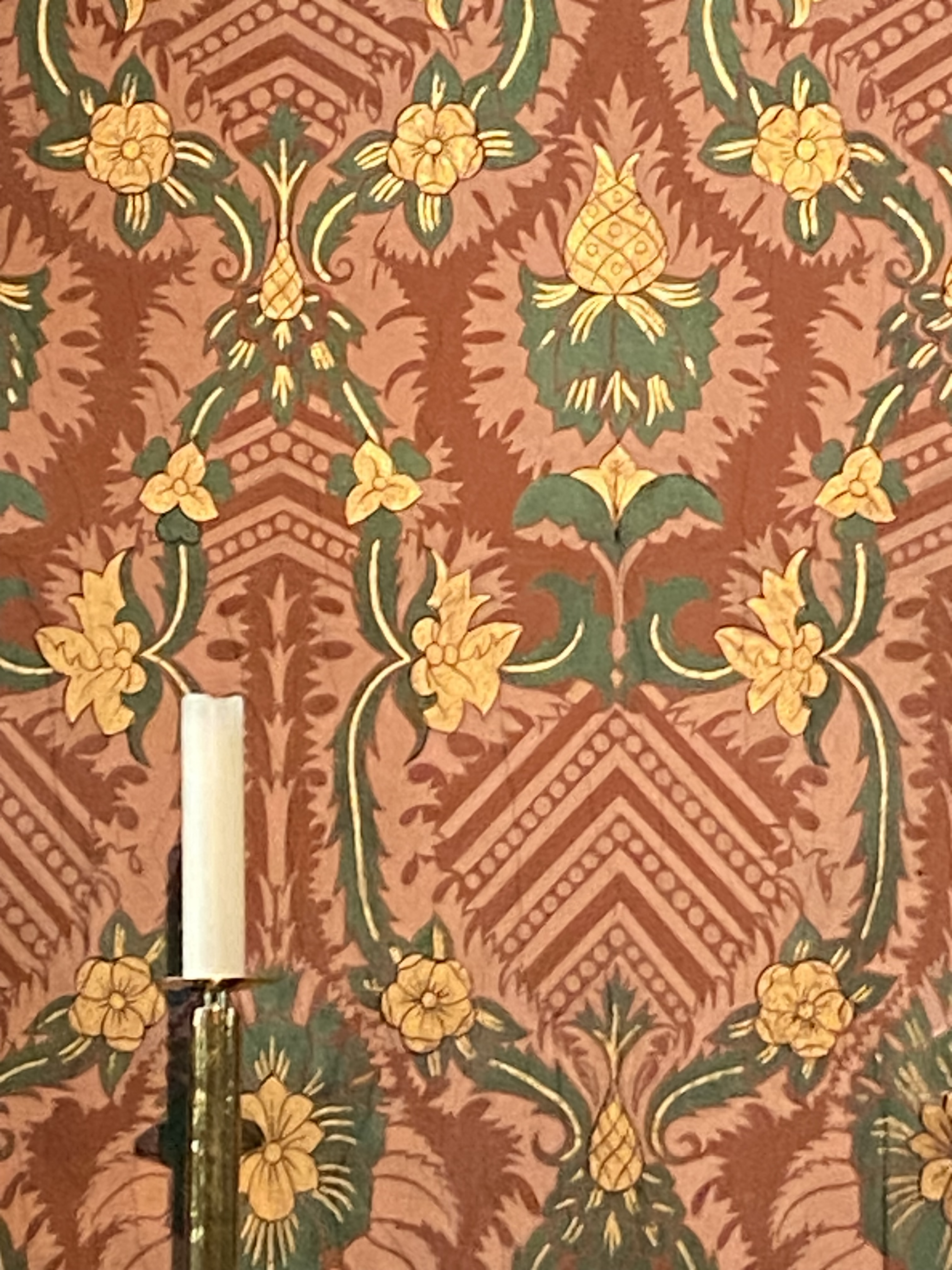
The Catholic St George’s Church is highly painted in a style said to be “late Gothic” dating from 1904. Every pillar has a brightly coloured panel at the foot.

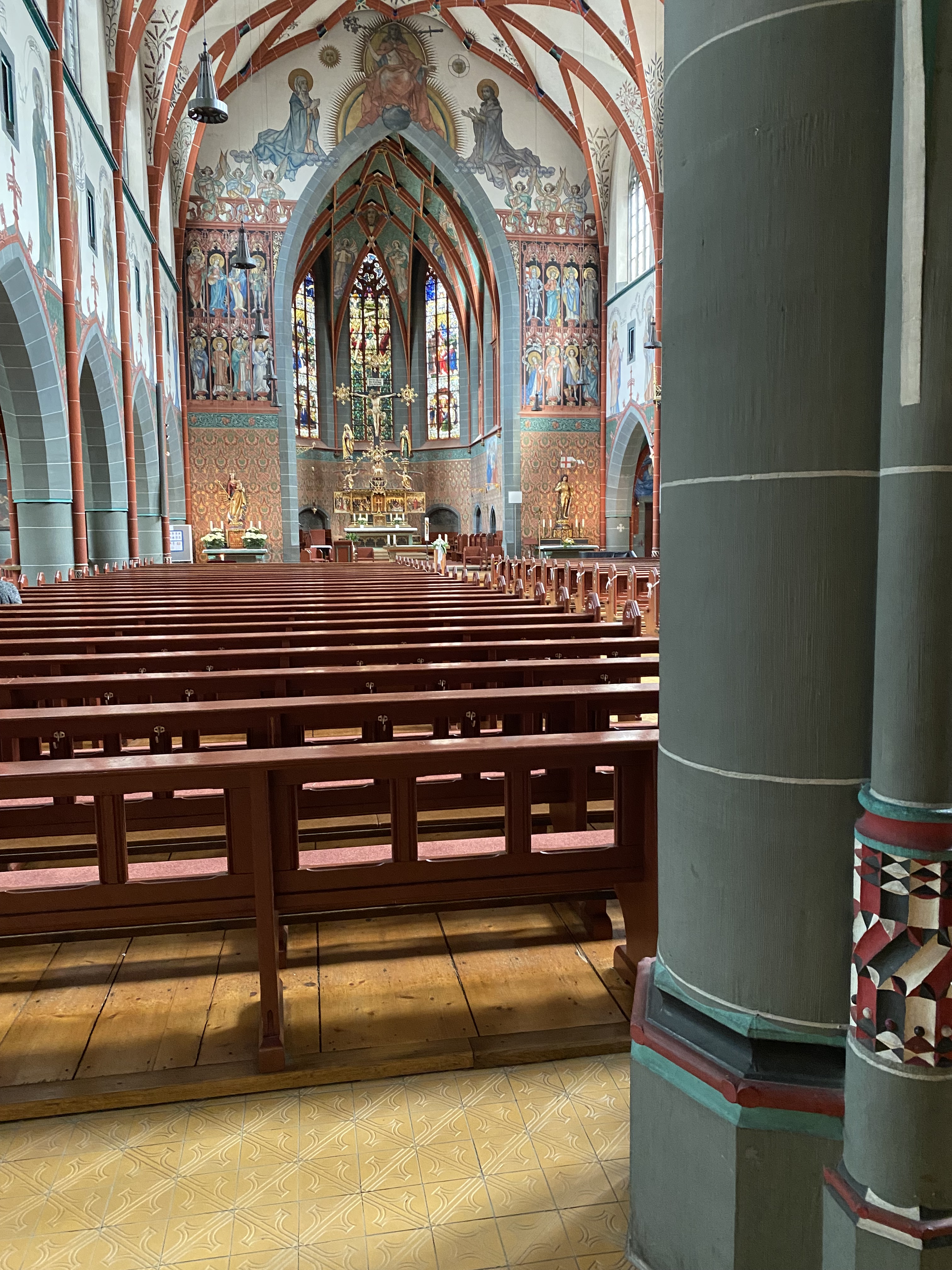


Wengen Church


 undivided-back postcards