Ulm Minster

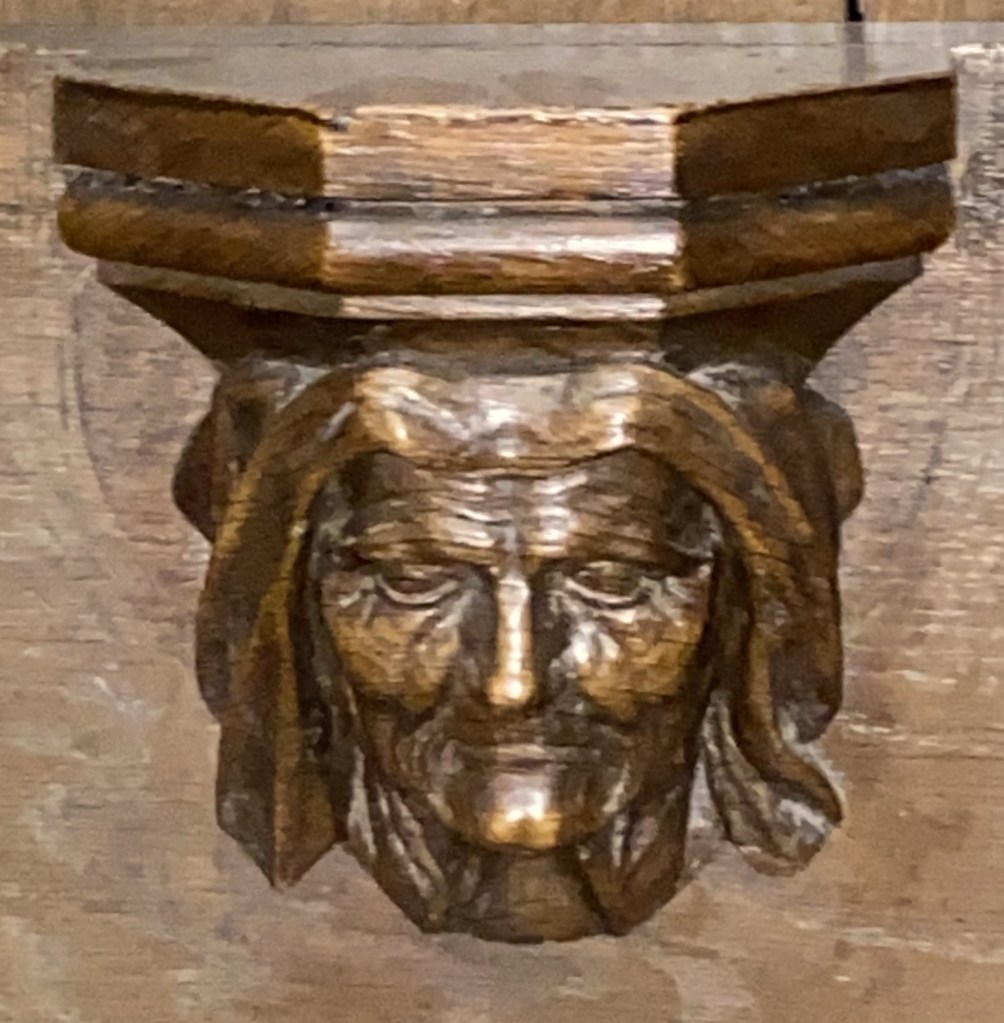
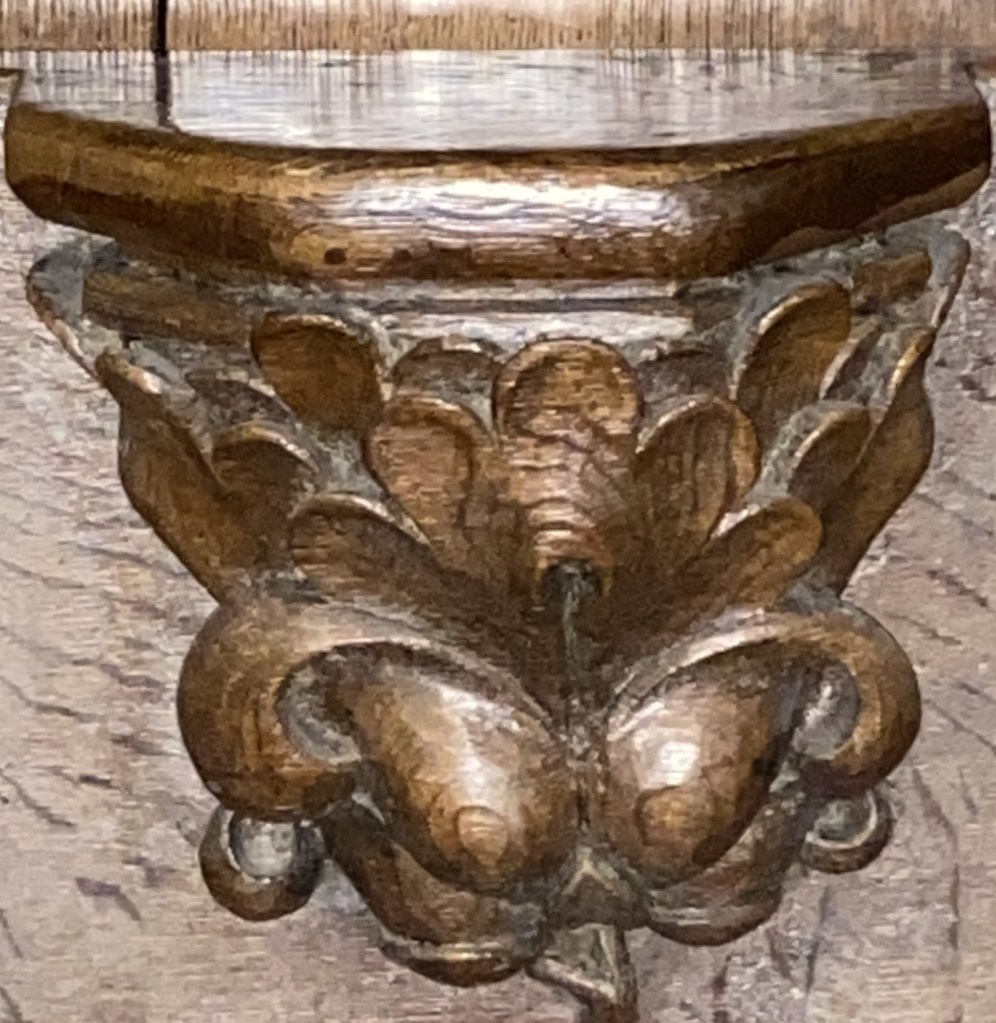
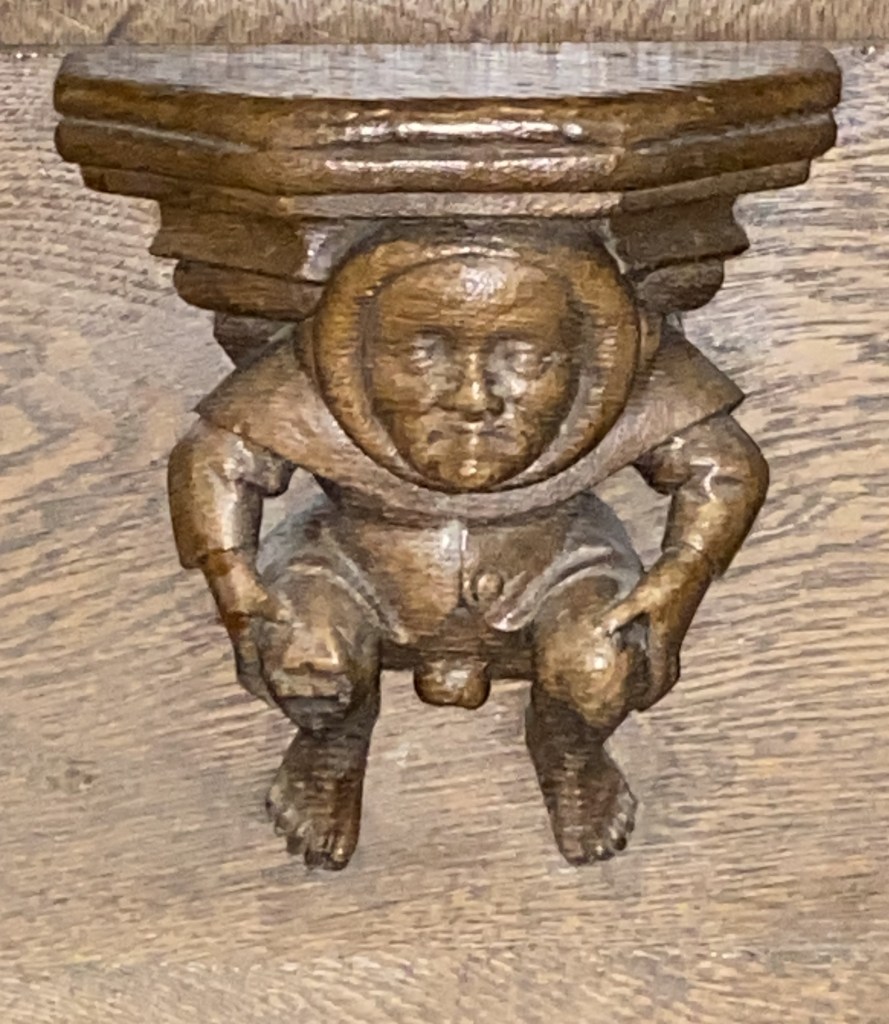
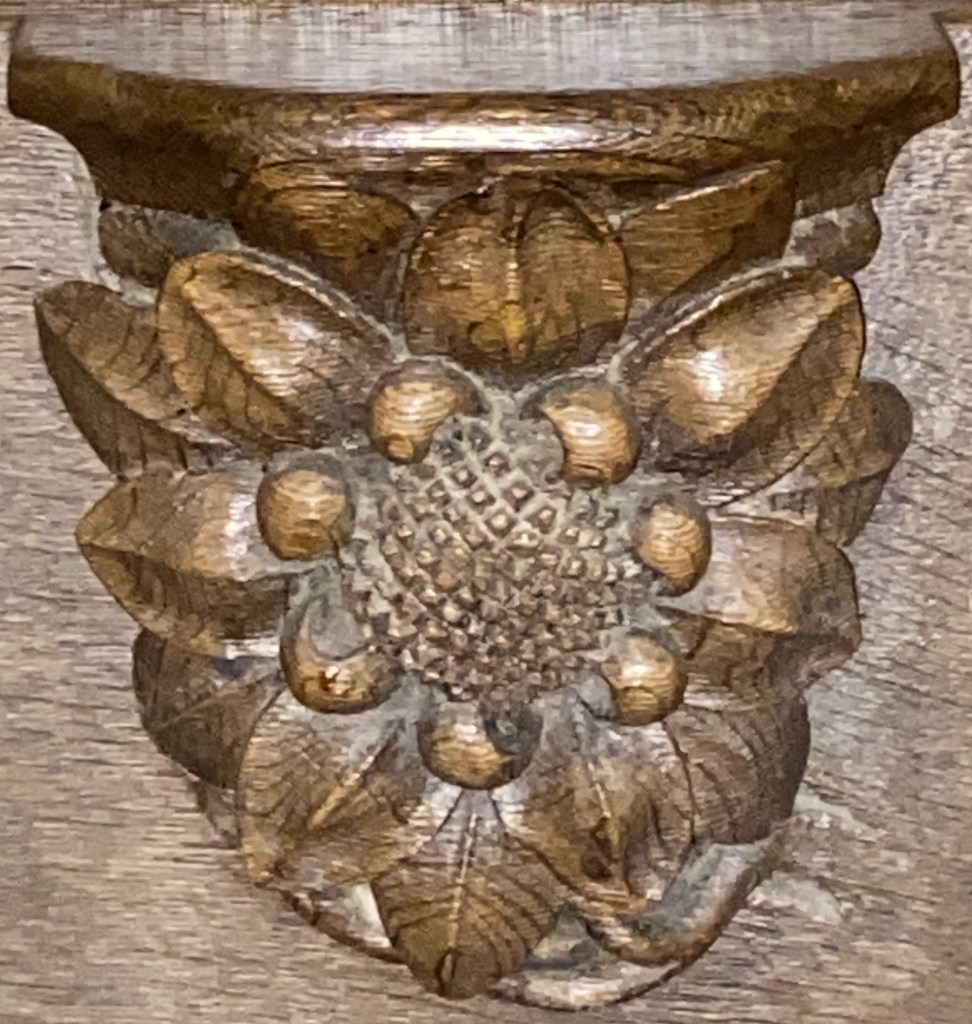
The choir stalls (1469 to 75) originally had 91 seats and in 2008 had 89 seats. There are two rows of misericords, equally divided on the left and right of the choir. The outstanding features are the Wangenbüsten – the figures on the side, a series of impressive carved half-length figures of sybils and ancient philosophers.
Jörg Syrlin the Elder (c. 1425 in Ulm to 1491 in Ulm) is a woodworker best known for the choir stalls of the Ulm Minster for which he contracted in 1469. The price of the choir stalls was 1,188 guilders.
However, opinion is divided as to whether Syrlin was in fact the craftsman who created the stalls. Syrlin and his son were both long thought to be major figurative sculptors in their own right but it is now widely held that their roles are in fact likely to have been limited to design and joinery work. This view is that the Syrlins in fact employed a number of sculptors for the figurative elements of their works, the most important of whom was Michel Erhart (c. 1440/45 to c. 1522/23), who probably carved the busts of sybils and philosophers on the choir stalls. They are considered the earliest adaptation of the bust type introduced by Niclas Gerhaert van Leyden, a Dutch sculptor who became a style-defining figure in the southern German-Austrian region for several generations starting around 1470.
Erhart is the most frequently mentioned sculptor in the city archives of Ulm between 1469 and 1522, the last note concerning him, dated December 1522, concerns the receipt of an alms pension. He initially worked in Ulm in the workshop of Syrlin the Elder on the choir furnishings of the Minster. Syrlin accepted larger commissions such as altars and delegated work to sculptors, carvers, and painters. As a carpenter himself, he crafted the altarpiece or, as here, the pews. But his contribution to the designs of the figural program was increasingly called into question, so that most art historical researchers today assume that Erhart was the author of most of the figurative busts on the choir stalls .
By 1474 at the latest, after completing his work for Syrlin, Erhart had his own workshop with several assistants and journeymen in Ulm. Again with Syrlin as the principal, he was commissioned to create several pictures for the high altar of the Minster, which, however, fell victim to the Reformation iconoclasm of the 16th century.
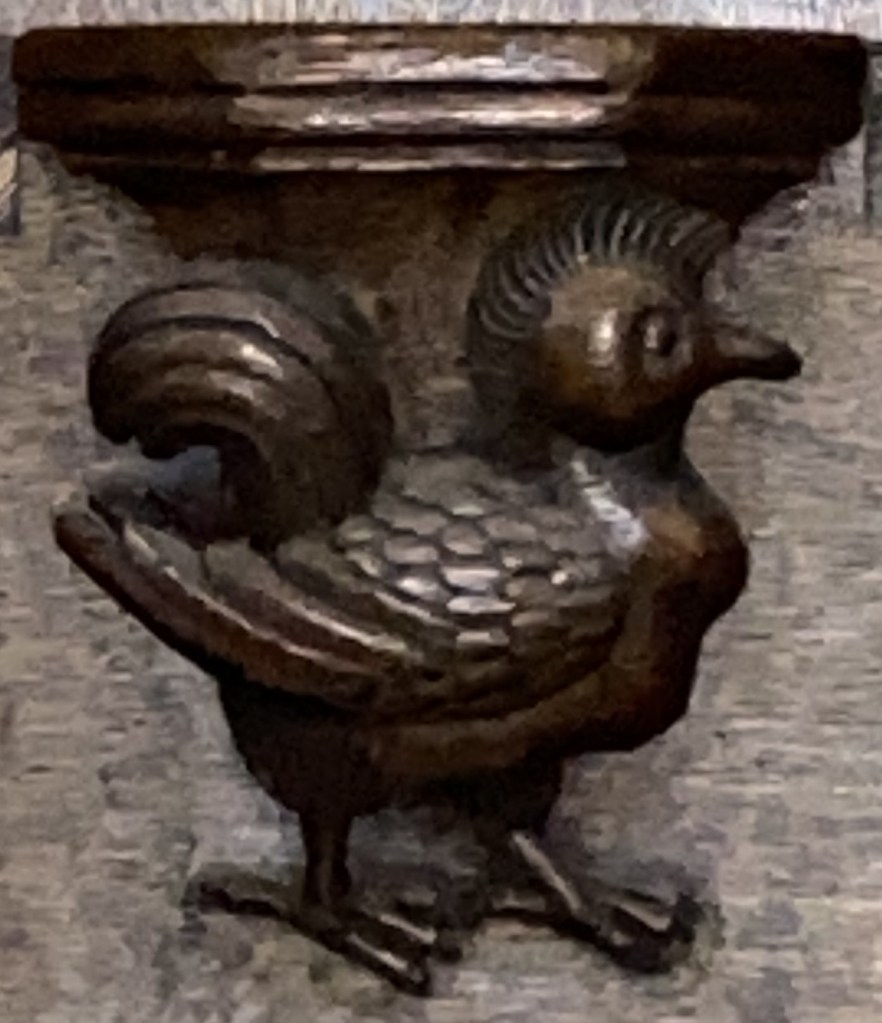
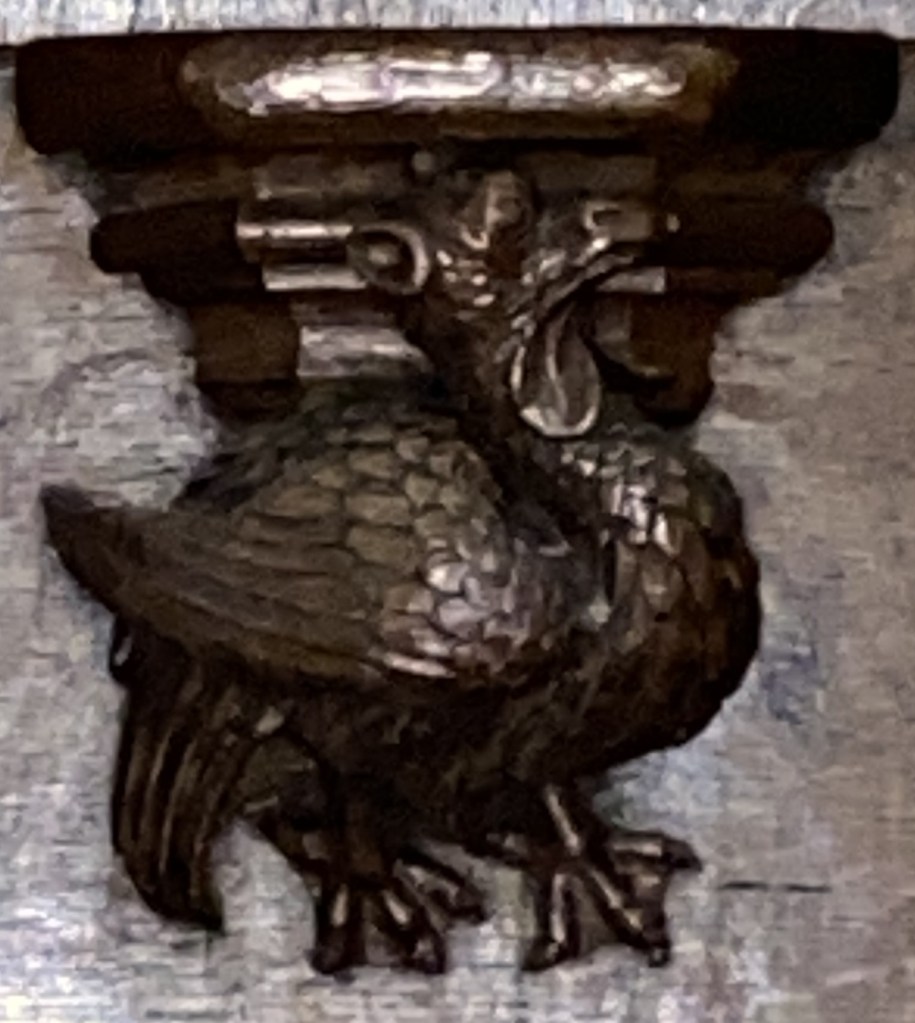
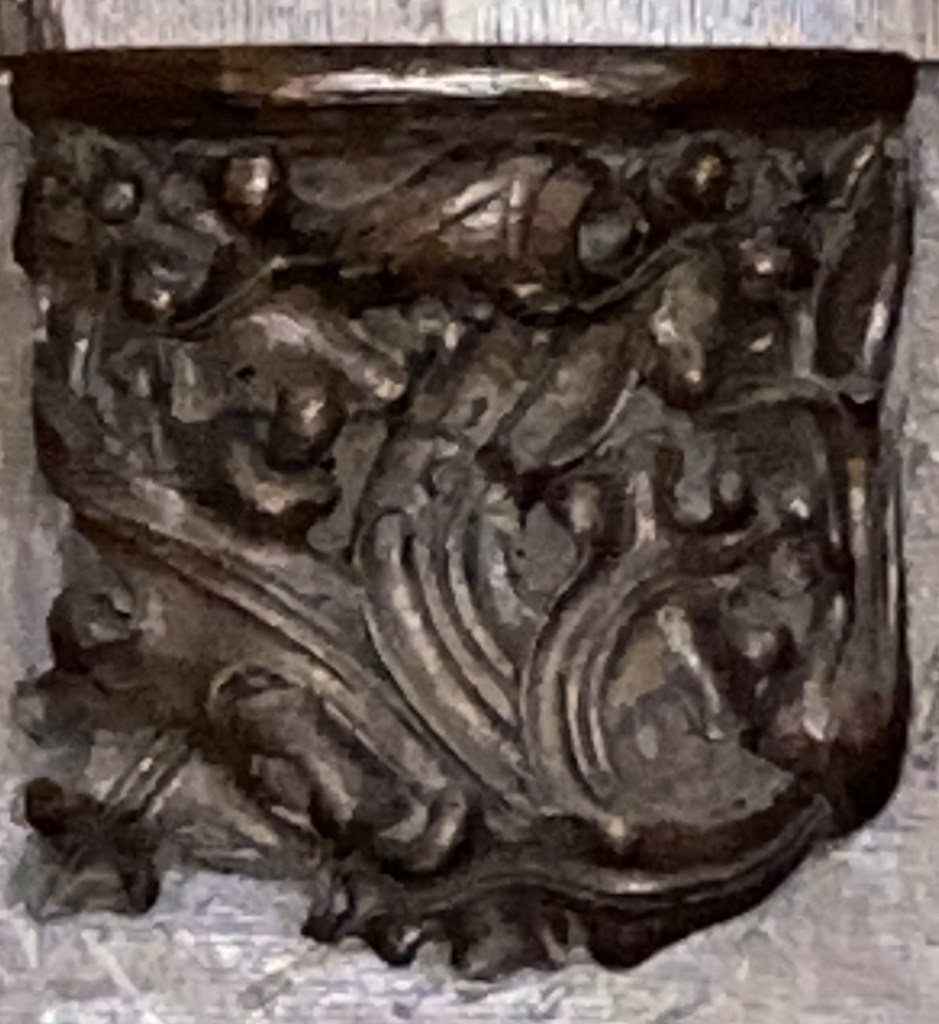
The misericords are, in the continental style, unadorned by supporters. Although many of them are of good quality, they are perhaps not as fine as the busts. Some of them are on a background of banding which is clearly by a different hand, consistent with the idea that Syrlin made them and someone else decorated them.
Front row left from the nave







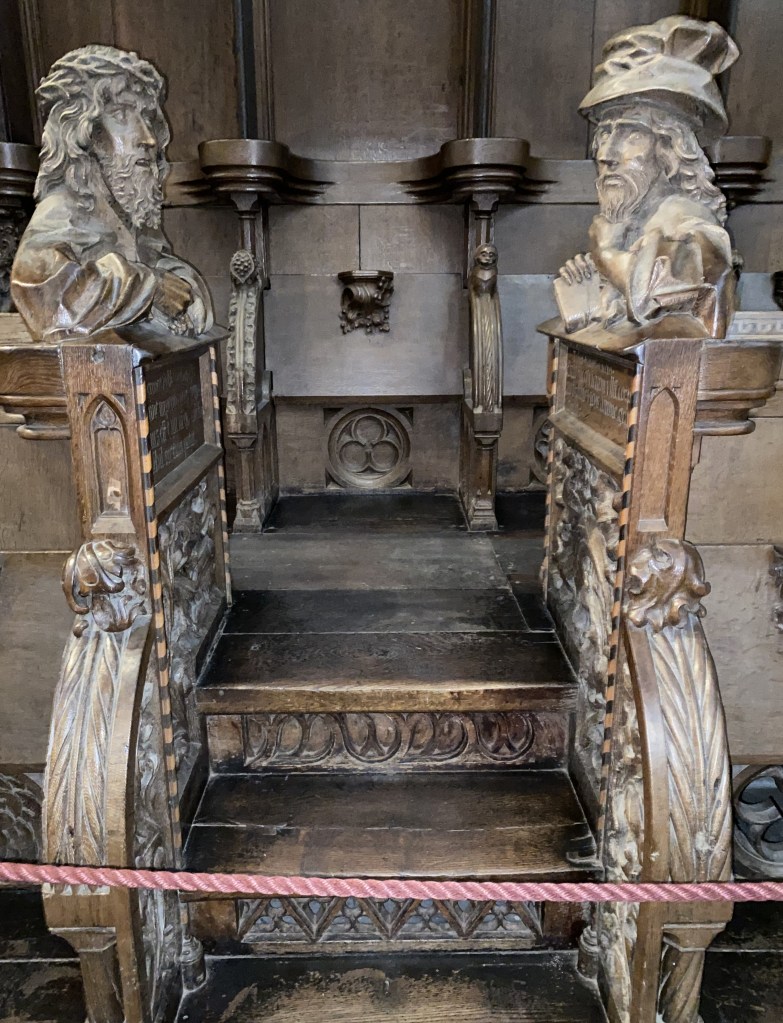


Left back row

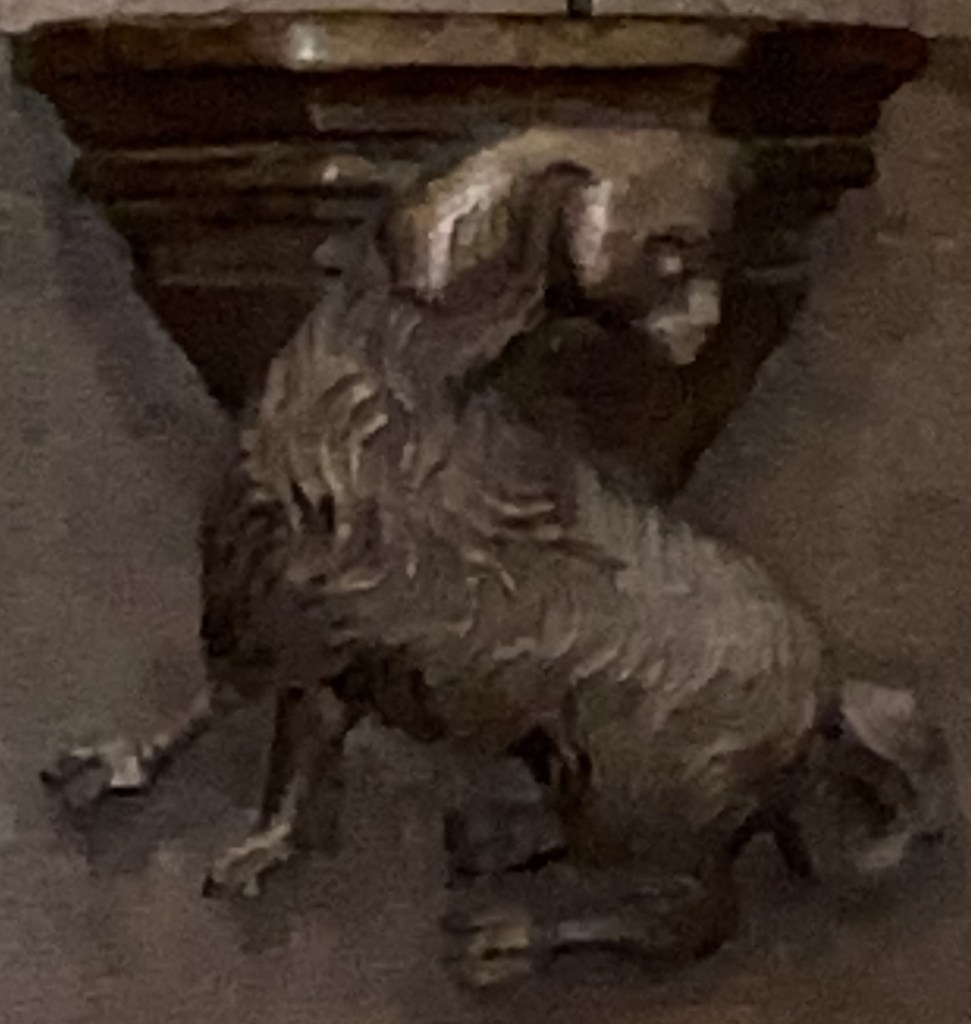
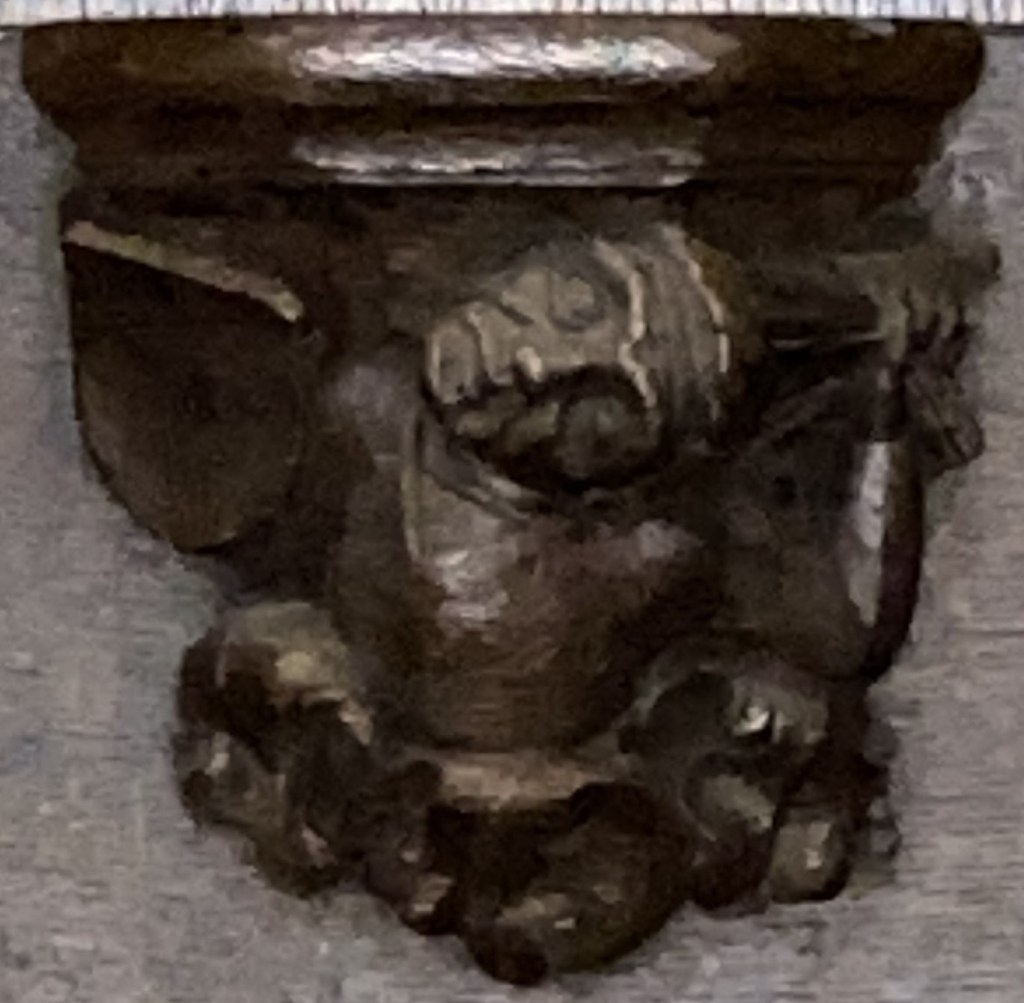
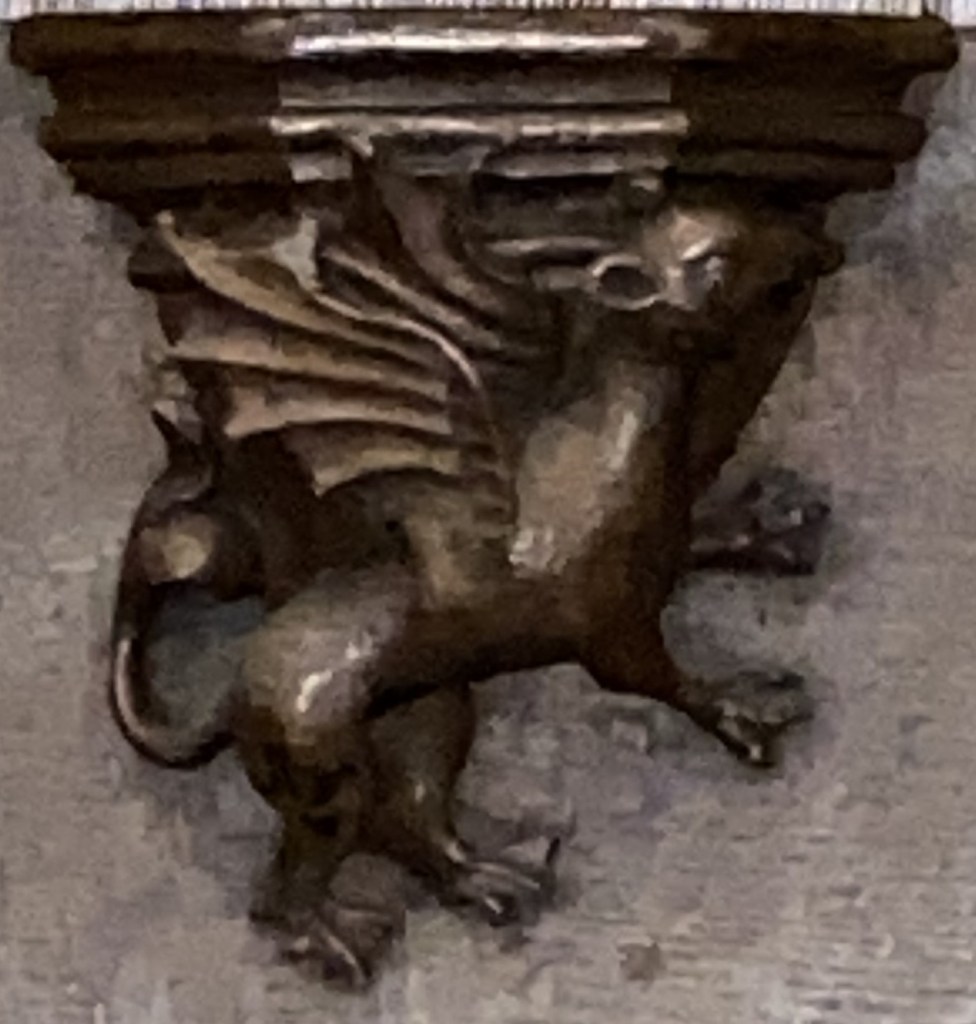


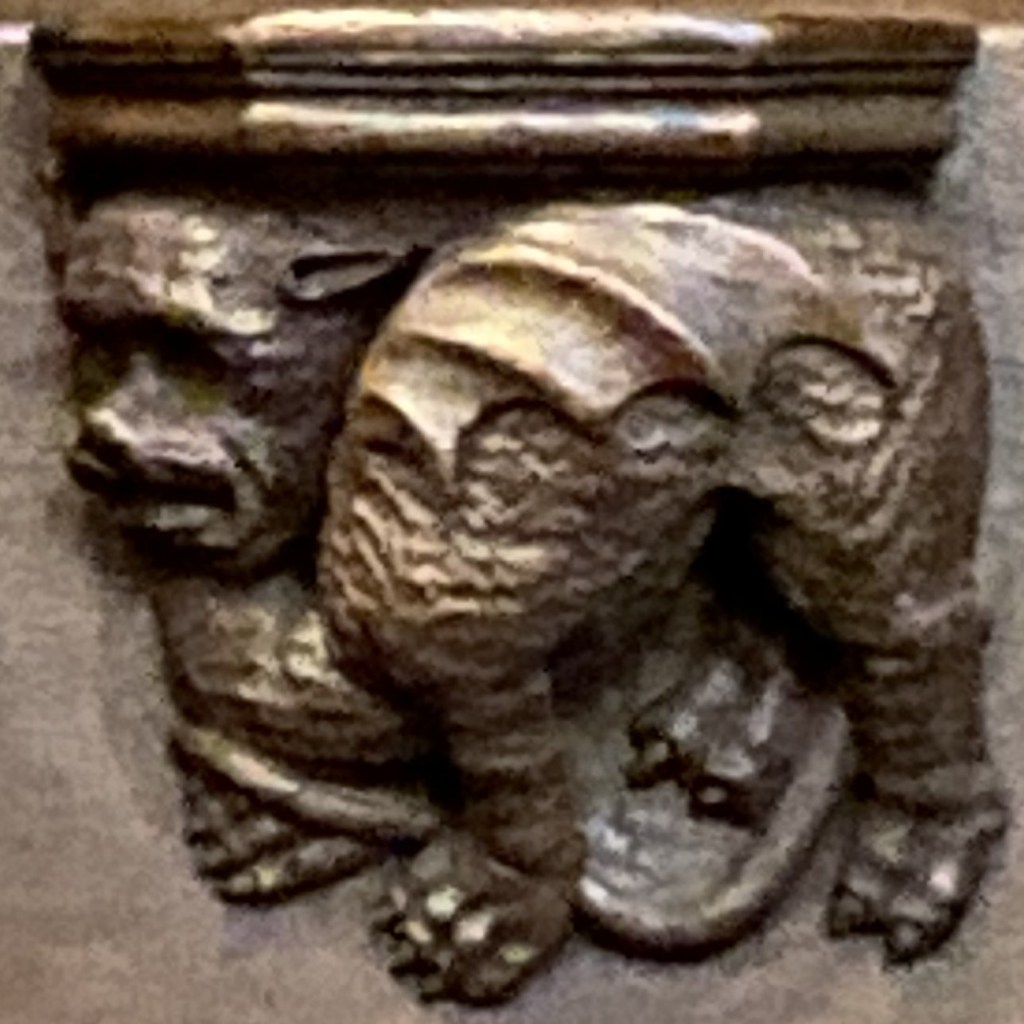
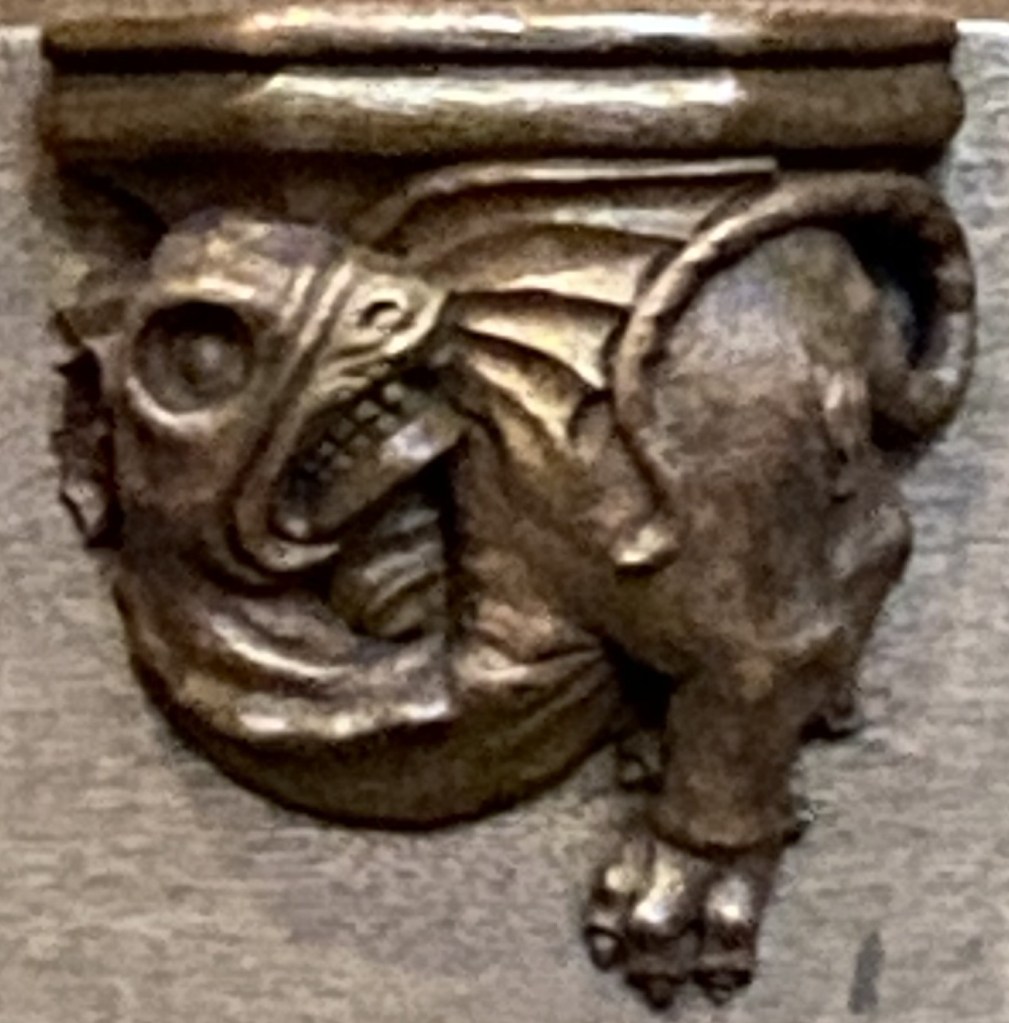
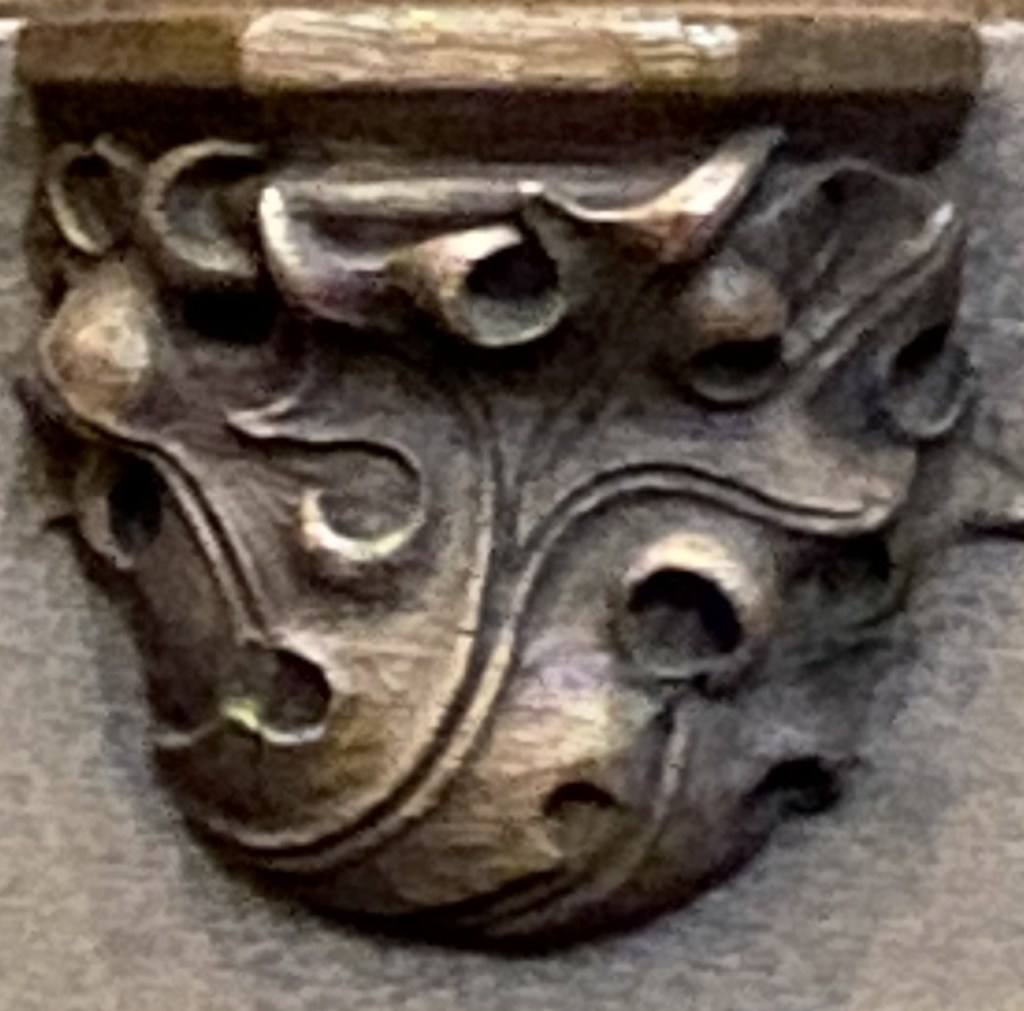
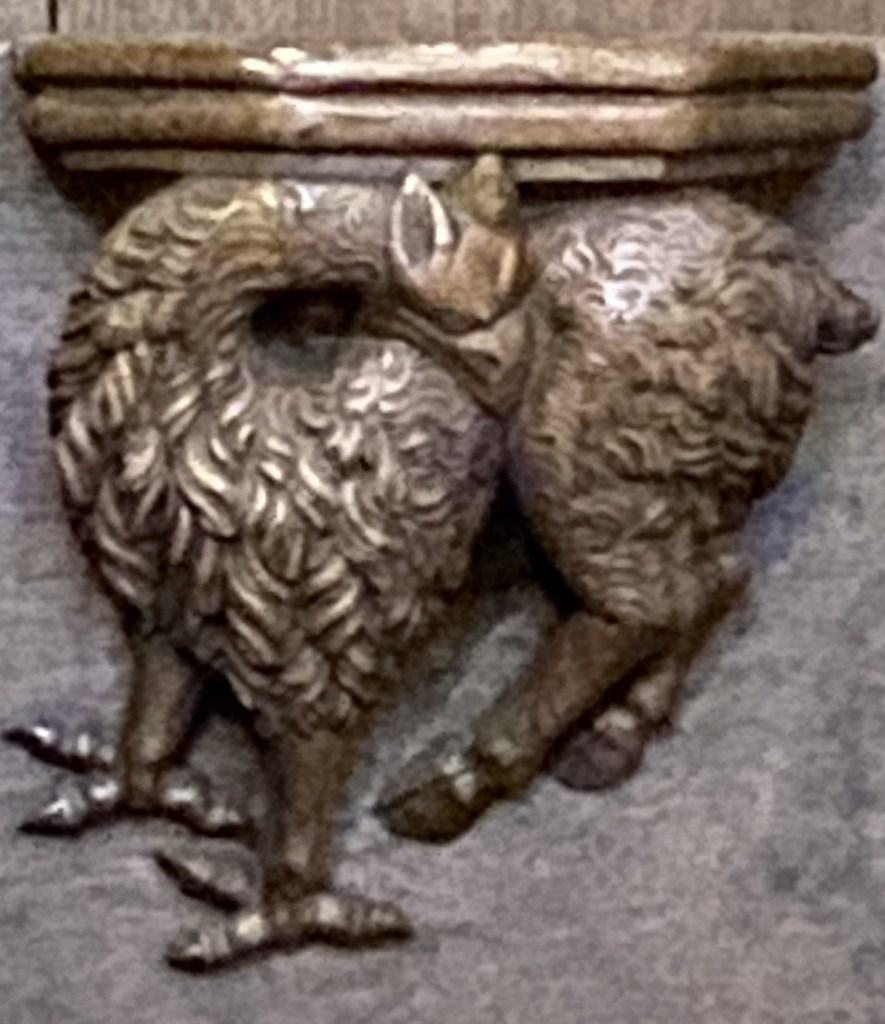
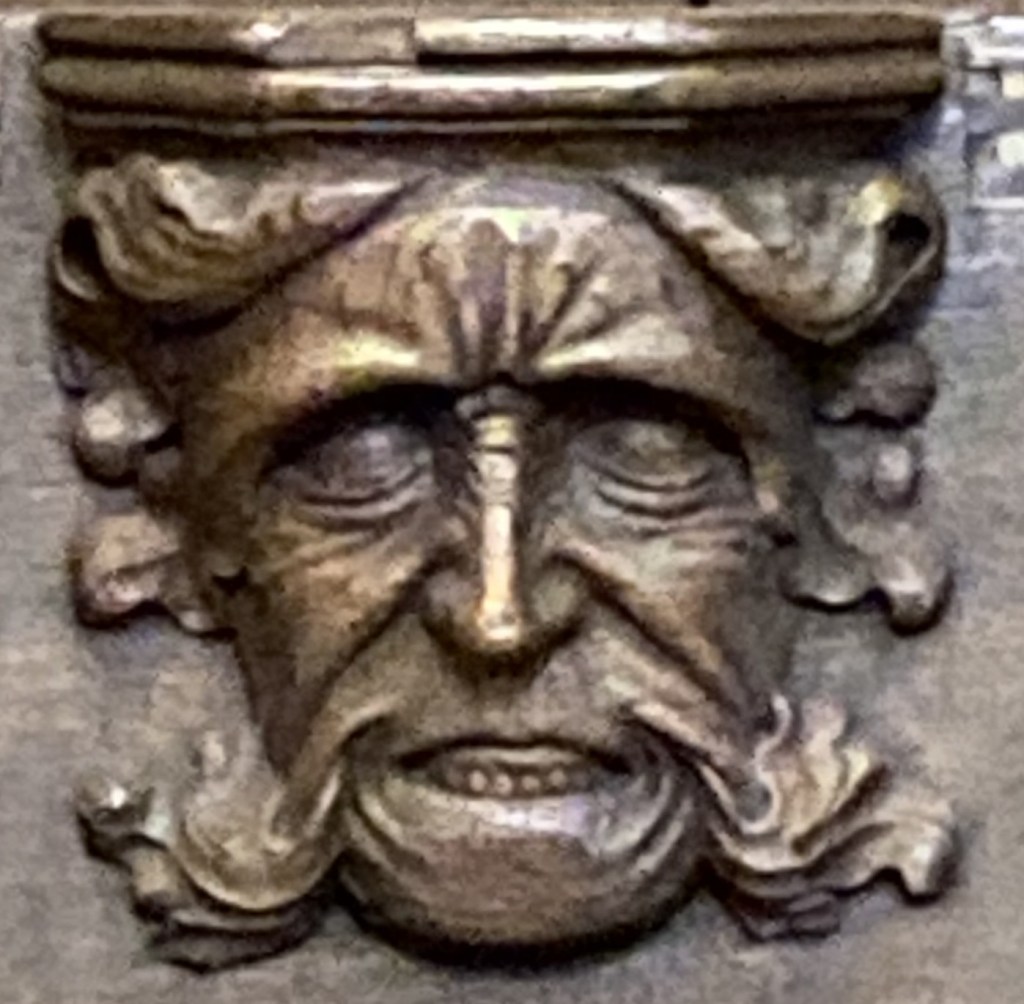
Right front row from the nave
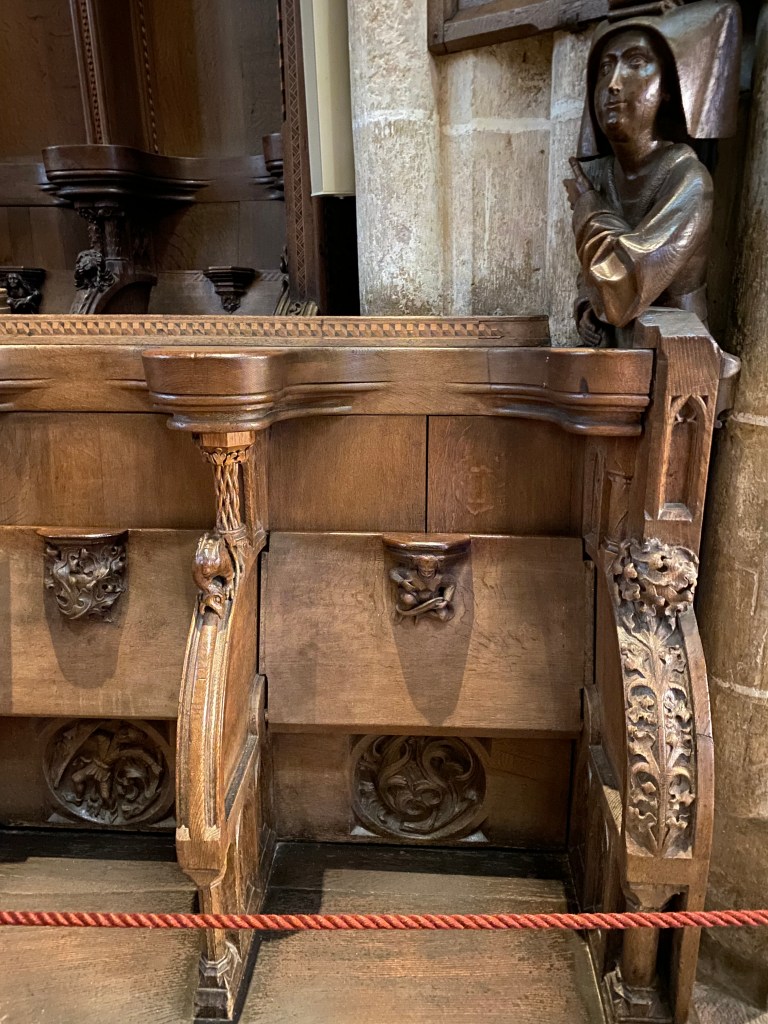
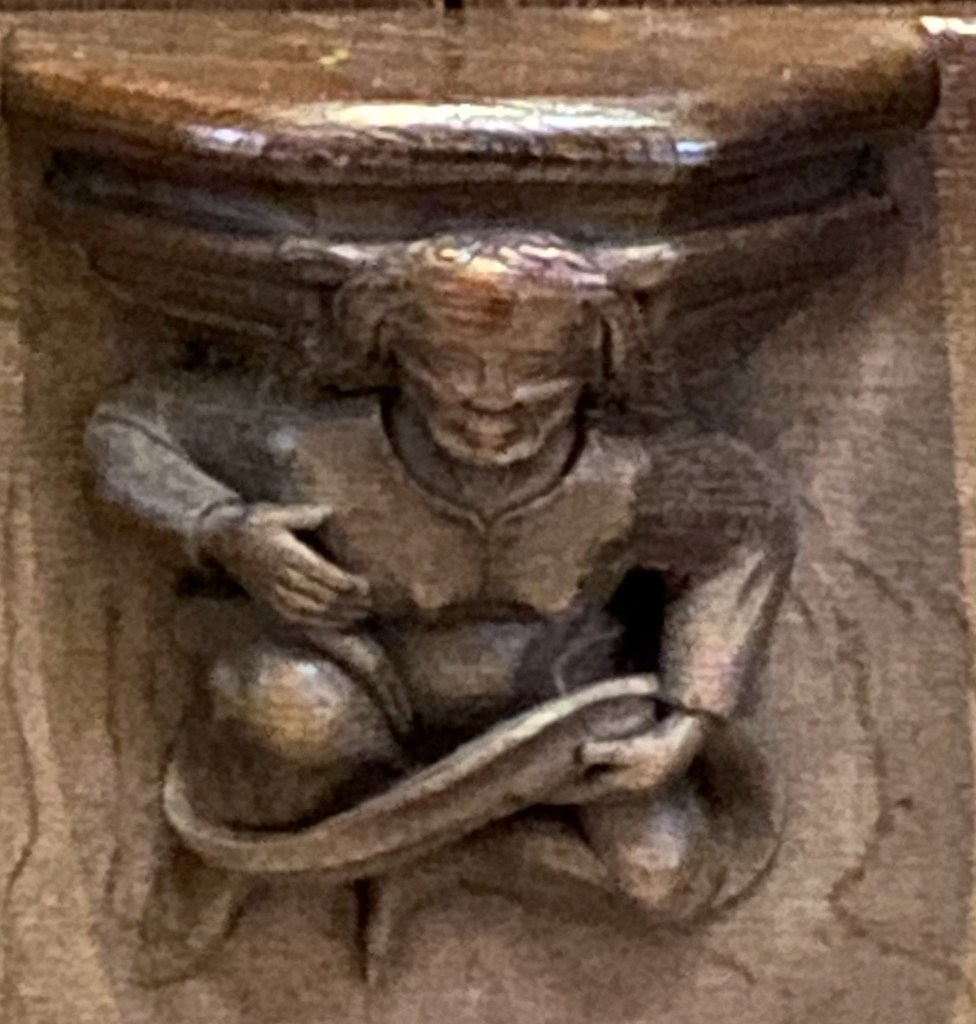


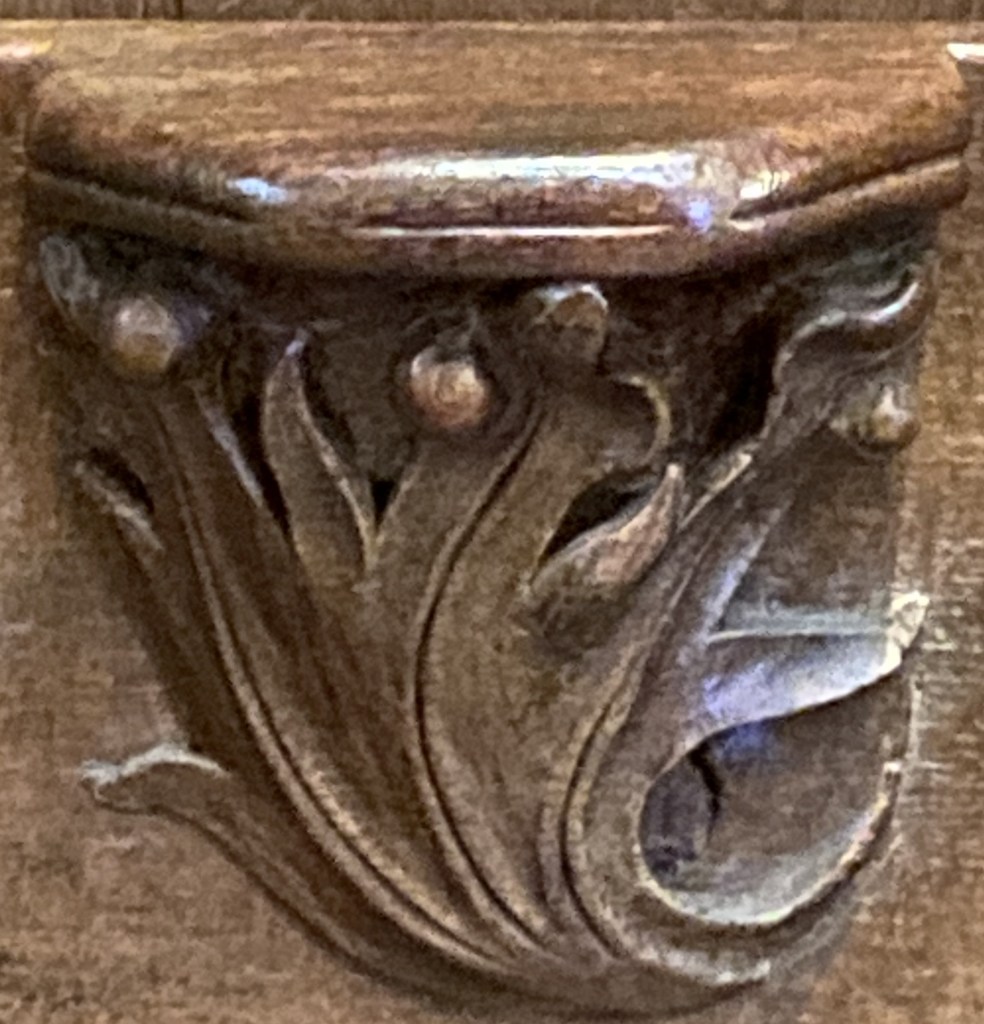
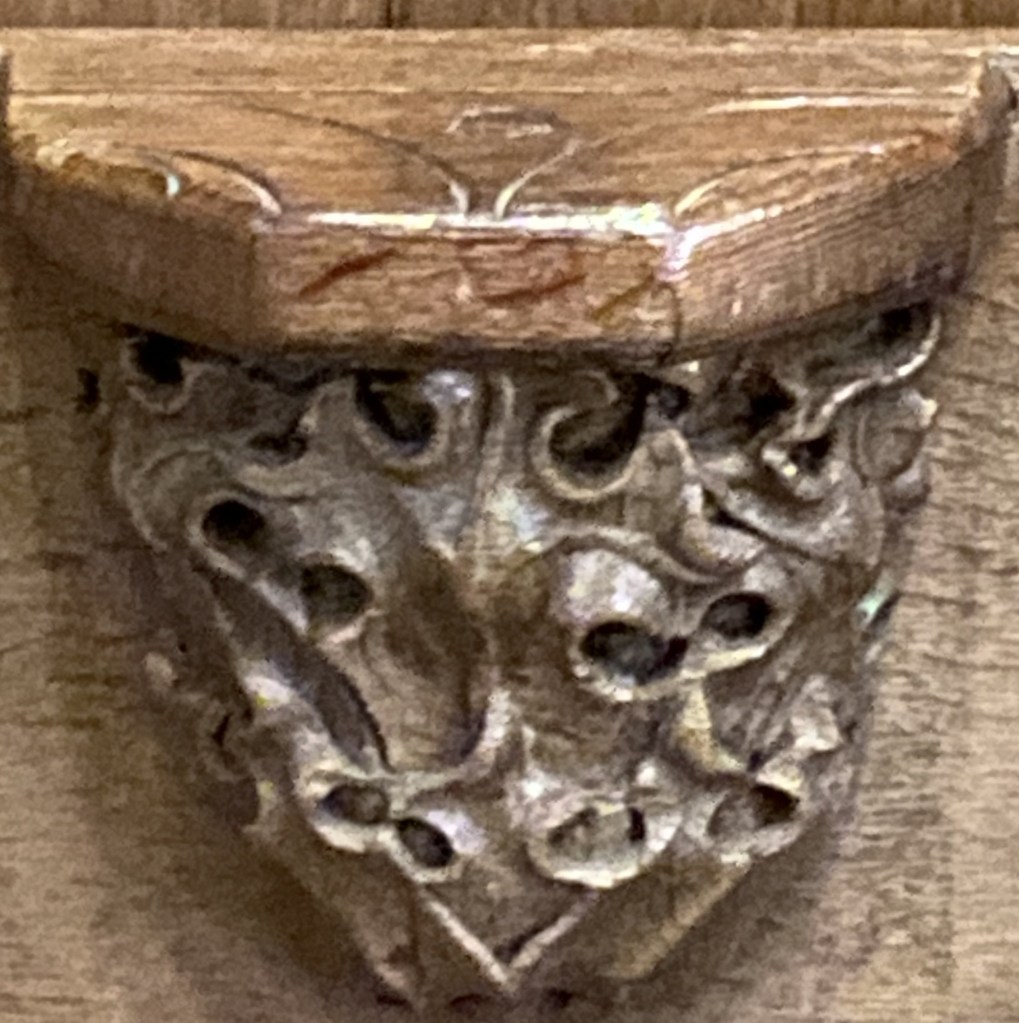

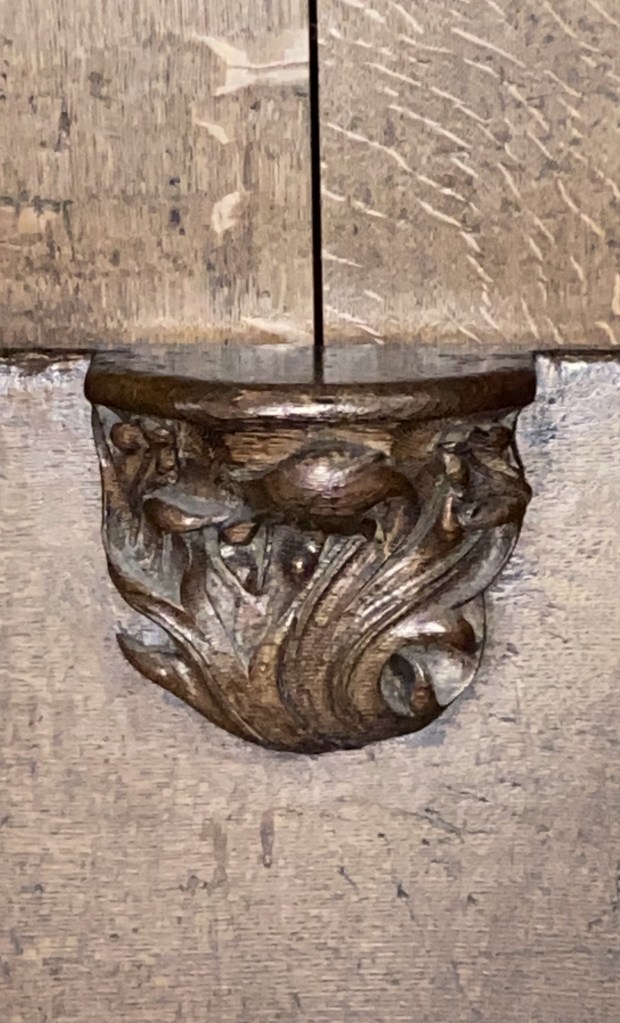


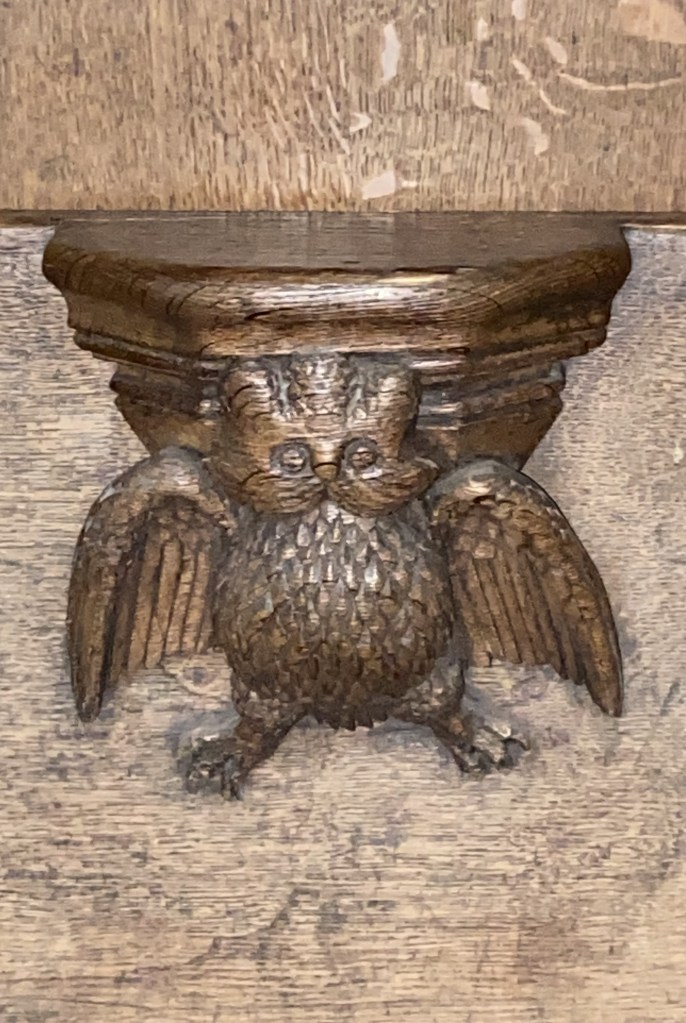


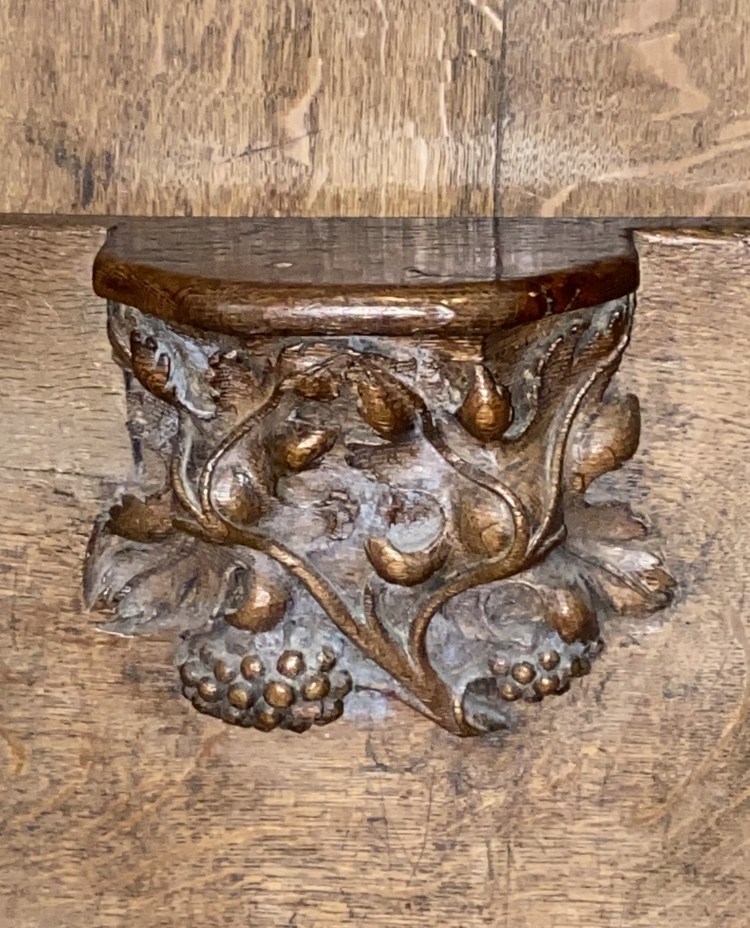
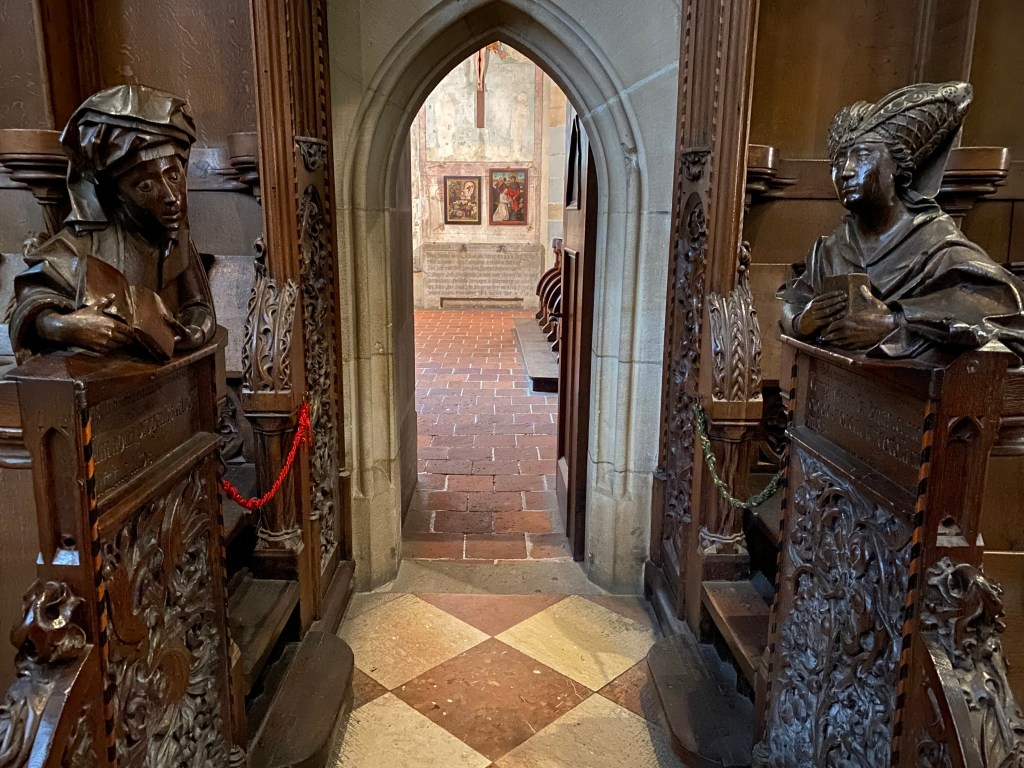

Right back row from the nave
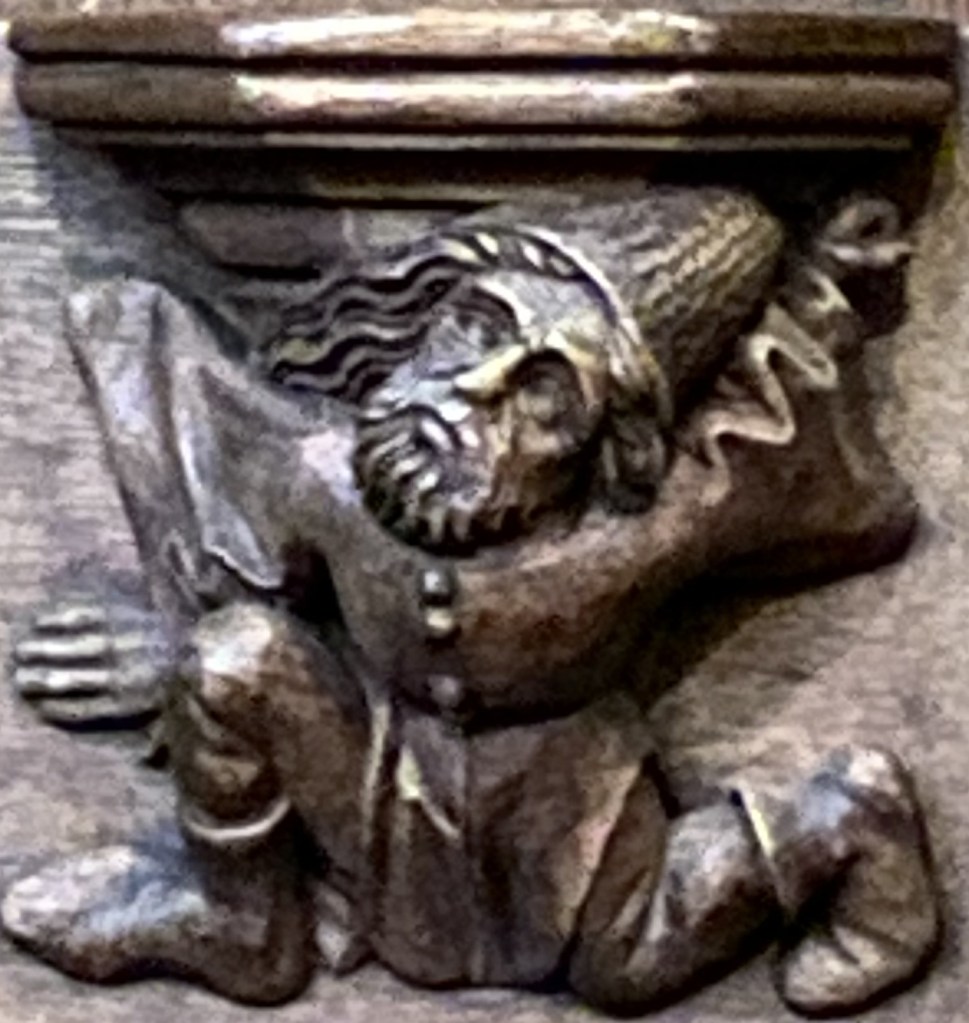


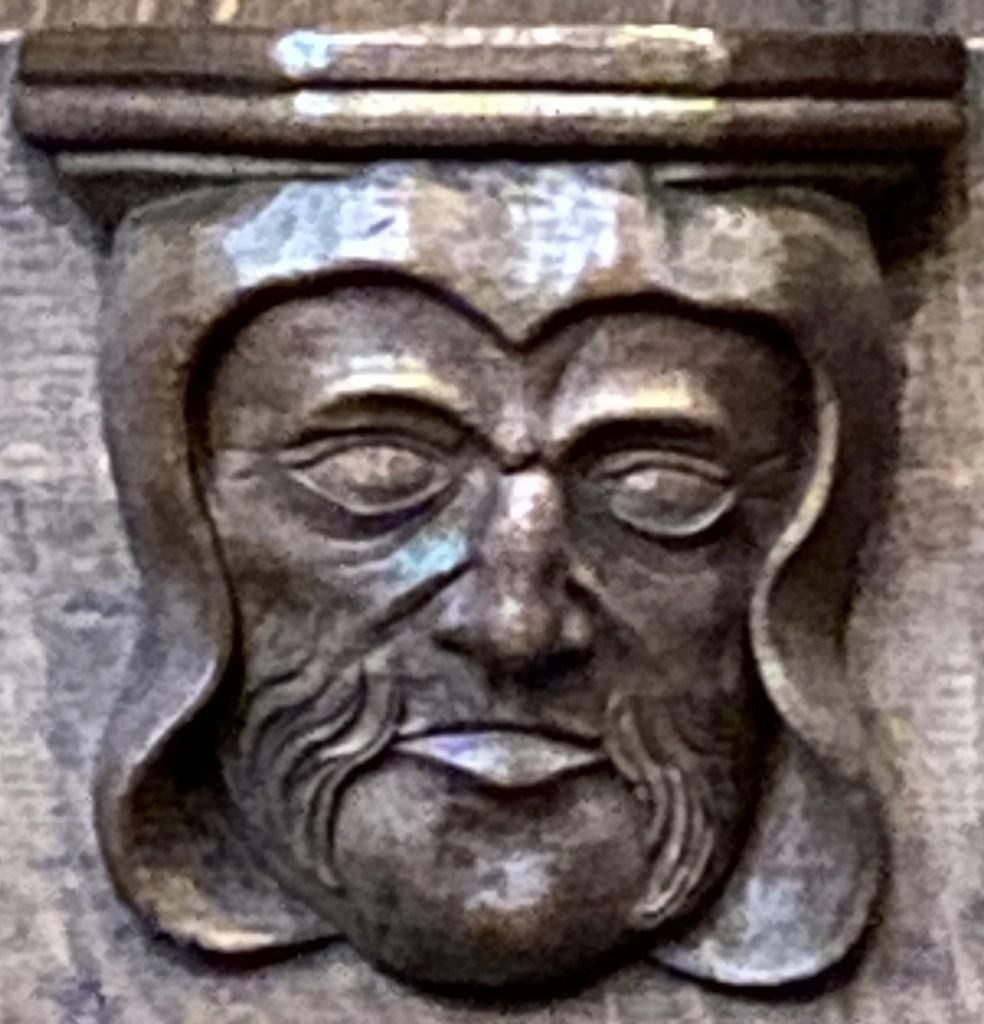


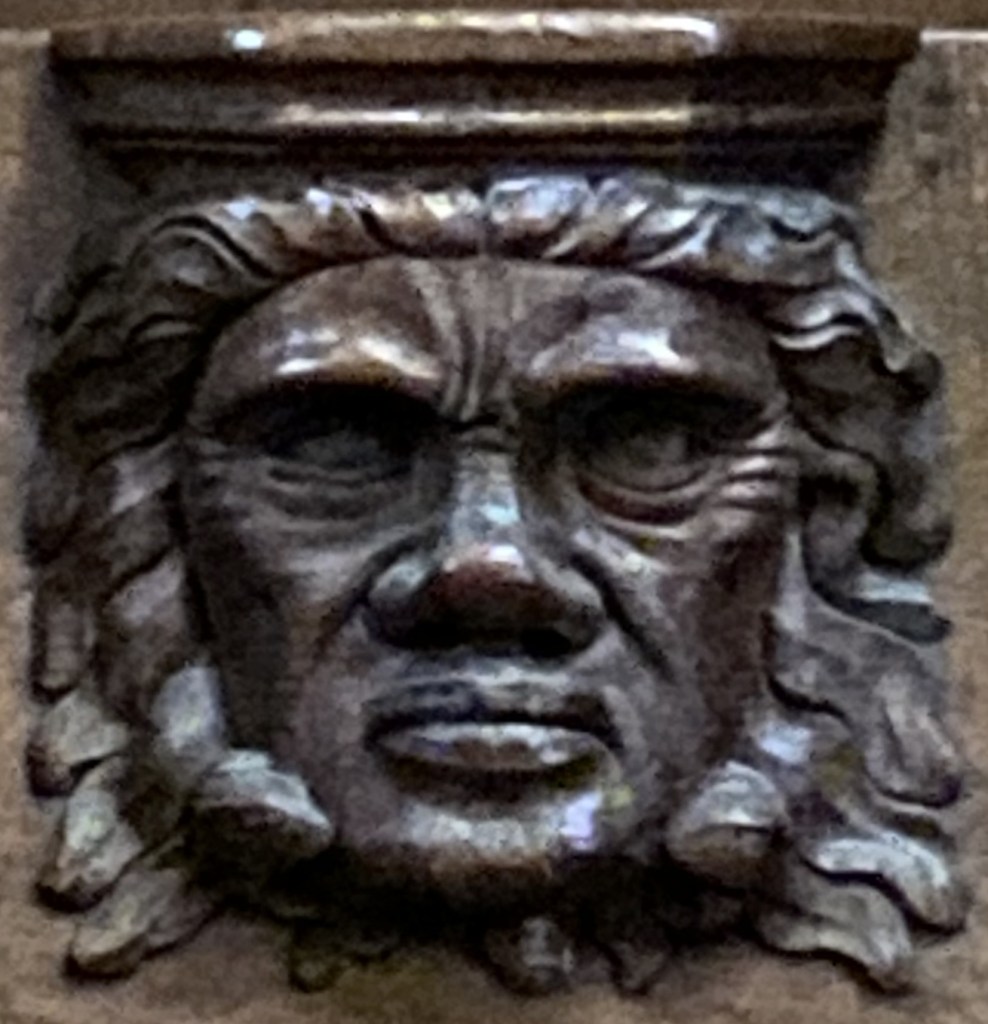




Three-Seater (1468 to 1469)
A solitary three-seat choir stall, which separates the choir from the nave:


Sources: misericords.co.uk; The Elaine C. Block Database of Misericords; wikipedia: Jörg Syrlin (the Elder) Michel Erhart; National Trust
 undivided-back postcards