Seating for the Medieval Monk
Great Malvern Priory
Great Malvern Priory, Worcestershire has thirty-six stalls of which all but two have carved misericords. Twenty-two are medieval and they are much wider than the twelve nineteenth-century stalls which were added to the east-end of each row in Victorian times. The medieval stalls were moved around the building in the centuries following the dissolution of the monastery in 1539 and their original order is unknown.
There were originally two sets of misericords here; twelve of the months and twelve on miscellaneous subjects. The latter are still complete but the Kalendar is now incomplete, having been moved out of order within the church. As a consequence, it is difficult to be clear which months the individual misericords represent. While the miscellaneous carvings date from the latter part of the fourteenth century, the Kalendar ones are a hundred years more recent.
Labours of the Months calendars were popular across western Europe in the middle ages and were found in books, stained glass and stone carvings. Worcestershire seems to be a hotspot for this concept – they are also found in Worcester and St Mary’s, Ripple which is complete. Perhaps this is an indication that they were all carved by the same hand? At Worcester and Great Malvern there are similar fourteenth-century carvings of a butcher felling an ox and there’s a butcher at Ripple killing pigs.
Medieval Misericords of Great Malvern Priory The Labours of the Months Katherine Wells
Ancient Misericords in The Priory Church Great Malvern Vera L Edminson
St Andrew’s Church
Greystoke, Penrith, Cumbria
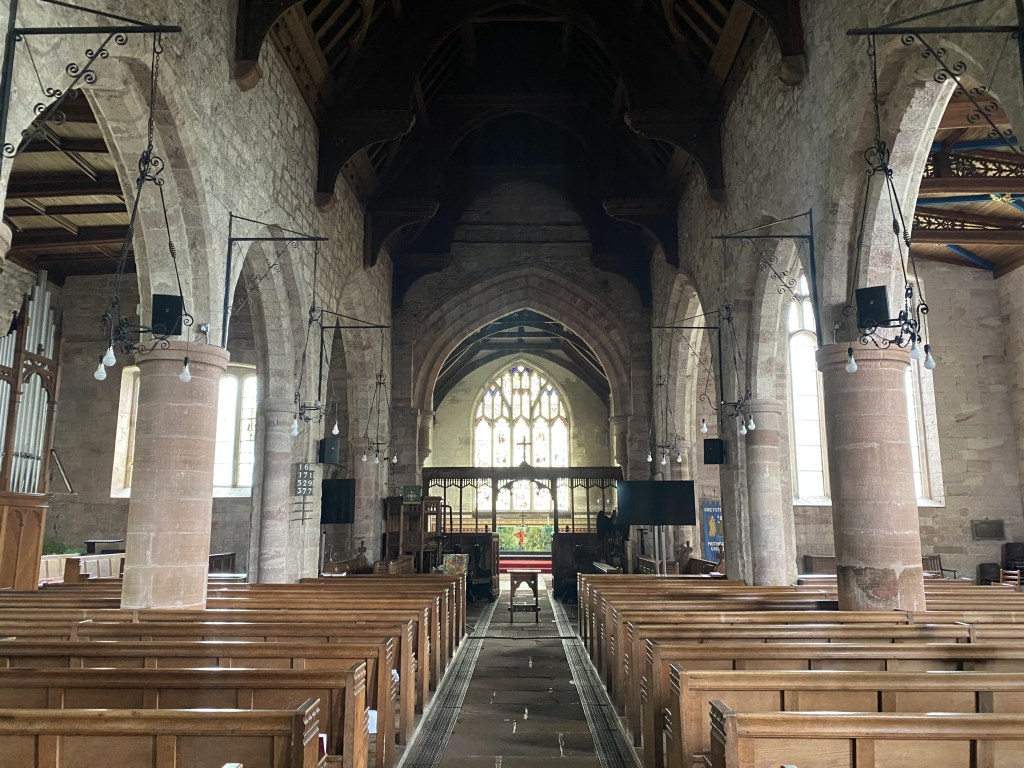
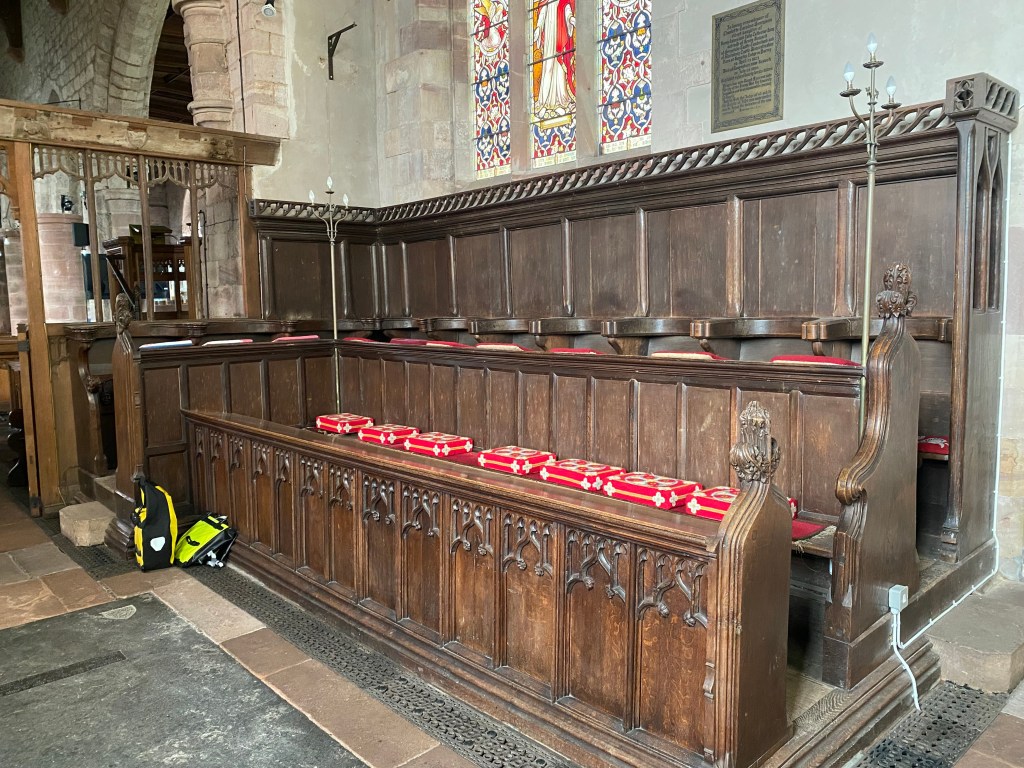
St Andrew’s Church’s panelled oak choir stalls have ten misericords in the back row of each side. I use the same numbering as misericords.co.uk
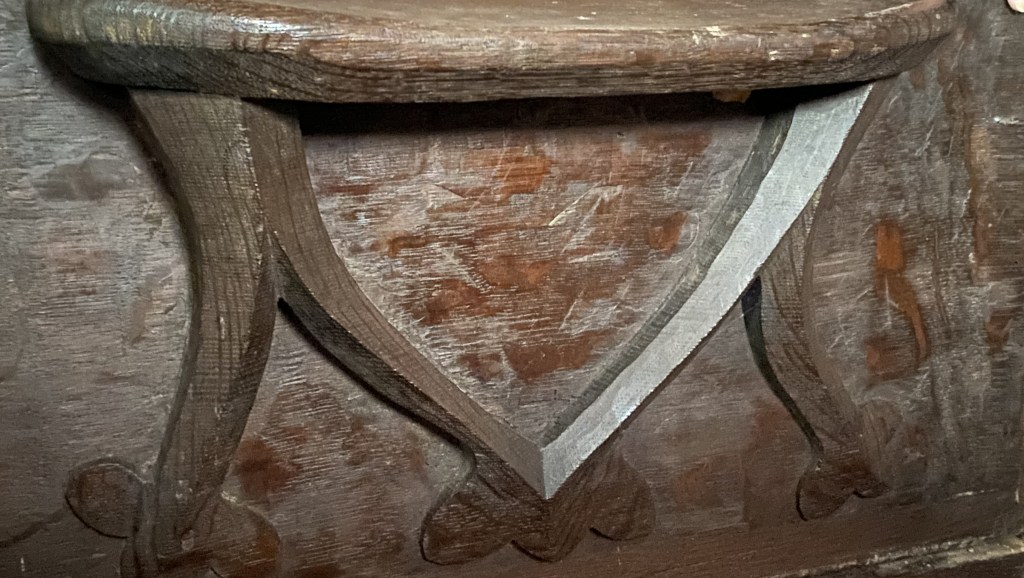
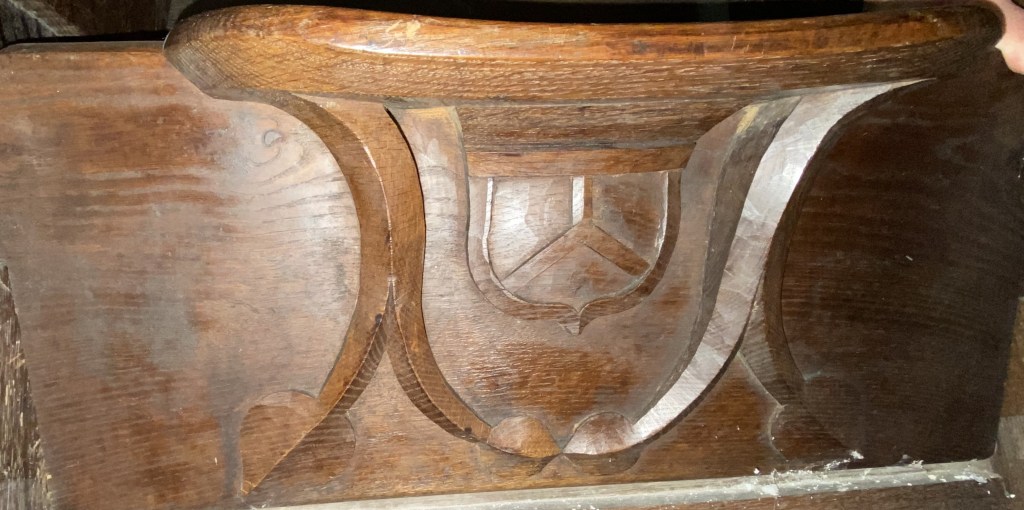
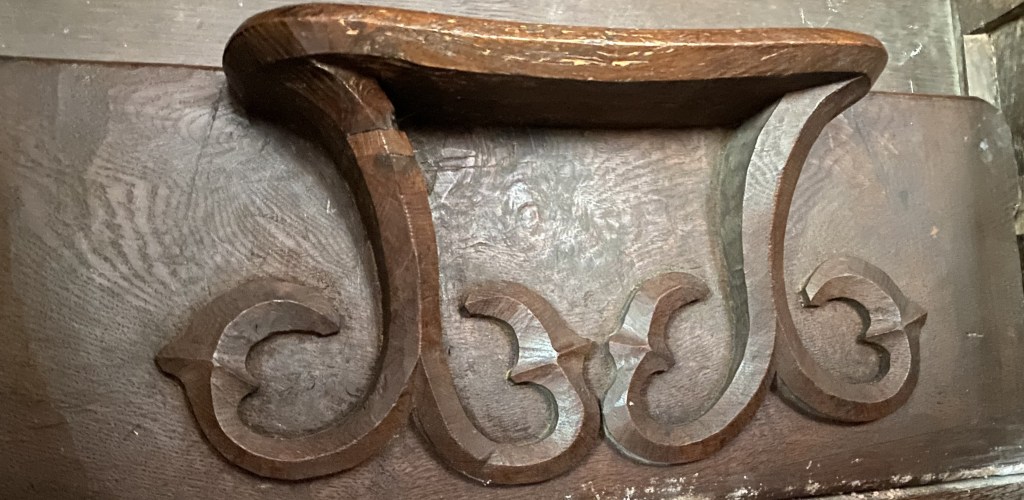
The misericords are said to be of the fourteenth to seventeenth centuries and they are certainly in a variety of styles; S3 and N1 to 5 can be identified as earlier than the rest. Of the others, S1, S4, S7 and N6 have shields consistent with having been family coats of arms at some stage.
The later designs are both original and of high quality; the organic style is strikingly modern and they contrast with almost all the misericords to be seen elsewhere.


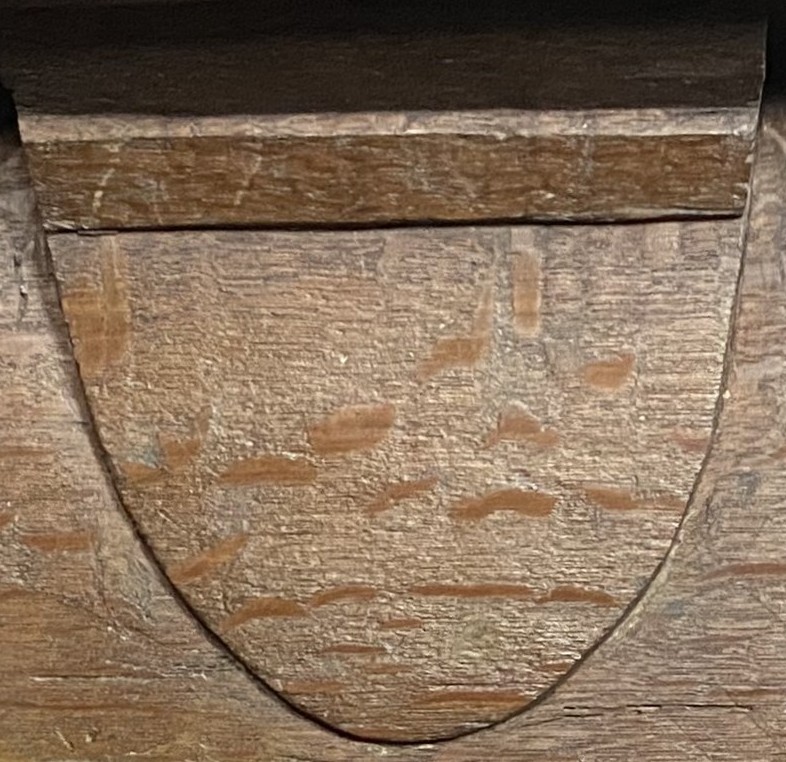

This coat of arms in S4 (probably a later addition) is reflected in the stained glass of the church and similar to that of Thomas, Earl of Arundel K.C. (1585 to 1646)
South


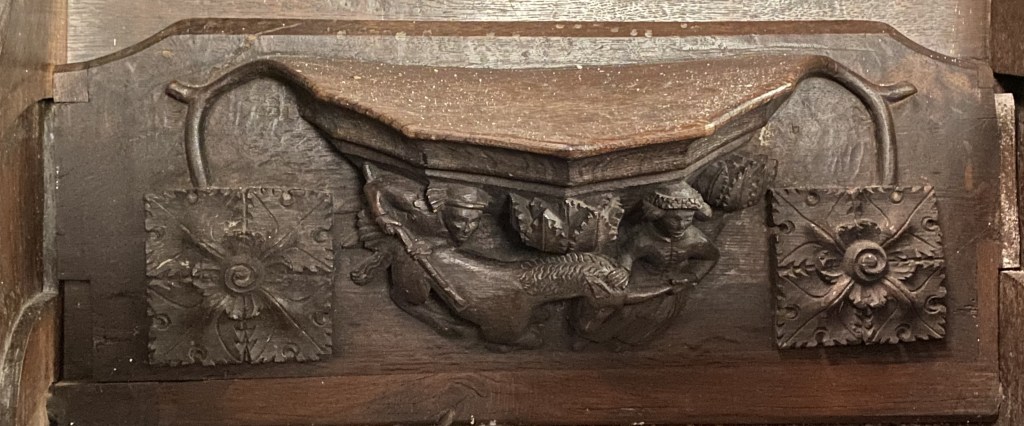

The ten misericords on each side are arranged three and seven with these fine corner pieces between the groups.





North

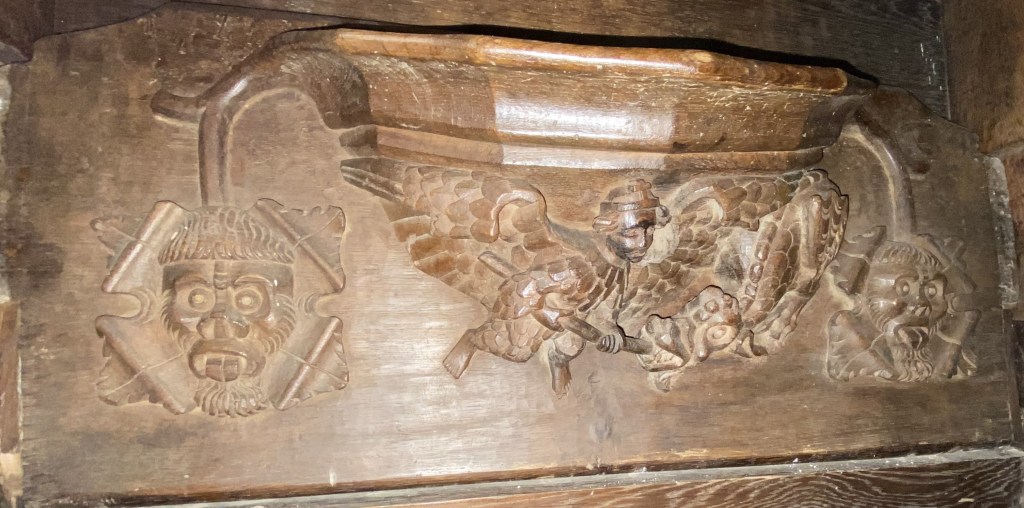


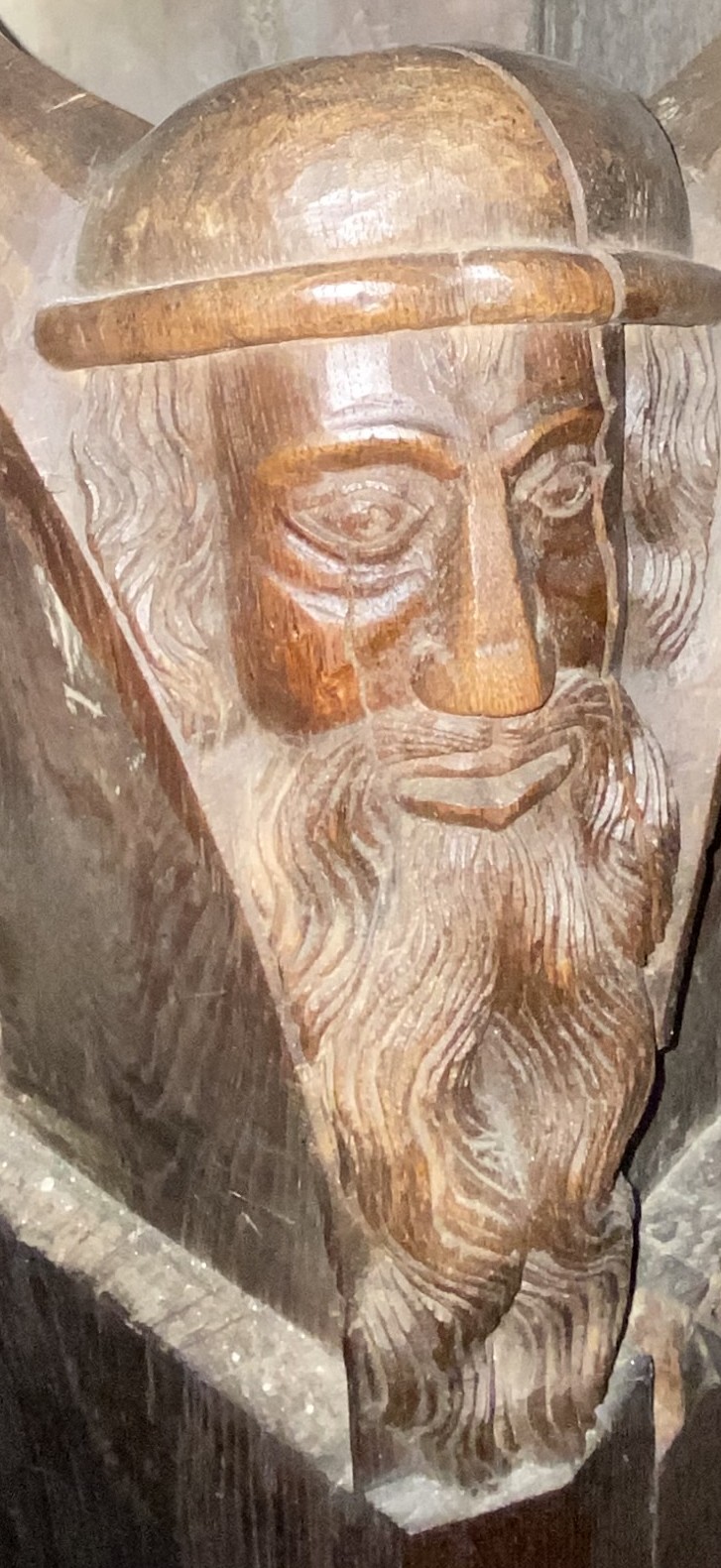

On the left is the north corner piece with close-ups of the faces to the right – the crescent-moon headband on the right is evocative of the middle east while the very different look of the other is reminiscent of druids nearer home.


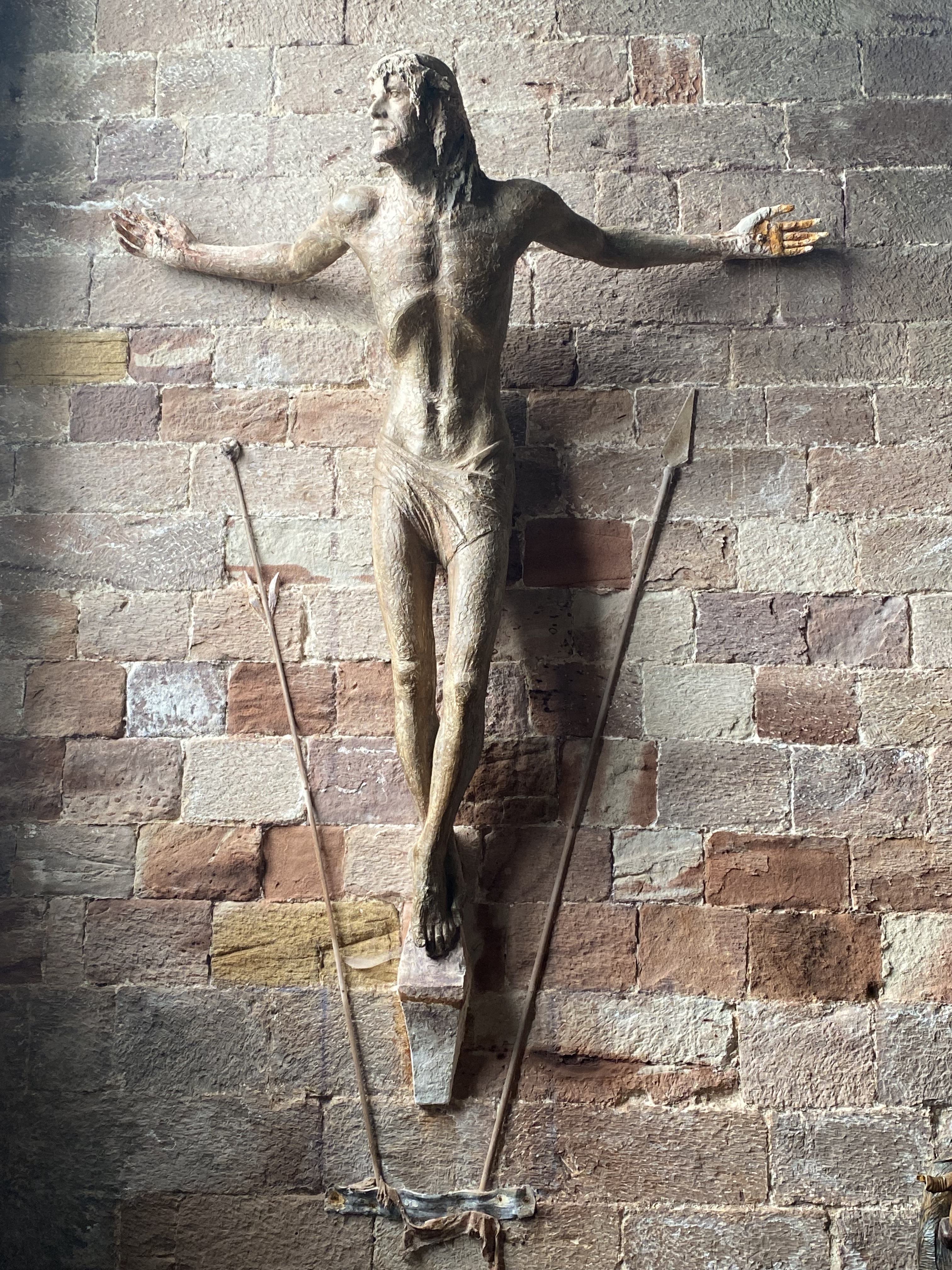
The church is also known for fine stained glass and modern scupture.
 undivided-back postcards